Connect with us

General

Nigeria, Others to Lead Africa’s Upstream Sector Resurgence

Published

on

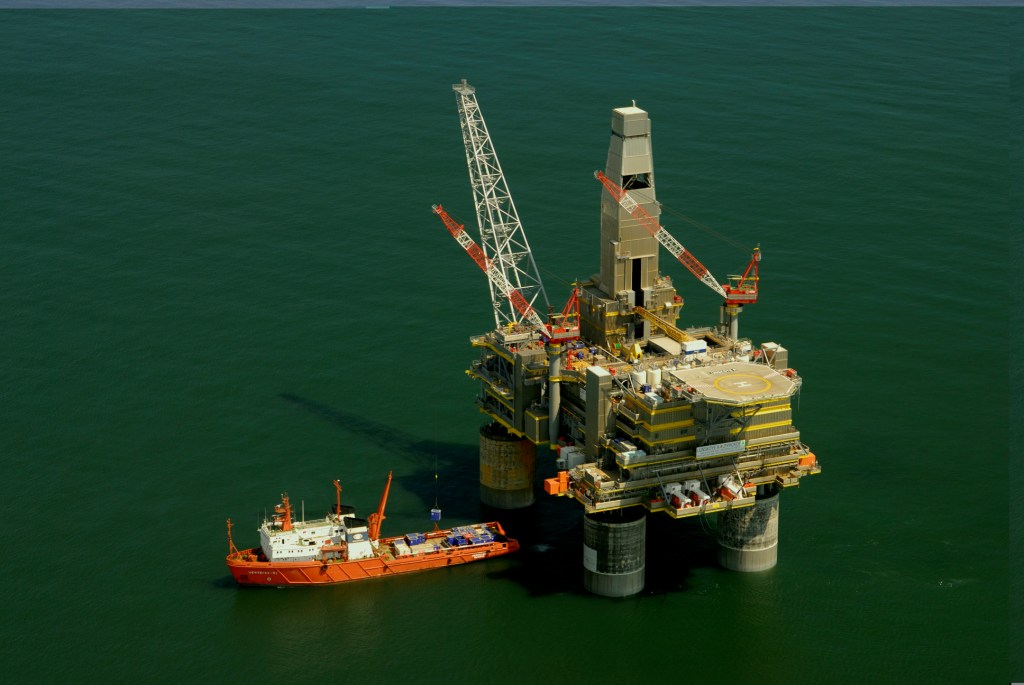
oil production rig

By Faridat Yusuf

Africa’s oil and gas sector is getting ready for a slow comeback in 2026, with Nigeria among the countries to lead the resurgence.

This was revealed in a new report titled State of African Energy 2026 Outlook by the African Energy Chamber (AEC).

The report says countries like Nigeria, Algeria, Libya, Egypt, and Angola are still leading in oil and gas production, but they are facing problems like old equipment and aging oil fields.

Meanwhile, new countries such as Ivory Coast and Namibia are now drawing investors because of recent oil discoveries.

According to the report, Africa’s total oil and gas production will stay around 11.4 million barrels per day in 2026, and may rise to 13.6 million barrels per day by 2030. North Africa will produce about 60 per cent of this, while sub-Saharan Africa will produce the rest.

The report also noted that growing feature of the African energy landscape is the increasing role of National Oil Companies (NOCs), which now account for roughly 53 per cent of total production.

By contrast, International Oil Companies contribute about 30 per cent, reflecting a shift toward resource nationalism and greater operational involvement by host governments.

It said that African countries such as Nigeria via the Nigerian National Petroleum Company (NNPC) Limited are actively expanding NOC capabilities to operate major assets independently or through joint ventures, emphasizing the need to build local expertise alongside attracting foreign investment.

Speaking on this, Mr NJ Ayuk, Executive Chairman of the African Energy Chamber, said the continent still has great potential if investors focus on new oil areas and governments make good policies.

“The African upstream sector is evolving rapidly,” he said. “Frontier and emerging basins present enormous potential, but realizing that potential requires targeted investment, innovative fiscal frameworks and partnerships that can de-risk technically complex projects.”

The report added that the next African Energy Week will hold in Cape Town from October 12 to 16, 2026, where investors, operators, and leaders will discuss how Africa can grow its energy sector and overcome challenges.


General

Dangote Refinery Cuts Petrol to N1,250 Per Litre, Diesel N1,700 Per Litre

Published

on

Dangote refinery petrol

By Dipo Olowookere

The ex-depot prices of two major petroleum products, Premium Motor Spirit (PMS), otherwise known as petrol, and Automotive Gas Oil (AGO), also known as diesel, have been slashed by Dangote Petroleum Refinery and Petrochemicals.

The company announced the reduction in prices of the products in a statement on Saturday evening.

The Lagos-based private refinery said its latest action was to reinforce its commitment to making refined petroleum products more affordable and supporting economic activities across Nigeria.

The cut in the prices of petrol and diesel by Dangote refinery comes as the global crude oil prices continue to moderate, amid expectations that the United States of America and Iran will agree on a ceasefire very soon and reopen the Strait of Hormuz.

This narrow vessel passage accounts for 20 per cent of the world’s crude oil consumption. It has been closed for more than two months because of the Middle East crisis.

On February 28, 2026, America and Israel launched airstrikes in Iran, killing its Supreme Leader and other top government officials.

Iran fought back by attacking US bases in the Middle East, including in Saudi Arabia, Qatar, the United Arab Emirates and others. It also shut down the Strait of Hormuz, causing the price of oil to almost hit $120 per barrel.

The crisis faraway in the Middle East, rather than becoming a blessing to Nigeria, put citizens under untold hardship, as the price of petroleum products, especially PMS, jumped from around N800 per litre to almost N1,500 per litre.

On Friday, the price of Brent crude was about $94 per barrel, while the West Texas Intermediate (WTI) crude was about $89 per barrel.

Ostensibly in response to this, the Dangote refinery has reduced the ex-depot price of petrol to N1,250 per litre from N1,275 per litre, while the price of diesel has been cut to N1,700 per litre from N1,800 per litre.

Since commencing operations, the 650,000 barrels per day refinery has increasingly supplied the domestic market with refined products aimed at eliminating the country’s dependence on imported fuels.

The company claimed it decided to slash the price to improve supply efficiency, deepen domestic refining, and provide cost relief to consumers and businesses that depend heavily on petroleum products for transportation, power generation and industrial operations.

Continue Reading

General

Customs Agents Ask Tinubu to Halt Planned Shipping Charge Hike

Published

on

National Shipping Line

By Adedapo Adesanya

The National Council of Managing Directors of Licensed Customs Agents (NCMDLCA), the umbrella body of customs agents in Nigeria, has petitioned President Bola Tinubu to compel the Nigerian Shippers’ Council (NSC) to suspend the planned increase in shipping charges pending the review by the standing committee.

According to Mr Lucky Amiwero, the president of the body, in a letter to the President, the increase is a clear contravention of the Memorandum of Understanding (MOU) signed in respect of local shipping charges between providers and users of shipping/Port and related service approved by the federal government.

The MoU under Articles 2(b)&4 clearly states that any other charges shall require agreement between the Parties concerned through the Nigerian Shippers Council, which must be complied with.

“In line with the provisions of Articles 2 and 4 of the Memorandum of Understanding, there is a need to follow the prescribed procedure as contained in the MOU. First is by submitting the information of the increase to the standing committee, including the detailed information, why the increase, and the percentage, to the standing committee for consideration and review of any increase

“We hereby request the suspension of any Local Shipping Charges increase, pending the review by the standing committee, which entails the detailed information of the increase, the Percentage (%), and if the Increase is necessary, to be sent to the standing Committee as approved by the Federal Government,” he said.

The official said the NSC were supposed to forward all detailed information on the increase in the local shipping charges to the standing committee, who are signatory to the MOU, and then to review in line with the approved federal government directive.

“We refer the government to the usual procedure of initiating an increase in local shipping charges. Notification of increase as proposed is always forwarded to the standing committee, reference 2003 NSC/TOD/FPS/011/VOL.V/54 OF 20TH JUNE, and NSC/TOD/FPS/011/VOL.35 OF 14TH April 2003 in line with article 2(b)&4 of the MOU.

“In line with Article 2(b)&4 of the memorandum of understanding, the request made by Shipping Association of Nigeria (SAN), which was forwarded to the Shippers Council and the Shippers Council forwarded the same to the technical standing committee for review,” he added.

Continue Reading

General

Presidency Raises Alarm Over Politically Motivated Deepfake Campaigns

Published

on

tinubu VDM

By Adedapo Adesanya

The presidency has raised alarm over what it described as a growing pattern of digitally manipulated content aimed at exploiting religious sentiments for political purposes.

In a public service announcement issued by the Office of Digital Engagement and Strategy, it was disclosed that “deliberate attempts” to mislead Nigerians through deep fake videos and false narratives across online platforms had been identified.

According to the statement, a manipulated video surfaced on Tuesday, featuring altered audio and false attributions designed to portray President Bola Tinubu in a negative light.

It noted that a similar attempt followed shortly after, involving a fabricated video linked to a religious leader, allegedly intended to incite Muslim communities against the President.

The presidency said the recurring pattern suggests a coordinated effort to inflame religious tensions and sow division, particularly as political activities begin to intensify ahead of future elections.

It warned that “desperate actors” are likely to continue deploying misinformation tactics, including distorting religious messages, manipulating context, and spreading provocative content through social media and messaging platforms.

The presidency urged Nigerians to exercise caution before sharing sensitive or inflammatory content, encouraging citizens to question the motives behind such materials and to verify information through credible sources.

Describing the trend as “coordinated manipulation at scale,” it stressed that such actions are neither patriotic nor reflective of genuine political engagement.

The statement further warned that individuals and groups involved in the creation and dissemination of false information would be held accountable under relevant Nigerian laws, including those relating to cybercrime, incitement, and threats to public peace and national security.

It concluded by calling on citizens to remain vigilant and united in safeguarding the country’s social cohesion against digital disinformation.

Continue Reading

Trending