Connect with us

Auto

Court Orders Driver to Pay N3.2m for Damaging FRSC Vehicle

Published

on

ondo sector commander FRSC

By Modupe Gbadeyanka

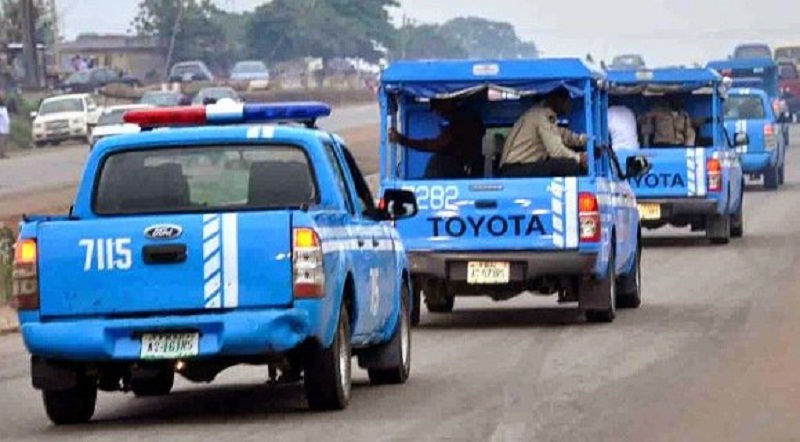
A driver identified as Mr Yusuf Baba has been directed by a High Court sitting in Abuja to pay about N3.2 million for damages caused to FRSC patrol vehicle and other impounded vehicles during his attempt to evade arrest.

A statement issued by the Corps Public Education Officer of FRSC, Mr Olusegun Ogungbemide, disclosed that the court, in its judgement on Wednesday, October 29, 2025, also found Mr Baba guilty dangerous driving, convicting and sentencing him to three months imprisonment or a fine of N50,000.

However, he was not found guilty of assaulting a marshal on duty on June 10, 2025, when the incident occurred under the Dantata Bridge in Abuja, , according to the statement.

It was disclosed that the convict was flagged down by FRSC operatives for the primary offence of overloading, but sped, lost control, and crashed into an FRSC patrol vehicle and another offender’s car, damaging the vehicles before fleeing the scene.

He was later apprehended at Major Filling Station, along CITEC Road, and promptly charged to court on two counts bothering on dangerous driving and assaulting a marshal on duty.

The court in its judgement also suspended his driver’s licence for three months and ordered full restitution for the vehicles damaged through his reckless conduct.

Reacting to the verdict, the Corps Marshal, Mr Shehu Mohammed, described the judgment as “a resounding victory for road safety, law enforcement, and the principle of accountability on Nigerian roads.”

“This judgment has once again proven that the era of impunity on our roads is over. Anyone who endangers lives, attacks law enforcement, or damages public property will face the full wrath of the law. FRSC will never back down in defending the safety and dignity of its operatives and road users.”

He commended the judiciary for its courage and the legal department of the FRSC for its steadfastness in pursuing justice, advising all motorists to obey traffic rules, respect patrol operatives, and drive responsibly, as the Corps remains relentless in its mission to safeguard lives and restore sanity on Nigerian roads.


Modupe Gbadeyanka is a fast-rising journalist with Business Post Nigeria. Her passion for journalism is amazing. She is willing to learn more with a view to becoming one of the best pen-pushers in Nigeria. Her role models are the duo of CNN's Richard Quest and Christiane Amanpour.

Click to comment

Leave a Reply

Your email address will not be published. Required fields are marked *

Auto

Court Restrains Police, FRSC from Imposing Car Insurance Fines Without Court Order

Published

on

third-party insurance

By Adedapo Adesanya

The Federal High Court in Abuja has restrained the Nigeria Police Force and the Federal Road Safety Corps (FRSC) from imposing fines on motorists for third-party motor vehicle insurance violations without a court order.

The ruling followed a suit marked FHC/ABJ/CS/291/2025 filed by activist-lawyer, Mr Deji Adeyanju, against the Inspector-General of Police, the Attorney-General of the Federation and the FRSC.

Delivering judgment on Friday, Justice Hauwa Yilwa held that while both the police and the FRSC have the power to enforce compliance with third-party motor insurance, they lack the legal authority to impose fines on alleged offenders.

The suit was initiated through an originating summons, brought pursuant to Section 17 of the Motor Vehicles (Third Party Insurance) Act, 1950, Sections 68(3) and (4) of the Insurance Act, 2003, as well as provisions of the Federal Road Safety Commission (Establishment) Act, 2007.

Mr Adeyanju had asked the court to determine whether the police could enforce third-party insurance, impose fines without judicial backing, and whether such enforcement during routine stop-and-search operations violated constitutional rights.

He also sought a declaration on whether the power to enforce third-party motor insurance lies exclusively with the FRSC.

In addition to the declaratory relief, the applicant requested orders of perpetual injunction restraining the police from enforcing third-party insurance and from imposing fines without judicial backing.

He further urged the court to hold the Attorney-General of the Federation accountable for providing legal guidance on the scope of police powers under the relevant statutes.

However, in its judgment, the court drew a distinction between enforcement and sanctioning powers.

Counsel to the applicant, Mr Marvin Omorogbe, said the court upheld the authority of both the police and the FRSC to ensure compliance with motor vehicle insurance laws, but firmly ruled against the imposition of fines by either agency.

According to him, the court held that “the police and the road safety may enforce” compliance but “outrightly lack the powers to impose fines on third parties or vehicle owners” in the course of such enforcement.

“The court went further to restrain the IGP, the Police Force and all their officers, including the FRSC, from imposing fines on motor vehicle users or Nigerian citizens,” Mr Omorogbe said.

Reacting to the judgment, Mr Adeyanju expressed satisfaction, noting that the central objective of the suit had been achieved.

“The sole reason why we came to court is that we wanted the court to make a positive declaration that the police and the road safety do not have the right to impose fines on any Nigerian over motor vehicle insurance. And we have succeeded,” he said.

He argued that the ruling would curb what he described as a pattern of extortion by enforcement agencies and restore confidence among motorists.

Mr Adeyanju added that although the court declined to grant all the reliefs sought—particularly the request to strip the police entirely of enforcement powers—it nonetheless made a significant pronouncement on the limits of those powers.

He also urged Nigerians to take advantage of the judgment to assert their rights and seek legal remedies where necessary.

On the other hand, counsel to the defendants, Mr Victor Okoye, said the judgment was only partly favourable to the police and signalled plans to challenge it at the Court of Appeal.

Mr Okoye disclosed that the defence had raised a preliminary objection questioning the jurisdiction of the court to entertain the suit, arguing that the originating summons was incompetent and unsuitable for resolving contentious issues.

He relied on appellate authorities to stress that jurisdiction is fundamental to adjudication and must be determined before any substantive issues.

Despite this, he noted, the court proceeded to deliver judgment.

Continue Reading

Auto

Pamtech Issues Public Disclaimer on Popular Auto Influencer Juliet Ibekwe

Published

on

Juliet Ibekwe Somiari Lucky

By Modupe Gbadeyanka

A public disclaimer has been issued on two former representatives of Pamtech Group, Mr Somiari Lucky and Ms Juliet Ibekwe, who is a popular auto influencer.

In the notice signed by the chief executive of Pamtech, Mr Chidomere Ndubuisi, on Tuesday, members of the public were informed that the duo no longer work with the organisation.

Mr Ndubuisi, who did not disclose why he disengaged the duo, however, emphasised that Mr Lucky and Ms Ibekwe are “not authorised to act on behalf of, represent, negotiate, or enter into any business dealings in the name of Pamtech Media Ltd or Pamtech Group.”

Ms Ibekwe rose to fame by creating content on how to make vehicles work efficiently. She became a notable auto content creator in Nigeria and garnered more fans for her car care tips.

In the disclaimer today, Pamtech warned “the general public, our valued clients, partners, and stakeholders” that doing business with Ms Ibekwe and Mr Lucky is “at their own discretion and risk, and such engagements do not involve Pamtech Group in any capacity.”

“Any business transactions, agreements, or engagements entered into with the above-mentioned individuals are strictly personal to them; Pamtech Group shall not be held liable or responsible for any commitments, representations, or obligations made by them after their exit from the company,” another part of the notice stressed.

The Owerri, Imo State-based firm further noted that, “Any use of the Pamtech name, brand, platform, or reputation by them without written authorisation is unauthorised and not recognised by the company.”

The company urged its clients, partners, and members of the public to verify all engagements directly with Pamtech Group official channels, and also ensure that all payments and communications are made only through verified company accounts and representatives.”

Pamtech expressed its commitment to delivering excellence, integrity, and professionalism across all its services in media, automobile, and business solutions.

Continue Reading

Auto

Mixed Reactions Over Nigeria’s Ban on Importation of Accidented Vehicles

Published

on

import accidented cars nigeria

By Modupe Gbadeyanka

Reactions have continued to trail the decision of the federal government to stop the importation of accidented vehicles into Nigeria by car dealers and others.

On Tuesday, the government declared that it would no longer accept the importation of vehicles without prior certification, noting that it was worried at the influx of substandard automobiles into the country.

The Minister of State for Industry, Trade, and Investment, Mr John Enoh, said the no certification, no entry policy tagged the Standard Organisation of Nigeria–National Automotive Design and Development Council Vehicle Conformity Assessment Programme was now fully implemented with immediate effect, noting that any vehicle that fails to meet the requirements would be denied entry into the country.

“I want to clarify again that this is not a proposal or a pilot. This has become government policy and takes immediate effect upon commencement,” he declared at a meeting in Abuja, stressing that vehicles coming into the nation must obtain pre-shipment certification.

“So, the endorsement integrates vehicle safety into Nigeria’s economic policy framework. It aligns fiscal instruments, foreign exchange import financing, and revenue systems with safety and standards objectives.

“It also strengthens the long-standing work of the Standard Organisation of Nigeria and NADDC within a coordinated whole-of-government approach.

“I think that with effect from the commencement of this SON-NADDC VehCAP, all new and used vehicles and automotive products entering Nigeria must obtain pre-shipment certification on that VehCAP before form M approval, before customs valuation, before power processing, before import clearance, and before market entry,” he stated.

“No vehicle or automotive product shall be imported, cleared, registered or licensed without valid certification. Any non-compliant import shall be subject to refusal of clearance, seizure, or sanctions under applicable laws,” he added.

Mr Enoh disclosed that, “We did not arrive here by accident. Too many Nigerians have died from accidents caused by vehicles that fell short of required standards. Nigeria deserves better, and this government is determined to deliver better.”

While he admitted that some Nigerians may not be able to afford new vehicles, the government cannot fold its arms and allow its citizens to die because of substandard cars.

“I think that without taking an extreme position, we must find a middle ground. There are economic challenges, there is purchasing power, and there is also the capacity of local assemblers to meet demand.

“But at the very minimum, if we adhere strictly to existing regulations, such as limits on the age of imported vehicles, our problem will not be nearly as bad as it is,” he said.

“A vehicle that is non-compliant at the federal level must not be registered at the state level. For the FCCPC, you are expected to treat VehCAP certification as a baseline for consumer protection enforcement for vehicles. State governments, because we run a federation with federal units, state governments are expected to align vehicle registration systems with VehCAP requirements. Most importantly, let me acknowledge the very profound role that was played by the Minister of Finance and Coordinating Minister of the Economy, Wale Edun, for approving the VehCAP initiative,” he warned.

While some Nigerians applaud this initiative, others believe citizens would be exploited by government officials and make the price of fairly used cars more expensive. Some dealers have been accused of bringing in accidented cars, refurbishing them and selling to unsuspecting customers at exorbitant prices.

Continue Reading

Trending