General
PenCom Reaffirms Commitment to Expanding Pension Coverage
By Adedapo Adesanya
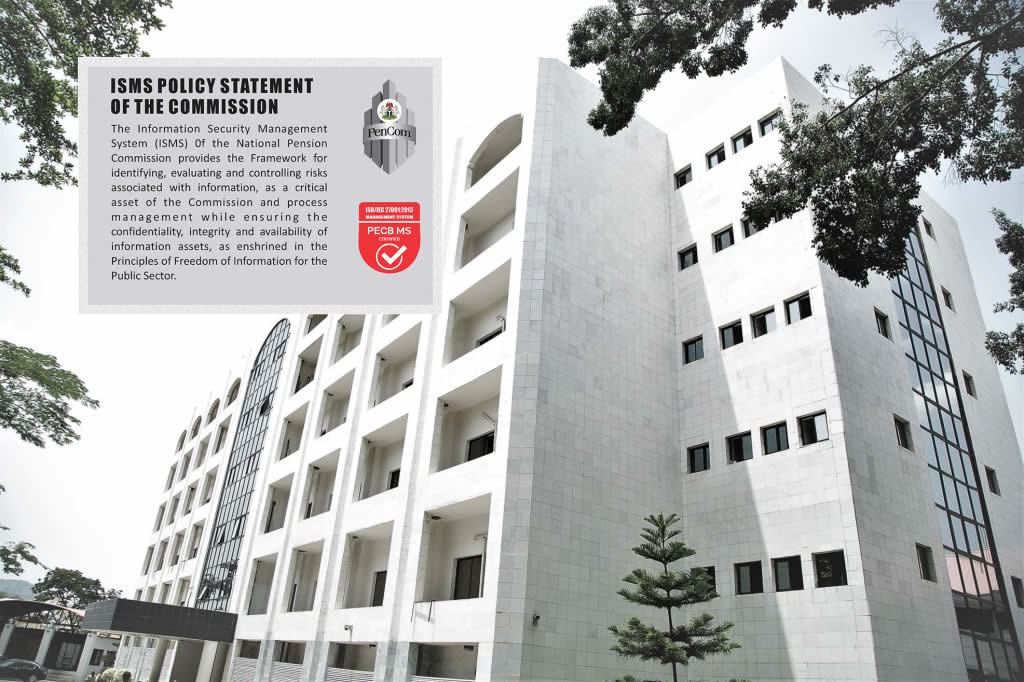
The Director-General of the National Pension Commission (PenCom), Mrs Omolola Oloworaran, has reaffirmed the organisation’s commitment to expanding pension coverage through the new Personal Pension Plan.
She made the disclosure while speaking at the annual conference of the Pension Correspondents Association of Nigeria held on Thursday in Abuja, themed, Inclusion and Innovations: Bridging the Pension Gap for Nigeria’s Informal Sector.
Represented by Head of Corporate Communications, Mr Ibrahim Buwai, she said the plan would ensure every Nigerian, whether employed or self-employed, enjoyed a secure and dignified retirement.
She noted that Nigeria’s informal workforce, estimated at up to 80 million people, remained largely uncovered under the existing pension scheme.
According to her, this gap deprives artisans, traders, freelancers, and gig workers of the benefits of structured retirement savings.
She said under-coverage meant the promise of retirement security remained a distant dream for many Nigerians.
Mrs Oloworaran said the Micro Pension Plan launched in 2019 attracted about 200,000 contributors and assets worth N1 billion.
She added that more innovative and inclusive measures were needed to expand pension participation across the country, noting that PenCom has redesigned the Micro Pension Plan into the new Personal Pension Plan under the Pension Revolution 2.0 initiative.
The PenCom DG outlined key PPP features, including broad eligibility for informal and self-employed workers and voluntary contributors in formal employment, adding that contributions would be flexible, with savers allowed to access half of each payment for urgent needs.
Mrs Oloworaran added that the plan would use mobile money, POS, USSD, and digital wallets through accredited agents and pension administrators.
She said the scheme offered transparency, with instant payment acknowledgment and real-time access to contribution statements.
Mrs Oloworaran said the plan was created to address low awareness, irregular earnings, and complex registration processes in the informal sector.
She said the new approach was expected to boost pension coverage, strengthen financial inclusion, and improve retirement security.
The PenCom chief urged journalists to support the regulator by raising awareness and simplifying the message for grassroots communities.
Acting PenOp Chief Executive, Ms Anthonia Ifeanyi-Okoro, also called for increased inclusion and innovation in the pension system.
She described pensions as a social contract that transforms long years of labour into dignity and independence in old age.
Ms Ifeanyi-Okoro said the PPP offered flexibility, simple onboarding, and digital channels tailored to informal sector realities.
She said technology, education, and trusted agents would help millions of informal workers join the pension system. She highlighted progress under the Contributory Pension Scheme introduced by the Pension Reform Act of 2004.
General
Nigeria Edges Toward State Policing Amid Rising Security Challenges
By Adedapo Adesanya
The Presidency has said Nigeria is moving closer to establishing state police, with progress made towards the constitutional framework required to decentralise policing.
The development follows months of consultations involving the Presidency, the National Assembly, and security authorities aimed at strengthening the country’s security architecture and comes amid increased security challenges across the country.
The Chief of Staff to the President, Mr Femi Gbajabiamila, disclosed this on Thursday while briefing State House correspondents after a consultative meeting on state police convened by the Presidency at the State House in Abuja.
According to a statement issued by the Special Adviser to the President on Information and Strategy, Mr Bayo Onanuga, deliberations on the proposed state police framework began several months ago following a directive from President Bola Tinubu.
“We started deliberations in the last three or four months on how to go about the establishment of state police as directed by Mr President.
“Establishing state police is not something that you do with the snap of the fingers. There is a lot involved in terms of constitution and legalities, and thank God, we have now gained a lot of traction.
“Hopefully, the amendment will come shortly, and the details of the amendment will come after that,” he was quoted as saying.
The president’s chief of staff explained that the immediate priority is securing constitutional amendments, while enabling legislation would follow.
“Right now, what we are looking at is the constitutional amendment itself, and then the enabling law would follow thereafter. That is what we have been deliberating on in the last couple of hours,” he added.
Mr Gbajabiamila noted that there is now broad national support for the initiative, saying the debate has shifted from whether state police should be established to determining the most effective legal and institutional framework for its operation.
He added that Tinubu, a long-time advocate of state police, would receive a comprehensive report on the outcome of the consultations.
Thursday’s meeting was attended by Deputy Senate President Mr Jibrin Barau, Deputy Speaker of the House of Representatives, Mr Benjamin Kalu, Inspector-General of Police, Mr Tunji Disu and other senior government officials.
The latest meeting forms part of ongoing efforts by the federal government to develop a workable framework for state police, which proponents argue would improve internal security, strengthen intelligence gathering at the grassroots level, and enhance the ability of state governments to respond to emerging security threats.
Nigeria’s policing system is currently controlled by the federal government through the Nigeria Police Force. However, growing security challenges have intensified calls for a decentralised policing structure.
The renewed push for state police also comes amid growing concerns over insecurity and mass kidnappings across parts of the country.
Among recent incidents was the May 15 attack on three schools in Oriire Local Government Area of Oyo State, where 39 pupils and seven teachers were abducted. The incident triggered widespread outrage, protests, and an indefinite strike by teachers in the state.
General
AFC Mobilises $2bn From Global Lenders for African Infrastructure Projects
By Adedapo Adesanya
The Africa Finance Corporation (AFC) has raised $2 billion via a syndicated loan, with considerable participation from Asian and European banks seeking to capitalise on growing demand for infrastructure projects across the continent.
Barclays Bank, Commerzbank, First Abu Dhabi Bank PJSC, and FirstRand Bank led the debt facility. Other participating lenders include Export-Import Bank of India, Bank of Communications, Industrial and Commercial Bank of China, and Industrial Bank of Korea, among others.
Each region accounted for about 35 per cent of the creditors, according to a statement by AFC.
AFC chief executive, Mr Samaila Zubairu, said the money would enable more master planning around infrastructure and industrial planning for economies, regions and economic corridors across the continent.
According to Mr Zubairu, the lender is also in discussions to invest in a proposed oil refinery to be built by billionaire Aliko Dangote in East Africa.
The financer initially sought $1.6 billion via the facility but scaled it up to $2 billion amid strong demand from Asian financial institutions.
“In this round, we saw a lot more of Asian banks. We have banks from China, Hong Kong, and Korea. They are a lot more engaged,” he said.
Mr Zubairu said the loan underscored AFC’s strong track record, pointing to its financing for projects including Nigeria’s 650,000 barrels per day Dangote oil refinery and Africa’s largest copper smelter in the Democratic Republic of Congo.
“There’s a lot more confidence, a lot more partners,” Mr Zubairu said of those participating in the loan. “We are constantly demonstrating that Africa is executing. Africa is building.”
“The capital that we raise goes into African infrastructure build out, African industrialisation build up – essentially creating jobs for Africans,” Mr Zubairu said.
The AFC chief said the lender is also working to reform capital rules and create structures that will allow more African money to stay on the continent and be invested in crucial infrastructure projects.
AFC, founded in 2007, has assets surpassing $19 billion and counts 48 African countries as members.
In January, the infrastructure-focused multilateral lender secured an A rating from S&P. It has an A3 rating from Moody’s, an AAAspc rating from S&P Ratings (China) and an A+ rating from the Japan Credit Rating Agency.
General
NERC Orders DisCos to Pay 20% Compensation to Affected Band A Customers
By Adedapo Adesanya
The Nigerian Electricity Regulatory Commission (NERC) has ordered electricity distribution companies (DisCos) to pay 20 per cent compensation to eligible Band A customers who were affected by power shortfalls between February and March 2026.
In Directive No. NERC/2026/002, the commission said, generation constraints, which were largely caused by inadequate gas supply and vandalism of gas and transmission infrastructure, prevented DisCos from meeting committed service levels for some Band A feeders.
NERC Mandated that for feeders that supplied less than 18 hours per day, affected Band A feeders will not be downgraded during the covered period, and eligible customers will receive special compensation equal to 20 per cent of approved energy figures for February 2026.
However, for Band A feeders that recorded an average daily supply of between 18 and 20 hours, the existing compensation framework under Addendum No. NERC/2024/003 applies to both Maximum Demand (MD) and Non-Maximum Demand (Non-MD) customers.
MD customers are high-consumption users who typically have their own dedicated transformer and operate with a load of 45 kVA and above; they include large residential estates, banks, hotels, supermarkets, industrial facilities and oil and gas complexes.
Non-MD customers do not have a dedicated transformer and instead share public transformers, and they generally consume less, often below 45–50 kVA.
For Non-MD customers, compensation is set at 20 per cent of the approved February 2026 energy cap applicable to the affected feeder.
For MD customers, compensation is 20 per cent of the average energy billed per MD customer in February 2026.
According to NERC, prepaid customers will receive their compensation as token credits, while postpaid customers will receive bill adjustments.
The commission said that compensation for February must be completed by 31 May 2026, while compensation for March must be completed by 30 June 2026.
The commission prohibited Distribution companies from using compensation credits to offset any existing customer debt, adding that customers must be clearly informed of the value and period of the compensation they receive.
NERC said it will monitor implementation and verify compliance to ensure all eligible customers receive what they are due.
The commission reaffirmed its commitment to protecting electricity consumers while ensuring the stability and sustainability of the electricity market.
-
Feature/OPED6 years agoDavos was Different this year
-
Travel/Tourism10 years ago
Lagos Seals Western Lodge Hotel In Ikorodu
-
Showbiz3 years agoEstranged Lover Releases Videos of Empress Njamah Bathing
-
Banking8 years agoSort Codes of GTBank Branches in Nigeria
-
Economy3 years agoSubsidy Removal: CNG at N130 Per Litre Cheaper Than Petrol—IPMAN
-
Banking3 years agoSort Codes of UBA Branches in Nigeria
-
Banking3 years agoFirst Bank Announces Planned Downtime
-
Sports3 years agoHighest Paid Nigerian Footballer – How Much Do Nigerian Footballers Earn