Connect with us

Economy

FG Prohibits Cash Transactions at MDAs, Adopts Electronic Payments

Published

on

cashless transactions

By Adedapo Adesanya

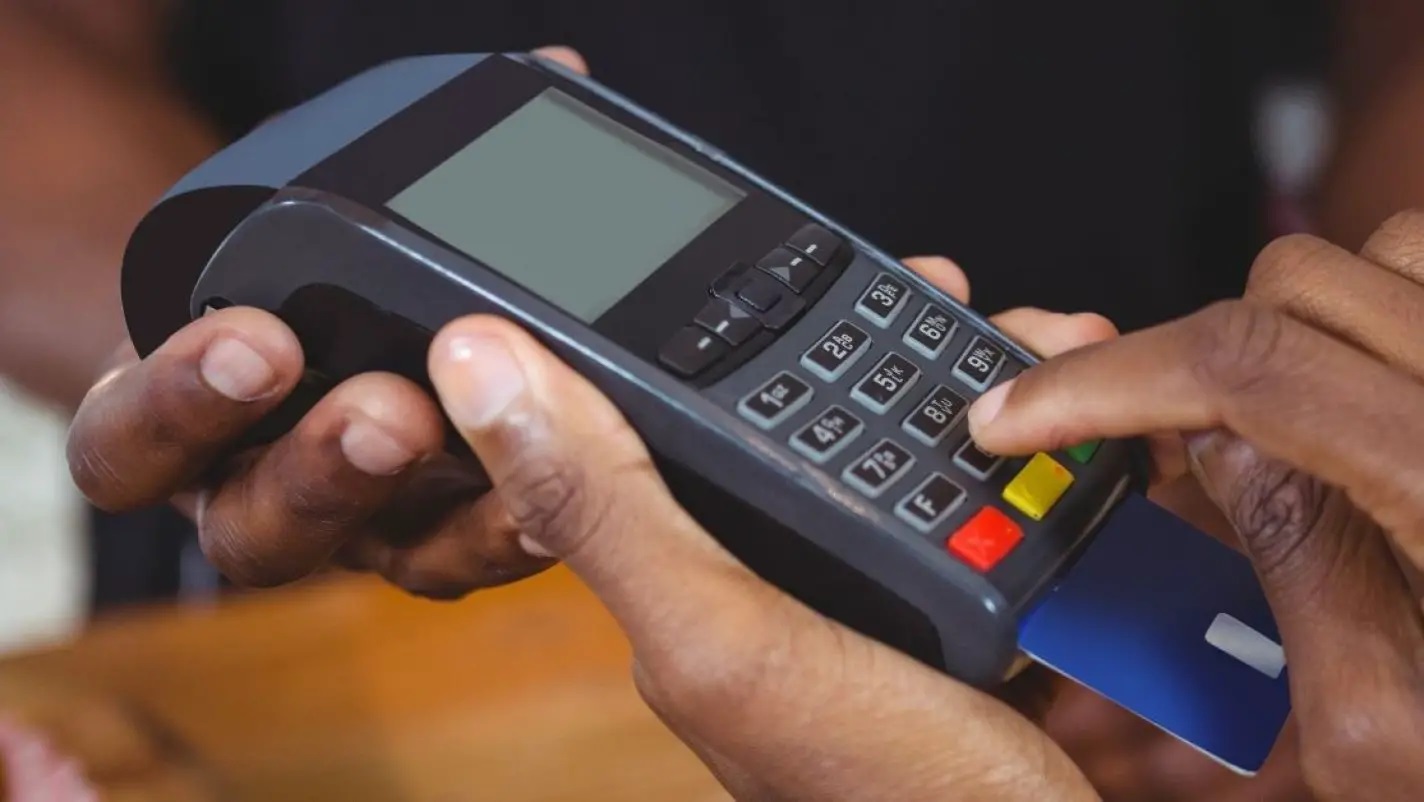
The federal government has banned the use of physical cash for revenue payments and directed all Ministries, Departments, and Agencies (MDAs) to deploy Point of Sale (PoS) terminals within 45 days, as part of a sweeping shift toward full electronic revenue collection.

The directive was contained in four separate treasury circulars issued by the Office of the Accountant-General of the Federation (OAGF) late last month.

In the documents, the Accountant-General, Mr Shamseldeen Ogunjimi, ordered that all payments to the federal government must now be made electronically and routed through platforms approved by the treasury.

According to the first circular, dated November 24, 2025, the government expressed concern over the persistent acceptance of physical cash at MDA revenue points, noting that it contradicts existing policies on e-payment and the Treasury Single Account (TSA). It warned that continued cash collection undermines the integrity of federal electronic payment systems.

The OAGF therefore prohibited the receipt of cash “in Naira or any other currency” for government revenues and mandated MDAs to immediately sensitise staff and the public. Revenue points are to display notices such as “NO PHYSICAL CASH RECEIPT” and “NO CASH PAYMENT.”

It added that MDAs still collecting cash must install functional POS machines or other approved electronic tools within 45 days, with accounting officers held accountable for breaches.

A second circular, dated November 25, 2025, addressed the Treasury’s concern over widespread unauthorised deductions carried out through customised MDA payment platforms. It noted that some MDAs were using front-end applications linked to Payment Solution Service Providers (PSSPs) that deducted charges before remitting balances to the TSA. The OAGF said this has resulted in significant revenue leakages.

The circular ordered MDAs to stop all direct deductions at source and remit revenues in full to designated TSA or Sub-TSA accounts. Any service-related fees must be paid directly by the Treasury rather than through automated deductions.

It also directed that all MDA portals and PSSPs be regularised with the OAGF by December 31, 2025, warning that non-compliance could lead to suspension from GIFMIS and TSA access.

A third circular, issued on November 26, 2025, announced the introduction of a unified Federal Treasury e-Receipt (FTe-R), which will serve as the only valid proof of payment for federal transactions from January 1, 2026. The receipt will be issued via the Revenue Optimisation platform and delivered electronically through channels selected by each MDA.

The fourth circular, dated November 27, 2025, outlined guidelines for the rollout of the new Revenue Optimisation (RevOP) platform, which the government has adopted as the central system for automating billing, reconciliation, and monitoring of MDA accounts.

The platform will integrate with TSA, GIFMIS, the Central Bank of Nigeria, NIBSS, FIRS, and collecting banks, ensuring real-time visibility over government revenues.

MDAs are required to nominate three officers as RevOP focal persons within seven working days, integrate their existing financial systems, and ensure that only CBN-licensed and NITDA-recommended PSSPs approved by the OAGF are used. All PSSPs currently engaged by MDAs must connect to RevOP for immediate harmonisation of federal collections. The Treasury also directed MDAs to submit details of all local and foreign currency accounts within 60 days.

These reforms represent some of the most significant changes to federal revenue administration since the introduction of the TSA. Earlier in March 2025, The PUNCH reported the launch of the Treasury Management & Revenue Assurance System, aimed at streamlining federal revenue and payment processes. The system’s first phase covers naira-denominated transactions, while the second phase—scheduled for June 1, 2025—will expand to foreign currency transactions and integration with MDA enterprise resource platforms.

The Treasury maintained that the new measures are designed to strengthen transparency, curb leakages, and modernise Nigeria’s public financial management framework.


Adedapo Adesanya is a journalist, polymath, and connoisseur of everything art. When he is not writing, he has his nose buried in one of the many books or articles he has bookmarked or simply listening to good music with a bottle of beer or wine. He supports the greatest club in the world, Manchester United F.C.

Click to comment

Leave a Reply

Your email address will not be published. Required fields are marked *

Economy

Lafarge Africa to Rebrand as HBM Nigeria After Huaxin Takeover

Published

on

Lafarge Africa

By Adedapo Adesanya

Lafarge Africa Plc will change its corporate name to HBM Nigeria Plc, reflecting new majority ownership by China’s Huaxin Cement Co., subject to approval by shareholders of the 67-year old cement maker.

The company will ask shareholders to approve the change of its corporate identity to HBM Nigeria Plc at its 67th Annual General Meeting scheduled for April 30, 2026, in Lagos.

The proposed name change is part of a broader AGM agenda that also includes financial reporting, dividend approval, and board restructuring.

The rebrand marks a new chapter following Holcim’s exit and signals Huaxin’s intent to deepen its footprint in Nigeria’s construction materials sector.

The company highlighted the proposed name change as a key special resolution requiring shareholder approval at the meeting. Management noted that the amendment will formally alter Clause 1 of its Memorandum of Association, redefining its legal identity.

Lafarge Africa Plc reported strong financial performance for the 2025 financial year, underscoring the backdrop to its proposed strategic shift. The company recorded significant growth across key financial metrics.

Revenue rose to N1.1 trillion in 2025, up 53 per cent from N696.8 billion in 2024. Profit after tax increased from N100.1 billion to N273 billion, representing a 173 per cent growth. Operating profit climbed from N193 billion to N392 billion, driven by cost optimisation and operational efficiency.

Earnings per share surged from N6.22 to N17, reflecting improved profitability. The company has proposed a final dividend of N6.00 per share, subject to shareholder approval and applicable withholding tax.

Huaxin Cement acquired a controlling 83.81 per cent stake in Lafarge Africa Plc from the Holcim Group for roughly $1 billion. The deal, finalised in late 2025, marks Holcim’s complete exit from Nigeria to focus on other markets, with Huaxin aimed at expanding its footprint in Africa.

The chairman of Lafarge Africa, Mr Gbenga Oyebode, said Nigeria’s market holds vast potential with its positive growth indices, increasing urbanisation, and infrastructure demand.

“This development will further solidify Lafarge Africa’s position as a leading contributor to Nigeria’s infrastructure and economic growth. Nigeria’s market holds vast potential with its positive growth indices, increasing urbanisation, and infrastructure demand. We remain committed to leveraging these opportunities while maintaining our focus on sustainability and innovation.”

Lafarge expanded into Nigeria in 2001 through the acquisition of Blue Circle, thereby taking over its stake in West African Portland Cement Company (WAPCO), later rebranding it as Lafarge Cement WAPCO Plc and significantly increasing production capacity with new plants and infrastructure in Ogun State.

Continue Reading

Economy

Naira Trades N1,356/$ at Official Market, N1,385/$1 at Parallel Market

Published

on

yuan-naira $10bn

By Adedapo Adesanya

The Naira extended its gain on the Dollar in the Nigerian Autonomous Foreign Exchange Market (NAFEX) on Friday, April 10, by 0.18 per cent or N2.43 to trade at N1,356.89/$1 compared with the previous day’s N1,359.32/$1.

It also improved its value against the Pound Sterling in the same market window by N16.01 to close at N1,828.82/£1 versus N1,844.83/£1, but lost N3.40 against the Euro to sell at N1,592.58/€1 versus N1,589.18/€1.

In the parallel market, the Nigerian Naira further appreciated against the Dollar during the session by N5 to settle at N1,385/$1 compared with the previous day’s rate of N1,390/$1.

With the FX market operating with greater liquidity and efficiency, market participants now transact without extraordinary interventions from the Central Bank of Nigeria (CBN).

However, external reserves fell for 16 straight days through April 8, the longest declining run since July 2025. The central bank’s foreign exchange holdings declined by $1.1 billion in the period to $48.94 billion, the lowest level since February 19, the lender’s data show.

After initially weakening, as the Iran war broke out, the Nigerian currency has recovered losses and is one of only four of 23 African currencies still standing in the period.

The CBN had pledged to stabilise the Naira and has boosted sales of high-yield short-term debt to attract inflows of Dollars.

As for the cryptocurrency market, Bitcoin (BTC) and other major cryptocurrencies fell after US Vice President J.D. Vance announced that the country and Iranian negotiators had failed to agree to an extended ceasefire. BTC lost 1.9 per cent to sell at $71,549.08.

The parties met in Pakistan on Saturday to negotiate an agreement after the US’s nearly six-week-long campaign against Iran. VP Vance said at a press conference afterwards that the US had “not reached an agreement.”

Cardano (ADA) fell 4.3 per cent to $0.2398, Solana (SOL) depreciated by 2.7 per cent to $82.22, Binance Coin (BNB) slumped 2.2 per cent to $593.61, Dogecoin (DOGE) went down by 1.9 per cent to $0.0912, Ethereum (ETH) weakened by 1.4 per cent to $2,214.56, and Ripple (XRP) crashed by 1.3 per cent to $1.33.

However, TRON (TRX) appreciated by 0.9 per cent to $0.3217, while the US Dollar Tether (USDT) and the US Dollar Coin (USDC) closed flat at $1.00 each.

Continue Reading

Economy

New Deadline for Filing Annual Income Tax Now April 21—LIRS

Published

on

company Income Tax

By Modupe Gbadeyanka

The deadline for filing individual annual income tax returns for residents of Lagos State has again been extended to April 21, 2026.

This information was revealed via a statement signed by the Head of Corporate Communications of the Lagos State Internal Revenue Service (LIRS), Mrs Monsurat Amasa-Oyelude, on Saturday.

The agency thanked some taxpayers for their continued compliance and commitment to the filing of their individual annual income tax returns, but charged those who have yet to file theirs to do so before the new deadline.

LIRS had earlier moved the deadline from its statutory period of March 31, 2026, to April 14, 2026, but due to “the overwhelming response and to enhance taxpayer convenience, while maintaining the integrity and accuracy of submissions,” the date was moved forward to April 26.

The tax-collecting organisation said it “observed a significant increase in traffic on its eTax platform as more taxpayers endeavour to meet the filing deadline.”

“In view of this development, and to ensure that all taxpayers are provided with adequate opportunity to successfully complete their filings, LIRS hereby announces a further extension of the deadline, now set for April 21, 2026,” it stated.

The agency reiterated that all filings must be completed electronically via the LIRS eTax platform: https://etax.lirs.net, which remains the only approved channel for submission.

Taxpayers were reminded that the filing of annual income tax returns remains a statutory obligation and were encouraged to take advantage of this final extension to fulfil their civic responsibility.

Continue Reading

Trending