Economy
FG Prohibits Cash Transactions at MDAs, Adopts Electronic Payments
By Adedapo Adesanya
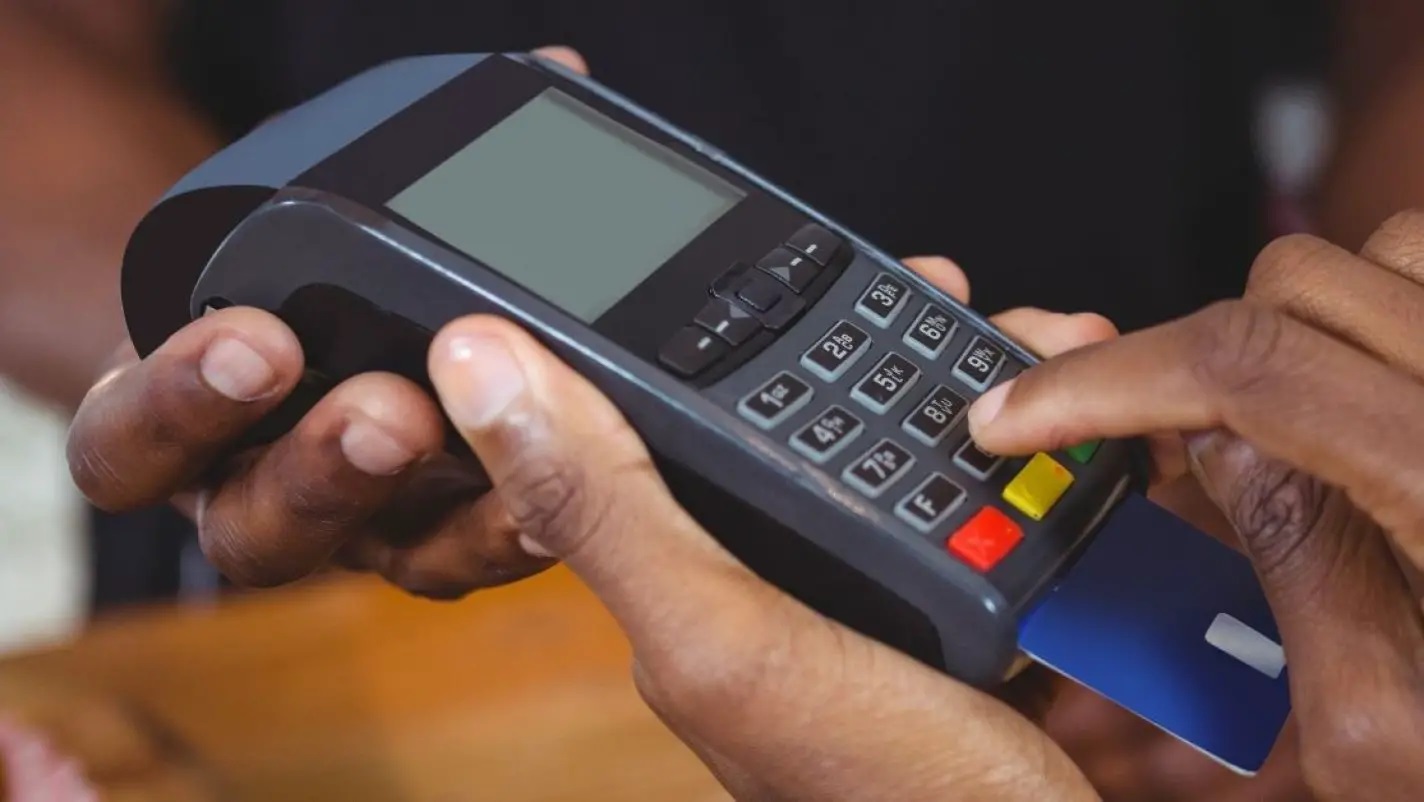
The federal government has banned the use of physical cash for revenue payments and directed all Ministries, Departments, and Agencies (MDAs) to deploy Point of Sale (PoS) terminals within 45 days, as part of a sweeping shift toward full electronic revenue collection.
The directive was contained in four separate treasury circulars issued by the Office of the Accountant-General of the Federation (OAGF) late last month.
In the documents, the Accountant-General, Mr Shamseldeen Ogunjimi, ordered that all payments to the federal government must now be made electronically and routed through platforms approved by the treasury.
According to the first circular, dated November 24, 2025, the government expressed concern over the persistent acceptance of physical cash at MDA revenue points, noting that it contradicts existing policies on e-payment and the Treasury Single Account (TSA). It warned that continued cash collection undermines the integrity of federal electronic payment systems.
The OAGF therefore prohibited the receipt of cash “in Naira or any other currency” for government revenues and mandated MDAs to immediately sensitise staff and the public. Revenue points are to display notices such as “NO PHYSICAL CASH RECEIPT” and “NO CASH PAYMENT.”
It added that MDAs still collecting cash must install functional POS machines or other approved electronic tools within 45 days, with accounting officers held accountable for breaches.
A second circular, dated November 25, 2025, addressed the Treasury’s concern over widespread unauthorised deductions carried out through customised MDA payment platforms. It noted that some MDAs were using front-end applications linked to Payment Solution Service Providers (PSSPs) that deducted charges before remitting balances to the TSA. The OAGF said this has resulted in significant revenue leakages.
The circular ordered MDAs to stop all direct deductions at source and remit revenues in full to designated TSA or Sub-TSA accounts. Any service-related fees must be paid directly by the Treasury rather than through automated deductions.
It also directed that all MDA portals and PSSPs be regularised with the OAGF by December 31, 2025, warning that non-compliance could lead to suspension from GIFMIS and TSA access.
A third circular, issued on November 26, 2025, announced the introduction of a unified Federal Treasury e-Receipt (FTe-R), which will serve as the only valid proof of payment for federal transactions from January 1, 2026. The receipt will be issued via the Revenue Optimisation platform and delivered electronically through channels selected by each MDA.
The fourth circular, dated November 27, 2025, outlined guidelines for the rollout of the new Revenue Optimisation (RevOP) platform, which the government has adopted as the central system for automating billing, reconciliation, and monitoring of MDA accounts.
The platform will integrate with TSA, GIFMIS, the Central Bank of Nigeria, NIBSS, FIRS, and collecting banks, ensuring real-time visibility over government revenues.
MDAs are required to nominate three officers as RevOP focal persons within seven working days, integrate their existing financial systems, and ensure that only CBN-licensed and NITDA-recommended PSSPs approved by the OAGF are used. All PSSPs currently engaged by MDAs must connect to RevOP for immediate harmonisation of federal collections. The Treasury also directed MDAs to submit details of all local and foreign currency accounts within 60 days.
These reforms represent some of the most significant changes to federal revenue administration since the introduction of the TSA. Earlier in March 2025, The PUNCH reported the launch of the Treasury Management & Revenue Assurance System, aimed at streamlining federal revenue and payment processes. The system’s first phase covers naira-denominated transactions, while the second phase—scheduled for June 1, 2025—will expand to foreign currency transactions and integration with MDA enterprise resource platforms.
The Treasury maintained that the new measures are designed to strengthen transparency, curb leakages, and modernise Nigeria’s public financial management framework.
Economy
Unlisted Securities Index Rises 0.91%
By Adedapo Adesanya
A 0.91 per cent growth was recorded by the NASD Over-the-Counter (OTC) Securities Exchange on Friday, May 22, after the share prices of four securities ended in green.
According to data, FrieslandCampina Wamco Plc went up by N15.61 to N179.67 per share from N164.06 per share, Newrest Asl Plc grew by N6.11 to N67.26 per unit from N61.15 per unit, Food Concepts Plc appreciated by 17 Kobo to N2.75 per share from N2.58 per share, and Nitrox Industrial Gases Plc added 6 Kobo to sell at N25.50 per unit compared with the previous day’s N25.44 per unit.
At the close of business, the market capitalisation chalked up N23.22 billion to settle at N2.561 trillion versus Thursday’s N2.538 trillion, and the NASD Unlisted Security Index (NSI) increased by 38.81 points to 4,281.28 points from 4,242.47 points.
During the session, the price of Central Securities and Clearing System (CSCS) Plc was down by N3.13 to N71.07 per share from N74.20 per share.
The activity chart showed that the volume of securities transacted by the market participants decreased yesterday by 81.6 per cent to 590,339 units from the 3.2 million units recorded on Thursday, as the number of deals shrank by 28.6 per cent to 30 deals from the 42 deals recorded a day earlier, while the value of securities increased by 0.5 per cent to N95.3 million from the preceding session’s N94.8 million.
Great Nigeria Insurance (GNI) Plc closed the day as the most active stock by value on a year-to-date basis, with a turnover of 3.4 billion units worth N8.4 billion, followed by Infrastructure Credit Guarantee (Infracredit) Plc with 2.3 billion units sold for N6.5 billion, and CSCS Plc with 61.2 million units traded for N4.1 billion.
The most active stock by volume on a year-to-date basis was GNI Plc, with the sale of 3.4 billion units for N8.4 billion, followed by Infracredit Plc with 2.3 billion units valued at N6.5 billion, and Resourcery Plc with 1.1 billion units exchanged for N415.7 million.
Economy
Stock Investors Gain N344bn amid Decline in Transactions
By Dipo Olowookere
The Nigerian Exchange witnessed a decline in transactions on Friday despite closing higher by 0.22 per cent on the back of sustained bargain-hunting.
During the last trading session of the week, investors transacted 711.9 million equities valued at N29.1 billion in 62,386 deals compared with the 1.1 billion equities worth N31.0 billion traded in 62,448 deals in the previous day, indicating a decline in the trading volume, value, and number of deals by 35.28 per cent, 6.13 per cent, and 0.10 per cent, respectively.
Fidelity Bank closed the day as the most active stock with the sale of 198.1 million units for N4.6 billion, Access Holdings traded 69.7 million units worth N1.8 billion, Mutual Benefits exchanged 42.7 million units valued at N197.4 million, Japaul transacted 33.9 million units worth N134.4 million, and Zenith Bank sold 24.4 million units valued at N3.2 billion.
Yesterday, the industrial goods index rose by 0.53 per cent, the consumer goods sector jumped 0.28 per cent, the banking industry improved by 0.25 per cent, and the energy counter soared by 0.18 per cent, while the insurance space shed 0.18 per cent.
At the close of business, the All-Share Index (ASI) gained 536.98 points to finish at 249,712.37 points compared with the previous day’s 249,175.39 points, and the market capitalisation grew by N344 billion to N160.077 trillion from N159.733 trillion.
Aluminium Extrusion and DAAR Communications expanded by 10.00 per cent each to sell for N9.90 and N2.09, respectively, RT Briscoe surged by 9.93 per cent to N14.06, Learn Africa increased by 9.79 per cent to N12.90, and Red Star Express advanced by 9.56 per cent to N34.95.
On the flip side, Trans-Nationwide Express depreciated by 9.92 per cent to N5.72, Livestock Feeds dipped by 9.64 per cent to N8.90, The Initiates crashed by 8.65 per cent to N33.80, Ellah Lakes drowned by 8.64 per cent to N10.05, and Neimeth lost 6.36 per cent to trade at N10.30.
Economy
Naira Slips by N3.15 Against Dollar to Trade N1,375/$1 at Official Market
By Adedapo Adesanya
The Naira weakened against the United States Dollar by N3.15 or 0.23 per cent to N1,375.46/$1 from N1,372.31/$1 in the Nigerian Autonomous Foreign Exchange Market (NAFEX) on Friday, May 22.
It was also a similar situation for the domestic currency against the Pound Sterling in the official market yesterday, as it lost N9.46 to sell for N1,849.72/£1 compared with the preceding session’s N1,840.26/£1, and against the Euro, it depreciated by N6.26 to close at N1,597.04/€1, in contrast to Thursday’s exchange rate of N1,590.78/€1.
At the GTBank FX desk, the Nigerian Naira tumbled against the Dollar during the session by N2 to trade at N1,381/$1 versus the previous day’s N1,379/$1, and at the parallel market, it remained unchanged at N1,390/$1.
Analysts at Cowry Asset Management Limited, in their weekly financial outlook, have projected the Naira will remain under soft pressure in near term due to continuous FX demand.
“Looking ahead, the Naira may remain under mild pressure in the near term due to persistent FX demand, though rising external reserves could help cushion volatility,” they noted.
Meanwhile, the Central Bank of Nigeria (CBN) this week reiterated that it would continue with its current policy direction to sustain the fight against inflation and stabilise the exchange rate.
This comes as the FX market has changed significantly under the ongoing reforms introduced by the apex bank, with increased market liquidity reducing the need for heavy intervention by the CBN. Its intervention currently accounts for only about 1.2 to 1.3 per cent of total market turnover in 2025, a development he said reflects the growing strength of the market.
Turnover has risen sharply from about $100 million in 2023 to roughly $550 million presently, with transactions occasionally climbing to as high as $1 billion in a single day.
A look at the cryptocurrency market showed that it was down on Friday as Mr Kevin Warsh was sworn in by President Donald Trump as the chairman of the US Federal Reserve, replacing Mr Jerome Powell, who will continue as a governor in the US central bank.
The appointment was made in the hope that he would lead the central bank to cut interest rates, but the Iran war has sent oil prices soaring and re-ignited what had been cooling inflation.
Ethereum (ETH) depreciated by 5.5 per cent to $2,010.90, Dogecoin (DOGE) lost 5.2 per cent to trade at $0.1001, Cardano (ADA) fell by 5.0 per cent to $0.2389, Solana (SOL) slipped by 4.9 per cent to $82.69, and Bitcoin (BTC) slid by 3.3 per cent to $74,950.02.
Further, Ripple (XRP) went down by 2.9 per cent to $1.32, Binance Coin (BNB) declined by 2.6 per cent to $641.61, and TRON (TRX) shrank by 1.2 per cent to $0.3606, while the US Dollar Tether (USDT) and the US Dollar Coin (USDC) remained unchanged at $1.00 each.
-
Feature/OPED6 years agoDavos was Different this year
-
Travel/Tourism10 years ago
Lagos Seals Western Lodge Hotel In Ikorodu
-
Showbiz3 years agoEstranged Lover Releases Videos of Empress Njamah Bathing
-
Banking8 years agoSort Codes of GTBank Branches in Nigeria
-
Economy3 years agoSubsidy Removal: CNG at N130 Per Litre Cheaper Than Petrol—IPMAN
-
Banking3 years agoSort Codes of UBA Branches in Nigeria
-
Banking3 years agoFirst Bank Announces Planned Downtime
-
Sports3 years agoHighest Paid Nigerian Footballer – How Much Do Nigerian Footballers Earn