Feature/OPED
Access Bank and the Rebirth of the National Theatre: Revitalising Nigeria’s Cultural Future
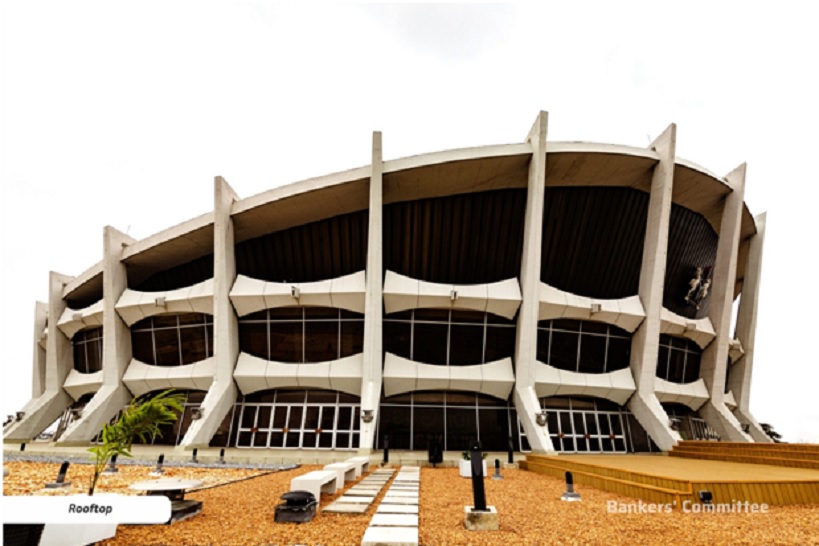
When the National Theatre Lagos first opened ahead of FESTAC ’77, an architectural marvel,a symbol of the cultural soul of a nation ready to introduce its artistic brilliance to the world. Modelled after the Varna Palace of Culture and Sports in Bulgaria and constructed between 1973 and 1976, the National Theatre was designed as an emblem of Nigeria’s ambition to be Africa’s cultural capital. Its 5,000-seat main hall, festival arena, exhibition spaces, and state-of-the-art acoustics made it one of the most sophisticated performance complexes on the continent.
Throughout the 1970s and 1980s, the Theatre became home to Nigeria’s most iconic productions, from Hubert Ogunde’s epic plays to international dance festivals, orchestral performances, film premieres, and global conferences. It was a beacon for African creativity, a place where culture, identity, music, and storytelling came alive. But by the early 2000s, the Theatre, though heavy with cultural memory, had fallen into disrepair. Years of inadequate maintenance, stalled concession agreements, and structural depreciation left the building struggling to meet modern technical and creative demands. The symbol of national pride had become a shadow of its past promise.
Recognising the scale of cultural loss and the opportunity embedded within it, the Bankers’ Committee, with Access Bank playing a pivotal role, initiated the largest cultural infrastructure revitalisation project in contemporary Nigeria. The decision was both strategic and patriotic: Nigeria’s creative industry, now contributing significantly to GDP through film, fashion, music, design, cultural tourism, and digital content, urgently needed a modern, centralised hub that could support global-standard production and creative entrepreneurship. Reviving the National Theatre would not only restore a national icon but also stimulate job creation, attract international collaborations, and reposition Lagos as a premier African creative economy hub.
The renewal of the National Theatre is therefore more than a restoration project; it is anecessary economic intervention, a cultural renaissance, and a visionary step toward building a more inclusive and future-ready Nigeria. And for Access Bank, supporting this transformation is a natural continuation of a long, deliberate commitment to art, culture, and creative empowerment.
Access Bank’s Legacy of Championing the Creative Economy
Well before Nigeria’s creative industry gained global recognition, Access Bank had positioned itself as a cultural investor and ecosystem builder. For over a decade, the Bank has supported transformational initiatives across music, visual arts, fashion, film, sustainability, and youth development.
Access Bank has helped spotlight emerging and established African artists on a global stage through partnerships and collaborations with platforms like ART X. The annual fair, now one of Africa’s most influential contemporary art events, has benefitted immensely from the Bank’s commitment to nurturing young talent, commissioning bold projects, and providing a meeting point for creators, collectors, and global art enthusiasts.
In film and entertainment, Access Bank has backed festivals, documentaries, youth-focused storytelling, and creative incubators, recognising that Nigeria’s cultural exports are among its most powerful global assets. Across literature, community theatre, design, and public art, the Access brand remains synonymous with innovation, creativity, and cultural elevation. The revival of the National Theatre is thus an extension of this commitment.
A Cultural Renaissance Rooted in National Development
The National Theatre project is designed as a two-phase undertaking. Phase One, already significantly advanced, focuses on restoring the original theatre structure. This includes upgrading the main stage, cinema halls, exhibition spaces, lighting systems, acoustics, seating, ventilation, and accessibility infrastructure. The goal is to return the iconic building to world-class functionality while preserving its historic architecture.
Phase Two introduces a modern Creative Industries Park, a multi-purpose development designed to house film production studios, music recording labs, fashion houses, IT and gaming centers, photography studios, coworking spaces, and training academies. This innovation hub is expected to host thousands of young creators annually, enabling them to produce, learn, collaborate, and scale ideas into globally competitive businesses.
With Access Bank’s involvement through the Bankers’ Committee, the project has attracted international partnerships, institutional investors, technical specialists, and creative collaborators. It is poised to become one of the most significant cultural and economic catalysts in West Africa.
In a world where creative exports have become a major source of national influence, from Nollywood films to Afrobeats, digital arts to global fashion, infrastructure is destiny. Nigeria’s young creators generate some of the world’s most consumed cultural content, yet the ecosystem has lacked the physical and institutional support systems needed to harness that potential fully.
The revitalised National Theatre is therefore a launchpad for Nigeria’s next creative era.
With Access Bank’s long-standing commitment to empowering Africa’s creative industries, the revival blends heritage with innovation, history with ambition, and art with economic development.
From art fairs to creative hubs, sustainability initiatives to youth empowerment, Access Bank continues to champion platforms that inspire, educate, and elevate communities across the country.
By supporting the transformation of the National Theatre, the Bank has once again placed itself at the heart of Nigeria’s cultural renewal, bridging past and future, preserving heritage, and building an ecosystem where creativity can thrive without limits.
Feature/OPED
Nigeria 2025: Successful NUGA, No Fuel Queues and Some Good Things
By Prince Charles Dickson, Ph.D.
We once woke up to a brand-new Toyota Camry in our estate; the type they called Muscle. It belonged to the chairman of our residents’ association, a policeman posted to Bwari Area Council. Everyone knew his salary could not muscle that muscle. From that morning, murmurs replaced greetings. It was not envy; it was arithmetic.
Our transformer was dying. AEDC ignored us with the indifference of only perfect monopolies. We agreed to tax ourselves. N5 million for a replacement in 2017. To “simplify,” we paid directly to the chairman. While contributions trickled in, the chairman’s car announced itself daily; bass turned up, windows down, confidence loud. Two weeks later, when we asked for an update, he said nearly ₦3 million had been forwarded to the seller. Someone called the seller on speaker. He had received nothing.
Chaos followed. Then a young man—barely 21—raised his hand. He asked one question: How did you decide who should keep the community’s money? Why a police officer? We chased him out for rudeness. After all, not all policemen steal. True. But sometimes, a question is less about accusing a profession and more about interrogating a system.
Nigeria in 2025 felt like that meeting. Loud, contradictory, uncomfortable and oddly revealing.
It is 2025. Against a backdrop of insecurity that tried to become our national anthem, some things went right. In the city of Jos, at the University of Jos, the Nigerian Universities Games (NUGA) was hosted with over ninety universities participating. For Nigeria, that alone is news. For Jos, often reduced to headlines of grief, it was a statement. No kidnappings. No mass casualties. No “unfortunate incidents.” Kudos to the Vice-Chancellor and a team that chose competence over theatrics. When institutions work, miracles become boring.
Food prices came down too, almost a first in recent memory. Tomatoes softened. Rice exhaled. Pepper behaved. And yet, purchasing power also dropped. Cheap food, no money. The stalls were full; wallets were empty. We have screamed about food security for years, blaming insecurity for scarcity. In 2025, the food was there. The money was not. Like the young lad’s question, the wisdom was weird: abundance without access; stability without prosperity. A country can fill markets and still starve its people.
Then there was fuel, our December tradition of queues and curses. For once, there were none. Just money and motion. You drove in, paid, drove out. If you are not Nigerian, you will miss the poetry here. Fuel queues are our annual rite, the proof of belonging. This year, the ritual failed to show up. We didn’t protest; we suspected a trick. But December passed, and petrol behaved. A small mercy, perhaps, but in Nigeria small mercies keep marriages intact.
Security incidents; bombs, kidnappings, and banditry did not vanish, but they softened. Not gone; just quieter. I will avoid the politics around the U.S. Christmas hit in Sokoto. Nigeria does not lack analysts; it lacks listeners. Let us say only this: when violence pauses, even briefly, it exposes what peace could look like if we were serious.
Politically, the year tilted toward déjà vu. Like the Olusegun Obasanjo era, we drifted toward a one-party atmosphere. Many joined the All Progressives Congress. We shouted “one-party state!” but refused to ask why opposition parties offered no alternatives beyond press statements. Blame is a lazy currency; accountability is harder. Parties do not win by default; opponents lose by negligence.
In parts of the North, voices of criticism returned after the hush of the Muhammadu Buhari years. Yet collective action lagged. Power visited, but productivity did not. We had moments, appointments, platforms, access—but failed to translate them into outcomes for the people who lent us their hopes. Criticism is not courage if it does not organize itself into service.
The country remained divided as ethnic lines drawn in permanent ink, religious fault lines widened by opportunists. And yes, the matter of Nnamdi Kanu found a new rhetorical address in Sokoto, as if relocating arguments could resolve grievances. Nigeria loves to move problems around and call it progress.
So, was 2025 good or bad? Pick your choice. Like our estate meeting, both truths sat in the same room. The chairman’s car was loud; the transformer was broken. We were angry at the theft but offended by the question. We defended integrity in theory while ignoring process in practice.
Here is the metaphor we keep missing: corruption is not only about bad people; it is about bad systems that concentrate trust without checks. We did not give the money to a policeman because policemen steal. We gave it to one person because we confuse authority with accountability. Nigeria does this often. We centralize trust, then feign shock when it leaks.
2025 showed us flashes of competence; events secured, queues gone, food available. It also showed us the hollowness beneath: thin wallets, brittle unity, lazy opposition, relocated grievances. Good things happened. Bad things too. The lesson is not to deny either, but to learn how to hold money together without worshipping the custodian; how to celebrate fuel without forgetting income; how to host games without postponing justice.
It was the year we collected all kinds of loans, and not exactly sure if we can say same of littered infrastructures, we spent more on aesthetics than the real deal
The young man’s question still echoes. It was not an insult; it was an audit. Nigeria needs more audits—of systems, not just souls. Less bass from the car, more balance in the books. If we can do that, perhaps the next transformer will hum, and the next December will be boring in the best possible way—and may Nigeria win.
Feature/OPED
Navigating Nigeria’s $1 Trillion Roadmap: Growth Indexes and PR Intelligence That Define Success in 2026
By Nosa Iyamu
As we navigate the threshold of 2026, the Nigerian economic landscape is finally shedding the “survivalist” skin that defined the previous two years. The data from 2025 paints a compelling picture of a nation pivoting toward stability. Headline inflation, which sat at a staggering 34.8% in December 2024, underwent a significant decline through 2025, cooling to 14.45% by November. This disinflationary trend, paired with economic reforms such as the Nigerian Electricity Regulatory Commission’s (NERC) aggressive reforms and strategic shifts in the Oil and Gas sector, has effectively reopened the floodgates for Foreign Direct Investment (FDI). The narrative has shifted from a desperate scramble for survival to a strategic quest for sustainability. Investors who were once hesitant are now looking at Nigeria not as a volatility risk, but as a market undergoing profound structural re-engineering. This transition is marked by a renewed focus on transparency and a commitment to market-driven policies that reward institutional resilience and long-term planning.
Building on the stability achieved last year, 2026 is projected to be a period of “Growth Consolidation.” With GDP expansion forecasted between 4.1% and 4.2% and headline inflation expected to settle into a manageable range of 12.5% to 20%, the mandate for brands should shift. It is no longer about merely surviving the storm of volatility; it is about scaling within high-impact corridors that have been cleared by these macroeconomic reforms. Strategic opportunities are ripening in four key sectors: Energy, driven by the Electricity Act 2023 and NERC’s cost-reflective market reforms; Healthcare, anchored by the landmark $5.1B Bilateral MOU between the U.S. and Nigeria; Financial Services, fueled by post-recapitalization lending power; and the Digital Economy, accelerated by the 5G rollout and the maturity of social commerce. Brands playing in these spaces and other industries must recognize that the consumer of 2026 is more discerning, having been refined by the economic hardships of the past, and will only reward businesses that offer clear value and authentic connection.
Perhaps the most pivotal anchor for 2026 is that $2 billion bilateral health Memorandum of Understanding (MOU) signed between the U.S. and Nigeria. This five-year agreement, which began its full implementation cycle in early 2026, is far more than a healthcare play; it is a massive economic stimulus and a resounding vote of global confidence in Nigeria’s institutional reforms. It signals that Nigeria is ready for high-level international cooperation and that the groundwork for a stable, productive economy is being laid. As we march toward the ambitious goal of a $1 trillion economy by 2030, visibility is no longer the endgame for any serious brand. To survive and thrive during this transition from subsistence to high productivity, brands must be deeply understood. It is about moving from the “top of mind” awareness to “top of heart” resonance, where the brand’s purpose aligns with the aspirations of a nation on the move.
In the fast-evolving communications landscape of 2026, visibility has become a cheap commodity, but clarity is a premium asset. The Public Relations industry has officially entered the era of Narrative Intelligence. Traditional Search Engine Optimization (SEO) is being rapidly superseded by Generative Engine Optimization (GEO). As consumers increasingly rely on AI agents and large language models (LLMs) rather than scrolling through pages of search results, brands must ensure they aren’t just “present” on the web—they must be cited as authoritative, credible voices by AI models. This requires a shift from keyword stuffing to high-context storytelling and data-backed authority. If an AI agent cannot summarize your brand’s value proposition accurately in two sentences, you are effectively invisible to the next generation of digital consumers. Narrative Intelligence is about ensuring your brand’s story is coherent, consistent, and machine-readable across all digital touchpoints.
However, this AI-driven world brings a darker side – the proliferation of Deepfakes and hyper-realistic misinformation. As the 2027 political cycle begins to warm up in late 2026, the Nigerian digital space could become a minefield of synthetic media designed to manipulate public opinion. For brands, this represents a significant reputational risk. PR professionals must now act as “Narrative Bodyguards,” deploying advanced AI detection tools to monitor, detect, and neutralize synthetic media before it erodes brand equity. Authenticity is no longer a buzzword or a marketing slogan; it is a defensive necessity. Brands must lean into “Responsible Communication,” ensuring that every piece of content is verifiable and that their response mechanisms for crisis management are faster than the speed of a viral deepfake. Trust, once lost in this high-speed environment, is nearly impossible to regain.
The era of the “Press Release for the sake of it” is officially dead. In 2026, Nigerian boardrooms are demanding a direct, quantifiable line between PR activity and business impact. This marks the definitive death of vanity metrics. Success is no longer measured by the thickness of a press clipping file or the number of generic “likes” on a social media post. Instead, we are seeing a shift from volume to impact, where the primary KPIs are how a campaign drives customer acquisition, increases investor interest, or improves employee retention. Measurement has shifted focus to quality over quantity; it is about the sentiment of the conversation and the conversion rate of the audience. If your PR strategy does not move the needle on the set measurable objectives, it is considered mere noise. PR is now a performance-driven discipline, integrated deeply into the sales and growth funnels of the modern Nigerian enterprise.
The age of the N100 million celebrity brand ambassador is also rapidly fading. Battle-hardened by years of economic shifts and broken promises, Nigerian consumers are increasingly skeptical of high-gloss, low-substance celebrity endorsements. In 2025, the Creator Economy has professionalized and matured. We will see the ascendancy of Niche Creators—the personal finance expert on TikTok, the sustainable farmer on YouTube, or the tech-policy analyst on Instagram. These voices offer what traditional celebrities cannot: community, deep credibility, and a mastery of their craft. Brands in 2026 will pivot toward long-term “Responsible Communication” partnerships with these creators who speak the hyper-local language of their audience. The “next big creator” is no longer a movie star; they are a subject matter expert with a loyal, high-intent community that values authentic insight over superficial fame.
While we must continue to support and prioritize independent media platforms to maintain democratic health, the reality is that traditional newsrooms continue to shrink under the weight of digital disruption. In response, savvy brands are increasingly becoming their own media houses. “Owned Media”—newsletters, podcasts, proprietary research reports, and custom-built community platforms—is the new frontier for brand storytelling. By owning the platform, brands can ensure their story is not diluted or lost in the noise of a fragmented media landscape. This allows for Direct Empathy, speaking to the consumer’s daily reality without a third-party filter. It provides Narrative Control, which is essential in an era of deepfakes, and grants Data Ownership, allowing brands to deeply understand who is engaging with their story and why. Owned media is the bridge that moves a brand from being seen to being truly understood and must be a strategy for 2026.
The 2026 landscape is a high-stakes arena of immense complexity and opportunity. With the active involvement of global powers like China, Russia, and the USA in trade and commerce, and a renewed national commitment to fighting insecurity to protect the $1 trillion goal, Nigeria is a land of profound transformation. But for a brand to capture this opportunity, it must move beyond the surface-level metrics of the past. Brands must empathize through genuine partnerships, drive cross-sector collaboration, and tell stories that resonate with the Nigerian spirit of resilience. The verdict for the year is clear: Trust is the new currency. In a world of AI-generated noise and economic restructuring, the brands that win will be those that have spent the time to build a foundation of understanding. The mandate for 2026 is simple: Don’t just show up. Ensure your audience knows exactly who you are, what you stand for, and why you are essential to their future.
Nosa Iyamu is the CEO of IVI PR
Feature/OPED
On the Gazetted Tax Laws: What if Dasuki Was Indifferent?
By Isah Kamisu Madachi
For over a week now, flipping through the pages of Nigerian newspapers, social media, and other media platforms, the dominant issue trending nationwide has been the discovery of significant discrepancies between the gazetted version of the tax laws made available to the public and what was actually passed by the Nigerian legislature.
Since this shocking discovery by a member of the House of Representatives, opinions from tax experts, public affairs analysts, activists, civil society organisations, opposition politicians, and professional bodies have been pouring in.
Many interesting events capable of burying the tempo of the debate have recently surfaced in the media, yet the tax law discussion persists due to how deeply entrenched public interest is in the contested laws.
However, while many view the issue from angles such as a breach of public trust, a violation of legislative privilege by the executive council, the passage of an ill-prepared law and so on, I see it from a different, narrower, and governance-centred perspective.
What brought this issue to public attention was an alarm raised by Abdulsammad Dasuki, a member of the House of Representatives from Sokoto State, during a plenary on December 17, 2025. He called the attention of the House to what he identified as discrepancies between the gazetted version of the tax laws he obtained from the Federal Ministry of Information and what was actually debated, agreed upon, and passed on the floors of both the House and the Senate.
He requested that the Speaker ensure all relevant documents, including the harmonised versions, the votes and proceedings of both chambers, and the gazetted copies, are brought before the Committee of the Whole for careful scrutiny. The lawmaker expressed concern over what he described as a serious breach of his legislative privilege.
Beyond that, however, my concern is about how safe and protected Nigerians’ interests are in the hands of our lawmakers at the National Assembly. This ongoing discussion raises a critical question about representation in Nigeria. Does this mean that if Dasuki had also been indifferent and had not bothered to utilise the Freedom of Information Act 2011 to obtain the gazetted version of the laws from the Federal Ministry of Information, take time to study it, and make comparisons, there would have been no cause for alarm from any of Nigeria’s 360 House of Representatives members and 109 senators? Do lawmakers discard the confidence we reposed in them immediately after election results are declared?
This debate should indeed serve a latent function of waking us up to the reality of the glaring disconnect between public interest and the interests of our representatives. The legislature in a democratic setting is a critical institution that goes beyond routine plenaries that are often uninteresting and sparsely attended by the lawmakers. It is meant to be a space for scrutiny, deliberation, and the protection of public interest, especially when complex laws with wide social consequences are involved.
We saw Ali Ndume in a short video clip that recently swept the media, furiously saying during a verbal altercation with Adams Oshiomhole over ambassadorial screening that “the Senate is not a joke.” The Senate is, of course, not a joke, and either should the entire National Assembly be.
Ideally, it should not be a joke to us or to the legislators themselves. Therefore, we should not shy away from discussing how disinterested those entrusted with the task of representing us, and primarily protecting our interests, appear to be in our collective affairs.
It is not a coincidence that even before the current debate around the tax reform law, it had continued to generate controversy since its inception. It also does not take quantum mechanics to understand that something is fundamentally wrong when almost nobody truly understands the law. Thanks to social media, I have come across numerous skits, write-ups, and commentaries attempting to explain it, but often followed by opposing responses saying that the authors either did not understand the law themselves or did not take sufficient time to study it.
The controversy around the gazetted Tax Reform Laws should not end with public outrage or media debates alone. It should force a deeper reflection on how laws are made, checked, and defended in Nigeria’s democracy. A system that relies on the alertness of one lawmaker to prevent serious legislative discrepancies is not a resilient or reliable system. Representation cannot be occasional and vigilance cannot be optional.
Nigerians deserve a legislature that safeguards their interests, not one that notices breaches only when a few individuals choose to be different and look closely. If this ongoing debate does not lead to formidable internal checks and a renewed sense of responsibility among lawmakers, then the problem is far bigger than a flawed gazette. When legislative processes fail, it is ordinary Nigerians who bear the cost through policies they did not scrutinize and consequences they did not consent to.
Isah Kamisu Madachi is a public policy enthusiast and development practitioner. He writes from Abuja and can be reached via: [email protected]
-
Feature/OPED6 years agoDavos was Different this year
-
Travel/Tourism9 years ago
Lagos Seals Western Lodge Hotel In Ikorodu
-
Showbiz3 years agoEstranged Lover Releases Videos of Empress Njamah Bathing
-
Banking8 years agoSort Codes of GTBank Branches in Nigeria
-
Economy3 years agoSubsidy Removal: CNG at N130 Per Litre Cheaper Than Petrol—IPMAN
-
Banking3 years agoFirst Bank Announces Planned Downtime
-
Banking3 years agoSort Codes of UBA Branches in Nigeria
-
Sports3 years agoHighest Paid Nigerian Footballer – How Much Do Nigerian Footballers Earn