Connect with us

General

Army Arrests 19 Oil Thieves, Destroys 22 Illegal Bunkering Sites in Niger Delta

Published

on

names of oil thieves

By Adedapo Adesanya

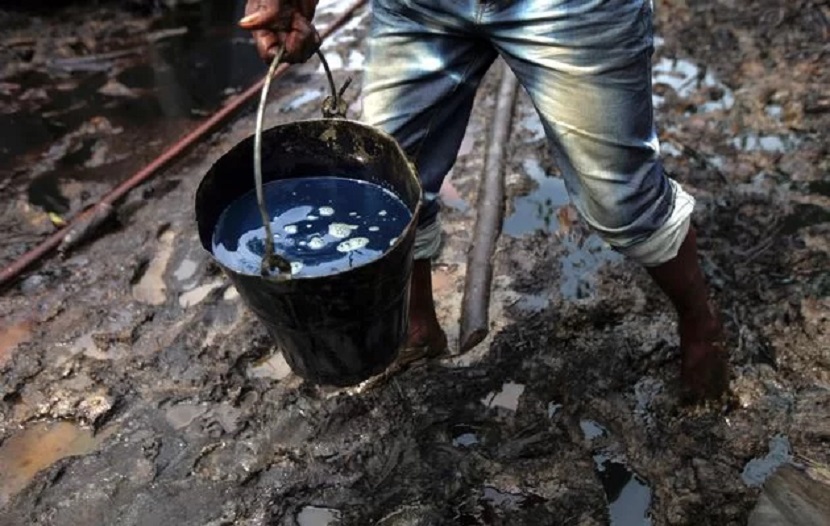
Troops of the 6 Division of the Nigerian Army have arrested 19 suspected oil thieves, destroyed 22 illegal refining hubs, and recovered over 180,000 litres of stolen petroleum products valued at more than N150 million in a sustained crackdown on oil theft across the Niger Delta region.

The details of the operations were contained in a statement signed by Lieutenant Colonel Danjuma Jonah Danjuma, the Acting Deputy Director of Army Public Relations, 6 Division.

According to the release, the operations were conducted between November 23 and December 28, 2025, with troops working “in close synergy with other security agencies to deny criminal elements freedom of action across the Niger Delta.”

“Troops have continued to dominate the operational landscape, effectively disrupting oil theft, pipeline vandalism, and other forms of economic sabotage,” the release stated.

The release disclosed that in Rivers State, troops uncovered 350 sacks containing more than 10,500 litres of stolen crude oil at Ogale Community in Eleme LGA, while two illegal refining sites were destroyed around Okarki Forest in Ahoada West LGA.

At Orashi Forest in Abua/Odual LGA, troops traced a hose spanning over nine kilometres, leading to four illegal refining sites equipped with large ovens, receivers, and dugout pits stocked with crude oil.

“Several illegal refining sites were destroyed, alongside large ovens, reservoirs, and pumping machines used in the illicit operations,” the release added.

In Bayejsa State, troops deactivated an illegal refining site at Siebu Creek in Ogbienbiri, Southern Ijaw Local Government Area, where a large reservoir containing over 75,000 litres of stolen crude oil and a pumping machine were recovered.

Further operations around Biseni in Yenagoa LGA led to the destruction of several illegal refining sites, with over 17,000 litres of stolen products recovered. At Okarki waterside in Ogbia LGA, troops intercepted a concealed Cotonou boat loaded with 2,775 litres of stolen crude oil.

The release further revealed that in Delta State, troops intercepted a truck along the Asaba–Benin Expressway in Agbor, allegedly discharging 45,000 litres of diverted petroleum products. Additional operations in Sapele and Ughelli South LGAs led to the arrest of suspects and the recovery of illegally refined condensates.

In Akwa Ibom State, troops discovered a warehouse stocked with illegally refined Automotive Gasoline Oil (AGO) at Ikot Ntuen Village in Abak LGA, where several jerricans filled with stolen products were seized.

The General Officer Commanding, 6 Division, Nigerian Army, Major General Emmanuel Eric Emekah, commended the troops and charged them to sustain the momentum against oil thieves.

“The GOC urged troops to maintain the tempo against economic saboteurs who threaten critical national infrastructure,” the release said.

He also appealed to residents of the Niger Delta to support the military by providing credible information.

“The cooperation of law-abiding citizens remains critical to winning the fight against criminal networks in the region,” the statement noted.

The Army reaffirmed its commitment to protecting national assets and ensuring continued security across the Niger Delta.


Adedapo Adesanya is a journalist, polymath, and connoisseur of everything art. When he is not writing, he has his nose buried in one of the many books or articles he has bookmarked or simply listening to good music with a bottle of beer or wine. He supports the greatest club in the world, Manchester United F.C.

Click to comment

Leave a Reply

Your email address will not be published. Required fields are marked *

General

Nigeria Joins IEA as Associate Member to Boost Energy Access

Published

on

International Energy Agency

By Adedapo Adesanya

Nigeria has joined the International Energy Agency (IEA) as an associate member, making Africa’s largest crude producer the first member of the Organisation of the Petroleum Exporting Countries (OPEC) to do so.

The governing board of the Paris-based agency unanimously agreed for Nigeria to join the IEA family, deepening its cooperation with Africa’s most populous nation in a major advance for global energy governance.

“I am thrilled that Nigeria is joining the IEA – it is Africa’s most populous country and a major international energy player. Nigeria becoming part of the world’s energy authority marks a milestone for global energy governance. I am very thankful to President Tinubu and Minister Ekpo for their trust in the IEA,” said IEA Executive Director, Mr Fatih Birol.

“As Nigeria works to strengthen energy security, support economic growth and expand energy access, deeper cooperation with the IEA will bring important benefits for both sides. We look forward to building on our already strong partnership and welcoming Nigeria to the IEA,” he added.

On his part, Nigeria’s Minister of State for Petroleum Resources (Gas), Mr Ekperikpe Ekpo, lauded the decision, saying it will contribute to helping the country utilise its energy resources.

“I am elated with the decision of the IEA Members to officially welcome Nigeria to the IEA Family as an Association country,” he said. “It is an honour for Nigeria to join this leading energy agency, and I will take this opportunity to encourage the African continent to embrace the IEA, as we all work together to achieve key development goals including universal energy access and industrialisation.”

Nigeria’s growing role in international energy markets has been highlighted by recent developments in its refining sector. During recent periods of market disruption, increased fuel exports from Nigeria helped strengthen resilience in African and international fuel markets.

The IEA, in a statement, noted that Nigeria has emerged as one of the world’s fastest-growing markets for decentralised solar solutions and is stepping up efforts to expand access to electricity and clean cooking.

The IEA governing board’s decision builds on a strong history of engagement and collaboration between Nigeria and the IEA since 2014.

In September 2025, the IEA, Mr Ekpo as Minister of Petroleum Resources and the African Energy Commission (AFREC) jointly convened a Regional Roundtable on Turning Methane Pledges into Action in Abuja, bringing together energy stakeholders from across the region to advance efforts to reduce methane emissions from the energy sector.

As an associated country, Nigeria and the IEA will work more closely across a wide range of energy issues, including on the Agency’s engagement in sub-Saharan Africa.

Created in 2015, the IEA Association programme allows the agency to deepen ties with its partner countries, bringing together major energy-producing and consuming countries from around the world.

Nigeria joins a network of 13 other Association countries that work with the IEA to advance secure, affordable and sustainable energy systems worldwide. As a result of this expansion, the IEA’s share of global energy demand has increased from 40 per cent in 2015 to over 80 per cent today.

Continue Reading

General

WCO Renews Customs CG Adeniyi’s Tenure as Council Chair

Published

on

adewale adeniyi customs

By Adedapo Adesanya

The World Customs Organisation (WCO) has extended the tenure of Nigeria’s Comptroller-General of Customs, Mr Adewale Adeniyi, as Chairperson of its Council for another year.

The decision was taken at the 147th and 148th Council Sessions in Brussels, Belgium, citing his leadership and contributions to global customs administration.

Comptroller Adeniyi returned to Abuja on June 29 to a reception by officers and management of the Nigeria Customs Service at its Maitama headquarters.

The management team also congratulated him on the six-month extension of his appointment by President Bola Tinubu.

Speaking on his return, the Comptroller-General said he had expected to hand over in Brussels, but was instead given a renewed mandate, which he dedicated to the Service.

The extension at both international and national levels is expected to support ongoing reforms, trade facilitation, and partnerships within the Nigeria Customs Service.

The six-month domestic extension is expected to provide continuity for ongoing reforms within the Customs Service while paving the way for a smooth leadership transition.

During the transition period, the Presidency said Mr Adeniyi, working with the Nigeria Customs Service Board, will ensure the promotion of eligible officers to the rank of Comptroller of Customs and the compulsory retirement of officers who have attained 60 years of age or have served 35 years.

Mr Adeniyi joined the Nigeria Customs Service after graduating from Obafemi Awolowo University (OAU) in the late 1980s and rose steadily through the ranks of the service.

Mr Adeniyi’s first tenure extension was due to expire on August 1, 2026, but President Tinubu approved the additional six months to enable him to complete key reforms within the Customs Service.

The presidency, via a statement, said the extension was granted “to enable him to consolidate the implementation of the National Single Window and ensure an orderly succession in the service.”

Continue Reading

General

Oyetola Urges West, Central Africa to Strengthen Port State Control

Published

on

Badagry Seaport

By Adedapo Adesanya

Nigeria’s Minister of Marine and Blue Economy, Mr Adegboyega Oyetola, has called on maritime administrations across West and Central Africa to strengthen Port State Control (PSC) systems as a critical strategy for enhancing maritime safety, facilitating trade and unlocking the full potential of Africa’s Blue Economy.

Speaking earlier at the Abuja Memorandum of Understanding (Abuja MoU) Regional Workshop for Directors-General/Chief Executive Officers of Maritime Administrations and Heads of Port State Control in Lagos, the Minister said effective maritime governance has become indispensable to Africa’s economic transformation, particularly under the African Continental Free Trade Area (AfCFTA).

Mr Oyetola said the workshop aligns with President Bola Tinubu’s Renewed Hope Agenda, which recognises the Marine and Blue Economy as a major driver of economic diversification, trade, employment and sustainable development.

“As Nigeria works to consolidate its position as Africa’s leading maritime hub, we recognise that world-class maritime governance, effective Port State Control, safe shipping practices and adherence to international standards are indispensable foundations for achieving that vision,” the Minister said.

He noted that strengthening Port State Control across the region would not only improve maritime safety but also support Africa’s broader economic aspirations by creating an efficient, secure and internationally compliant maritime transport system capable of facilitating seamless intra-African trade.

“The success of the African Continental Free Trade Area depends significantly on efficient, secure and internationally compliant maritime transport systems. As maritime administrations, we bear a collective responsibility to ensure that our ports, shipping operations and regulatory systems support the free flow of commerce, strengthen regional connectivity and contribute meaningfully to Africa’s economic integration and global competitiveness,” he stated.

Speaking on the workshop’s theme, A Future-Ready Port State Control Regime: Leadership, People, Governance and Performance for Safer Maritime Systems, Mr Oyetola described it as both timely and strategic, noting that the maritime industry is undergoing unprecedented transformation driven by technological innovation, environmental obligations, evolving regulations and changing geopolitical realities.

According to him, these developments require Port State Control regimes that are not only robust but also adaptive and future-ready.

The Minister described the workshop as the first major strategic intervention under the Abuja MoU Port State Control Strengthening Programme, designed to equip Directors-General and Chief Executive Officers of maritime administrations to champion institutional reforms, strengthen governance frameworks and improve maritime safety performance across the region.

Reaffirming Nigeria’s commitment to international maritime standards, Mr Oyetola said the country has consistently supported the vision of the International Maritime Organisation (IMO), which regards Port State Control as one of the most effective mechanisms for eliminating substandard shipping, protecting the marine environment and safeguarding the welfare of seafarers.

On his part, the Secretary-General of the Abuja MoU, Mr Sunday Umoren, described collaboration among member states as essential to building a safer, more efficient and globally competitive maritime sector in West and Central Africa.

Also speaking, the Director-General of the Nigerian Maritime Administration and Safety Agency (NIMASA), Mr Dayo Mobereola, stressed the need for greater investment in capacity building and institutional development, revealing that only 16 of the Abuja MoU’s 22 member states currently conduct Port State Control inspections consistently.

He disclosed that Nigeria conducted 917 Port State Control inspections in 2025, achieving an inspection rate of 23.5 per cent, significantly exceeding the Abuja MoU benchmark of 15 per cent.

Mr Mobereola said the country’s performance demonstrates its commitment to enforcing international maritime conventions and promoting safer shipping within the region.

The Lagos workshop is expected to produce practical recommendations for strengthening Port State Control implementation across the Abuja MoU region while laying the foundation for a more harmonised, efficient and globally respected maritime safety regime in West and Central Africa.

Continue Reading

Trending