Connect with us

Economy

AfCFTA: FG to Identify One Exportable Product from Each of 774 Local Councils

Published

on

AfCFTA Export

By Adedapo Adesanya

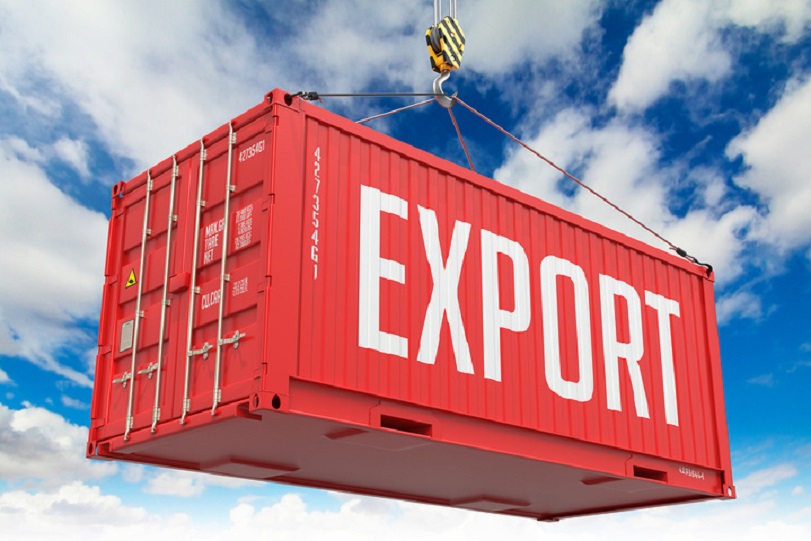
The Minister of Industry, Trade and Investment, Mrs Jumoke Oduwole, has said the federal government would deepen its participation in the African Continental Free Trade Area (AfCFTA) in 2026 by working with state governors to identify at least one exportable product in each of the country’s 774 local governments.

The move gears towards scaling production, boosting non-oil exports, and strengthening competitiveness across Africa.

She made this disclosure while speaking on Nigeria’s AfCFTA Achievements Report 2025 under the Federal Ministry of Industry, Trade and Investment.

The Minister noted that Nigeria’s AfCFTA Agenda in 2026 will be building on implementation milestones recorded in 2025.

According to her, the plan aims at positioning the country to better exploit opportunities under the continent-wide trade pact.

Operationalised through the AfCFTA Central Coordination Committee (CCC), the Ministry will collaborate with development partners across public and private sector institutions to mobilise production nationwide, while also undertaking an awareness and sensitisation campaign.

“FMITI will work with the Nigerian Governors’ Forum and State Governments to identify a minimum of one (1) product that each Local Government Area can export into the AfCFTA market,” the report stated.

Beyond local production, the 2026 agenda places a strong emphasis on creating an enabling policy and regulatory environment to support the full implementation of the AfCFTA Agreement and its protocols, with the Ministry of Industry, Trade, and Investment leading the regulatory alignment efforts.

In addition, Nigeria plans to upgrade trade data systems to effectively track AfCFTA trade flows, including disaggregated data on goods, services, and participation by women and youth, while expanding global advocacy and hosting key continental trade events ahead of the Intra-African Trade Fair in 2027.

The report also outlines plans to demystify AfCFTA rules and compliance requirements through a series of targeted publications for businesses, alongside measures to strengthen institutional coordination and improve accountability among public sector agencies involved in trade facilitation.

On investment and industrial capacity, the document notes that: “Investment mobilisation efforts with foreign and domestic investors will prioritise the exponential increase of productive capacity in key sectors, to position Nigeria as the innovation, production and distribution hub of the AfCFTA market.”


Adedapo Adesanya is a journalist, polymath, and connoisseur of everything art. When he is not writing, he has his nose buried in one of the many books or articles he has bookmarked or simply listening to good music with a bottle of beer or wine. He supports the greatest club in the world, Manchester United F.C.

Economy

ACCI Urges Policy Consistency, MSMEs Protection in 2026

Published

on

MSMEs Digitalisation

By Adedapo Adesanya

The Abuja Chamber of Commerce and Industry (ACCI) has called for policy consistency, the protection of Micro Small and Medium Enterprises (MSMEs), and private sector-led growth to strengthen Nigeria’s economy in 2026.

The President of the chamber, Mr Emeka Obegolu, made the call in a New Year message issued by the ACCI Media and Strategy Officer, Mrs Olayemi John-Mensah, on Thursday in Abuja.

He submitted that consistent policies and private-sector-friendly reforms were critical to reducing the cost of doing business and achieving sustainable economic development, stressing the need for strong protection of MSMEs, describing them as the backbone of the Nigerian economy.

According to him, sustained stakeholder engagement and predictable reforms would encourage investment and business expansion.

The ACCI president said the organised private sector remained cautiously optimistic about business opportunities in 2026, noting that the optimism persisted in spite global and domestic economic pressures affecting businesses.

He commended Nigerian businesses for their resilience and adaptability in navigating the economic challenges of 2025, adding that businesses demonstrated commitment to innovation and value creation despite inflation and foreign exchange volatility.

Mr Obegolu also cited high energy costs, rising interest rates and limited access to finance as key constraints faced by enterprises.

According to him, these challenges underscored the importance of chambers of commerce in advocating stability and competitiveness.

He said economic reforms were necessary but should be carefully sequenced to safeguard MSMEs and organised businesses.

Mr Obegolu warned that poorly managed reforms could result in business closures, job losses and capital flight.

He drew attention to over N720 billion in outstanding contractor debts owed by government.

He said delayed settlement of verified obligations had weakened cash flows and disrupted supply chains.

According to him, the situation had particularly affected indigenous contractors and MSMEs nationwide.

He urged government to prioritise transparent verification and timely settlement of the debts to stimulate economic activity.

Mr Obegolu also called on the Federal Government and the FCT Administration to create a more enabling and predictable business environment.

He noted that Abuja had evolved into a major commercial and investment hub requiring stronger infrastructure and regulatory support.

He reaffirmed ACCI’s commitment to constructive engagement with government to promote ease of doing business and inclusive economic growth.

Continue Reading

Economy

NNPC Plans New Oil Fields Development, to Raise $30bn by 2030

Published

on

NNPC Crude Cargoes pricing

By Adedapo Adesanya

The Nigerian National Petroleum Company (NNPC) Limited plans to develop new oil fields from next year and seeks to raise at least $30 billion by the end of the decade.

According to Bloomberg, this was disclosed by senior officials familiar with the plans in the country which is Africa’s largest oil producing nation.

The state-owned oil firm is raising the money as part of efforts to reverse years of underinvestment that have left several discoveries undeveloped, the people said, without disclosing the new fields being targeted.

The publication revealed that the NNPC expects significant investment decisions to come through next year, according to the people who declined to be identified because the talks involve confidential commercial matters.

The sources also said the NNPC is also reviewing its portfolio and plans to sell non-performing fields, adding that the firm will likely meet more than half of its fundraising target.

The energy company plans to develop some of the fields in-house and is expected to call for bids early next year, the people said.

NNPC also plans to boost oil output by 5 per cent to 1.8 million barrels per day next year compared with 2025 and is targeting 4 million barrels of daily output by 2030.

It also targets the completion of the $2.8 billion Ajaokuta-Kaduna-Kano (AKK) pipeline, connecting various segments to the main line from early next year, one of the people said.

Once ready, the pipeline will deliver gas at scale to parts of northern Nigeria including the capital of Abuja, supplying industrial parks, fertilizer plants and power-generation facilities.

Recall that the chief executive of the NNPC, Mr Bashir Ojulari, recently said the country would begin to export gas from the $2.8 billion Ajaokuta-Kaduna-Kano (AKK) pipeline from early 2026.

First conceived in 2008, the AKK pipeline is central to Nigeria’s ambition to leverage its vast gas reserves for economic growth. Its completion could transform the north, where chronic power shortages and a lack of energy infrastructure have stifled manufacturing for decades.

Continue Reading

Economy

SEC to Prioritise Mobilisation of Long Term Funds, Others in 2026

Published

on

SEC FF Tiffany

By Aduragbemi Omiyale

One of the main goals of the Securities and Exchange Commission (SEC) for 2026 is prioritising the mobilisation of long-term capital to bridge Nigeria’s infrastructure and sectoral gaps while also streamlining regulatory frameworks and aggressively facilitating the issuance of innovative financial instruments that channel disciplined capital into productive sectors.

In his New Year message on Thursday in Abuja, the Director General of the agency, Mr Emomotimi Agama, also disclosed that SEC intends to facilitate the issuance of infrastructure bonds, green bonds, municipal bonds, and infrastructure-focused funds.

He further disclosed that efforts would be made to drive the revitalisation of Real Estate Investment Trusts (REITs) and introduce innovative affordable housing bonds.

According to him, these initiatives will unlock capital for mass housing delivery, create new asset classes for investors, and move millions of Nigerians closer to homeownership.

“Our goal is to attract long-term domestic and international capital into roads, power, rail, housing, and digital infrastructure, while making it easier for state governments and infrastructure companies to access the market efficiently.

“We will promote the listing of agribusiness firms and create tailored listing windows for agricultural cooperatives and value-chain companies.

“Through commodity exchanges, agricultural investment trusts, and commodities-linked financial instruments, we will de-risk agriculture, ensure fair pricing for farmers, strengthen food security, and allow Nigerians to own a stake in the nation’s breadbasket,” he stated.

“We are reviewing our rules to incentivize listings from small and medium-scale industries, with special focus on manufacturing, automotive, pharmaceuticals, and finished goods.

“By providing patient capital through the capital market, we will revitalize factories, reduce import dependency, create jobs, and position Made in Nigeria as a global brand.

“The SEC will support Nigeria’s power sector through infrastructure bonds, green energy bonds, project-backed securities, and public–private investment vehicles.

“We will help unlock long-term capital for grid expansion, renewable energy projects, embedded power solutions, and energy transition initiatives. By improving bankability structures and attracting patient capital into the power value chain, the capital market will support energy security,” he added.

Mr Agama noted that as the new year begins, the SEC is  not merely turning a page on the calendar; but is embracing a profound opportunity—an opportunity to redefine the very purpose and power of the Nigerian capital market.

“We look back at a year of transformation and look forward to a future where our capital market becomes the definitive solution provider for Nigeria’s most pressing economic and developmental needs,” he added.

Continue Reading

Trending