

Economy
Nigeria Attracts $5.3bn Upstream Investments in 2025

By Adedapo Adesanya
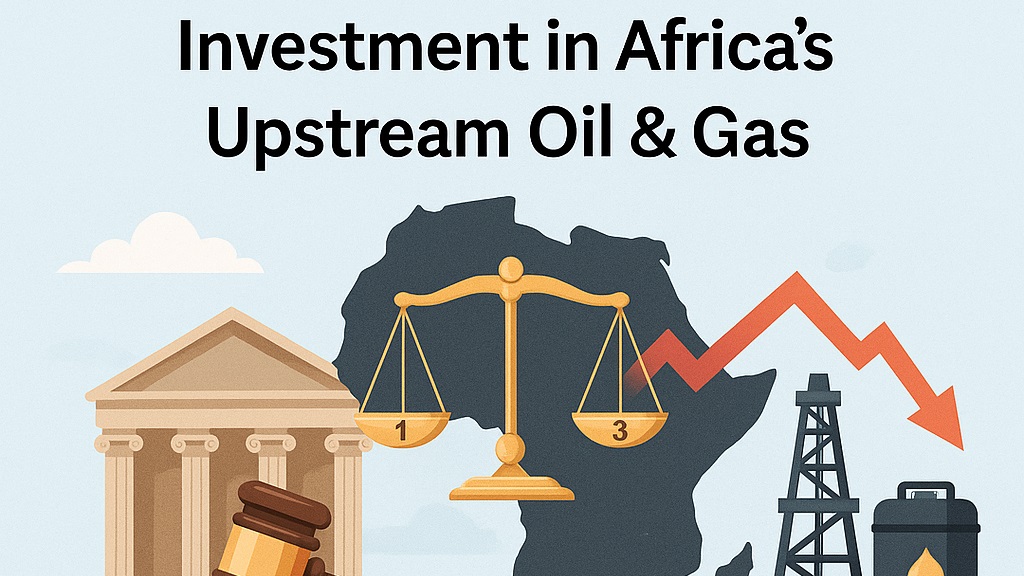
Nigeria has emerged as Sub-Saharan Africa’s leading upstream oil and gas investment destination in 2025, attracting $5.3 billion in capital, according to a report by industry intelligence firm, Wood Mackenzie.
The investment into the country happened despite an 18 per cent decline in upstream spending across the region, underscoring the impact of recent fiscal and regulatory reforms.
Wood Mackenzie disclosed that Nigeria retained the top spot for upstream capital inflows, even as investment activity slowed sharply across Africa.
Notably, only two Final Investment Decisions (FIDs) were recorded across Sub-Saharan Africa in 2025, with Nigeria securing one of them.
The FID was reached on the Shell–Sunlink HI Field (OML 144), a shallow-water non-associated gas project, following the introduction of Nigeria’s Non-Associated Gas (NAG) incentives in 2024.
The incentives restored the project’s commercial viability and unlocked critical gas feedstock for Nigeria LNG Limited (NLNG) which according to Wood Mackenzie signals a clear shift in investor confidence.
“Nigeria’s NAG incentives have materially improved gas economics, enabling projects that were previously marginal to reach FID,” the firm noted.
The latest investment milestone marks a sharp turnaround from previous years.
Between 2015 and 2023, Nigeria captured just 4 per cent of Africa’s sanctioned FIDs, securing $5 billion across six of 44 projects.
However, over the last two years, Nigeria has attracted 38 per cent of Africa’s sanctioned FIDs, accounting for $8 billion across five of eight projects continent-wide.
“This reversal highlights the impact of decisive reforms implemented over the past 24 months,” Wood Mackenzie said, adding that Nigeria now offers “among the most competitive deep-water fiscal terms globally and the most attractive gas terms in Africa,” it said.
Looking ahead, the firm expressed optimism that Nigeria will sustain the momentum into 2026. “With targeted incentives and a stable, investor-focused policy framework, we expect additional FIDs to be sanctioned,” it stated.
The resurgence positions Nigeria as a standout destination for upstream oil and gas investment at a time when capital discipline and policy uncertainty continue to weigh on much of Sub-Saharan Africa.
The Bola Tinubu administration has reiterated its commitment to boosting investment in the country’s energy sector, particularly in oil and gas. In May 2025, President Tinubu issued a new executive order (EO) to lower project costs, attract investment, and enhance revenues from oil and gas operations.
The new order builds on the administration’s 2024 presidential reform directives, which introduced enhanced fiscal terms, streamlined project timelines, and aligned local content policies with global best practices.


