Connect with us

Economy

Focus on Nigeria’s Reforms, Not Security Challenges—Tuggar to Investors

Published

on

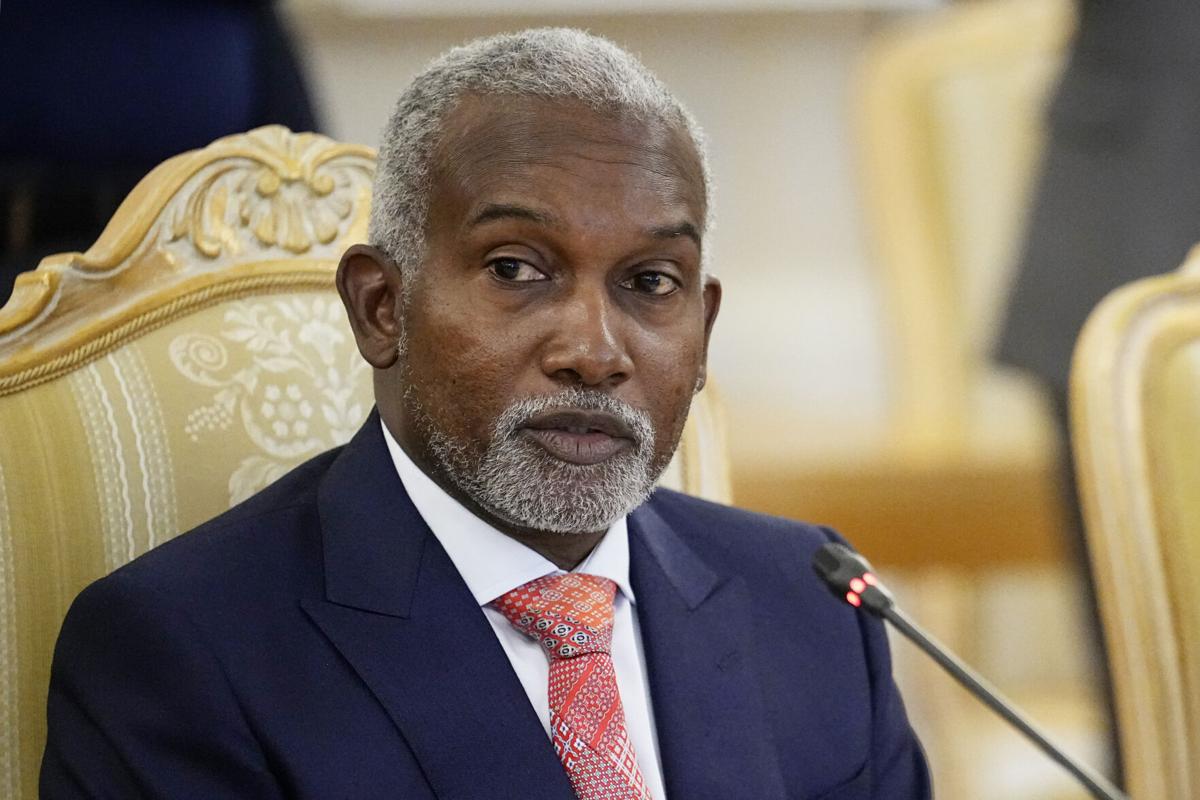
Yusuf Tuggar

By Adedapo Adesanya

The Minister of Foreign Affairs, Mr Yusuf Tuggar, has urged international investors to look beyond the security challenges facing Nigeria, and instead focus on the reforms.

Speaking during an interview at the ongoing World Economic Forum (WEF) in Davos, Switzerland, Mr Tuggar noted that incidents of insecurity being recorded across the country are “isolated cases” and not the reality across the country.

According to him, instability in the Sahel had spilled into Nigeria.

“We are urging investors to treat us the same way they treat other countries. The fact that there were isolated incidents in some places in the country does not mean that it’s the entire country.

“Conversations that are taking place here also have to do with risk buyers, where the issue of geopolitical risk, in particular, is over-hyped when it comes to Africa, which doesn’t apply in other parts of the world.

“It’s very important to see the conflict for what it is. It’s a regional conflict that has spilled over into Nigeria. It is not removed from the conflict in the Sahel. It’s not removed from what happened in Libya many years ago,” he told CNN on Tuesday.

“It’s not removed from the proliferation of weaponry, of fighters, and climate change issues, and so many other complex issues.”

Mr Tuggar said the government is working with international partners, including the United States, to target bandits and terrorist groups in their hideouts.

The minister also said Nigeria is actively engaging investors and pushing back against an exaggerated risk narrative around Nigeria’s economy.

“We’re urging potential investors to treat us the same way, to look at us the way that they look at other countries. The fact that there is an incident in a country of 923,000 square kilometres does not mean you write off the entire country,” he said.

Mr Tuggar highlighted a number of macroeconomic and fiscal reforms under the Bola Tinubu administration aimed at improving investor confidence, including changes to the foreign exchange regime, tax reforms, and a reduction in corporate income tax.

The minister said Nigeria’s foreign reserves had risen to about $43 billion, while reforms had eased access to foreign exchange.

“It’s very important we look at the progress that the Tinubu administration has been making with macroeconomic reforms, with the tax reforms that make it easier for investors to come into Nigeria,” he said.

On security, he said Nigeria had recorded significant gains against Boko Haram through regional cooperation, particularly the multinational joint task force, which allowed cross-border pursuit of insurgents.

Mr Tuggar warned that persistent negative framing of Nigeria’s security situation could itself worsen insecurity by encouraging extremist groups to stage attacks for attention.

“So, let us look at Nigeria holistically. Let us not continue to dwell on some of these isolated incidents and define the entire country by it,” he said.

According to him, apart from working with security agencies to safeguard lives and properties, the country has also secured the services of forest guards to militate against terrorism.


Adedapo Adesanya is a journalist, polymath, and connoisseur of everything art. When he is not writing, he has his nose buried in one of the many books or articles he has bookmarked or simply listening to good music with a bottle of beer or wine. He supports the greatest club in the world, Manchester United F.C.

Advertisement
Click to comment

Leave a Reply

Your email address will not be published. Required fields are marked *

Economy

Okonwo-Iweala Advises Nigeria to Move from Stabilisation to Job Creation

Published

on

okonjo iweala nigeria house

By Adedapo Adesanya

The Director-General of the World Trade Organisation, Mrs Ngozi Okonjo-Iweala, has advised the Nigerian government to position recent stabilisation results to drive job creation for Nigerians.

She made the remarks on Wednesday at Nigeria House during the ongoing World Economic Forum (WEF) in Davos.

The former Nigerian Minister, in her presentation at a panel discussion titled From Scale to Capital: Financing Nigeria’s Role as Africa’s Digital Trade and Infrastructure Anchor, stressed that rising geopolitical tensions, particularly between the United States and China, have accelerated supply chain diversification.

“Firms are increasingly adopting China+1 sourcing strategies to reduce single-country risk, although China remains deeply embedded in many global value chains.

“In addition, tariffs and trade restrictions have incentivised companies to reconsider reliance on dominant suppliers, prompting the relocation or diversification of production hubs,” she said.

According to her, these disruptions present an opportunity for Nigeria to capture a share of global supply chains.

She, however, noted that this would require aggressive marketing of the country to prospective investors.

“As you said, some good reforms are being pursued right now. I think they need to yield to job creation. That was what I said to His Excellency [President Bola Tinubu]—that we need to move from stabilisation to job creation, because that is where we are lacking. It is not going to be overnight, but they are moving in the right direction. What I think they need to do is map where the opportunities are.

“What I would like to see is a continued effort to attract investment into the country, because there is an opportunity now to attract these supply chains. If there is one thing I would say, it is that everything we can do to showcase Nigeria as a country worthy of investment is what we should be doing.

“And we should deliberately have strategies to go after those investments and investors, to go to China, the US, whatever it takes, to come and invest in our country. As companies seek to diversify supply chains, a lot of that movement is still within Asia.

“Diversification is moving from China but still within Asia, and India is another destination. We should attract a sizeable chunk of that. I’m not saying all.

“Let’s build solar panels in Nigeria. We are importing, but we can also manufacture. We have the renewable capacity. In fashion, let them come to invest. Every time I buy a piece of wax (textile), I check to see where it’s made.

“Let’s attract investment to make it at home rather than elsewhere. Many of the shiny new textiles we are wearing now are not made in Nigeria; a lot of them are imported,” she said.

Continue Reading

Economy

Nigeria to Become Urea Exporter in 2028—NMDPRA Chief

Published

on

export urea

By Adedapo Adesanya

The chief executive of the Nigerian Midstream and Downstream Petroleum Regulatory Authority (NMDPRA), Mr Saidu Aliyu Mohammed, has declared that Nigeria would become a urea-exporting nations within the next 24 months.

Mr Mohammed made the assertion during an operational visit to key midstream and downstream facilities in Port Harcourt, including the Indorama Eleme Petrochemicals Complex, as part of an executive regulatory activity mandated by the Petroleum Industry Act (PIA), 2021.

According to him, the expansion of facilities at Indorama and other major investments, such as the Dangote Fertiliser Plant, signal a turning point for Nigeria’s oil and gas value chain.

“We have no business importing any of those things,” the NMDPRA chief said. “With the expansion of what is going on today at Indorama and many other places, including Dangote Fertilisers, I am sure that in the next 24 months Nigeria will join the league of urea-exporting countries, and that is where we should be.”

He described the midstream segment of the oil and gas industry as a critical but capital-intensive area that requires between $30 billion and $50 billion in investments to position Nigeria as a regional hub, not only for oil and gas, but also for secondary derivatives and value-added products. These, he said, include fertilisers, urea, and other products derived from hydrocarbon resources.

“What we have seen in Indorama is really a manifestation of what Nigeria needs to have. We need a lot of these in the midstream—fertiliser plants and every value-addition opportunity from our hydrocarbon sources. That is what the nation needs to propel growth.”

He acknowledged that while such ambitions had existed for years, progress had been slow due to various challenges; however, he noted that effective partnerships with the private sector were now yielding tangible results.

“Today, we have found the right footsteps in partnership with the private sector. Indorama has really shown us that growth is growth, and we can continue to grow in that same direction,” he said.

The NMDPRA boss explained that the visit to facilities in Rivers State was aimed at assessing the operational status and availability of critical midstream and downstream infrastructure, reviewing alignment between the regulator and its licensees, and engaging investors to ensure optimal regulatory support. Other objectives include improving regulatory operational excellence, promoting health and safety standards, and presenting the Nigerian public with an accurate assessment of sector operations.

He noted that Rivers State remains a strategic hub for the industry, with diverse facilities spanning gas processing, manufacturing, and refining. “There is no sample that we cannot take here,” he said.

“If we want to see gas processing, manufacturing, or refining, we can. We selected just a few facilities to have an overview of what is going on, but we cannot do that in only three days. I will be coming back because there are many industries within Rivers State that we still need to cover,” he added.

Mr Mohammed stressed that the role of the Authority is to facilitate investments by creating an enabling environment that allows operators to expand while attracting new investors.

He added that the executive regulatory exercise, which has commenced in the South-South region, will be replicated across the country under his leadership.

The CEO of Indorama, Mr Munish Jindal, described the visit by the NMDPRA leadership as timely and highly significant. He said regulatory visits help authorities gain a firsthand understanding of operations and the progress made on the ground.

“These visits are always very important,” Jindal said. “It is important for the regulator to come and see with their own eyes what is happening and understand the changes that have been brought. We are highly appreciative that since assuming office, Engr. Saidu Aliyu Mohammed has visited with his full team to see and visualise what has been delivered here in the last 20 years.”

Mr Jindal recalled that the NMDPRA chief had been involved in the sector since the early days of the Eleme Petrochemicals Company Limited (EPCL), when plans for Phase 2 and Phase 3 expansions were conceived. “Those dreams have been delivered today by Indorama,” he noted.

He also commended regulatory authorities for their improved understanding of the midstream industry over the years, describing it as critical to the sector’s growth. While expressing support for the new regulatory leadership, Jindal disclosed that Indorama had raised concerns over certain regulatory requirements which, in the company’s view, are no longer relevant to manufacturing-focused midstream operators.

“We have made a keen request to the Authority to kindly look into some issues that may not be relevant to the manufacturing industry and consider granting exemptions where necessary,” he said.

The NMDPRA said it remains committed to ensuring that the objectives of the Federal Government and the Nigerian people are fully reflected in the business outlooks of key industry stakeholders, as the country pursues its ambition of becoming both an energy hub and a centre for oil and gas derivatives in Africa.

Continue Reading

Economy

How Cardoso Influenced Retaining Interest Rate at 27% in November

Published

on

cardoso MPC meeting FX obligations

By Adedapo Adesanya

The Governor of the Central Bank of Nigeria (CBN), Mr Yemi Cardoso, voted to hold interest rate at 27 per cent at the last meeting of the Monetary Policy Committee (MPC) meeting.

The committee members were split on whether to cut interest rates or keep them unchanged when they met in November, but the central bank chief broke the ice with a hold vote.

Minutes of the MPC meeting held on November 25 revealed a split vote across the 11 members, with five members supporting a hold at 27 per cent and five members favouring a rate cut. One member abstained.

Mr Cardoso, as the 12th man and chairman of the committee, said holding rates was a deliberate signal to reinforce macroeconomic stability and acknowledge that the current monetary policy stance was beginning to deliver the intended outcomes.

It had been widely expected that the MPC would cut the rate after headline inflation declined for the seventh consecutive month to 16.05 per cent in October 2025, down from 18.02 per cent in September, at the time.

“In my view, holding is a clear signal of reinforcing stability and acknowledgement that the current policy stance is having the desired effect,” Mr Cardoso said.

The committee also retained the cash reserve ratio (CRR) for deposit money banks at 45 per cent, merchant banks at 16 per cent and 75 per cent for non-Treasury Single Account (TSA) public sector deposits, while the liquidity ratio was kept at 30 per cent.

Mr Cardoso noted that the improved anchoring of overnight market rates within the standing facilities corridor demonstrated stronger transmission of monetary policy to the wholesale market, describing this development as a positive outcome.

According to him, the effective transmission of policy provided room for further technical adjustments to the corridor in response to evolving liquidity conditions and sustained price action in the benchmark government securities market.

He added that the proposed asymmetric adjustment of the monetary policy corridor widening the floor while keeping the ceiling tight was designed to absorb persistent excess liquidity without undermining the Central Bank’s control over short-term interest rates.

Continue Reading

Trending