Connect with us

Health

Governor Keeps N1.1b for Hospital Renovation

Published

on

Pix Credit: Alarmy

By Dipo Olowookere

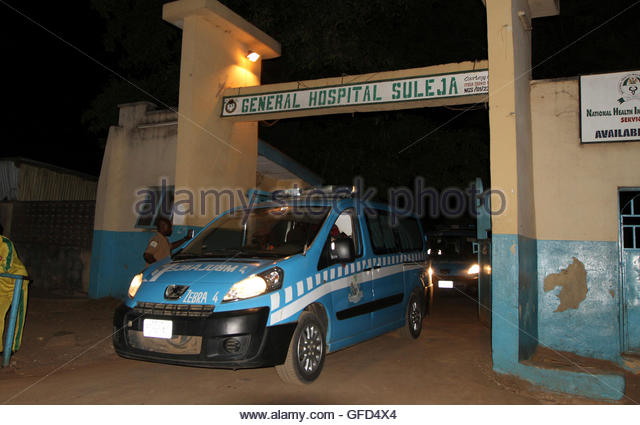
At least N1.1 billion would be needed for the total renovation of the Suleja General Hospital in Niger State, Governor Abubakar Sani Bello has revealed.

Mr Bello explained that the decision to renovate the health facility was in compliance with his administration’s restoration agenda following the infrastructural decay in the hospital due to many years of neglect.

He made this known when some elders and leaders of the All Progressives Party (APC) from the town led by Mr Abubakar Lado, member representing Suleja/Tafa/Gurara Federal constituency in the House of Representatives, paid him a courtesy visit.

“With the rate of expansion of Suleja and the neglect the overstretched General Hospital has suffered over the years that has led to gross infrastructural decay, we have resolved to carry out total renovation of the hospital to enable it meet the health needs of our people,” he told his guests.

The Governor explained that, “The renovation will involve the rehabilitation of wards, consulting rooms, installation of state of the art medical equipment, laboratory facilities, doctor’s and nurses’ quarters. The project will be costing government N1.1billion.”

Mr Bello also unveiled plans to address the water challenges being faced by the residents of the commercial city.

According to him, “We are almost through with the Minna water scheme and we are moving into Suleja to address the challenges at the Suleja Water Works. We are carrying out a holistic overhaul of Suleja water works as well as the reticulation network within the city and neighbouring towns.”

The Governor also said that in meeting the environmental hazards associated with growing cities like Suleja, two new fire stations would be built in the town to complement the newly rehabilitated township fire station.

He then called on the people of the area to remain committed in meeting their civic responsibilities to the state as he reaffirmed his administration’s commitment to its restoration agenda.

Earlier the leader of the team, Mr Lado, pledged the continued support of the people of the administration of Governor Sani Bello. He commended the efforts of the governor at ensuring even distribution of dividends of democracy across the length and breadth of the state.

The delegation expressed appreciation to the governor for considering some of their sons for appointments.


Dipo Olowookere is a journalist based in Nigeria that has passion for reporting business news stories. At his leisure time, he watches football and supports 3SC of Ibadan. Mr Olowookere can be reached via [email protected]

Advertisement
Click to comment

Leave a Reply

Your email address will not be published. Required fields are marked *

Health

Polaris Bank Sponsors Free Breast, Prostate Cancer Screenings

Published

on

Polaris Bank free cancer screenings

By Modupe Gbadeyanka

To commemorate World Cancer Day observed on Wednesday, February 4, 2026, Polaris Bank Limited is bankrolling free screenings for breast and prostate cancers across the country.

The financial institution partnered with a non-governmental organization (NGO) known as Care Organization and Public Enlightenment (COPE) for this initiative.

At least 100 women would be screened during the exercise, scheduled for Saturday, February 21, 2026, at the C.O.P.E Centre on 39B, Adeniyi Jones Avenue, Ikeja, Lagos, from 10:00 am to 2:00 pm.

The exercise will be conducted by trained health professionals and volunteers, ensuring participants receive both screening services and educational guidance on cancer prevention, self-examination, and follow-up care.

To participate in the free breast cancer screening programme, the applicants must be women, must be Polaris Bank account holders, and must have registered ahead of the day via bit.ly/BCS2026, with selection based on early and confirmed submissions.

Polaris Bank said the initiative was designed to promote awareness, screening, early detection, and preventive care, reinforcing its belief that access to health services is a critical foundation for individual and economic well-being.

The organization is already supporting an on-going free prostate cancer screening programme for 250 men aged 40 years and above across Nigeria.

The prostate cancer screening is being conducted at the Men’s Clinic, situated at 18, Commercial Avenue, Sabo, Yaba, Lagos, providing accessible, professional medical support for male participants seeking early detection and preventive care for prostate cancer.

Both initiatives (free breast and prostate cancer screenings) directly aligns with the United Nations Sustainable Development Goals, particularly SDG 3 (Good Health and Well-being) through improved access to preventive healthcare and early detection services, SDG 5 (Gender Equality) by prioritizing women’s health and empowerment, and SDG 17 (Partnerships for the Goals) through strategic collaboration with civil society organizations such as C.O.P.E to deliver community-centered impact.

Educational materials, community engagement sessions, and digital awareness campaigns will be deployed to reinforce key messages around early detection, lifestyle choices, and the importance of regular medical check-ups.

The Head of Brand Management and Corporate Communications for Polaris Bank, Mr Rasheed Bolarinwa, emphasised that early detection remains one of the most effective tools in the fight against cancer.

Continue Reading

Health

NSIA Gets IFC’s Naira-financing to Scale Oncology, Diagnostic Services

Published

on

NSIA MedServe

By Adedapo Adesanya

International Finance Corporation (IFC), a subsidiary of the World Bank, and the Nigeria Sovereign Investment Authority (NSIA) have partnered to provide Naira-denominated financing to NSIA Advanced Medical Services Limited (MedServe), a wholly owned healthcare subsidiary of the country’s  wealth fund.

Supported by the International Development Association’s Private Sector Window Local Currency Facility, this financing enables MedServe to scale critical healthcare infrastructure while mitigating foreign exchange risks. IFC is a member of the World Bank Group.

The funds will support MedServe’s expansion program to establish diagnostic centers, radiotherapy-enabled cancer care facilities, and cardiac catheterisation laboratories across several Nigerian states.

These centres will feature advanced medical technologies, including CT and MRI imaging, digital pathology labs, linear accelerators, and cardiac catheterisation equipment, thereby enhancing specialised diagnostics and treatment.

MedServe provides sustainable service delivery with pricing that matches local income levels, helping ensure broader access to affordable oncology care for low-income patients.

The initiative will deliver over a dozen modern diagnostic and treatment centers across Nigeria, create 800 direct jobs, and train more than 500 healthcare professionals in oncology and cardiology specialties.

The total project size is $154.1 million, with IFC contributing roughly N14.2 billion ($24.5 million) in long-tenor local currency financing, marking IFC’s first healthcare investment in Nigeria using this structure.

This comes as Nigeria advances its aspirations for Universal Health Coverage. This partnership provides an opportunity to leverage private investment to complement government efforts to expand oncology care and diagnostic services.

IFC’s provision of long-tenor Naira financing addresses a significant market gap and unlocks institutional capital for healthcare infrastructure with strong development upside while MedServe’s co-location strategy with public hospitals maximises capital efficiency and strengthens the public-private ecosystem, establishing a replicable platform for future investment.

“This partnership with IFC represents a significant milestone in NSIA’s commitment to strengthening Nigeria’s healthcare ecosystem through sustainable, locally anchored investment solutions,” said Mr Aminu Umar-Sadiq, managing director & chief executive of NSIA.

He added, “By deploying long-tenor Naira financing, we are addressing critical infrastructure gaps while reducing foreign exchange risk and ensuring that quality diagnostic and cancer care services are accessible to underserved communities. MedServe’s expansion underscores our belief that commercially viable healthcare investments can deliver strong development impact while supporting national health priorities.”

“This ambition is consistent with our broader vision for Africa, one where resilient health systems and inclusive growth reinforce each other to deliver long-term impact across the continent,” said Mr Ethiopis Tafara, IFC Vice President for Africa.

Continue Reading

Health

Lagos Steps up Mandatory Health Insurance Drive

Published

on

Mandatory Health Insurance Drive

By Modupe Gbadeyanka

Efforts to entrench mandatory health insurance through the Ilera Eko Social Health Insurance Scheme in Lagos State have been stepped by the state government.

This was done with the formal investiture of the Commissioner for Health, Professor Akin Abayomi, and the Special Adviser to the Governor on Health, Mrs Kemi Ogunyemi, as Enforcement Leads of the Lagos State Health Scheme Executive Order and ILERA EKO Champions.

The Commissioner described the recognition as both symbolic and strategic, noting that Lagos is deliberately shifting residents away from out-of-pocket healthcare spending to insurance-based financing.

“We have been battling with how to increase enrolment in ILERA EKO and change the culture of cash payment for healthcare. Insurance is a social safety net, and this mindset shift is non-negotiable,” he said.

He recalled that Lagos became the first state to domesticate the 2022 National Health Insurance Authority (NHIA) Act through an Executive Order issued in July 2024, making health insurance mandatory. He stressed that the decision reflected the Governor’s strong commitment to healthcare financing reform, adding, “When Mr. Governor personally edits and re-edits a document, it shows how critical that issue is to the future of Lagosians.”

Mr Abayomi also warned against stigmatisation of insured patients, describing negative attitudes towards Ilera Eko enrolees as a major barrier to uptake. “If someone presents an Ilera Eko card and is treated as inferior, uptake will suffer. That must stop,” he said, pledging to prioritise insurance compliance during facility inspections. “The key question I will keep asking is: ‘Where is the Ilera Eko?’”

In her remarks, Mrs Ogunyemi, said the enforcement role goes beyond a title, stressing that the health insurance scheme is now law.

“This is about Universal Health Coverage and equitable access to quality healthcare for everyone in Lagos State,” she said, noting that ILERA EKO aligns with the state’s THEMES Plus Agenda.

She commended the Lagos State Health Management Agency (LASHMA) for aggressive sensitisation efforts across the state, saying constant visibility was necessary to address persistent gaps in public knowledge. “People are still asking, ‘What is Ilera Eko?’ ‘Where do I enrol?’ Those questions tell us the work must continue,” she said.

She urged all directors and health officials to mainstream Ilera Eko promotion in every programme and engagement, emphasising that responsibility for health insurance advocacy does not rest with LASHMA alone. “When people come with medical bills, the first question should be: are you insured?” she said, adding that early enrolment remains critical as premiums rise over time.

Earlier, the Permanent Secretary of LASHMA, Ms Emmanuella Zamba, said the investiture marked a critical step in positioning leadership to drive enforcement of the Executive Order across the public service.

“What we are undertaking is pioneering in Nigeria. All eyes are on Lagos as we demonstrate how mandatory health insurance can work,” she said.

Ms Zamba disclosed that enforcement nominees across Ministries, Departments and Agencies have been trained, with a structure in place to ensure compliance beyond the health sector.

According to her, “This initiative cuts across the entire public service, particularly public-facing MDAs, in line with the provisions of the Executive Order.”

She explained that the formal designation of the Commissioner and the Special Adviser as Enforcement Leaders was meant to strengthen compliance, alongside the Head of Service, while also recognising their consistent advocacy for universal health coverage. “This decoration is to amplify their roles and appreciate the leadership they have shown,” she said.

Continue Reading

Trending