Sports
Which Football Competitions Drive the Highest Betting Payments in Nigeria?
Public payment-by-competition data is limited but that betting attention always centers on the top European football, specifically the EPL and UCL, plus the AFCON spikes in Nigeria.
First, payment volume by competition is not usually published publicly.
In reality, sportsbooks and payment processors do not generally get into the habit of publishing, in an auditable form, competition-by-competition payment breakdowns in a way that can be ranked, with precision, by the public. That is, any assertion that the EPL accounts for exactly X% of payments would be speculation unless supported by a published data set.
What can be said factually is which competitions tend to have the greatest attention from betting in Nigeria, which is based on repeated commentary by market players and patterns of observed consumption: football is clearly the most dominant, and the ones with the greatest amount of coverage, familiarity and weekly volume tend to drive the most consistent wagering behaviour.
In this article, we try to cast the highest payment volume in the form of a practical proxy: competitions that have the most definitive association with high and repeated betting activity.
Football’s weekly engine: never-ending leagues
The most significant driving force for betting-related payments is frequency. Weekly leagues introduce habitual behaviour: consistent deposits through multiple payment methods, steady in-play interest and constant opportunities for accumulators. These payment methods include bank transfers, cards, e-wallets, and others that can be deposited with PayPal. However, it is paramount that you check out the various payment and withdrawal methods offered by each bookmaker before placing your bets.
Within that structure, the English Premier League is widely considered to be the centre of gravity of Nigerian football attention. The reasons are simple and observable: It has good presence in the broadcaster world, it has massive fan bases of the key clubs, and has a full weekend slate which creates a steady rhythm to betting. When a competition is discussed every day, it is the go-to to bet after.
Behind it, other major European leagues (often featuring football’s top flight in Spain or Italy, football’s top flight, in betting parlay), benefit from the same frequency effect: weekly matches, recognisable clubs, widespread media coverage. Even bettors who profess their loyalty to one league, many still bet across the several European slates because the markets are never closed.
The prestige engine: European club competition
The UEFA Champions League is somewhat different to the domestic leagues. It doesn’t run every weekend, it comes in big nights. That structure tends to form spikes. Big clubs, knockout stakes, and trumped-up matchups draw attention. In payment terms this usually manifests itself in bursts: heavier deposits around big midweek ties, followed by a return to domestic routines at the weekend.
The Champions League also promotes different betting behaviour as well. Caused by their narratives; home legs, away goals history (now removed), second leg tactics, often punters go as much for “storey bets” as statistical bets. The result can be increased in-play engagement, and an increase in prop interest on marquee nights.
The national and continental engine: AFCON and major international tournaments
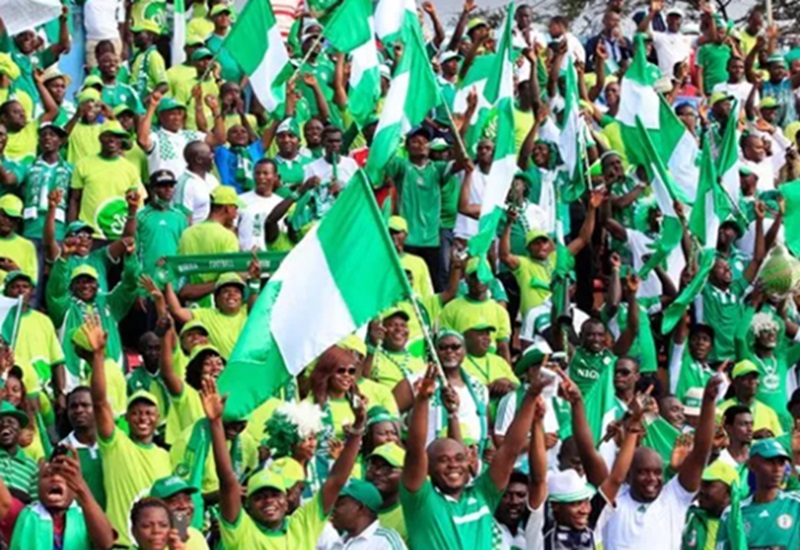
International tournaments like AFCON create a lot of betting activity in Nigeria especially when the national team is involved, or any time the international tournament is covered in the media. It comes in the shape of festival betting: concentrated, time-limited, emotionally charged.
Unlike the steady weekly flow of the EPL, AFCON has a tendency to be peaky during the window. Deposit can increase as people go back to wagering for the tournament, withdrawal can increase after decisive rounds. Even punters who play predominantly in club football often play AFCON when it is a special season for them.
Why these competitions dominate activity
There are three practical reasons as to why these competitions rise above the rest.
First is information. Bettors are more active when they believe that they know. High coverage competitions lead to endless analysis, highlights and discussion, which makes bettors feel confident, even with results remaining uncertain.
Second is market depth. The hottest competitions often have the smallest number of betting markets: match odds, totals, corners, cards, and a host of lines involving players. More markets equals more ways to bet, and can be translated into more transactions.
Third is social reinforcement. When everyone is watching the same leagues and tournaments, then betting forms part of the communal conversation. That social energy is what drives participation.
Bottom line
If by highest payment volume we talk about the competitions most consistently linked to heavy betting barrage, Nigeria’s centre of gravity is top European football, especially the EPL, followed by Champions League nights, other big European leagues and AFCON bursts during the tournament periods. It is nearly impossible to obtain exact payment volume data for each competition, so these precision rankings beyond these broad drivers can’t be found publicly, i.e., they’d have to be obtained internally by operators.
Sports
The Role of Live Sports in Modern Entertainment
Not many forms of entertainment still require people to show up in real time. Movies can be watched days later. Series can be binged over a weekend. Social media ensures that almost every major moment is available on demand. But live sports remain one of the few experiences where being present at the moment still matters.
The ongoing FIFA World Cup is proving exactly why. Every tournament comes with its own stories. There are the favourites expected to dominate, the underdogs rewriting expectations, and the players who suddenly become household names overnight. But beyond football itself, the World Cup continues to highlight something bigger: live sports have become one of the most powerful forces in modern entertainment.
What makes live sports different is simple: nobody knows how it ends. Unlike scripted television or pre-recorded content, sports thrive on unpredictability. A match can change in seconds. A last-minute goal can alter a nation’s mood. One decision, one save, or one upset can become a moment fans talk about for years. That uncertainty is what keeps people watching live rather than catching up later.
In an era where audiences increasingly consume content on their own schedules, live sports create a rare shared experience. Millions of people are reacting to the same moment at the same time. Conversations happen instantly online, and debates continue long after the final whistle.
The World Cup has once again shown how sports have evolved beyond competition into full-scale entertainment. The experience no longer begins at kick-off or ends at full-time. Pre-match analysis, expert commentary, post-match discussions, and digital conversations have become part of how fans engage with the game.
Access also plays a major role in this experience. Across Africa, fans continue to rely on platforms that bring the tournament closer to them. Through SuperSport on DStv and GOtv, viewers can follow the action live as it unfolds, experiencing every goal, upset and defining moment in real time rather than through highlights or social media clips.
This immediacy is part of why live sports remain so valuable in today’s entertainment landscape. While streaming has changed viewing habits and audiences have more content choices than ever before, sports still command attention in a way few other formats can.
The World Cup serves as a reminder that in a world of endless content, people still crave moments they can experience together. Live sports deliver exactly that: unscripted drama, shared emotions and memories that last long after the final whistle.
As entertainment continues to evolve, live sports have not lost their relevance. If anything, they have become even more important because in an age where almost everything can wait, some moments are simply better experienced live.
To make football’s biggest moment even more accessible, MultiChoice has introduced special World Cup bundle offers across DStv and GOtv ahead of the 2026 FIFA World Cup in the US, Mexico, and Canada. From June 1, 2026, new customers can get a full decoder kit plus a one-month subscription for ₦15,000 on either platform. The offer is aimed at helping more Nigerians stay connected to the tournament, which will feature 48 teams and 104 matches. Through SuperSport, viewers will enjoy full live coverage of all games, dedicated 24-hour World Cup channels, expert analysis, highlights, multilingual commentary including pidgin, and flexible viewing options on TV and streaming, so fans don’t miss any moment of the action.
Sports
2026 World Cup Opening Day Fixtures and Betting Market Overview
The largest World Cup in history begins on June 11, with 48 teams competing across 104 matches over 39 days. The opening day sets the tone for the whole group stage, and the first results carry more tactical and psychological weight than they might appear to at this stage. For fans following the tournament through platforms offering options like live betting on BizBet Africa, the opening fixtures provide the first look at how World Cup markets respond in real time. The first Group A fixtures give an early indication of how the opening section may develop. Two matches on the schedule give the first real indication of how the group stage will develop.
The Opening Fixtures and What They Mean
The tournament begins with Mexico in Group A, a repeat of the 2010 opener remembered for Siphiwe Tshabalala’s first goal of that tournament. The 2026 edition opens the competition on the same ground, with both teams having qualified from difficult groups and neither carrying the status of clear favourite to top their section.
The second listed Group A fixture is Korea Republic vs Czechia, giving the section two early results before most other groups begin. Two Group A matches on the first day mean the section develops earlier than most of the tournament, and those results can influence how teams approach the next round of fixtures.
The opening day of a World Cup under the new 48-team format carries more significance than previous editions because the third-place qualification system makes early goal difference relevant in ways it has not been before. A team that wins its opening match by a wide margin can improve its goal-difference position early, which may matter later if third-place ranking becomes relevant.
Here is a summary of the opening day fixtures and the group context around them:
| Match | Group | Key storyline |
| Opening match | A | Repeat of 2010 opener, historical weight |
| Second match | A | Completes first set of Group A fixtures |
Both matches in Group A mean the section has its first two results before any other group has begun, giving it a head start on the overall standings picture.
Key Narrative Threads Across the Opening Week
The first five days of the tournament run from June 11 to 15 and cover the opening matches of almost all 12 groups. By the end of that window, every team will have played at least once and the group standings will have their first shape.
These are the storylines most worth tracking across the opening week:
- Which squads affected by pre-tournament injuries show the most visible impact in their opening match
- Whether the new third-place qualification system produces tactical caution in any opening fixtures
- How the tournament’s leading goalscorer candidates perform in their first appearances
- Whether any significant upset results in the opening round reshape the pre-tournament favourite picture
- How the co-host nations perform across their respective opening fixtures
The opening week will produce the clearest early information about which squads are genuinely prepared for deep tournament runs and which face more difficult paths than their seedings suggested.
Why Opening Round Betting Markets Are So Unpredictable
Opening-round markets can move quickly because there is no current tournament form yet. Before kick-off, prices rely mainly on squad news, qualification results, recent friendlies and historical data. Once the match starts, that picture changes fast. A favourite that struggles in the first 15 minutes may drift in live markets, while an underdog that presses well, creates chances or controls possession can shorten before the first goal is even scored.
The markets most likely to move early are match winner, over/under and goalscorer. Over/under lines can react to tempo, early shots and defensive caution, while goalscorer prices often shift after lineups are confirmed. That is why opening-round markets are difficult to read from pre-match odds alone: the first few minutes can reveal more than a week of previews.
Sports
Barred World Cup Referee Omar Artan to Officiate UEFA Super Cup
By Adedapo Adesanya
European football body, UEFA, has appointed Somali referee Omar Artan to officiate the 2026 UEFA Super Cup after he was not allowed into the United States to officiate in the 2026 FIFA World Cup taking place in the US, Canada, and Mexico.
UEFA said Mr Artan will referee the August 12 game between Champions League winners Paris Saint-Germain and the Europa League winners, Aston Villa, in the Austrian capital, Salzburg.
The European football regulator said this follows discussions with its sister confederation, the Confederation of African Football (CAF).
Mr Artan got a hero’s welcome returning to Somalia on Wednesday, days after he was refused entry in Miami by US authorities despite being picked by FIFA for World Cup duty. US officials claimed Artan had connections to terror organisations without offering proof.
“The decision to appoint Artan to officiate the UEFA Super Cup match has been made in the framework of the Memorandum of Understanding (MoU) recently signed between UEFA and CAF to encourage cooperation in many areas, including refereeing. UEFA and CAF are united by a shared commitment to developing football at all levels and promoting the core values of unity, equality and non-discrimination,” UEFA said in a statement on Thursday.
Speaking on this development, Mr Aleksander Čeferin, UEFA president, said, “Omar Artan is an excellent young but already experienced referee, who has proven himself at the highest competition level of the Confederation of African Football. Football is made to connect people, and UEFA wants to show its respect to Omar and his outstanding officiating skills, which have earned him such a prestigious nomination. I am grateful to my friend CAF President Patrice Motsepe for supporting our initiative enthusiastically.”
Adding his input, Mr Patrice Motsepe, CAF president, said: “Omar Artan has made Somalia and the entire people of the African continent extremely proud. His receipt of the CAF Men’s Referee of the Year Award 2025 and his appointment as a referee of the FIFA World Cup 2026 are a recognition of his world-class refereeing ability and the international respect that he enjoys.”
“I am very thankful to my friend, Aleksander Čeferin, for enabling Omar Artan to officiate the UEFA Super Cup 2026 match. This is a great honour for Omar Artan and for African referees and is also an excellent example of football, bringing together and uniting people from Africa and Europe and worldwide,” he added.
The heroic referee has established himself as one of the world’s top referees and has been on the FIFA international list since 2018. Among the most notable matches he has officiated is the second leg of the 2025/26 CAF Champions League final. In recognition of his performances, he received the CAF Men’s Referee of the Year Award 2025.
-
Feature/OPED6 years agoDavos was Different this year
-
Travel/Tourism10 years ago
Lagos Seals Western Lodge Hotel In Ikorodu
-
Showbiz3 years agoEstranged Lover Releases Videos of Empress Njamah Bathing
-
Banking8 years agoSort Codes of GTBank Branches in Nigeria
-
Economy3 years agoSubsidy Removal: CNG at N130 Per Litre Cheaper Than Petrol—IPMAN
-
Banking3 years agoSort Codes of UBA Branches in Nigeria
-
Banking3 years agoFirst Bank Announces Planned Downtime
-
Sports3 years agoHighest Paid Nigerian Footballer – How Much Do Nigerian Footballers Earn