Connect with us

Economy

Buying Pressure Inflates NGX Performance Indices by 0.12%

Published

on

Trading activities NGX

By Dipo Olowookere

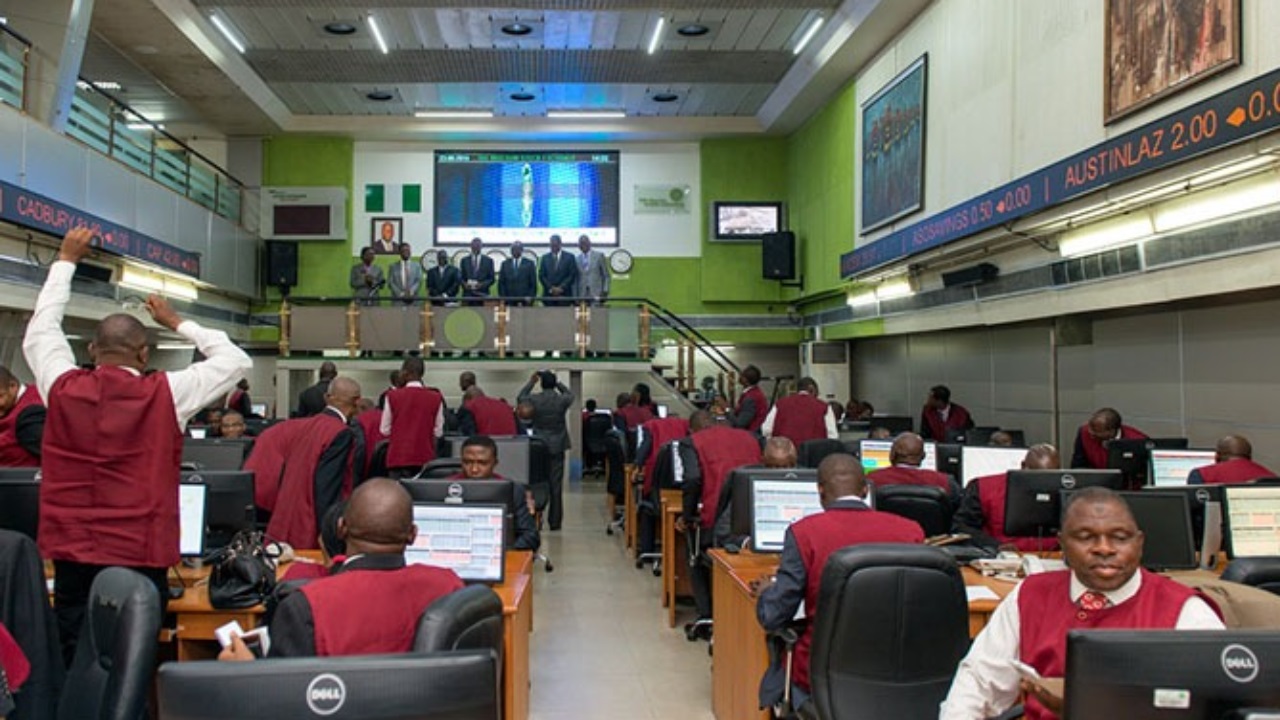
The Nigerian Exchange (NGX) Limited ended its first trading session of this week on a positive note after it improved by 0.12 per cent on Monday.

Buying pressure across key sectors of Customs Street influenced the growth achieved yesterday despite the global instability triggered by the war in Iran by the United States and Israel.

Energy stocks on the local bourse have continued to benefit from the crisis, which has raised the price of crude oil above $100 per barrel.

The energy index was up by 2.07 per cent during the session, and the consumer goods sector appreciated by 0.58 per cent, while the insurance and banking indices depreciated by 3.05 per cent and 0.99 per cent, respectively.

When the closing gong was struck on Monday, the All-Share Index (ASI) increased by 228.82 points to 197,196.97 points from 196,968.15 points, and the market capitalisation garnered N147 billion to settle at N126.584 trillion compared with last Friday’s N126.437 trillion.

The trio of Conoil, Legend Internet, and Omatek advanced by 10.00 per cent each to N185.90, N7.04, and N2.42 apiece, as NGX Group chalked up 9.97 per cent to trade at N166.00, and Oando appreciated by 9.96 per cent to N54.65.

Conversely, Aluminium Extrusion shrank by 10.00 per cent to N13.95, SCOA Nigeria declined by 9.90 per cent to N30.95, RT Briscoe lost 9.87 per cent to finish at N10.87, Sunu Assurances crashed by 9.81 per cent to N4.32, and Union Dicon lost 9.76 per cent to settle at N14.80.

The most active stock for the session was Fortis Global Insurance with 120.4 million units worth N174.1 million, Access Holdings exchanged 32.2 million units valued at N818.5 million, Chams traded 28.3 million units for N110.5 million, Zenith Bank transacted 25.3 million units worth N2.4 billion, and Japaul sold 21.6 million units valued at N82.1 million.

At the close of trades, market participants bought and sold 762.5 million shares for N31.2 billion in 86,488 deals during the session, in contrast to the 586.2 million shares valued at N30.6 billion traded in 62,699 deals in the preceding session, implying a spike in the trading volume, value, and number of deals by 30.08 per cent, 1.96 per cent, and 37.94 per cent apiece.


Dipo Olowookere is a journalist based in Nigeria that has passion for reporting business news stories. At his leisure time, he watches football and supports 3SC of Ibadan. Mr Olowookere can be reached via [email protected]

Click to comment

Leave a Reply

Your email address will not be published. Required fields are marked *

Economy

NECA Demands Accountability for N10.4tn Subsidy Funds Shared to States, LGs

Published

on

NECA Nigeria

By Adedapo Adesanya

The Nigeria Employers’ Consultative Association (NECA) has called on state and local governments to account for the N10.4 trillion they received from resources generated following the removal of the petrol subsidy.

The Director-General of NECA, Mr Adewale-Smatt Oyerinde, made the call on Channels Television’s Sunrise Daily on Thursday morning, a day after the Minister of Finance and Coordinating Minister of the Economy, Mr Taiwo Oyedele, disclosed details of the financial impact of the federal government’s economic reforms.

Mr Oyedele had said the removal of the petrol subsidy and reforms to the foreign exchange market mobilised N15.8 trillion for the Federation between June 2023 and December 2025.

According to the minister, the federal government received N5.4 trillion of the amount, while N10.4 trillion was distributed to state and local governments through the Federation Account.

Reacting to the disclosure, Mr Oyerinde said the states and local governments should now provide details of how the funds they received were utilised.

He particularly called on state commissioners for finance to disclose the amounts their respective governments received and how the funds were spent.

“Absolutely. I think it should trickle down. The commissioners of finance in states, you come out and also say, this is how much we’ve received; this is how much we have spent,” he said on the television programme.

Mr Oyerinde compared the expected disclosure by governments to the financial reporting obligations of private businesses, where companies present audited accounts and performance reports to shareholders.

“We believe strongly that as private businesses, at the end of the year you audit your accounts, you present your scorecard to your shareholders to gauge what we have done. The Minister of Finance has led the way now, and the states also should follow,” he said.

The NECA director-general urged state governments to provide a breakdown of the funds received, the challenges encountered and how the money was deployed.

“And so this is how much we have received. These are the constraints we face, and this is how we have expended this amount. I think we should move progressively towards transparency in government,” he said.

Mr Oyerinde commended the Federal Government for publicly disclosing details of its finances, describing the presentation by the finance minister as a step towards greater transparency in public administration.

He said the level of detail provided by Mr Oyedele would enable citizens and other stakeholders to better scrutinise government spending and assess the impact of the reforms.

The NECA boss also said greater disclosure by the sub-national governments would allow citizens to engage state and local governments more constructively on the use of public funds.

“I also put citizens, and I must say this, citizens are also in a good position now to engage constructively, engage the state governments constructively, and also engage local governments constructively, because that is where development should actually start,” Mr Oyerinde said.

Continue Reading

Economy

How FG, States, LGs Shared N15.8trn Subsidy Savings

Published

on

subsidy savings

By Adedapo Adesanya

The Minister of Finance and Coordinating Minister of the Economy, Mr Taiwo Oyedele, has said from the N15.8 trillion in subsidy savings, N5.4 trillion went to the federal government, and N10.4 trillion was shared between the 36 states and the 774 local governments of the federation between June 2023 and December 2025.

Mr Oyedele disclosed this on Wednesday in Abuja while presenting the federal government’s Nigeria’s Reform Scorecard: The Benefits, Costs and Harms Prevented, an assessment of the economic reforms implemented under President Bola Tinubu.

The finance minister said the N15.8 trillion in subsidy savings was distributed through the Federation Account, rather than being retained entirely by the federal government.

According to him, the central government received N5.4 trillion, representing about 34 per cent of the total savings, the states received N6.5 trillion, or 41 per cent, and the local councils received N3.9 trillion, representing about 24 per cent.

The combined N10.4 trillion allocated to states and local governments accounted for almost two-thirds of the total subsidy savings and was nearly twice the amount received by the federal government.

Mr Oyedele clarified that the N15.8 trillion should not be understood as money accumulated in a dedicated government account labelled “subsidy savings”.

Rather, he said the impact of the reforms was reflected in increased resources available to the federation through higher revenue collections, which were subsequently shared among the three tiers of government through the Federation Account.

The minister said the federal government’s N5.4 trillion share formed only one component of the additional resources available to it during the period.

It also recorded N3.1 trillion in incremental independent revenue, mainly from remittances by government-owned entities, and obtained N11.9 trillion in incremental borrowing.

Together, the three sources provided the federal government with N20.4 trillion in incremental resources between June 2023 and December 2025.

Mr Oyedele said the distribution of the subsidy savings underscored that the reform was not designed simply to increase Federal Government revenue, as a substantial portion of the additional resources accrued to the sub-national governments.

“The reform was never introduced for revenue purposes, but to address entrenched corruption in an artificially managed fuel subsidy and foreign exchange market,” he said.

He added that the federal government subsequently deployed its additional resources, alongside funds from its existing revenue base, to meet N30.64 trillion in incremental expenditure during the period.

Of the N20.4 trillion in incremental resources available to the federal government, borrowing accounted for 58 per cent, subsidy savings for 27 per cent and other revenue for 15 per cent.

The minister said the figures provided a clearer picture of how the financial impact of the subsidy reform was distributed across the Federation, with states and local governments collectively receiving the largest share.

Continue Reading

Economy

NIRSAL Relishes Participation of Non-Interest Banks in Credit Risk Guarantees for Loans

Published

on

NIRSAL guaranteed loan

By Aduragbemi Omiyale

The Nigeria Incentive-Based Risk Sharing System for Agricultural Lending (NIRSAL) Plc has expressed satisfaction with the growing participation of non-interest financial institutions in its credit risk guarantees for loans to farmers, processors, aggregators, exporters and other businesses across multiple agricultural value chains.

The chief executive of the non-bank financial institution created by the Central Bank of Nigeria (CBN) to de-risk agricultural lending in the country, Mr Sa’ad Hamidu, said non-interest lenders accounted for well over 50 per cent of the loans guaranteed by NIRSAL in the first half of 2026.

In 2025, the company guaranteed more than N100 billion to beneficiaries, and according to Mr Hamidu, this figure has already been surpassed in 2026 year-to-date.

Speaking at the AFRACA Masterclass on Inclusive Finance for Climate Resilience and Artificial Intelligence for Financial Services and Agricultural Finance in Lagos, the NIRSAL chief stated that the trend demonstrates what becomes possible when appropriate risk-sharing frameworks create sufficient confidence for different forms of capital to participate in agriculture.

“At NIRSAL, we have always maintained that agriculture, especially in sub-Saharan Africa, is not underfinanced because opportunities do not exist, but because the risks have not been sufficiently understood, measured, appropriately priced, and managed,” Mr Hamidu, represented by the agency’s Executive Director of Operations, Mr Ewaen Imohe, said.

He explained that NIRSAL’s response has been to co-develop systems and financing frameworks that bring greater structure to agricultural value chains, better define and mitigate their risks, and improve financiers’ understanding of the sector and confidence to lend.

The NIRSAL boss described the masterclass as particularly timely, noting that climate change is no longer an abstract global concern but a practical reality confronting farmers, agribusinesses and their financiers every production season across Africa.

The programme’s first major theme, Inclusive Finance for Climate Resilience, exposed participants to the concepts, tools, and approaches required to understand climate risk and develop financeable adaptation and mitigation projects.

For the second major theme, Artificial Intelligence for Financial Services and Agricultural Finance, Mr Hamidu expressed the expectation that participants would move beyond the excitement surrounding AI to examine how it can improve risk understanding, transaction assessment, and financial decision-making in agriculture.

He also pointed to opportunities for technology to complement climate finance, blended finance, grants, and other innovative mechanisms capable of expanding the financial and technical resources available to African agriculture.

On deepening AFRACA-NIRSAL collaboration, he stated that, “AFRACA, for us, is a platform for knowledge, continental exchange, and global insight. On our part, we remain a results-driven source of practical experience for AFRACA member countries.”

Continue Reading