Economy
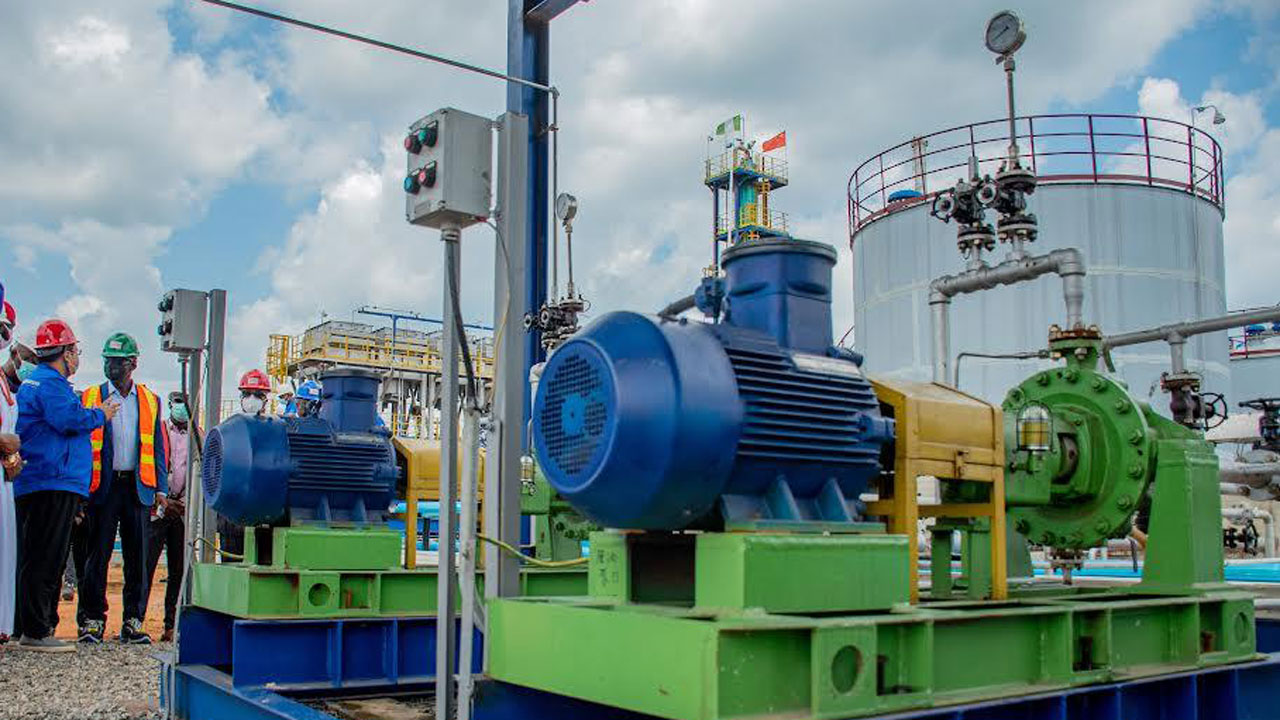
Nigeria’s Crude Output Falls 145,000bpd in February
By Adedapo Adesanya
Nigeria’s crude production dropped 145,000 barrels per day in February 2026, reversing the small gains made in January 2026.
The country averaged 1.314 million barrels of crude per day, a 9.94 per cent slide from the 1.459 million barrels of crude per day averaged in January 2026, according to data published in the March 2026 issue of the OPEC Monthly Oil Market Report (MOMR).
The main contributor to the decrease was the ongoing turnaround maintenance of the Bonga field, the country’s largest single producing accumulation. The TAM runs from February 1 to March 18, 2026.
February 2026 data from the Nigerian Upstream Petroleum Regulatory Commission (NUPRC) had not been released as of March 13, 2026, so it’s unclear what the volume of condensate produced in the month was since OPEC doesn’t publish condensate volumes produced by its members.
However, the crude oil figures published in the MOMR for every country are cleared with the regulatory agencies of those countries, so the 1.314 million barrels of crude per day figure is expected to be confirmed when NUPRC data for February 2026 is published on its website.
Despite the plunge, Nigeria remained Africa’s largest crude oil producer in the month, with second-place Libya also dropping from 1. 378 million barrels of crude per day in January to 1 287 million barrels of crude per day in February 2026.
The drop in production may affect Nigeria’s gains from the expected oil windfall, as skyrocketing oil prices are heightened by Iran’s closure of the Strait of Hormuz.
The closure of the Strait, which connects the Gulf to the world market, has triggered the biggest oil supply disruption in history. The narrow waterway is a critical energy choke point that typically carries roughly 20 per cent of the world’s oil.
The international benchmark Brent crude futures traded 1.9 per cent higher at $105.00 per barrel.
The Paris-based International Energy Agency (IEA) spearheaded more than 30 countries to release 400 million barrels of stockpiled oil to address the supply disruption. Asian nations will start releasing emergency oil supplies immediately, while countries in the Americas and Europe will start releasing their stockpiles by the end of March.
Economy
Afreximbank’s Gamble on Dangote Refinery Paid Off—Elombi
By Adedapo Adesanya
The President of the African Export-Import Bank (Afreximbank), Mr George Elombi, said the lender’s gamble on the soon-to-be expanded 650,000-barrel-per-day Dangote Refinery has paid off amid rising energy needs following the United States and Israel’s war on Iran.
Speaking recently on the sidelines of last Monday’s formal signing event to host the bank’s Intra-African Trade Fair 2027 in Lagos, a continental commerce event designed to boost trade across Africa, Mr Elombi said the fears that its involvement in the $20 billion infrastructure “could break Afreximbank” have proven to be a win for the company and the continent.
The $20 billion Dangote Refinery, which was largely financed by Afreximbank, has been described as a transformative project for Nigeria’s energy landscape. It has disrupted local markets as well as foreign markets.
In October 2025, Mr Elombi revealed in Cairo that Mr Aliko Dangote was seeking an additional $5 billion to expand his refinery in Lagos. This came after Afreximbank announced a $1.35 billion facility for Dangote Industries Limited as part of a $4 billion syndicated financing deal to refinance the construction of the complex, the largest single-train refinery in the world, in August. The bank contributed the largest share.
Mr Elombi, who took over the presidency of the lender in October, stated at the time that Mr Aliko Dangote had personally disclosed the plan earlier and assured the bank would explore all possible financing options.
In his latest comment regarding the relationship, he said, “We looked around, and we said, if we didn’t do it, then who else was going to come and take the risk later. Still, the risk is a gamble, but on this occasion we were lucky because it turned out to be a very positive gamble.”
“You gamble on someone like Mr Aliko Dangote, every type of gamble will be on the winning side. So we went along with the gamble, and you can see what the impact is; it is that he can now refine domestically and sell at the domestic rate. We can now use Dangote as an instrument for dealing with our refined product challenges across the Gulf of Guinea and further in some countries,” he added.
He described the refinery as “a development instrument” for African countries in light of the disruptions, saying “he (Dangote) has to use it for that purpose and we will be using it all the way down the Atlantic Coast, Namibia, Botswana, where we intend to put storage facilities so that when crises happens like this, long as is further away from the African coast.”
Economy
Coronation Sees February 2026 Inflation Cooling to 14.12%
By Aduragbemi Omiyale
Analysts at Coronation Research are projecting the inflation rate for February 2026 to moderate by 0.98 per cent to 14.12 per cent from the 15.10 per cent recorded in the preceding month.
The National Bureau of Statistics (NBS) is expected to release the inflation numbers today, Monday, March 16, 2026.
In a note released over the weekend, Coronation Research disclosed that the fall in the average prices of goods and services for last month would be impacted by a decline in the prices of food items.
“Our projection is supported by favourable base effects, easing food price pressures, and slight appreciation of the Naira,” a part of the report sighted by Business Post read.
The organisation revealed that the ongoing government interventions in the agricultural sector to improve food supply conditions are beginning to ease pressures within the food component of the consumer basket.
It further stated that “appreciation of the Naira to N1,363.40/1$ from N1,386.55/1$ in January is expected to reduce the cost of imported food items.”
However, it stressed that the ongoing US/Israel-Iran war was capable of reversing the deflationary trends because of the rising global energy prices.
“Also, the $200 million financing approved by the African Development Bank (AfDB) Group to scale up priority agricultural investments is expected to be disbursed in March, but its impact is likely to materialise in the medium to long term, with limited immediate effects on food supply and prices,” it said.
Coronation Research also disclosed that the recent energy market developments could keep core inflation sticky in the near term, as average Bonny Light crude oil prices rose to $72.33 per barrel in February 2026 from $68.04 per barrel in January.
Economy
SERAP Calls for Investigation into NNPC’s N5.9bn Rebranding
By Adedapo Adesanya
The Socio-Economic Rights and Accountability Project (SERAP) has called on President Bola Tinubu to order an investigation into the alleged N5.9 billion rebranding cost of the old Nigerian National Petroleum Corporation into the Nigerian National Petroleum Company (NNPC) Limited.
In a Sunday statement, SERAP urged Mr Tinubu to direct the Attorney General of the Federation and Minister of Justice, Mr Lateef Fagbemi, alongside anti-corruption agencies, to look into the matter.
The group further urged the President to direct the panel to identify and invite officials who authorised the payment and contractors who handled the project for questioning.
“We’ve urged President Bola Tinubu to urgently direct the Attorney General of the Federation and Minister of Justice, Mr Lateef Fagbemi, SAN, and appropriate anti-corruption agencies to promptly investigate the alleged expenditure of about ₦5.9 billion reportedly spent on the rebranding of the Nigerian National Petroleum Corporation (NNPC) to the Nigerian National Petroleum Company Limited (NNPCL).
“We also urged him to direct the Economic and Financial Crimes Commission (EFCC) and the Independent Corrupt Practices and Other Related Offences Commission (ICPC) to identify the officials who approved and paid the amount, and the contractor(s) who collected the money, and to invite them for questioning,” the organisation stated.
SERAP further alleged that the NNPC reportedly paid N2.9 billion for incorporation expenses from petroleum product proceeds, while the National Petroleum Investment Management Services (NAPIMS) also charged N2.9 billion against crude oil revenue for the same purpose.
The group argued that the total cost was valued at about N5.9 billion, which was spent by the NNPCL for the rebranding.
“There ought to be full transparency and accountability regarding the reported ₦5.9 billion spent on rebranding NNPC to NNPCL.”
SERAP emphasised that Nigerians have the right to know who approved the expenditure, who received the money, and whether due process was followed.
“Any investigation into the rebranding project should determine whether the N5.9 billion represents value for money, lawful spending of public funds, and compliance with transparency and accountability requirements,” the statement concluded.
Business Post reports that NNPC became a limited liability company on July 1, 2022, under the Companies and Allied Matters Act (CAMA) in line with the implementation of the Petroleum Industry Act (PIA), which was signed into law on August 16, 2021, by late President Muhammadu Buhari.
-
Feature/OPED6 years agoDavos was Different this year
-
Travel/Tourism10 years ago
Lagos Seals Western Lodge Hotel In Ikorodu
-
Showbiz3 years agoEstranged Lover Releases Videos of Empress Njamah Bathing
-
Banking8 years agoSort Codes of GTBank Branches in Nigeria
-
Economy3 years agoSubsidy Removal: CNG at N130 Per Litre Cheaper Than Petrol—IPMAN
-
Banking3 years agoSort Codes of UBA Branches in Nigeria
-
Banking3 years agoFirst Bank Announces Planned Downtime
-
Sports3 years agoHighest Paid Nigerian Footballer – How Much Do Nigerian Footballers Earn