Economy
Nigeria to Improve Efficiency in Import, Export Processes
By Adedapo Adesanya
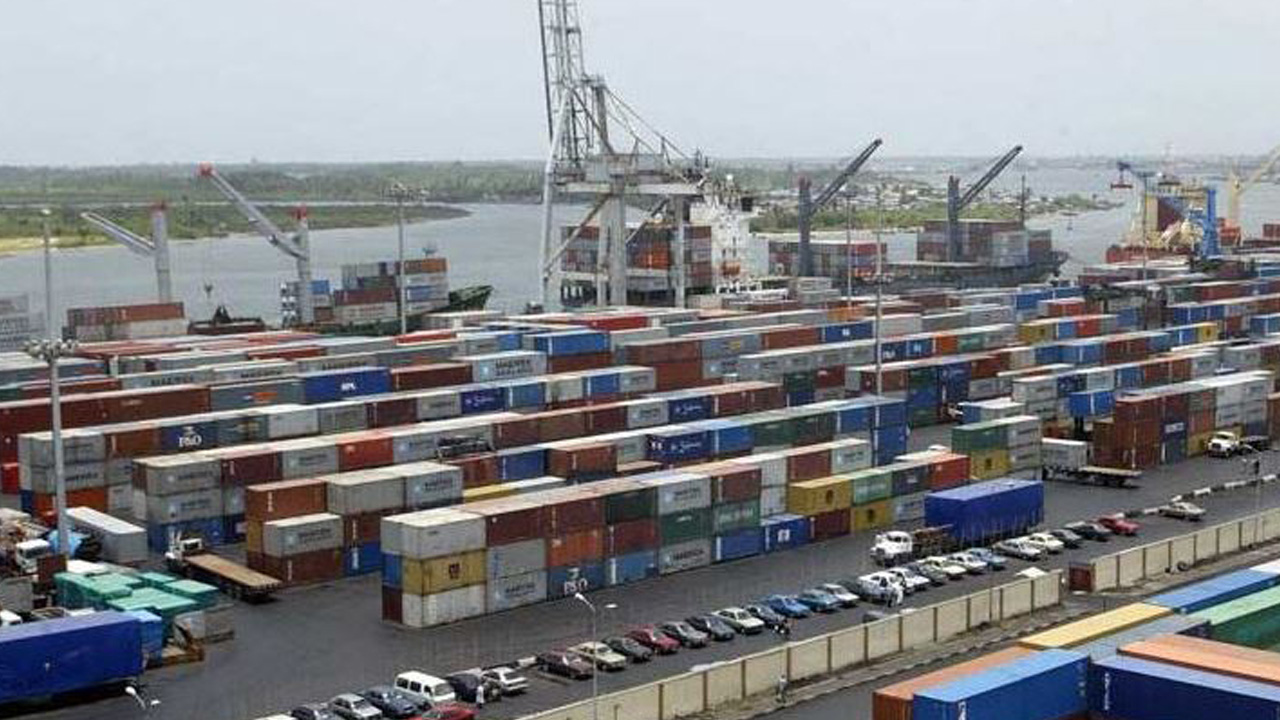
Nigeria is targeting cutting port delays, reducing costs, and improving efficiency in import and export processes with the National Single Window (NSW), a major digital trade reform.
The reform initiative is designed to address cargo dwell time, eliminate multiple agency visits and process duplication, and reduce human interference and operational bottlenecks.
The Minister of Finance and Coordinating Minister of the Economy, Mr Wale Edun, speaking in Lagos, explained that the initiative, alongside the upgrade of Apapa and Tin Can Island ports, represents a turning point in Nigeria’s trade and economic trajectory.
Mr Edun said that as of 2025, cargo dwell time at Nigerian ports averages between 18 and 21 days, about 475 per cent higher than the global average of four days, resulting in high costs of doing business, delays for importers and exporters, and reduced competitiveness of Nigerian goods.
According to him, the NSW and port modernisation are part of a broader economic strategy under the leadership of President Bola Ahmed Tinubu to strengthen macroeconomic stability, improve the ease of doing business, attract and scale investment, and achieve a 7 per cent medium-term economic growth target.
He added that the reforms demonstrate a coordinated, system-wide approach to economic transformation.
“Phase 1 of the NSW directly targets the 73 per cent transaction delay component by introducing a single digital platform for trade documentation, eliminating multiple agency visits and duplicative processes, and enabling electronic submission of Licences, Permits, and Certificates (LPCOs), digital manifest processing, centralised risk management across agencies, transparent electronic payments, faster document processing, reduced human interface and bottlenecks, and more predictable and transparent timelines,” he said.
He added that the launch of Phase 1 of the NSW coincides with last week’s deal to upgrade Apapa Port (built in 1913) and Tin Can Island Port (built in 1977), describing both as coordinated reforms designed to cut cargo dwell time, reduce trade costs, and unlock economic growth.
According to the Minister of Trade and Investment, Mrs Jumoke Oduwole, the platform is scheduled to go live on Friday and will include one shipping line and one port.
“These are the kinds of game changers in terms of trade facilitation that we need,” Oduwole said, adding that it is a priority project for an economy of Nigeria’s size that is working to emphasise trading.
Mrs Oduwole said streamlining imports and exports at the ports could have a “multiplier effect” in terms of balance of trade and foreign exchange generation.
Economy
Airtel Africa Moves to Return Cash to Shareholders With $110m Buyback
By Adedapo Adesanya
Airtel Africa has launched a share buyback programme worth up to $110 million, signalling confidence in its strong balance sheet and financial flexibility as the telco seeks to return value to shareholders.
The company disclosed in a notice filed on the portal of the Nigerian Exchange (NGX) Limited that the programme would involve the repurchase of up to 1 per cent of its issued share capital as part of its capital allocation policy.
The telco further stated that all shares repurchased under the programme would be cancelled as the sole purpose of the exercise is to reduce the company’s capital base.
“The sole purpose of the buyback programme is to reduce the capital of the company. As such, all shares purchased under the buyback programme will be cancelled,” the notice stated.
According to the organisation, the initiative reflects the board’s confidence in the group’s financial position and its ability to continue investing across its African operations while rewarding shareholders.
“The board’s decision reflects the continued strength of the Group’s balance sheet and its ability to preserve financial flexibility while supporting ongoing investment to capitalise on the compelling growth outlook across the Group’s footprint,” the notice stated.
Airtel Africa said it had entered into an agreement with Barclays Capital Securities Limited to execute the programme through on-market purchases of its ordinary shares, which would subsequently be acquired by the company. The agreement, according to the notice, consists of two parallel elements.
Under the non-discretionary arrangement, Barclays will independently purchase between $50 million and $60 million worth of ordinary shares without influence from the company.
The second component is a discretionary arrangement under which Airtel Africa may instruct Barclays to purchase up to an additional $50 million worth of shares, subject to the provisions of the Market Abuse Regulation.
The programme commenced on May 22, 2026, and is expected to run until no later than November 27, 2026, unless terminated earlier in line with the terms of the agreement.
Airtel Africa said further tranches of the programme could be announced later to enable it fulfil its objective of repurchasing up to one per cent of its issued share capital as at the date of the announcement.
The telecommunications company also explained that the purchases would be carried out in line with shareholder approvals, UK listing regulations and market abuse rules. It noted that shareholders had earlier granted the company authority at its annual general meeting held on July 9, 2025, to repurchase a maximum of 366.07 million ordinary shares.
Following the completion of an earlier buyback programme, Airtel Africa said the remaining authority available for repurchases currently stands at 357.04 million ordinary shares.
The company further disclosed that Barclays may continue executing the discretionary portion of the buyback autonomously during closed periods under irrevocable and non-discretionary instructions permitted by regulation.
The new buyback announcement comes weeks after Airtel Africa reported strong financial and operational performance for the year ended March 31, 2026 (Q1), supported by growth in data usage, mobile money services and improved profitability across its markets.
According to its audited financial statement, the group recorded a 29.5 per cent increase in revenue to $6.42 billion from $4.96 billion in the previous year, while profit after tax (PAT) rose by 147.4 per cent to $813 million from $328 million.
Economy
Court Battle: Tension Brews as NNPC Accuses Dangote of Monopoly
By Adedapo Adesanya
* NNPC rejects Dangote’s argument, cites risks
* NMDPRA joins suit
The Nigerian National Petroleum Company (NNPC) has accused Dangote Petroleum Refinery of seeking to restrict competition and expose the country’s fuel market to monopoly control.
This came after the management of the 650,00/ barrels per day refinery challenged import licences issued to rival marketers in court by suing the federal government.
In a proposed defence filed at the Federal High Court in Lagos, NNPC said granting Dangote’s request to void or restrict import permits would expose Africa’s largest oil producer to supply disruptions, price instability and risks to national energy security.
The regulator, the Nigerian Midstream and Downstream Petroleum Regulatory Authority (NMDPRA), has applied to join the case, widening a legal battle over import policy and Dangote refinery’s market position.
Dangote said in the filing that the licences issued to marketers, including NIPCO, AA Rano, Matrix, Shafa, Pinnacle, and Bono, undermined its operations and contravene the provisions of Nigeria’s Petroleum Industry Act, which it argues allows imports only when domestic supply falls short.
Named in the suit against the country is the Attorney General and Minister of Justice, Mr Lateef Fagbemi. The federal government can only be sued via his office.
The state-owned oil company rejected the argument, saying the law allows import licences to companies with local refining licences or proven records in international crude and petroleum-product trading.
It said regulators had discretion to manage imports under Nigeria’s backwards-integration policy and that there was no mandatory ban on imports except in cases of domestic shortfall.
NNPC also said Dangote had not provided “credible, independent or verifiable evidence” that the refinery could meet Nigeria’s total fuel demand or guarantee uninterrupted nationwide supply, the court documents show.
The company denied allegations that it had sabotaged Dangote’s refinery or deliberately withheld crude, saying crude allocations depended on operational, commercial, security and logistical factors.
The court has scheduled a hearing in the coming weeks.
Fuel marketers under Depot and Petroleum Products Marketers Association of Nigeria (DAPPMAN) have also opposed Dangote’s suit, warning it could hurt competition and supply security.
The dispute comes months before Dangote’s planned September IPO of its refinery business, adding uncertainty over market rules, import competition and the revenue outlook investors may assign to the 650,000-barrel-per-day plant.
Economy
55 Stocks Lower NGX Index by 0.25% in One Week
By Dipo Olowookere
The All-Share Index (ASI) of the Nigerian Exchange (NGX) Limited contracted by 0.25 per cent week-on-week last week to 249,712.37 points, and compressed the market capitalisation by 0.23 per cent to N160.077 trillion.
This was due to profit-taking, which also caused all other indices to finish lower except for CG, premium, banking, pension, AFR Bank Value, MERI growth, energy, growth and commodity indices, which appreciated by 0.24 per cent, 0.33 per cent, 1.11 per cent, 0.19 per cent, 1.47 per cent, 0.33 per cent, 0.07 per cent, 1.57 per cent and 0.02 per cent, respectively. The sovereign bond index was flat in the week.
Data from Customs Street showed that 38 equities appreciated during the week versus 74 equities in the previous week, 55 shares depreciated versus 24 shares of the preceding week, and 53 stocks remained unchanged versus 48 stocks a week earlier.
ABC Transport gained 44.82 per cent to trade at N9.08, Academy Press improved by 29.79 per cent to N9.15, University Press grew by 28.00 per cent to N6.40, International Energy Insurance appreciated by 22.22 per cent to N3.41, and Learn Africa jumped 18.89 per cent to N12.90.
Conversely, Sovereign Trust Insurance lost 22.45 per cent to settle at N2.28, Trans-Nationwide Express moderated by 18.98 per cent to N5.72, CAP depleted by 14.85 per cent to N199.00, Berger Paints slumped by 12.64 per cent to N147.60, and RT Briscoe slipped by 11.18 per cent to N14.06.
Business Post reports that market participants traded 3.875 billion shares worth N161.757 billion in 334,745 deals in the five-day trading week versus the 7.772 billion shares valued at N374.040 billion traded in 402,945 deals in the previous week.
Financial stocks led the activity chart with 2.410 billion units sold for N69.712 billion in 126,919 deals, contributing 62.19 per cent and 43.10 per cent to the total trading volume and value, respectively.
Services equities recorded a turnover of 409.306 million units worth N5.409 billion in 25,908 deals, and energy shares exchanged 294.859 million units valued at N31.496 billion in 26,738 deals.
Sterling Holdings, Fidelity Bank, and Access Holdings accounted for 1.092 billion units worth N19.527 billion in 21,683 deals, contributing 28.18 per cent and 12.07 per cent to the total trading volume and value, respectively.
-
Feature/OPED6 years agoDavos was Different this year
-
Travel/Tourism10 years ago
Lagos Seals Western Lodge Hotel In Ikorodu
-
Showbiz3 years agoEstranged Lover Releases Videos of Empress Njamah Bathing
-
Banking8 years agoSort Codes of GTBank Branches in Nigeria
-
Economy3 years agoSubsidy Removal: CNG at N130 Per Litre Cheaper Than Petrol—IPMAN
-
Banking3 years agoSort Codes of UBA Branches in Nigeria
-
Banking3 years agoFirst Bank Announces Planned Downtime
-
Sports3 years agoHighest Paid Nigerian Footballer – How Much Do Nigerian Footballers Earn