Economy
Nigeria Can’t do Without Importing Fuel For Now—Lokpobiri
By Adedapo Adesanya
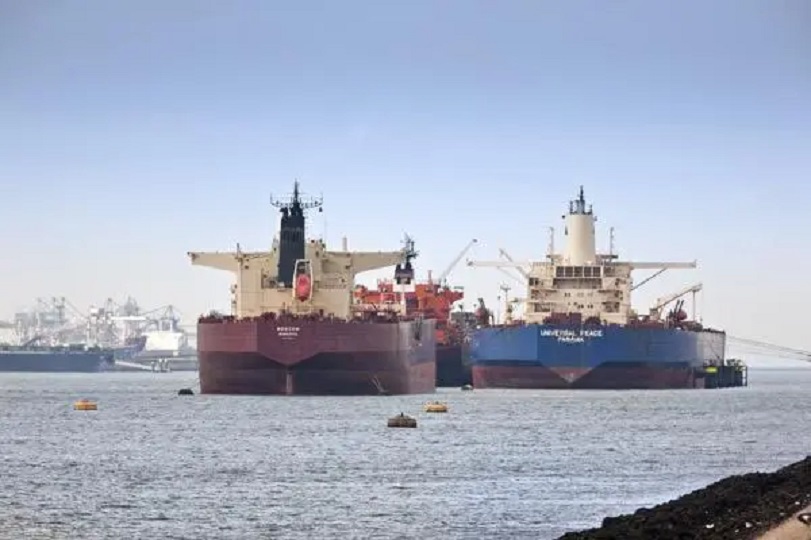
The Minister of State for Petroleum Resources (Oil), Mr Heineken Lokpobiri, has acknowledged that the country still depends on imported petroleum products as domestic refining cannot fully meet local demand.
Speaking on the state of the downstream sector at the CERAWeek by S&P Global Conference in Houston, Texas, Mr Lokpobiri acknowledged that while local refining capacity has improved significantly, it remains insufficient to fully cover national consumption.
The Minister noted that Nigeria was making measurable progress, with domestic refining contributing a growing share of supply, but added that imports remain a critical component of the country’s fuel supply mix for now.
“We are not yet at a point where local production alone can satisfy total consumption,” he said, underscoring the need to sustain imports while capacity continues to build.
The Minister emphasised that Nigeria’s daily fuel consumption stands at about 50 million litres, while domestic refining output remains below that level, making imports necessary to bridge the shortfall and ensure supply stability.
Data from the Nigerian Midstream and Downstream Petroleum Regulatory Authority (NMDPRA) aligns with this position, showing that although local refining volumes have risen in recent months, they are not yet sufficient to fully meet national demand.
Dangote refinery had earlier this year said it can supply 75 million litres of Premium Motor Spirit (PMS) daily against an estimated national consumption of 50 million litres, alongside 25 million litres of Automotive Gas Oil (AGO) compared with an estimated daily demand of 14 million litres.
It also stated that it has the capacity to supply 20 million litres of aviation fuel daily, far above the estimated maximum domestic consumption of four million litres.
According to the refinery, the availability of volumes above prevailing demand provides critical supply buffers, enhances market stability and reduces reliance on imports, particularly during periods of peak demand or logistical disruption.
The minister highlighted what he described as a fundamental shift in Nigeria’s petroleum sector following recent reforms.
He noted that Nigeria has moved away from a subsidy-driven regime that, for years, placed a heavy fiscal burden on the country and distorted the downstream market.
According to him, the removal of subsidies has not only eased pressure on government finances but also curtailed widespread fuel smuggling and arbitrage that previously thrived under price differentials.
Mr Lokpobiri said the deregulation of the downstream sector is beginning to deliver results, with a more transparent and competitive market structure emerging. This, he added, is helping to restore investor confidence and attract new investments into refining and related infrastructure.
The minister also pointed to ongoing efforts to rehabilitate existing refineries and support new refining projects, noting that these initiatives are critical to closing the gap between production and consumption.
He emphasised that while Nigeria is making steady progress toward boosting domestic refining capacity, noting that the transition will take time to sustain investment and policy consistency.
At the same time, Mr Lokpobiri underscored Nigeria’s ambition to evolve beyond meeting local demand to becoming a supplier of refined petroleum products within the West African region.
However, he maintained that achieving that goal depends first on significantly expanding domestic capacity.
Economy
Customs Street Rallies 0.36% Amid Weakened Market Activity
By Dipo Olowookere
The first trading session of this week on Customs Street ended on a positive note, with a 0.36 per cent leap on Monday buoyed by buying pressure in some stocks.
Business Post reports that 50 equities ended on the gainers’ chart yesterday, offsetting the selling pressure on 30 other equities, indicating a positive market breadth index and strong investor sentiment.
Market participants are gradually getting accustomed to the extended trading window introduced last Monday, which stretched the closing hour to 4 pm from 2:30 pm.
The duo of FTN Cocoa and Consolidated Hallmark gained 10.00 per cent each to quote at N6.05 and N5.72 apiece, as CAP grew by 9.99 per cent to N159.70, Dangote Sugar increased by 9.97 per cent to N76.65, and RT Briscoe surged by 9.96 per cent to N11.70.
On the flip side, International Energy Insurance declined by 9.82 per cent to N2.48, UPDC shrank by 9.18 per cent to N4.45, Learn Africa moderated by 8.06 per cent to N8.55, NEM Insurance retreated by 8.02 per cent to N28.10, and Guinea Insurance tumbled by 7.83 per cent to N1.06.
Yesterday, the insurance index was up by 1.25 per cent, the industrial goods space expanded by 1.08 per cent, the consumer goods industry improved by 0.83 per cent, and the banking sector jumped by 0.41 per cent, while the energy counter contracted by 0.89 per cent.
At the close of business, the All-Share Index (ASI) of the Nigerian Exchange (NGX) Limited went up by 883.71 points to 243,161.52 points from 242,277.81 points, and the market capitalisation soared by N64 billion to N156.058 trillion from N155.994 trillion.
A total of 967.5 million shares worth N43.8 billion were traded by investors in 122,041 deals during the session compared with the 1.9 billion shares valued at N104.3 billion in 92,353 deals last Friday.
This indicated a leap in the number of deals by 32.15 per cent, and a drop in the trading volume and value by 49.08 per cent and 58.01 per cent, respectively.
Closing the day on top of the activity chart was Access Holdings with 182.7 million units sold for N4.7 billion, AIICO Insurance transacted 58.1 million units worth N264.2 million, Fidelity Bank exchanged 57.5 million units valued at N1.1 billion, Zenith Bank traded 48.9 million units worth N6.4 billion, and Chams sold 45.9 million units valued at N149.4 million.
Economy
Higher Fuel Costs Limit Growth as Stanbic IBTC PMI Reads 52.4 in April
By Aduragbemi Omiyale
The Stanbic IBTC Purchasing Managers’ Index (PMI) for April 2026 stood at 52.4 points compared with the 51.9 points recorded in March 2026, a statement from the lender on Monday revealed.
Though the Nigerian private sector remained in growth territory, it was stunted by higher fuel costs because of the war in Iran, triggered by the United States and Israel, which led to the closure of the Strait of Hormuz. The rising fuel prices have limited expansions in new orders and business activity.
Companies took on extra staff in April in response to rising workloads, but the rate of job creation was only marginal and the softest in three months. Some organisations reported that staff shortages had been behind the latest accumulation of backlogs of work, while others cited customer payment delays and issues securing raw materials. Outstanding business increased for the third consecutive month in April.
Further efforts were made to secure materials, with purchasing activity increasing for the seventeenth month running in April. Stocks of purchases also rose amid improving customer demand, and at a marked pace that was the sharpest in five months. When companies placed orders for materials, they often made sure to pay on time in order to secure deliveries. As a result, supplier lead times shortened again, albeit to the least extent in 2026 so far.
“The health of Nigeria’s private sector improved in April – remaining above the 50-point growth threshold for the third consecutive month – as new orders increased in line with higher customer numbers and rising demand even as price pressures remain prevalent.
“Accordingly, the headline PMI increased to 52.4 points in April from 51.9 points seen in March,” the Head of Equity Research West Africa at Stanbic IBTC Bank, Mr Muyiwa Oni, commented.
He further said, “Despite the improvement in new orders, we understand that lingering inflationary pressures limited the pace of expansion.
“Notably, companies increased their selling prices in April to the highest level since December 2024 in response to rising fuel and raw material costs. Staff costs also increased modestly as some companies increased their staff pay so as to help them with increasing transportation fares.
“Business expectations also improved in April compared to March as businesses plan to expand their operations through the opening of new branches, stock building, and entry into new markets.”
“The improved start of the second quarter of the year by Nigerian businesses continues to support our view of improved growth expectations in 2026 relative to 2025.
“Hence, we still maintain our expectation that the Nigerian economy is likely to grow by 4.22 per cent y/y in 2026, from 3.87 per cent y/y in 2025.
“We estimate the non-oil sector’s growth at 4.24 per cent y/y in 2026, from 3.71 per cent y/y in 2025, likely driven primarily by services, which we see growing by 5.64 per cent y/y in 2026 (vs 2025: 4.14 per cent y/y).
“The government’s continuous investment attraction across oil & gas, solid minerals, electricity, agriculture and general manufacturing should continue to support sentiment on production activity.
“However, the oil sector’s growth is likely to moderate to 3.01 per cent y/y (vs 2025: 8.50 per cent y/y), as we now expect crude oil production (including condensates) to average 1.70m bpd, from 1.64m bpd in 2025,” he added.
Economy
Otedola Denies Funding, Owning Stake in Dangote Refinery
By Adedap0 Adesanya
Nigerian businessman, Mr Femi Otedola, has dismissed reports suggesting he has a stake and financed the Dangote Petroleum Refinery, describing the allegation as completely false.
The billionaire, who is a close ally of Mr Aliko Dangote, the owner of the $20 billion oil facility, clarified in a statement on Monday that those behind such claims were spreading misinformation and attempting to create division among leading Nigerian business figures.
His clarification came a day after the Dangote Group addressed viral claims suggesting a financing rift between its president, Mr Dangote, and fellow businessman, Mr Tony Elumelu.
He wrote, “Let’s set the record straight. Reports claiming that Femi Otedola funded the Dangote Petroleum Refinery are completely and utterly false. He has not invested a single kobo, not one dollar, not one naira.”
He added that, “The real story, which those peddling these lies conveniently ignore, is that Mr Otedola has actually been requesting a special allocation to participate in the refinery’s forthcoming public offer.”
Mr Otedola further explained that Mr Dangote did not request financial support from Mr Elumelu, Mr Mike Adenuga, or himself, a statement that aligns with a clarification issued by the Dangote Group’s Chief Branding and Communications Officer, Mr Anthony Chiejina.
The company also warned individuals, organisations, and platforms involved in creating, publishing, or disseminating such false content to desist immediately.
Mr Otedola said, “I can categorically state that at no point did Alhaji Dangote request financing from Mr Elumelu, Mr Adenuga and me. The Dangote Group is a well-structured organisation that is well-versed in raising structured capital for its operations.
“This is calculated mischief and a deliberate attempt to create rifts and sow discord within Nigeria’s closely knit and respected private sector leadership. These are men who have built businesses, created jobs, and invested in this nation for decades. They deserve better than to be used as props in a social media fabrication.”
“To those behind this: desist immediately.. And to everyone else, social media is not a tool for manufactured drama. Nigeria deserves truth, not lies dressed up as insider information,” Mr Otedola warned.
-
Feature/OPED6 years agoDavos was Different this year
-
Travel/Tourism10 years ago
Lagos Seals Western Lodge Hotel In Ikorodu
-
Showbiz3 years agoEstranged Lover Releases Videos of Empress Njamah Bathing
-
Banking8 years agoSort Codes of GTBank Branches in Nigeria
-
Economy3 years agoSubsidy Removal: CNG at N130 Per Litre Cheaper Than Petrol—IPMAN
-
Banking3 years agoSort Codes of UBA Branches in Nigeria
-
Banking3 years agoFirst Bank Announces Planned Downtime
-
Sports3 years agoHighest Paid Nigerian Footballer – How Much Do Nigerian Footballers Earn