Connect with us

General

NSC Stands by Tariff Changes, Defends ICTN Rollout Delay

Published

on

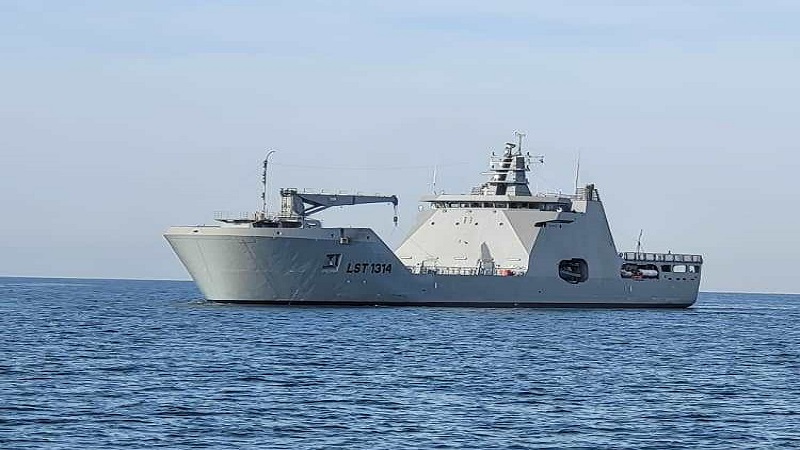
Nigerian Navy Ship KADA

By Adedapo Adesanya

The Nigerian Shippers’ Council (NSC) has defended the council’s recent tariff adjustments that sparked outrage and the delayed implementation of the International Cargo Tracking Note (ICTN).

The Executive Secretary and Chief Executive Officer of the council, Mr Pius Ukeyima, noted in Lagos on Friday that all actions taken by the agency were guided strictly by law, due process, and extensive stakeholder consultations rather than external pressure or inconsistency in policy direction.

He explained that the tariff regulation was a core statutory responsibility of the council under Sections 5 and 6 of the Port Economic Regulations 2025, stressing that the NSC acted within its legal mandate in approving adjustments after years of sustained pressure from service providers who had repeatedly demanded significant increases due to rising operational costs.

He noted that for more than two and a half years, no tariff review had been implemented despite inflationary trends, increasing cost of operations, and multiple requests from industry players, some of which ranged between 150 per cent and 300 per cent increases, which the council had to carefully moderate in order to prevent wider economic disruption.

The NSC scribe maintained that tariff adjustment in the maritime sector cannot be treated as a profit-driven exercise but rather as part of broader sectoral development and investment sustainability, adding that any decision must take into account key macroeconomic indicators such as inflation, GDP performance, and the potential impact on national trade.

According to him, the council deliberately adopted a cautious approach given that over 80 per cent of Nigeria’s trade is dependent on maritime transport, warning that excessive tariff hikes could have immediate ripple effects across the economy.

On concerns that shipping companies were introducing exploitative charges and that the regulator was merely reacting to crises, he dismissed the allegation, stating that the council did not act arbitrarily but approved a structured adjustment framework of about 35 per cent, which was designed as a flexible band rather than a fixed rate.

He explained that operators were allowed to implement within an approved range, typically between 10 and 20 per cent, depending on their operational realities, while cautioning that any over-implementation would distort competitiveness in the sector.

Mr Akutah clarified that the tensions were not systemic but largely isolated to a disagreement between Mediterranean Shipping Company (MSC) and its stakeholders.

He said that other shipping companies successfully concluded their stakeholder engagements without incident, adding that the situation with MSC stemmed from a breakdown in agreement during consultations rather than any regulatory lapse.

He disclosed that he personally intervened during a protest at MSC premises to de-escalate tensions and encourage dialogue, noting that regulatory engagement must always remain the preferred route for resolving disputes in the sector.

Addressing concerns about regulatory interference, he warned against what he described as regulatory capture, arguing that undue external pressure on a statutory regulator could undermine transparency and distort the balance required to protect both shippers and service providers.

He emphasised that the Council’s role is to maintain equilibrium in the industry, not to favour one side over another, stressing that the collapse of any segment of the value chain would ultimately affect national trade.

On the International Cargo Tracking Note (ICTN), Mr Akutah acknowledged delays in implementation but attributed them to a complex web of legal disputes, court cases, and historical inconsistencies surrounding the project, explaining that the council was currently working with the Ministry of Justice to resolve outstanding litigation involving some stakeholders before full rollout can proceed, noting that the objective is to ensure a seamless and legally sound implementation that will not be subject to further suspension.

He reaffirmed that ICTN remains critical to improving cargo security, enhancing tracking efficiency, and safeguarding national revenue, but stressed that the Council must ensure all legal bottlenecks are resolved to avoid operational setbacks.


Adedapo Adesanya is a journalist, polymath, and connoisseur of everything art. When he is not writing, he has his nose buried in one of the many books or articles he has bookmarked or simply listening to good music with a bottle of beer or wine. He supports the greatest club in the world, Manchester United F.C.

General

NUPRC Issues Directive on Measurement-Based Methane, GHG Reporting

Published

on

oritsemeyiwa Eyesan nuprc

By Adedapo Adesanya

The Nigerian Upstream Petroleum Regulatory Commission (NUPRC) has issued a new directive mandating upstream oil and gas operators to adopt standardised templates and transition to measurement-based reporting of methane and greenhouse gas (GHG) emissions.

The directive was signed by the chief executive of the commission, Mrs Oritsemeyiwa Eyesan, on Monday and it takes immediate effect.

This is part of efforts to strengthen transparency, accountability, and alignment with Nigeria’s climate commitments under its Nationally Determined Contributions (NDCs).

According to the commission, all operators are now required to institutionalise credible Measurement, Reporting and Verification (MRV) systems for emissions tracking, moving away from estimation-based methods toward more precise, science-driven measurement approaches.

The regulator said the move is in response to increasing global pressure to limit temperature rise to 1.5°C, which has placed heightened expectations on fossil fuel producers to curb methane emissions and improve environmental performance.

NUPRC noted that since 2022, operators had been required to use the Intergovernmental Panel on Climate Change (IPCC) Tier 1 methodology for emissions estimation, but the new directive enforces a phased transition to more advanced systems.

Under the new framework, companies must adopt IPCC Tier 2 methodologies by the third quarter of 2026 and fully transition to Tier 3—considered the most accurate, measurement-based standard—by January 2027.

To ensure uniformity in reporting, operators are also mandated to comply with newly introduced templates, including the Greenhouse Gas Emissions Management Plan (GHGEMP) and standardised formats for methane and GHG emissions accounting and inventories.

The commission emphasised that all submissions must be verifiable, transparent, and evidence-based, in line with MRV principles, and must follow templates published on its official website.

While reaffirming the IPCC framework as the global standard, NUPRC stated that operators may align with other recognised frameworks such as OGMP 2.0, API, and ISO, provided submissions meet regulatory requirements.

The directive also acknowledges existing technical and infrastructural gaps within the industry. In response, the commission said it has begun capacity-building initiatives, including targeted workshops and guidance sessions, to support operators in the transition.

Nigeria has committed to achieving net-zero emissions by 2060, ending routine gas flaring by 2030, and cutting methane emissions by 60 per cent by 2035. The commission said achieving these targets depends on a robust, traceable, and internationally compliant emissions reporting system.

NUPRC added that the new measures are expected to enhance Nigeria’s credibility in global energy and climate markets while attracting climate-focused investments into the upstream sector.

The commission reiterated its commitment to supporting the industry through technical guidance and the deployment of MRV-enabling infrastructure.

Continue Reading

General

Power Supply Has Improved in Two Weeks as Promised—Adelabu

Published

on

adebayo adelabu two weeks

By Adedapo Adesanya

The Minister of Power, Mr Adebayo Adelabu, says that electricity generation has improved between March 28 and April 10, 2026, following increased gas supply to thermal power plants.

In a statement via his Special Adviser on Strategic Communications and Media Relations, Mr Bolaji Tunji, the Minister said the improvement fulfilled his pledge at the Power Sector Working Group that electricity supply would improve within two weeks.

He said data from the period showed that actual power generation rose from about 3,951 megawatts on March 28 to over 4,300 MW on April 10.

He added that gas supply to thermal power plants increased from approximately 605 million standard cubic feet per day to over 704 million standard cubic feet per day within the same timeframe.

He also stated that mechanical availability remained stable, peaking at over 7,796MW in early April, while operational availability rose from about 4,208MW to a peak of over 4,694MW.

“Despite minor fluctuations recorded on some days, the overall trajectory points to a gradual recovery in the power sector, driven largely by improved gas supply and better coordination among critical stakeholders,” Mr Tunji said.

The spokesperson added that the correlation between gas availability and generation output underscored the need for sustained interventions in the gas-to-power value chain.

He disclosed that the minister recently inaugurated a Gas-to-Power Monitoring Committee to ensure improved coordination, real-time monitoring, and sustained gas supply to generating companies.

“The committee is expected to address bottlenecks in gas delivery, enhance synergy between gas producers and power generation companies, and ultimately guarantee a more stable and reliable electricity supply across the country.

“The Honourable Minister remains committed to ensuring that the modest gains recorded are not only sustained but significantly improved upon in the coming weeks,” Mr Tunji added.

The Minister assured Nigerians that ongoing reforms and targeted interventions in the sector would continue to yield measurable improvements, saying, “We are not there yet, but we will continue to ensure measurable improvements.”

Adelabu urged the new management of the Nigeria Electricity Management Services Agency (NEMSA) to improve its internally generated revenue and reduce dependence on government appropriation.

He also called for the establishment of more meter testing centres across the country and reiterated the need for collaboration between the National Power Training Institute of Nigeria (NPTIN) and NEMSA to address manpower shortages.

Continue Reading

General

NAF Launches Probe into Civilian Casualties During Jilli Market Operation

Published

on

Jilli Market Operation Air Force

By Adedapo Adesanya

The Nigerian Air Force (NAF) is investigating the reported fatal civilian casualties during airstrikes while pursuing Islamist militants around Jilli Market, around the Borno-Yobe border near Fuchimiram village in the Geidam Local Government Area of Yobe State.

In a statement on Sunday, the Director of Public Relations and Information for the Nigerian Air Force, Air Commodore Ehimen Ejodame, said it “treats all reports of possible civilian harm with the utmost seriousness and empathy.”

According to eye witnesses and local government official accounts, at least 200 people are feared dead after Nigerian military jets struck the village market.

“In line with this commitment, the CAS has directed an immediate activation of the Civilian Harm Accident and Investigation Cell (CHAI-Cell) to immediately proceed to the location on a fact-finding mission on the allegation,” the statement read.

NAF maintained that it remained “firmly committed to professionalism, accountability, and transparency in the conduct of its missions.”

In an earlier statement, the Nigerian Air Force confirmed mop-up air strikes in the Jilli axis, but did not state whether any civilian casualties were recorded.

“Coming amid intensified efforts to track and neutralise terrorist elements responsible for recent attacks on security forces within the wider theatre, the follow-on strikes were aimed at fleeing remnants and regrouping cells seeking to exploit the difficult terrain,” NAF said.

However, Brigadier General Dahiru Abdulsalam, a military adviser to the Yobe state government, said, “Some people from Geidam LGA (local government area) bordering Gubio LGA in Borno state who went to the Jilli weekly market were affected.”

Several persons were feared killed and others wounded after the suspected accidental airstrikes at Jilli Market in the Geidam Local Government Area of Yobe State.

Jilli, a border community with Damasak in Borno State, is located over 200 kilometres from Damaturu, the Yobe State capital.

Lawan Zanna Nur Geidam, the councillor and traditional head of Fuchimeram ward in Yobe’s Geidam district, told Reuters that those injured were being taken to hospitals in Yobe and Borno.

“It’s a very devastating incident at Jilli Market. As I’m speaking to you, over 200 ​people have lost their lives ​from the air strike ⁠at the market,” he told Reuters.

Continue Reading

Trending