Technology
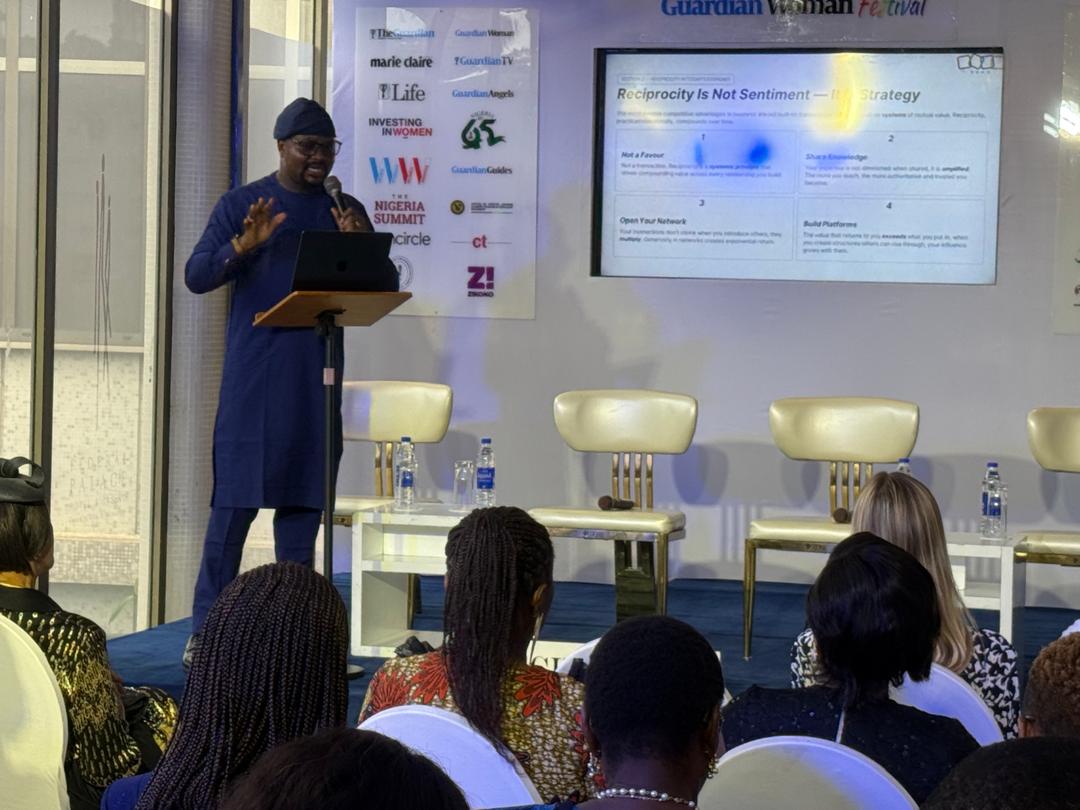
Zoho Nigeria Champions Women’s Digital Empowerment at Guardian Women Festival
By Modupe Gbadeyanka
The urgent need to bridge the digital gap for female entrepreneurs has again been emphasised by the Country Head of Zoho Nigeria, Mr Kehinde Ogundare.
Speaking at the Guardian Woman Festival held at the Federal Palace Hotel in Lagos recently, Mr Ogundare stressed that technology does not replace the strengths women already bring to business, such as relationship building and community engagement, but instead, it amplifies them, enabling entrepreneurs to reach wider audiences and scale more efficiently.
“The difference is not talent. Not capital. Not ambition. It is digital adoption,” he said during his keynote address titled Give Value, Gain Growth: Women Driving Reciprocal Innovation in the Digital Economy.
“Smart tools create smart businesses. Smart businesses create strong economies. When women entrepreneurs and leaders have access to the right tools, the possibilities for growth are limitless,” he added.
Zoho Nigeria partnered with Guardian Newspapers for the event as part of activities to mark a month-long initiative celebrating women’s contributions to business, governance, and social development while promoting digital empowerment for female entrepreneurs.
The Guardian Women Festival, themed Reciprocity, was to encourage the exchange of value, networks, and digital innovation to strengthen women-led businesses and foster collaboration.
While Nigeria has the highest concentration of women-owned businesses in Africa, fewer than 30 per cent currently use digital tools to manage or grow their operations.
During the festival’s panel session tagged Women in the Business of Digital Innovation, the Sales Manager for Zoho Nigeria, Ms Zubaida Aliyu, highlighted how women are uniquely positioned to create shared value in digital spaces by building platforms that encourage knowledge sharing, mentorship, and collaboration.
She also challenged organisations that continue to view women’s digital inclusion primarily as corporate social responsibility rather than a strategic business priority.
“Tech creates a level playing field,” Ms Aliyu said, noting that digital platforms remove limitations related to location and infrastructure size.
Addressing organisations that overlook the economic value of inclusive digital strategies, she added, “They are leaving money on the table — they need to think of it as a strategy, not charity.”
Through its participation in the Guardian Woman Festival, Zoho reaffirmed its commitment to providing affordable and accessible enterprise-grade technology to businesses of all sizes. By helping women transition from manual effort to digital efficiency, Zoho aims to support entrepreneurs in building scalable enterprises and ensure their sustained success in Africa’s digital economy.
Technology
FG Targets $750m Investment With New National Digital Cloud Policy
By Adedapo Adesanya
The federal government has unveiled the National Digital Cloud Policy, a framework designed to strengthen Nigeria’s digital infrastructure and drive the next phase of economic growth.
The policy implementation has an investment target of $750 million over the next 24 months.
The Minister of Communications, Innovation and Digital Economy, Bosun Tijani, disclosed this on Tuesday, noting that the effort aims to further strengthen the transformation of Nigeria’s digital economy.
According to the ministry, through the implementation of the policy, the government’s initial ambition is to mobilise $250 million in private investment within the first 12 months.
The investment will rise to $750 million within 24 months, alongside progressive increases in compliant hosting capacity and the development of Nigeria’s regional cloud export market.
Mr Tijani explained that cloud and data infrastructure are now foundational to artificial intelligence, financial services, digital government, healthcare, education and the wider digital economy.
The minister said Nigeria’s ambition is to ensure that the country moves beyond being primarily a consumer of global cloud infrastructure to becoming a competitive location for cloud investment, infrastructure, skills and digital services serving Nigeria and the wider African market.
According to him, the policy creates an open and competitive framework designed to attract investment into cloud, data centre, and AI compute infrastructure.
It will accelerate the government’s transition to secure, efficient cloud services and strengthen its capacity to host and export digital services across Africa.
“Our approach is deliberately open and investment-oriented. We want Nigerian and international providers to invest, build capacity, develop talent and serve both the Nigerian market and the wider African continent from Nigeria.
“At the same time, government has a responsibility to ensure that its most sensitive digital assets are governed and secured in a manner consistent with our national interests.
“The National Digital Cloud Policy therefore provides a balanced framework — one that promotes investment and competition, strengthens indigenous capability, modernises government and applies sovereignty requirements only where they are genuinely necessary,” Mr Tijani added.
The National Information Technology Development Agency (NITDA) will provide regulatory oversight, standards and assurance, while Galaxy Backbone (GBB) will lead operational delivery, shared infrastructure and aggregation.
Also, the Bureau of Public Procurement (BPP) will ensure alignment with public procurement requirements.
“This separation of responsibilities is intended to provide regulatory certainty and avoid conflicts between regulatory, operational and procurement functions,” the ministry said.
A Sovereign Government Cloud Governance Committee, chaired by Mr Tijani, will provide strategic oversight and whole-of-government coordination for the implementation of the sovereignty framework.
Technology
The Difference Between VPS and Dedicated Server Explained
Choosing between a VPS and a dedicated server can be complex. They run apps and webpages. But they operate differently. Understanding the difference between VPS and dedicated server solutions will help you prevent complications and save money later on. In this text we will explain everything in detail with examples from actual life.
VPS vs Dedicated Server: What Actually Sets Them Apart
One physical machine is divided into multiple virtual servers by a VPS. Through virtualization software, each user receives a portion of resources that are separate from those of other users.
A dedicated server operates in a different manner. One user owns a single physical machine. No neighbors, no sharing, simply complete hardware access.
This is the core of the vps vs dedicated server debate. Shared hardware means lower costs, while full ownership means more raw power. Finding the best vps hosting service often comes down to how well a provider balances performance with fair pricing on shared resources.
| Factor | VPS | Dedicated Server |
| Resource allocation | Shared pool, virtualized | 100% dedicated hardware |
| Performance consistency | Possible noisy neighbor effect | Guaranteed, stable capacity |
| Scalability | Instant resize | Requires hardware upgrade or migration |
| Cost | Lower entry price | Higher fixed cost |
Performance, Cost and Control: Where Each One Wins
In terms of raw performance, dedicated servers are superior. Each gigabyte of RAM and each CPU cycle are part of a single project. There is no competition for resources.
Flexibility is where VPS excels. It takes minutes, not days, to scale up. Pricing stays lower too, since costs get split across multiple users on the same hardware.
Shared hardware limitations rarely cause problems for smaller projects. Providers like Antihost allocate resources fairly, so performance stays steady even during traffic spikes. The gap only really matters once traffic gets heavy and consistent.
The contrast of vps vs virtual machine is also confusing people often. A VPS is a virtual computer in a technical sense, but it’s rented from a hosting company, rather than running on your own hardware.

Matching the Server to the Project: Real Scenarios
A dedicated server is rarely required for a small business website. A VPS can easily manage moderate traffic while maintaining low expenses.
A growing SaaS product usually starts on a VPS and expands as the user base grows. This adaptability is more crucial in the early stages than brute strength.
A database-heavy application benefits from dedicated hardware once query volume reaches a certain level. In this case, the lack of resource sharing and a constant disk speed are essential.
A game server depends on low latency and steady performance. Many game servers run fine on VPS today, especially with modern hardware. As David Heinemeier Hansson put it: “Personal servers have gotten really scarily quick, inefficient, and personal internet connections rival what we connected data centers with just a decade or two ago.” That shift makes VPS a stronger option than it used to be.
Here is a quick breakdown of what typically fits best:
- Small business website: VPS, for cost and simplicity
- Growing SaaS product: VPS, then scale to dedicated later
- Database-heavy app: Dedicated server, for consistent speed
- Game server: VPS, unless player counts get very large
Summary
In every situation, neither choice is superior to the other. Everything impacts the optimal selection, including the scale of the project, traffic patterns, and all growth plans. Scale from what works now when the numbers really demand it.
Technology
Damage to Fibre Networks Carries Significant Economic Consequences—NCC
By Modupe Gbadeyanka
The Executive Vice Chairman of the Nigerian Communications Commission (NCC), Mr Aminu Maida, has reemphasised the need to protect the nation’s telecommunications infrastructure, especially fibre networks, noting that damage to fibre networks carries significant economic consequences.
Speaking virtually at the Association of Telecommunications Companies of Nigeria (ATCON) Critical Conversation Forum on Fibre-to-the-Home (FTTH) in Lagos recently, he described FTTH as a critical enabler of Nigeria’s digital future.
“FTTH is uniquely positioned to meet Nigerians' next phase of data demand. The quality of our broadband will increasingly shape the competitiveness of our businesses, the growth of our digital industry and the opportunities available to our citizens,” the NCC chief stated.
“We must uphold deployment standards. Nigeria needs fibre that is properly installed, properly documented, and properly protected,” Mr Maida further said at the event themed Fibre to the Home in Nigeria: Addressing Challenges, Strengthening Standards and Ensuring Sustainable Deployment.
During a panel discussion titled Policy, Governance and Regulatory Alignment, the Deputy Director of Strategic Business Initiatives at ipNX, Mr Segun Okuneye, highlighted the need for stronger collaboration across the telecommunications ecosystem to unlock the full potential of fibre broadband in Nigeria.
According to him, sustainable fibre deployment extends beyond technology and investment to include policy consistency, stakeholder alignment, infrastructure protection, and shared responsibility.
“Achieving universal fibre connectivity requires more than deploying infrastructure; it requires sustained collaboration between operators, regulators, government agencies and host communities.
“When policies are aligned, deployment standards are consistently enforced, and critical infrastructure is protected, we create an environment where investment thrives and more Nigerians can enjoy reliable, high-speed broadband.
“At ipNX, we remain committed to working with all stakeholders to build resilient digital infrastructure that will support Nigeria’s economic growth for generations to come.”
Earlier in his welcome address, ATCON President, Mr Tony Emoekpere, underscored the strategic importance of FTTH in achieving the country’s broadband penetration targets while calling for greater public awareness around protecting communications infrastructure.
“This forum is critical because Fibre-to-the-Home is the technology that will enable the country to achieve full broadband penetration. We all depend on communication infrastructure, and it must be protected,” he declared.
Drawing a comparison with power infrastructure in the country, he added, “If somebody comes to your neighbourhood to tamper with your transformer or power cables, everybody will come out. The same thing needs to apply for communications infrastructure. When we see people damaging fibre cables, we should raise an alarm.”