Economy
Nigeria Imports 61.7 million Barrels of US Crude in Two Years
By Adedapo Adesanya
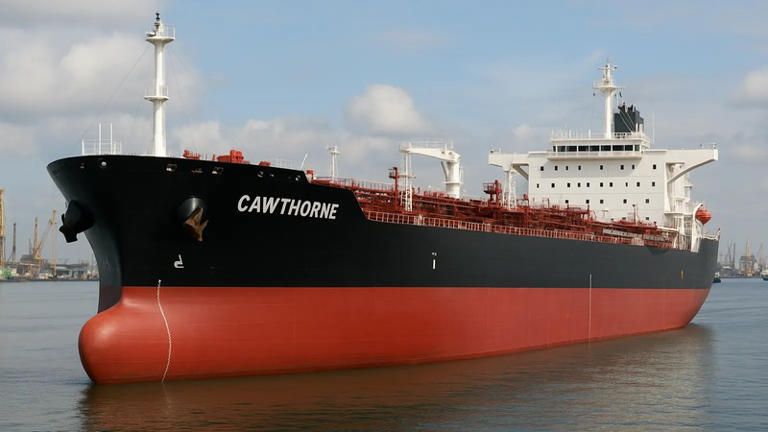
Nigeria imported about 61.7 million barrels of crude oil from the United States between January 2024 and January 2026, according to data from the US Energy Information Administration (EIA).
This came even as the country continued to export significantly larger volumes within the same period, exposing a growing imbalance in the country’s oil supply chain.
Data from the US agency showed a sharp shift in trade flows, with American crude now flowing steadily into Nigeria after nearly a decade of negligible transactions. Before 2024, the only notable supply came in 2016, when exports averaged just 19,000 barrels per day.
The trend changed in 2024 with the start of operations at the Dangote refinery, which industry players say has increasingly turned to foreign crude to bridge gaps in domestic supply.
Within the first six months of that year alone, Nigeria imported 15.7 million barrels from the US, with June recording the highest inflow at 3.96 million barrels.
Imports accelerated further in 2025, accounting for the bulk of the two-year volume. Between February and December, inflows reached 41.06 million barrels, peaking in June at 305,000 barrels per day, equivalent to 9.15 million barrels in one month.
However, volumes dropped sharply towards the end of the year, reflecting fluctuating supply dynamics.
In January 2026, imports rose again to 159,000 barrels per day, translating to 4.93 million barrels, bringing the total volume over the two-year period to 61.7 million barrels.
The figures stand in contrast to Nigeria’s export profile.
According to data from the Central Bank of Nigeria (CBN), the country exported about 306.7 million barrels of crude between January and October 2025, representing roughly 69 per cent of total production during the period. In the first two months of 2026 alone, exports reached 55.39 million barrels.
Despite producing over 443 million barrels within the first 10 months of 2025, only about 137 million barrels were retained for domestic use, leaving local refineries struggling to secure adequate feedstock.
Operators say the Dangote Refinery requires over 19 million barrels monthly to run at optimal capacity, a demand that local supply has failed to meet consistently. This shortfall has forced the facility to source crude not only from the US but also from Ghana and other African producers.
Imports became necessary to stabilise the 650,000 barrels per day refinery operations amid inconsistent domestic allocations, despite the introduction of the Naira-for-crude arrangement. According to the management of the company, only about four to five cargoes were distributed, but this has since changed.
Alongside Dangote Refinery, other smaller operators were also affected, since the country’s crude allocation is tied to joint ventures with International Oil Companies (IOCs).
The development underscores a persistent structural challenge in Nigeria’s oil sector, exporting large volumes of crude while struggling to supply domestic refineries, raising fresh concerns about policy coordination, upstream allocation, and the long-term viability of local refining.
Economy
SEC Bans Marketing, Promotion of Dangote Refinery’s IPO by Stockbrokers
By Aduragbemi Omiyale
The marketing and promotion of the planned initial public offering (IPO) by Dangote Petroleum Refinery & Petrochemicals FZE has been banned by the Securities and Exchange Commission (SEC).
A statement from the apex capital market regulator on Tuesday emphasised that it had yet to receive any application for such an offer or approve the purported IPO.
SEC noted that it had become aware of advertisements, flyers, digital banners and targeted electronic mails circulating on social media platforms and investment channels concerning a supposed securities offering by the refinery.
It expressed concern over the involvement of some Registered Capital Market Operators (CMOs) in what it described as an “unwholesome and manipulative exercise” of actively soliciting advance subscriptions for an offering that has not been presented to the commission.
“No application for the registration of an IPO or public offer of shares of the Refinery has been filed with or approved by the commission,” the agency noted, adding that the ongoing pre-marketing activities were “capable of misleading investors, distorting market expectations, creating information asymmetry and generally undermining the integrity of the capital market.”
It further stated that the marketing campaign and invitations to “create accounts”, “pre-fund,” or “secure guaranteed allocations” amounted to market manipulation and constituted “serious violation of the Investments and Securities Act.”
Consequently, the SEC directed all Registered Capital Market Operators, particularly stockbrokers and digital platform promoters, to immediately stop all promotional activities.
It also directed them to “cease with immediate effect from publishing, reposting, or distributing any promotional material, flyer, or commentary relating to the acquisition or allocation of shares in the Refinery.”
The commission further ordered operators to “remove or take down all such unauthorised marketing materials from websites, social media handles (including X, LinkedIn, Instagram, Facebook etc.), and messaging groups within twenty-four (24) hours of this notice.”
The regulator further instructed operators to desist from accepting deposits, commitments, account openings or expressions of interest from investors for the purported public offering and to “reverse and refund all funds already collected in connection with this purported offering to clients within twenty-four (24) hours of this notice.”
The organisation warned that defaulters would face sanctions as non-compliance would attract penalties under the Investments and Securities Act, 2025 and the SEC Rules and Regulations.
Advising investors to exercise caution, the SEC said members of the public should “rely only on formal, official pronouncements issued directly by the commission through its official channels.”
It warned that “all such high-pressure marketing tactics, or transfer of funds to any operator for ‘pre-IPO’ placement should be ignored as they did not receive the commission’s approval.”
SEC assured that if it eventually receives and clears an application for a public offering by the refinery, an approved prospectus would be made available to investors in line with the provisions of the Investments and Securities Act, 2025.
Economy
Ellah Lakes Lists N6.3bn Shares from Debt-to-Equity Conversion on NGX
By Aduragbemi Omiyale
The N6.3 billion shares of Ellah Lakes Plc converted from debt to equity have been listed on the Nigerian Exchange (NGX) Limited.
Instead of paying its creditors N6.3 billion loans in cash, Ellah Lakes triggered the option of paying back in equities.
According to a notice from NGX Regulation Limited on Tuesday, the company gave the creditors a total of 2,252,142,858 ordinary shares of 50 Kobo at a unit price of N2.80, amounting to N6.306 billion.
The listing of these additional stocks of Ellah Lakes has raised its total issued and fully paid-up shares to 6,110,316,536 ordinary shares of 50 Kobo each from 3,858,173,678 ordinary shares of 50 Kobo each.
“Trading licence holders are hereby notified that additional 2,252,142,858 ordinary shares of 50 Kobo each of Ellah Lakes Plc were today, Tuesday, June 23, 2026, listed on the daily official list of Nigerian Exchange Limited.
“The additional shares listed on NGX arose from Ellah Lakes Plc’s conversion of N6,306,000,000.00 debt-to-equity.
“With this listing of the additional 2,252,142,858 ordinary shares, the total issued and fully paid-up shares of Ellah Lakes Plc has now increased from 3,858,173,678 to 6,110,316,536 ordinary shares of 50 Kobo each,” the circular signed by Bonaventure Onwuji for the Head of Issuer Regulation Department stated.
Economy
FG Enlists DSS, EFCC, Police to Tackle Cooking Gas Hoarding, Smuggling
By Adedapo Adesanya
The Federal Ministry of Petroleum Resources has conscripted the Department of State Services (DSS), the Economic and Financial Crimes Commission (EFCC), and the Nigeria Police Force to address the hoarding and diversion of Liquefied Petroleum Gas (LPG), also known as cooking gas, to neighbouring countries.
A statement by the Nigerian Midstream and Downstream Petroleum Regulatory Authority (NMDPRA) on Monday stated that the move followed the recent increase in LPG (cooking gas) prices and developed coordinated measures to improve supply, affordability, and market stability across the country.
Business Post reports that in recent weeks, prices of the fuel have gone as high as N2,400 per kg in some areas in Lagos and Ogun State, but have since dropped to around N1,900 and N2,000 in the last few days.
In a statement by the Nigerian Midstream and Downstream Petroleum Regulatory Authority (NMDPRA) on Monday, the meeting also brought together other key government officials, regulators, producers, marketers, terminal operators, and industry associations to examine factors contributing to rising LPG prices and agree on practical interventions to strengthen the value chain.
Speaking at the engagement, the Permanent Secretary, Ministry of Petroleum Resources, Mrs Patience Oyekunle, described LPG as a critical energy source for households and an important component of Nigeria’s energy transition agenda.
She noted that rising LPG prices are putting additional pressure on household budgets and increasing the cost of essential goods, stressing the need for collective action to improve access to affordable cooking gas.
While speaking at the meeting, the Minister of State for Petroleum Resources (Gas), Ekperikpe Ekpo, stated that President Bola Tinubu is concerned about the impact of rising LPG prices on Nigerians and has directed relevant agencies to take proactive steps to address the situation.
He emphasised that increased supply must be supported by efficient logistics, improved infrastructure, and transparent pricing mechanisms to ensure consumers benefit from interventions across the sector.
The chief executive of the NMDPRA, Mr Rabiu Umar, noted that high landing costs continue to influence cooking gas prices but expressed optimism that ongoing measures across the value chain would begin to ease market pressures in the coming weeks.
He added that the authority is working with producers and other stakeholders to increase domestic supply, strengthen market oversight, and support interventions that will improve availability.
-
Feature/OPED6 years agoDavos was Different this year
-
Travel/Tourism10 years ago
Lagos Seals Western Lodge Hotel In Ikorodu
-
Showbiz3 years agoEstranged Lover Releases Videos of Empress Njamah Bathing
-
Banking8 years agoSort Codes of GTBank Branches in Nigeria
-
Economy3 years agoSubsidy Removal: CNG at N130 Per Litre Cheaper Than Petrol—IPMAN
-
Banking3 years agoSort Codes of UBA Branches in Nigeria
-
Banking3 years agoFirst Bank Announces Planned Downtime
-
Sports3 years agoHighest Paid Nigerian Footballer – How Much Do Nigerian Footballers Earn