Travel/Tourism
Nigeria Caps Jet Fuel Prices, Allows Airlines Buy on Credit to Avert Disruptions
By Adedapo Adesanya
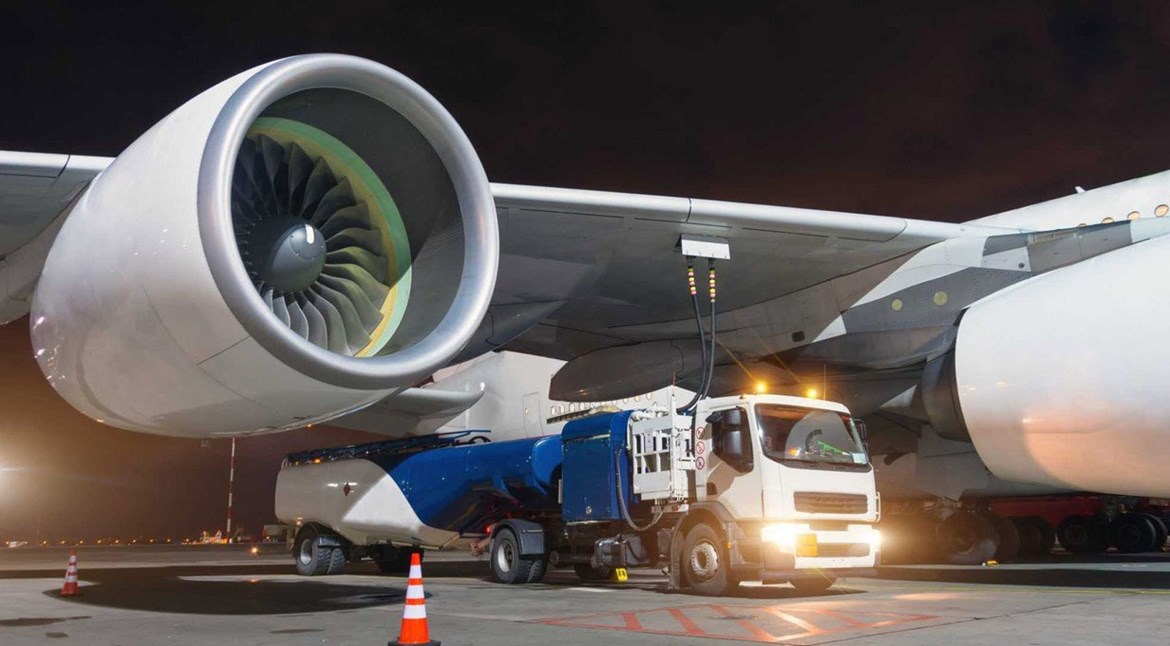
The Nigerian government is capping jet fuel prices and allowing airlines to get supplies on credit as part of efforts to avert flight disruptions caused by soaring fuel costs.
Reuters reported that the Nigerian Midstream and Downstream Petroleum Regulatory Authority (NMDPRA) said in an internal document that aviation fuel should sell for N1,760 to N1,988 ($1.29 to $1.46) per litre in Lagos and N1,809 to N2,037 in Abuja, based on benchmarks from April 17 to April 23.
The decision follows emergency talks after airlines threatened to go on a strike, warning that jet fuel prices had jumped by more than 300 per cent, forcing fare increases and raising the risk of capacity cuts.
The strike was averted after the federal government met with the Airline Operators of Nigeria (AON) and other stakeholders.
President Bola Tinubu last week approved 30 per cent relief on airlines’ debts to aviation agencies and ordered fuel marketers, airlines and regulators to agree on a “fair” fuel price within 72 hours to prevent the sector-wide shutdown that would have impacted the country’s economy.
The talks also agreed to grant airlines a 30-day credit window to pay for fuel and tasked the aviation ministry with mediating debt disputes between operators and oil marketers, according to the document.
The NMDPRA also formed a technical committee, which recommended that fuel marketers sell directly to airlines within the indicated price range to cut costs and improve supply-chain transparency.
The committee also urged regulators to engage Dangote Petroleum Refinery and Petrochemicals over the increased premiums applied to international benchmarks used to price jet fuel.
Other recommendations include validating airside fuel distributors with adequate infrastructure, potentially reducing the number of authorised suppliers at airports, and considering jet fuel for Nigeria’s Crude-for-Naira initiative to limit airlines’ foreign exchange exposure. So far, the Crude-for-Naira has only been for upstream operations.
The cost of fuel has generally risen in the last two months due to the escalating war with Iran by the US and Israel, which has triggered one of the most severe energy shocks in decades. Oil prices are currently above $100 per barrel as markets react to escalating tensions and the risk of prolonged disruption.
At the centre of the crisis is the Strait of Hormuz, a chokepoint through which roughly one-fifth of global oil supply flows. With shipping constrained, the effects are cascading across the global economy, raising fuel costs, fueling inflation, and increasing the risk of economic slowdown across many economies. This is forcing airlines to raise fares, curb growth plans and rethink forecasts.
Managing operational overhead like jet fuel is a constant battle for any operator in volatile markets. Strategic efficiency often begins with a more fuel-efficient fleet. Whether you are looking to upgrade or divest, finding a reliable global platform is essential. Use the Sprinkle Marketplace to navigate the current aircraft trade landscape with total professional confidence
Travel/Tourism
Keyamo Pushes for New IATA Code as FG Clarifies Osubi Airport Identity
By Adedapo Adesanya
The Minister of Aviation and Aerospace Development, Mr Festus Keyamo, has formally requested the International Air Transport Association (IATA) to review the existing three-letter location code “QRW” assigned to Osubi Airport in Delta State, with a view to adopting a code that more accurately reflects the airport’s official name and geographical identity.
The request was conveyed in a letter signed by the Minister and addressed to the IATA Area Manager for West and Central Africa, Mr Samuel Fatokun.
Osubi Airport, which bears the ICAO four-letter location indicator DNSU, is physically located in Osubi town, near Warri, Delta State. While the airport is sometimes informally identified as Warri Airport because it serves the Warri metropolitan area, the federal government has emphasised that its established and appropriate geographical designation is Osubi Airport.
According to the Minister, the continued use of the IATA code QRW, which is associated with the broader Warri identity, does not adequately reflect the airport’s actual name and physical location.
The federal government is therefore asking IATA to initiate a formal review of the existing code and, subject to IATA’s applicable coding standards and the availability of suitable combinations, consider a three-letter code that bears a clearer relationship to the name Osubi.
Among the possible alternatives suggested for consideration are OSU, OSB, SUB and QSB, while acknowledging that the final designation remains subject to IATA’s established coding procedures and availability.
The Minister said aligning the airport’s IATA code more closely with its official name and physical location would strengthen the airport’s identity, reduce potential ambiguity for passengers and other stakeholders, and promote consistency across aviation, travel, ticketing, baggage and related information systems.
In a related directive, the Minister has directed all airlines operating flights to and from the airport to ensure that appropriate flight tickets, luggage tags, boarding passes and other passenger-facing documentation reflect the airport’s proper designation as Osubi, Delta State.
He has also directed the Nigeria Civil Aviation Authority (NCAA), Federal Airports Authority of Nigeria (FAAN), Nigerian Airspace Management Agency (NAMA) and other relevant aviation agencies to ensure that the proper designation is consistently reflected and enforced across their respective systems, records, publications and operational interfaces.
The Minister stressed that the clarification is intended to ensure geographical and operational accuracy, rather than create confusion around the airport’s role in serving the wider Warri metropolitan area.
The federal government said it remains committed to ensuring that Nigeria’s aviation infrastructure, locations and operational information are accurately represented in national and international aviation systems.
Travel/Tourism
NCAA Adopts RFID Technology to Curb Missing, Misrouted Luggage
By Adedapo Adesanya
The Nigeria Civil Aviation Authority (NCAA) has announced plans to introduce Radio Frequency Identification (RFID) baggage tracking technology across domestic and international airport terminals to tackle the growing problem of delayed, misrouted and missing luggage.
The Director of Public Affairs and Consumer Protection for NCAA, Mr Michael Achimugu, disclosed this at a stakeholder engagement forum in Lagos on Tuesday.
Mr Achimugu said the RFID-enabled system would replace the traditional barcode-based baggage tracking framework and provide airlines and passengers with real-time visibility of checked luggage from check-in to final collection.
According to him, the technology would improve baggage traceability, reduce mishandling and strengthen accountability across the baggage-handling chain.
Unlike conventional barcode systems, RFID technology allows baggage to be automatically scanned at multiple points without requiring direct line of sight, enabling real-time tracking of luggage throughout its journey.
Mr Achimugu said issues involving short-landed, missing, lost or damaged baggage had remained among the major complaints from air travellers, alongside flight delays.
He said the introduction of RFID technology was therefore aimed at improving baggage-handling standards and restoring passenger confidence in the aviation sector.
The NCAA said the initiative also aligns with IATA Resolution 753, which requires airlines to track baggage at key points during the passenger journey.
The authority expects the technology to provide more accurate information on the location of luggage, facilitate quicker resolution of baggage-related complaints and improve the overall passenger experience.
The aviation agency said the initiative would also strengthen accountability among airlines and other stakeholders involved in baggage handling at Nigerian airports.
Travel/Tourism
Five Ways Emirates Helps Customers Travel with Greater Confidence
From free date changes to industry-first comprehensive travel insurance, Emirates continues to give customers greater flexibility and more choice, as well as the ability to tailor their travel plans for more peace of mind, from booking to the moment they arrive at their destination.
Here are the latest measures at a glance:
1. Unlimited free date changes to Dubai
From 10 August 2026, customers travelling to Dubai can change their travel dates as many times as they need, free of charge, across every type of fare. Unlimited, free of charge changes run across Saver all the way through to Flex fares in Economy, and for Special, Saver and Flex fares in Business Class.*
Economy Flex Plus, Premium Economy, Business Flex Plus and First Class fares continue to remain fully flexible.
2. Refunds, at a fraction of the cost
Emirates has also substantially reduced refund fees on flights to Dubai to US$50 on Saver fares and US$25 on Flex fares in Economy. In Business Class, refund fees will be US$50 on Special and Saver fares and US$25 on Flex fares.** Together with unlimited free date changes to Dubai, this latest measure means customers can adjust or step away from a booking with minimal penalties, whatever their circumstances.
3. A free date change anywhere across the network
Customers travelling anywhere on the Emirates network receive one free date change on tickets booked from 2 April 2026, including journeys connecting through Dubai. Customers can also hold a fare for 24 hours at no charge while they finalise their plans.*
4. Comprehensive Travel Cover
Emirates’ Comprehensive Travel Cover is an industry-first insurance product covering a range of scenarios, including added conflict cover with reimbursement of medical expenses up to US$25,000 and a free trip extension of up to 30 days. The cover is not restricted by government travel advice. Customers are also covered for trip cancellation, baggage delay and loss, in addition to unlimited worldwide medical expenses and emergency evacuation.
Available at an accessible premium and across 27 countries, the cover can be purchased at the time of booking on emirates.com or added to an existing booking through Manage Booking.
Where flights are disrupted, Emirates will support impacted customers with accommodation directly. Where onward connections on other airlines are affected, or Emirates services are unavailable, customers are rebooked to their destination at no additional cost, including where cancellations are caused by airspace disruptions.
5. More flexibility and savings for Emirates Skywards members
Emirates Skywards members can get more from their journeys, with greater flexibility, more opportunities to progress their tier and additional savings when using their Miles.
Until 31 August 2026, members can benefit from:
- 20% fewer Tier Miles required to reach Silver, Gold and Platinum status.
- 20% bonus Tier Miles on Emirates and flydubai flights.
- More savings with Cash+Miles, with a special rate of 2,000 Miles = USD 30, instead of the usual USD 15, when using Miles towards Emirates or flydubai flights, excess baggage, lounge access and seat selection.
* An applicable fare difference may apply.
** No show fees remain unchanged.


Pingback: FG Rules Out Return of Fuel Subsidy, Price Control Introduction | Business Post Nigeria