Connect with us

Economy

FG Rules Out Return of Fuel Subsidy, Price Control Introduction

Published

on

By Aduragbemi Omiyale

The federal government has stressed that it does not plan to bring back the payment of subsidies on premium motor spirit (PMS), otherwise known as petrol

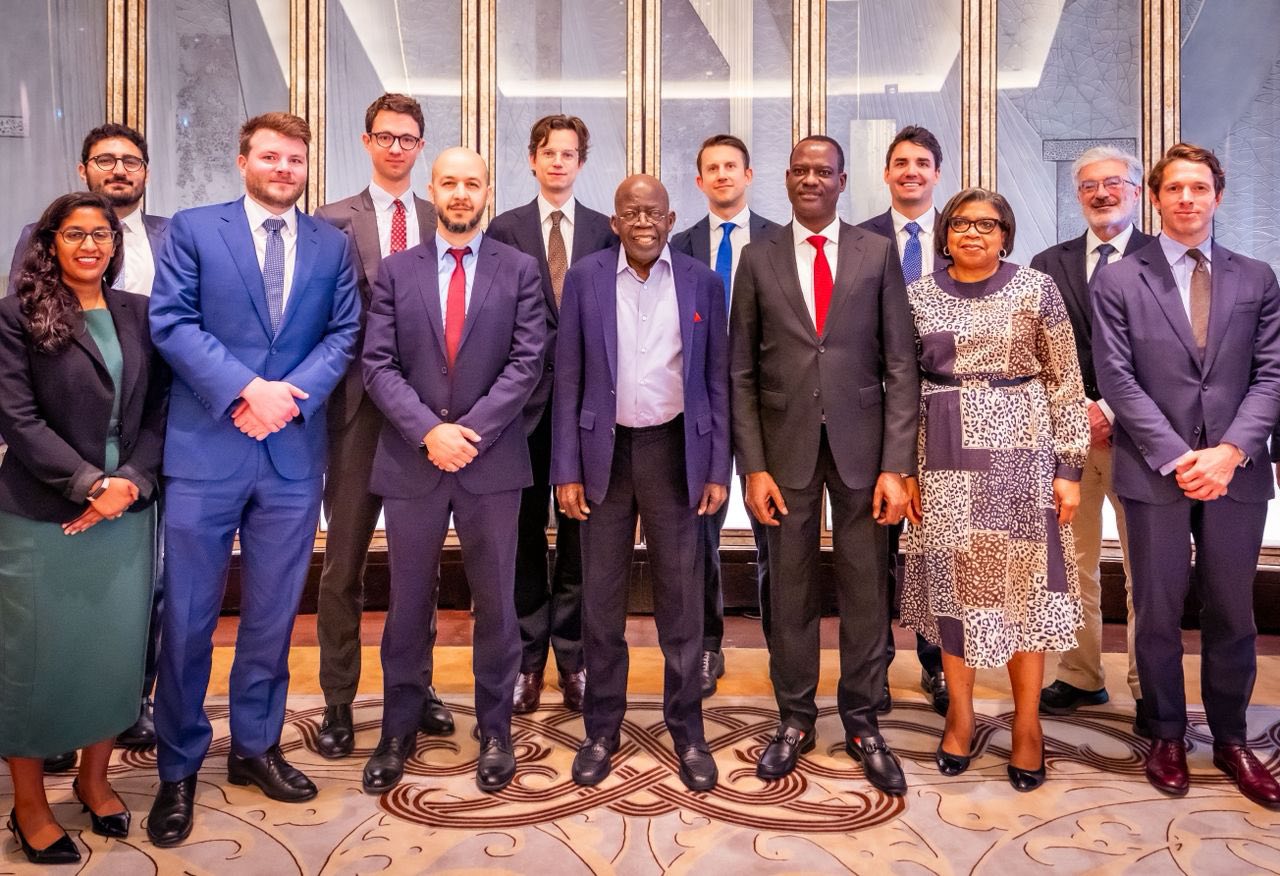
This disclosure was made by the Minister of Finance and Coordinating Minister of the Economy, Mr Taiwo Oyedele, during a meeting with some global investors in France.

Some of the investors were from Citibank and France’s Amundi, led by Valerie Baudson. There were also BlueCrest, the Britain- and South Africa-based Ninety One, Kirkoswald Capital, Principal Finisterre, US groups Prudential Global Investment Management (PGIM) and Mesarete Capital.

There had been calls for the return of petrol subsidy in Nigeria as a result of higher energy costs triggered by the Middle East crisis. The price of crude oil on the global market has surpassed $115 per barrel, and this is making Nigerians pay more for petroleum products, despite being an oil-producing nation.

A few days ago, the federal government, to calm the nerves of airline operators who threatened to shut down operations due to the high cost of aviation fuel, had 30 per cent of their debt written off, and also got a deal to buy Jet fuel at a steady price, indicating a subsidy.

“We will not bring back fuel subsidy because it creates distortions for the economy, and we won’t introduce price control because we believe in the market… the situation in Iran presents new opportunities for us as the world looks to diversify sources of energy and invest in new markets,” Mr Oyedele said in Paris, the French capital.

“Nigeria recorded a strong GDP growth rate of 11.2 per cent in US dollar terms in 2025, reinforcing the country’s ambition to achieve a $1 trillion economy by 2030,” he added.

The Finance Minister emphasised the government’s near-term priorities of translating reforms into results for the Nigerian people. He also pledged to publish quarterly financial data.

Mr Oyedele is in France with President Bola Tinubu, who departed Nigeria on Sunday for a three-nation trip to France, Kenya, and Uganda.

The President said the economic reform programme of his administration includes measures to remove economic distortions and stabilise macroeconomic indicators, laying the foundation for sustained inclusive growth.

He assured that his government was committed to deepening reforms, enhancing transparency across the oil value chain, and implementing a multi-pronged security strategy, including police decentralisation and disrupting terrorist financing.

“The focus remains on policy stability and diligent execution to ensure these strategic shifts translate into concrete benefits for all Nigerians,” Mr Tinubu said.


Click to comment

Leave a Reply

Your email address will not be published. Required fields are marked *

Economy

Oil Prices Edge Higher as Iran Keeps Hormuz Strait Closed

Published

on

oil prices driving up Trump

By Adedapo Adesanya

Oil prices rose marginally as Iran said it would adopt a more offensive stance and the Strait of Hormuz would remain ‌closed, while the United States ruled out extending a ceasefire.

Brent crude futures finished higher by 15 cents or 0.17 per cent at $91.02 a barrel, while the US West Texas Intermediate (WTI) crude futures chalked up 44 cents or 0.52 per cent to trade at $84.94 a barrel.

A top Iranian negotiator, Mr Mohammad Baqer ​Qalibaf, said that Iran will keep the strait closed until the United States meets the conditions of the interim deal signed in June.

Mr Qalibaf’s comments came after a senior Iranian official earlier said that ⁠Iran will shift to a “fully offensive” military posture as efforts have stalled toward a permanent end to the war.

Meanwhile, US President Donald Trump, who previously labelled that deal “over,” said on Tuesday that talks between the US and Iran were ​neither taking place nor scheduled, but the strait was open.

Iran has separately been negotiating with Oman on an agreement on managing the strait and says they are close to a deal. However, the American President threatened ​to bomb Oman, a longstanding ⁠US security partner.

Yemen’s Houthis launched missiles in an attack on vessels they described as a Saudi military ship and four escorts in the Red Sea while the United Kingdom Maritime Trade ​Operations (UKMTO) separately said it received a report on Tuesday that a vessel was struck by an unknown projectile while transiting out of ​the strait, causing engine ⁠room damage and a crew casualty.

Amid these developments, Saudi Aramco has resumed oil loadings from inside the strait, and is offering cargoes for loading via ship-to-ship transfers off ​Fujairah in the United Arab Emirates (UAE) while two Chinese shipping giants also have started collecting oil cargoes outside the Gulf.

Russia is reportedly rerouting Kazakhstan’s crude oil exports from the Baltic port of Ust-Luga to the Black Sea port of Novorossiysk, freeing up capacity ⁠for more ​Russian oil exports from the Baltic amid heightened Black Sea security risks. The move would allow Russia ​to replace Kazakh barrels at Ust-Luga with its own crude exports, while Ukrainian drone attacks make it more difficult for Russian exporters to secure tankers for Black Sea loadings.

Continue Reading

Economy

FCCPC Investigates Dangote, BUA, HBM Over Alleged Cement Price Fixing

Published

on

cement price fixing

By Adedapo Adesanya

The Federal Competition and Consumer Protection Commission (FCCPC) is set to investigate leading cement manufacturers over allegations of price manipulation in the Nigerian cement market.

The anti-trust agency has formally issued a Notice of Commencement of Investigation and Summons to Produce to major manufacturers in Nigeria’s cement industry following preliminary findings from a three-month cross-border study conducted by its Anticompetitive Practices Department. Some of Nigeria’s manufacturers include Dangote Cement, BUA Cement and HBM Nigeria, previously known as Lafarge Africa.

The investigation, according to a statement signed by the Director of Corporate Communications at FCCPC, Mr Ondaje Ijagwu, was initiated in response to persistent public complaints over the rapidly rising cost of cement.

The commission’s preliminary 40-page field report revealed a sharp increase in retail prices during the first half of 2026, where a 50kg bag selling for between N9300 and N9700 in January escalated to between N13,000 and N15,000 in several regions by July.

The FCCPC noted that Nigeria maintains an installed production capacity exceeding 60 to 65 million metric tonnes annually against an estimated domestic demand of roughly 25 to 30 million metric tonnes, creating a situation of significant excess installed capacity where downward price pressure would ordinarily be expected.

It also stated that cross-border comparative metrics across Sub-Saharan and North African markets revealed that retail prices in Nigeria remain significantly higher than in countries such as Kenya, Tanzania and Togo despite Togo lacking natural limestone deposits.

“Of particular concern to the commission is that this level of production capacity has not resulted in the downward pressure on domestic prices that might ordinarily be expected in a competitive market with substantial excess capacity,” the agency said.

While cement manufacturers have pointed to macroeconomic headwinds, including persistent Naira depreciation, rising energy expenses, transport logistics, and the inflated cost of imported industrial machinery spare parts, the FCCPC is actively auditing these claims against verified operational data.

Through the formal summons, the commission is legally requiring the affected entities to present comprehensive documentation detailing their pricing methods, factory capacity utilisation rates, export volumes, and distribution network agreements.

Continue Reading

Economy

Why the UK Is Becoming a Serious Expansion Market for Nigerian Tech Businesses

Published

on

Nigerian Tech Startups

The UK has quickly become an excellent destination for Nigerian tech firms to scale into international markets. The bilateral trade between the UK and Nigeria reaching a record £8.1 billion per year, and Nigerian fintech companies spending more than £100 million in the UK market are clear indications that the UK is much more than just a financial centre.

If you are a Nigerian tech businessperson, the UK offers an excellent combination of opportunities to raise funds, a favourable regulatory environment, and a clear growth path. Nigerian tech businesspeople may need to hire foreign workers to expand their workforce.

They can seek guidance for companies hiring international talent in the UK, especially if they are unfamiliar with the UK immigration system. This article explains why the UK has become a trusted market for Nigerian tech entrepreneurs, the visa options available to Nigerian entrepreneurs, and other relevant details.

Why the UK Is Attractive for Nigerian Tech Startups

Nigerian Tech startups seek to open a business in UK for various reasons, including:

Access to Funding

A significant reason the UK is appealing to Nigerian tech startups is its access to capital. London, the UK’s capital, is a major global financial hub and Europe’s leading technology centre. It has an extensive range of venture capital firms, angel investors, institutional investors, and technology-oriented capital sources.

If a Nigerian startup’s expansion goal is to raise international capital, it could become much easier to establish a genuine UK presence, especially in London, and to develop relationships with investors who regularly evaluate firms operating in various regions. This can also help Nigerian tech companies build trust with their international partners and global clients.

Cultural and Legal Synergies

The cultural and legal familiarity between the UK and Nigeria makes it much easier for Nigerian tech firms to move to the country. The legal system of Nigeria is rooted in English common law, with English being the language of trade and business.

This means that Nigerian entrepreneurs will probably find certain elements of contract negotiation, documentation, and business operations much more familiar compared to doing business in an entirely different legal environment.

However, this familiarity does not eliminate the need for UK-specific legal guidance, as certain issues, including employment law, taxation, and data protection, must be understood and followed.

Government and Institutional Support

Governmental connections between the UK and Nigeria offer another reason why a Nigerian tech startup may wish to open business in the UK. The connection between the two countries encompasses collaboration on technology, investment, innovation, and trade.

Programs associated with the UK-Nigeria Tech Hub have facilitated connections among entrepreneurs, technology ecosystems, and innovation networks in both nations. This has brought about mutual respect and collaboration between the two nations, making business growth and innovation more seamless.

Nigerian Tech Companies Expanding to the UK

The UK is one of the best countries for Nigerian tech companies, as it offers economic stability, easy access to global funding, a familiar common-law system, and bilateral support mechanisms, such as the UK-Nigeria Tech Hub and the UK-Nigeria Enhanced Trade and Investment Partnership (ETIP), which reduced barriers and opened new pathways for growth in sectors such as technology, financial services, and advanced manufacturing.

Major tech startups in Nigeria, such as LemFi, Moniepoint, and Kuda, have chosen the UK as their global or strategic headquarters to grow internationally. LemFi has committed £100 million over 5 years and has positioned London as its world headquarters. Moniepoint aims to reach 100 employees in London by the year-end of 2026.

Kuda Bank wants to double its representation in the UK, while 7 Nigerian banks operating there support at least 1,000 jobs. Zenith Bank has opened a new branch in Manchester and has been considering a potential listing on the London Stock Exchange in 2027.

These scenarios mean that Nigeria is becoming a net exporter of financial services expertise and capital. In light of this, when Nigerian tech companies move to open a business in UK, they will be entering an environment that is welcoming to African innovation and where their fellow Nigerians have had success.

UK Visa for Nigerian Entrepreneurs

The Innovator Founder visa is a crucial pathway for Nigerian entrepreneurs seeking to establish a technology venture in the UK. The pathway is intended for entrepreneurs who wish to set up an innovative, viable, and scalable business within the United Kingdom.

In contrast to the previous Innovator pathway, there is no mandatory minimum investment threshold. Nevertheless, Nigerian entrepreneurs must obtain endorsement by a specified UK endorsing body.

Nigerian entrepreneurs need to meet other eligibility criteria, including Innovator Founder visa English requirements, usually at the B2 level of the Common European Framework of Reference for Languages (CEFR).

Entrepreneurs must also demonstrate that they have sufficient funds to cover their personal expenses upon entering the UK. To demonstrate they have sufficient funds, they must present a bank statement showing personal savings of up to £1,270 for 28 consecutive days.

They must also have sufficient funds to cover the expenses of any dependent accompanying them to the UK. This includes an additional £285 for a partner, £315 for the first child and £200 for each additional child in the application.

Alternative Routes

There are other pathways through which Nigerian entrepreneurs can enter the UK to carry out their businesses. The appropriate route to choose depends on the business’s objectives in the UK and its expected timeframe.

A UK Standard Visitor visa would be ideal if the objective is to attend business-related meetings, conferences and negotiations. However, entrepreneurs cannot use this visa to establish and manage a UK business as a main occupation.

For existing companies in Nigeria planning to expand their businesses in the United Kingdom, the UK Expansion Worker visa (under the Global Business Mobility route) is best suited to a qualified senior employee seeking to help their company expand into the UK market.

Frequently Asked Questions

Do I Need a UK Visa If I Already Run a Nigerian Tech Company?

Yes, you need a UK visa to travel to the UK, as running a business in Nigeria does not grant you UK visa-free access. Moreover, Nigerian nationals are non-visa nationals to the UK. As such, Nigerian entrepreneurs and businesspeople must always obtain a UK visa that aligns with their purpose of travel whenever they intend to enter the country.

Do I Need a Physical Office in the UK to Register a Company?

You do not need a physical office to form a UK company, but you must have an officially recognised office in the UK where your business will be registered. This is an address which will receive government correspondence regarding the business.

How Long Does It Take to Expand a Nigerian Tech Business into the UK?

Expanding a Nigerian Tech business into the UK can take up to 3 to 6 months. This period is usually necessary for establishing an IT company operating in Nigeria before it begins operations in the UK. The time it will take entrepreneurs to incorporate such a business depends on whether they choose to establish a remote subsidiary or relocate founders through specific visas such as the Innovator Founder visa or the Global Business Mobility route.

Conclusion

The UK has become a potentially significant destination for expansion for many Nigerian tech startups seeking to open a business in the UK to access the global market. Nigerian tech startups can access funds, qualified personnel, well-developed tech networks, and solid business connections in the UK. To fully benefit from these advantages, Nigerian tech startups must move beyond a basic digital presence and execute a highly strategic, structural integration into the British ecosystem. For Nigerian tech startups to survive and grow in this circumstance, a deliberate effort in structuring and regulation is required.

Continue Reading