Connect with us

Economy

Inflation: Base Effect to bow out as Food Pressures Dictate CPI Tone

Published

on

Inflation Rate

By ARM Research

Nigerian inflation continued its descent in May to an annual rate of 16.25%, down from 17.3% in April – the fourth consecutive deceleration in 2017. The moderation in CPI was reflective of another sizable down-leg in core inflation owing to impact of high base effect from 2016.

To be clear, while MoM core inflation was 5bps higher at 1.2% (vs. April reading), the YoY reading materially moderated (-173bps from prior reading to 13% YoY) in the review month to provide validation to our thesis.

Particularly, breakdowns provided revealed that moderations in HWEGF (-314bps to 13% YoY) and other energy-related sub core components were central to the further southward swing in core inflation. To buttress, increases in PMS prices have been subdued (+0.3% YoY to N150.70 per litre).

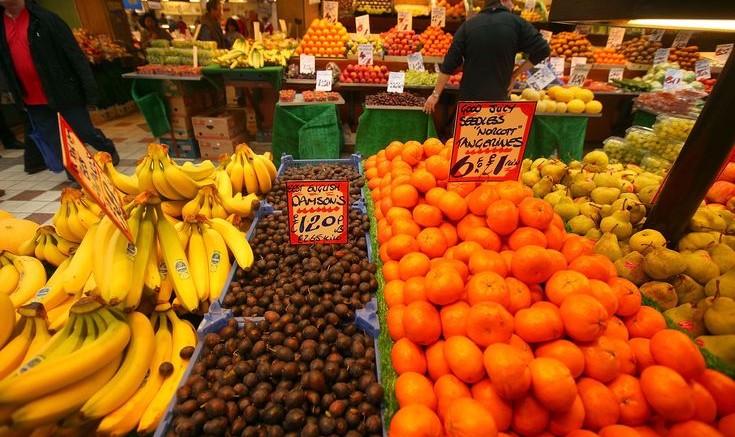
Notwithstanding the slight temperance in YoY food reading from prior month to 19.27% YoY—a reflection of similar base effects, MoM reading printed at its highest level in 12 months (+2.54% MoM) with the NBS noting highest increases in prices of bread and cereals, meat, fish, tubers, and vegetables.

Though much has been said of the potential impact of Naira appreciation on the food basket—with regards to its capacity to tame rising demand pressures from neighbouring West African countries, structural bottlenecks such as higher transport inflation have largely restricted potential pass-through in our view.

Specifically, transport inflation did not only fail to moderate in the review period, it touched its highest level in 9 months in May (+1.2% MoM) despite reported decline in diesel prices (-5.7% MoM to N216.30).

The pressure from transport largely reflects follow-through from recent price hikes by major transport associations across the country in response to the sharp jump in Diesel prices in December.

However, the recent MoM decline in diesel prices and subdued growth in PMS and cooking gas prices suggest that ongoing reforms are gradually gaining grounds despite current stickiness of transport cost.

Away from the strain from higher transport cost, increased demand for cereals—especially in the predominantly Muslim north—in the bloom of the Ramadan season also added another dimension to the Nigerian food price challenge in May.

Going forward, the continuation of the Ramadan season should leave pressures on cereal prices largely intact. Thus, aided by still elevated transportation cost which have limited gains from an appreciating naira, we remain bearish on food inflation despite ongoing green harvest in the Southern part of the country.

That said, the cumulative benefits of sustained FX policy gains appear to have finally caught up with energy prices given subdued MoM growth in prices of PMS and cooking gas as well as decline in diesel prices in recent readings.

We expect this to lead to a moderation in monthly core inflation reading in June—albeit expected to have a relatively pale influence on YoY reading compared to that from the just ended high base effect from 2016. Overall, our expectations across the core and food inflation buckets should translate to an unchanged headline reading of 16.25% YoY in June 2017.

In terms of market impact, the CBN is expected to maintain its ongoing foreign exchange management policy in line with its guidance at the last MPC.

Specifically, putting subsisting food inflation pressures side by side with the positives from the newly introduced FX window for Investors and Exporters thus far, the CBN is unlikely to be in a hurry to exit its ongoing tight monetary policy and FX market drives. In any case, evidence from last GDP report reveals that the economy is already well on its way to recovery. In the near term therefore, we expect the CBN to sustain its sizable FX supply and aggressive OMO issuances, with the liquidity sapping effect of the duo leaving short term interest rates elevated.

Source: ARM Research

“All rights reserved. This publication or any portion thereof may not be reproduced or used in any manner whatsoever without the express written permission of ARM Securities Limited.”


Modupe Gbadeyanka is a fast-rising journalist with Business Post Nigeria. Her passion for journalism is amazing. She is willing to learn more with a view to becoming one of the best pen-pushers in Nigeria. Her role models are the duo of CNN's Richard Quest and Christiane Amanpour.

Economy

Tinubu Presents N58.47trn Budget for 2026 to National Assembly

Published

on

2026 budget tinubu

By Adedapo Adesanya

President Bola Tinubu on Friday presented a budget proposal of N58.47 trillion for the 2026 fiscal year titled Budget of Consolidation, Renewed Resilience and Shared Prosperity to a joint session of the National Assembly, with capital recurrent (non‑debt) expenditure standing at 15.25 trillion, and the capital expenditure at N26.08 trillion, while the crude oil benchmark was pegged at $64.85 per barrel.

Business Post reports that the Brent crude grade currently trades around $60 per barrel. It is also expected to trade at that level or lower next year over worries about oil glut.

At the budget presentation today, Mr Tinubu said the expected total revenue for the year is N34.33 trillion, and the proposal is anchored on a crude oil production of 1.84 million barrels per day, and an exchange rate of N1,400 to the US Dollar.

In terms of sectoral allocation, defence and security took the lion’s share with N5.41 trillion, followed by infrastructure at N3.56 trillion, education received N3.52 trillion, while health received N2.48 trillion.

Addressing the lawmakers, the President described the budget proposal as not “just accounting lines”.

“They are a statement of national priorities,” the president told the gathering. “We remain firmly committed to fiscal sustainability, debt transparency, and value‑for‑money spending.”

The presentation came at a time of heightened insecurity in parts of the country, with mass abductions and other crimes making headlines.

Outlining his government’s plan to address the challenge, President Tinubu reminded the gathering that security “remains the foundation of development”.

He said some of the measures in place to tame insecurity include the modernisation of the Armed Forces, intelligence‑driven policing and joint operations, border security, and technology‑enabled surveillance and community‑based peacebuilding and conflict prevention.

“We will invest in security with clear accountability for outcomes—because security spending must deliver security results,” the president said.

“To secure our country, our priority will remain on increasing the fighting capability of our armed forces and other security agencies by boosting personnel and procuring cutting-edge platforms and other hardware,” he added.

Continue Reading

Economy

PenCom Extends Deadline for Pension Recapitalisation to June 2027

Published

on

Pension Recapitalisation

By Aduragbemi Omiyale

The deadline for the recapitalisation of the Nigerian pension industry has been extended by six months to June 2027 from December 2026.

This extension was approved by the National Pension Commission (PenCom), the agency, which regulates the sector in the country.

Addressing newsmen on Thursday in Lagos, the Director-General of PenCom, Ms Omolola Oloworaran, explained that the shift in deadline was to give operators more time to boost the capital base, dismissing speculations that the exercise had been suspended.

“The recapitalisation has not been suspended. We have communicated the requirements to the Pension Fund Administrators (PFAs), and we expect every operator to be compliant by June 2027. Anyone who is not compliant by then will lose their licence,” Ms Oloworaran told journalists.

She added that, “From a regulatory standpoint, our major challenge is ensuring compliance. We are working with ICPC, labour and the TUC to ensure employers remit pension contributions for their employees.”

The DG noted that engagements with industry operators indicated broad acceptance of the policy, with many PFAs already taking steps to raise additional capital or explore mergers and acquisitions.

“You may see some mergers and acquisitions in the industry, but what is clear is that the recapitalisation exercise is on track and the industry agrees with us,” she stated.

PenCom wants the PFAs to increase their capital base and has created three categories, with the first consists operators with Assets Under Management of N500 billion and above. They are expected to have a minimum capital of N20 billion and one per cent of AUM above N500 billion.

The second category has PFAs with AUM below N500 billion, which must have at least N20 billion as capital base.

The last segment comprises special-purpose PFAs such as NPF Pensions Limited, whose minimum capital was pegged at N30 billion, and the Nigerian University Pension Management Company Limited, whose minimum capital was fixed at N20 billion.

Continue Reading

Economy

Three Securities Sink NASD Exchange by 0.68%

Published

on

NASD securities exchange

By Adedapo Adesanya

Three securities weakened the NASD Over-the-Counter (OTC) Securities Exchange by 0.68 per cent on Thursday, December 18.

According to data, Central Securities Clearing System (CSCS) Plc led the losers’ group after it slipped by N2.87 to N36.78 per share from N39.65 per share, Golden Capital Plc depreciated by 77 Kobo to end at N6.98 per unit versus the previous day’s N7.77 per unit, and FrieslandCampina Wamco Nigeria Plc dropped 19 Kobo to sell at N60.00 per share versus Wednesday’s closing price of N60.19 per share.

At the close of business, the market capitalisation lost N16.81 billion to finish at N2.147 billion compared with the preceding session’s N2.164 trillion, and the NASD Unlisted Security Index (NSI) declined by 24.76 points to 3,589.88 points from 3,614.64 points.

Yesterday, the volume of securities bought and sold increased by 49.3 per cent to 30.5 million units from 20.4 million units, the value of securities surged by 211.8 per cent to N225.1 million from N72.2 million, and the number of deals jumped by 33.3 per cent to 28 deals from 21 deals.

Infrastructure Credit Guarantee Company (InfraCredit) Plc remained the most traded stock by value with a year-to-date sale of 5.8 billion units valued at N16.4 billion, followed by Okitipupa Plc with 178.9 million units transacted for N9.5 billion, and MRS Oil Plc with 36.1 million units worth N4.9 billion.

Similarly, InfraCredit Plc ended as the most traded stock by volume on a year-to-date basis with 5.8 billion units traded for N16.4 billion, trailed by Industrial and General Insurance (IGI) Plc with 1.2 billion units sold for N420.7 million, and Impresit Bakolori Plc with 536.9 million units exchanged for N524.9 million.

Continue Reading

Trending