Economy
Nigeria Must Shift From Stabilisation to Growth Acceleration—Wale Edun
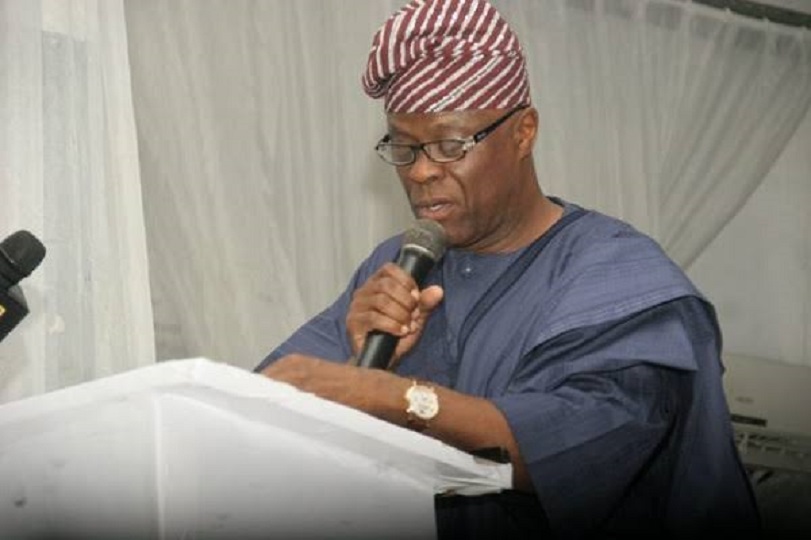
Nigeria’s economy is entering a critical phase, moving from stabilisation into what the Federal Government describes as ‘growth acceleration’, according to the former Minister of Finance and Coordinating Minister of the Economy, Wale Edun, during his keynote delivery at the Nigeria Business Summit convened by Stanbic IBTC.
In his keynote address, Edun said recent macroeconomic reforms had begun to stabilise the economy but cautioned that current growth levels remain inadequate to deliver broad‑based prosperity.
“For nearly a decade, our GDP averaged around two per cent,” Edun said. “We have now moved into a new phase where growth is closer to four per cent, supported by macroeconomic reforms. This is an important improvement, but it is still below the level required to move Nigerians out of poverty in their millions.”
Reforms have strengthened resilience
Edun noted that Nigeria is navigating a renewed global economic shock at a sensitive point in its reform journey. However, he argued that the effects have been softened by reforms introduced since May 2023.
“These shocks would have been far more severe without the comprehensive reforms that have been put in place,” he said, citing stronger external reserves, improved non‑oil revenue performance, and returning investor confidence across domestic and foreign markets.
According to the former Minister, Nigeria is now better positioned to absorb shocks “through price adjustments, investment reallocation, and expanded trade opportunities across Africa and globally”, creating a more predictable environment for business planning and capital deployment.
Enterprises across the value chain must drive inclusive growth
The central theme of the address was the role of enterprises across the value chain in driving inclusive growth. While Edun described small and medium‑scale enterprises (SMEs) as the backbone of the economy, accounting for over 90 per cent of businesses and the majority of employment, he also highlighted the importance of large corporates in building productive and resilient ecosystems.
“Their growth is central to inclusive development,” he said of SMEs. “If we want growth that creates jobs and reduces poverty, then SMEs must be supported deliberately.”
He stressed that this support must translate into practical outcomes, including access to appropriate financing, improved processes, and stronger integration into value chains. For large organisations, he noted, scaling productive capacity and strengthening supplier networks is equally critical.
Productivity and trade as growth enablers
Edun highlighted the National Single Window Initiative as a reform focused on execution and productivity. “Government revenue will increase, not because of higher charges, but because of increased volumes through productivity,” he said.
He emphasised that Nigeria’s long‑term growth will depend on its ability to compete beyond its borders, noting that trade will remain a key driver of diversification and foreign exchange earnings.
“Our true potential does not lie only in our large domestic market,” Edun said. “It lies in becoming a leading exporting economy.”
Partnership and shared responsibility
The former Minister was clear that the government cannot deliver transformation alone.
“Government cannot drive transformation alone,” Edun said. “Its role is to maintain stability, implement predictable policies, and remove structural and bureaucratic constraints to investment.”
Achieving Nigeria’s ambition of building a one‑trillion‑Dollar economy, he added, will require collaboration between government, large corporates, financial institutions, and SMEs.
In closing, Edun delivered a clear signal to investors and businesses.
“Nigeria is open for business. Nigeria is ready for investment, and Nigeria is committed to building an economy that works for all and delivers shared prosperity.”
As discussions continue at the summit, the message is clear. The next phase of growth will favour businesses that are well‑structured, productive, and positioned to scale. Stanbic IBTC continues to support SMEs and large corporates across key sectors, providing financing, advisory, transaction banking, and trade solutions aligned to different stages of business growth.
Businesses seeking to scale operations, strengthen value chains, or expand into regional and global markets are encouraged to engage with Stanbic IBTC to explore solutions aligned with their growth ambitions.
Economy
11 Plc, FrieslandCampina, CSCS Lift NASD Exchange by 1.38%
By Adedapo Adesanya
Three securities lifted the NASD Over-the-Counter (OTC) Securities Exchange by 1.38 per cent on Friday, July 3, with the NASD Security Index (NSI) up by 58.80 points to 4,307.26 points from 4,248.46 points, and the market capitalisation closing higher by N35.30 billion to N2.585 trillion from N2.549 trillion.
The price gainers were led by 11 Plc, which expanded by N20.05 to close at N220.55 per share compared with the previous day’s N200.50 per share, FrieslandCampina Wamco Nigeria Plc increased by N5.36 to N151.82 per unit from N146.46 per unit, and Central Securities Clearing System (CSCS) Plc appreciated by N3.52 to N90.74 per share from N87.22 per share.
Yesterday, the value of transactions surged by 1,431.2 per cent to N160.1 million from the preceding session’s N10.5 million, and the volume of trades rose by 303.7 per cent to 1.8 million units from 440,653 units, while the number of deals decreased by 34.4 per cent to 21 deals from 32 deals.
Great Nigeria Insurance (GNI) Plc was the most traded stock by value on a year-to-date basis, with 3.4 billion units sold for N8.4 billion, followed by Infrastructure Credit Guarantee (Infracredit) Plc with 2.3 billion units worth N6.5 billion, and CSCS Plc with 70.7 million units transacted for N4.9 billion.
GNI Plc was also the most traded stock by volume on a year-to-date basis, with 3.4 billion units valued at N8.4 billion, followed by Infracredit Plc with 2.3 billion units exchanged for N6.5 billion, and Resourcery Plc with 1.1 billion units traded for N415.7 million.
Economy
Nigerian Stocks Rebound by 2.19% to Halt Losing Streak
By Dipo Olowookere
The losing streak on the Nigerian Exchange (NGX) Limited was halted on Friday after the bourse closed higher by 2.19 per cent at the close of trading activities.
The gains reported by Nigerian stocks were buoyed by renewed bargain-hunting by investors, which resulted in all the key sectors of Customs Street ended in the green territory.
The banking space rose by 2.78 per cent, the insurance counter appreciated by 1.26 per cent, the energy segment expanded by 0.36 per cent, the consumer goods index chalked up 0.06 per cent, and the industrial goods sector grew by 0.05 per cent.
Consequently, the All-Share Index (ASI) went up by 4,918.37 points to 229,240.34 points from 224,321.97 points, and the market capitalisation increased by N3.156 trillion to N147.103 trillion from N143.947 trillion.
Investor sentiment was bullish after 34 stocks ended on the price gainers’ chart and 18 stocks finished on the losers’ log, representing a positive market breadth index.
The quintet of The Initiates, Universal Insurance, DAAR Communications, Omatek, and Airtel Africa surged by 10.00 per cent to sell for N25.85, 88 Kobo, N1.65, N1.76, and N5,274.00, respectively.
On the flip side, International Energy Insurance lost 9.96 per cent to trade at N4.70, Meyer shed 9.95 per cent to close at N18.55, Veritas Kapital dropped 5.07 per cent to finish at N1.31, Fidelity Bank slipped by 2.17 per cent to N18.00, and Jaiz Bank crashed by 1.84 per cent to N28.12.
During the session, a total of 414.7 million equities worth N25.1 billion exchanged hands in 47,106 deals compared with the 855.4 million equities valued at N28.4 billion transacted in the preceding day in 51,609 deals, implying a contraction in the trading volume, value, and number of deals by 51.52 per cent, 11.62 per cent, and 8.73 per cent, respectively.
Economy
Naira Trades Flat at Official Market as CBN Makes Minimal FX Intervention
By Adedapo Adesanya
The Naira closed flat against the United States Dollar at N1,370.19/$1 in the Nigerian Autonomous Foreign Exchange Market (NAFEX) on Friday, July 3.
However, it appreciated against the Pound Sterling in the same market segment by N2.29 to settle at N1,829.88/£1 compared with the previous day’s N1,832.17/£1, and marginally depreciated against the Euro by 4 Kobo to close at N1,568.32/€1 versus Thursday’s closing price of N1,568.28/€1.
At the parallel market, the Naira also traded flat against the US Dollar at N1,390/$1, and at the GTBank forex desk, it also maintained stability at N1,832/$1.
Market conditions improved shortly after the following minimal intervention by the Central Bank of Nigeria (CBN) through modest Dollar sales, which boosted liquidity and supported stronger trading activity.
Easing pressure came after half-year profit-taking tapered down, while continued stronger policy signals from the central bank add to near-term support.
Deals executed at the official market on Friday came in at $70.430 million across 82 interbank deals, from $85.517 million the previous day.
Meanwhile, the cryptocurrency market continued its recovery after June non-farm payrolls printed at 57,000, less than half the 113,000 consensus, sending the implied probability of a September Federal Reserve rate hike from 64 per cent to 54 per cent and dragging AI stocks sharply lower.
Weak labour data reduces inflationary pressure and, by extension, the Federal Reserve’s justification for holding rates elevated. That transmission mechanism is direct: lower rate-hike odds compress the opportunity cost of holding non-yielding assets like crypto.
Bitcoin regained the $62,000 mark after it rose by 1.3 per cent to $62,475.29.
Cardano (ADA) gained 6.6 per cent to trade at $0.1759, Ripple (XRP) appreciated by 3.5 per cent to $1.14, Ethereum (ETH) expanded by 2.4 per cent to $1,756.82, Dogecoin (DOGE) improved by 2.1 per cent to $0.0768, Solana (SOL) chalked up 1.8 per cent to $82.65, TRON (TRX) increased by 1.5 per cent to $0.3235, and Binance Coin (BNB) soared by 1.4 per cent to $569.12, while the US Dollar Tether (USDT) and the US Dollar Coin (USDC) traded flat at $1.00 apiece.
-
Feature/OPED6 years agoDavos was Different this year
-
Travel/Tourism10 years ago
Lagos Seals Western Lodge Hotel In Ikorodu
-
Showbiz4 years agoEstranged Lover Releases Videos of Empress Njamah Bathing
-
Banking8 years agoSort Codes of GTBank Branches in Nigeria
-
Economy3 years agoSubsidy Removal: CNG at N130 Per Litre Cheaper Than Petrol—IPMAN
-
Banking3 years agoSort Codes of UBA Branches in Nigeria
-
Banking3 years agoFirst Bank Announces Planned Downtime
-
Sports3 years agoHighest Paid Nigerian Footballer – How Much Do Nigerian Footballers Earn