Economy
Airtel Africa Moves to Return Cash to Shareholders With $110m Buyback
By Adedapo Adesanya
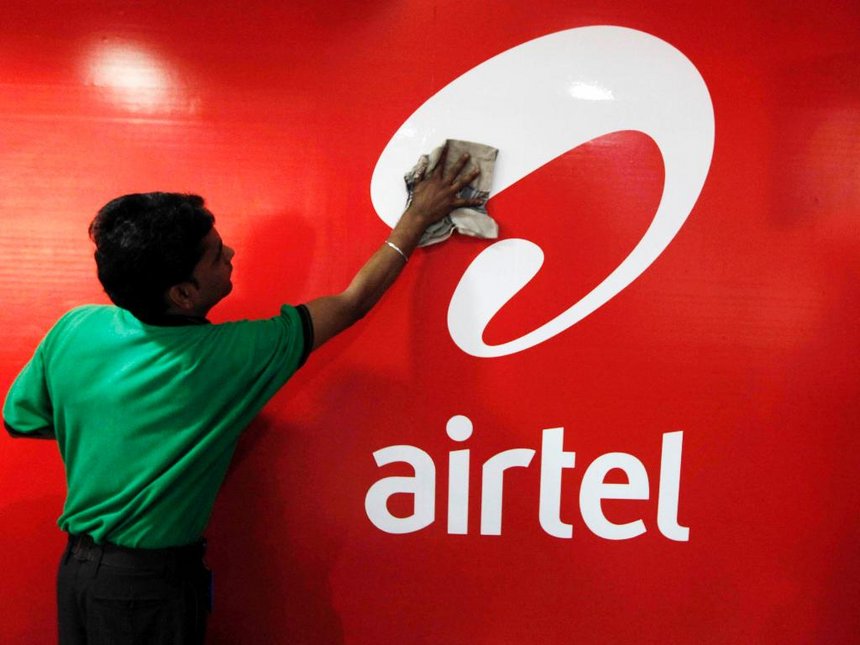
Airtel Africa has launched a share buyback programme worth up to $110 million, signalling confidence in its strong balance sheet and financial flexibility as the telco seeks to return value to shareholders.
The company disclosed in a notice filed on the portal of the Nigerian Exchange (NGX) Limited that the programme would involve the repurchase of up to 1 per cent of its issued share capital as part of its capital allocation policy.
The telco further stated that all shares repurchased under the programme would be cancelled as the sole purpose of the exercise is to reduce the company’s capital base.
“The sole purpose of the buyback programme is to reduce the capital of the company. As such, all shares purchased under the buyback programme will be cancelled,” the notice stated.
According to the organisation, the initiative reflects the board’s confidence in the group’s financial position and its ability to continue investing across its African operations while rewarding shareholders.
“The board’s decision reflects the continued strength of the Group’s balance sheet and its ability to preserve financial flexibility while supporting ongoing investment to capitalise on the compelling growth outlook across the Group’s footprint,” the notice stated.
Airtel Africa said it had entered into an agreement with Barclays Capital Securities Limited to execute the programme through on-market purchases of its ordinary shares, which would subsequently be acquired by the company. The agreement, according to the notice, consists of two parallel elements.
Under the non-discretionary arrangement, Barclays will independently purchase between $50 million and $60 million worth of ordinary shares without influence from the company.
The second component is a discretionary arrangement under which Airtel Africa may instruct Barclays to purchase up to an additional $50 million worth of shares, subject to the provisions of the Market Abuse Regulation.
The programme commenced on May 22, 2026, and is expected to run until no later than November 27, 2026, unless terminated earlier in line with the terms of the agreement.
Airtel Africa said further tranches of the programme could be announced later to enable it fulfil its objective of repurchasing up to one per cent of its issued share capital as at the date of the announcement.
The telecommunications company also explained that the purchases would be carried out in line with shareholder approvals, UK listing regulations and market abuse rules. It noted that shareholders had earlier granted the company authority at its annual general meeting held on July 9, 2025, to repurchase a maximum of 366.07 million ordinary shares.
Following the completion of an earlier buyback programme, Airtel Africa said the remaining authority available for repurchases currently stands at 357.04 million ordinary shares.
The company further disclosed that Barclays may continue executing the discretionary portion of the buyback autonomously during closed periods under irrevocable and non-discretionary instructions permitted by regulation.
The new buyback announcement comes weeks after Airtel Africa reported strong financial and operational performance for the year ended March 31, 2026 (Q1), supported by growth in data usage, mobile money services and improved profitability across its markets.
According to its audited financial statement, the group recorded a 29.5 per cent increase in revenue to $6.42 billion from $4.96 billion in the previous year, while profit after tax (PAT) rose by 147.4 per cent to $813 million from $328 million.
Economy
Airtel Africa Grows Customer Base 11.6% to 189 million
By Aduragbemi Omiyale
In the first quarter of its financial year ended June 30, 2026, Airtel Africa Plc showed resilience in the midst of challenging operating environments, churning out strong operating performance with accelerating customer base growth across all segments.
It was observed that the total customer base in Q1 2027 increased by 11.6 per cent to 189 million, with data customers rising by 15.5 per cent to 87.3 million.
In addition, data usage per customer continued its upward trajectory, rising from 7.8 GB to 10.6 GB per month over the past year, translating into a 56.3 per cent increase in data traffic across the network, underpinning a 10.3 per cent growth in constant currency data ARPU. Smartphone penetration was the key enabler of this increased traffic as penetration increased to 51.0 per cent as digital adoption of our services continues.
A look at the financial performance indicated that revenue in reported currency grew by 31.0 per cent to $1.85 billion, reflecting constant currency growth of 21.1 per cent and macroeconomic tailwinds supporting currency appreciation.
All segments continued to see double-digit constant currency revenue growth, with mobile services revenue growing by 19.1 per cent, and mobile money growing by 25.8 per cent.
Across mobile services, voice continued to see strong constant currency growth of 11.2 per cent and data revenue grew by 27.2 per cent.
In East Africa and Francophone Africa, constant currency revenues grew by 17.8 per cent and 18.0 per cent, respectively, while Nigerian revenues grew by 29.8 per cent, fully reflecting the lapping effect of the tariff adjustments which were implemented in the fourth quarter of 2025.
Constant currency EBITDA went up by 24.4 per cent, with reported currency EBITDA of $928 million growing by 36.6 per cent. The Q1’27 EBITDA margin of 50.1 per cent, an increase of 206bps year-on-year, continues to reflect the success of the company’s ongoing cost optimisation programme, despite the recent energy cost inflation arising from geopolitical developments.
The post-tax profit improved to $198 million from $156 million in the prior period, with higher profit after tax in the current period driven by elevated operating profit partially offset by derivative and foreign exchange losses of $6 million in the current period compared to $22 million derivative and foreign exchange gains in the prior period.
Furthermore, Profit after tax was impacted by the recognition of an exceptional finance cost of $37 million following an in-principle settlement reached during the quarter in respect of a commercial dispute in one of the group’s subsidiaries.
Commenting on the results, the chief executive of Airtel Africa, Mr Sunil Taldar, said, “We have started this year with another pleasing performance. Our continued focus on the customer experience translated into accelerating customer base growth across all business segments.
“As we continue to digitise our business, we are streamlining customer journeys, increasing digital adoption and harnessing data and AI to improve service delivery and support a strong, sustainable growth profile.”
Economy
Guinness Delights Investors With N7 Interim Dividend as H1’26 Profit Soars 53%
By Aduragbemi Omiyale
One of the nation’s top brewers, Guinness Nigeria Plc, is paying an interim dividend of N7 per share to its shareholders for the period ended June 30, 2026.
The funds should, on August 10, 2026, hit the bank accounts of investors whose names appear in the Register of Members as of the close of business on Wednesday, July 29, 2026, a regulatory note from the organisation disclosed.
The firm has informed shareholders who have yet to complete the e-dividend registration to download the Registrar’s E-Dividend Mandate Activation Form, which is also available on its website, so as not to be left out of the cash reward for the first half of this year.
In the first six months of 2026, Guinness Nigeria grew its net profit by 53.33 per cent to N25.3 billion from N16.5 billion in the same period of 2025, amid improved top line and better management of administrative, marketing and distribution costs.
The revenue for the period under consideration rose to N265.0 billion from N237.0 billion, boosted by domestic sales of its products, which accounted for N260.9 billion compared with N237.0 billion a year earlier. The balance was from its export sales. This showed that over 98 per cent of the company’s earnings are from sales in Nigeria.
In the first half of the year, Guinness Nigeria improved its gross profit to N97.5 billion from N89.4 billion in the same period of 2025, as its finance income, arising from financial assets and others, stood at N1.2 billion compared with N110.7 million in H1 of 2026.
Economy
FG Seeks Stronger Domestic Capital to Drive Nigeria’s Economic Growth
By Adedapo Adesanya
The federal government has reaffirmed its commitment to mobilising domestic capital to finance Nigeria’s long-term development, saying stronger local investment will be critical to accelerating economic transformation and attracting private sector participation.
The Minister of Finance and Coordinating Minister of the Economy, Mr Taiwo Oyedele, stated this while speaking at the 6th Annual General Assembly of the Association of Nigerian Development Finance Institutions (ANDFI) in Abuja on Thursday.
The Minister’s remarks were contained in a statement on Friday, July 24, by his Senior Special Assistant on Communications and Press Secretary, Mrs Maryann Duke.
Addressing the conference with the theme, Unlocking Domestic Capital for Development Financing, Mr Oyedele said Nigeria must harness its domestic financial resources and strengthen institutions that can channel capital into productive sectors of the economy.
He noted that despite increasingly difficult global financing conditions, the country possesses substantial domestic savings, institutional assets and private capital that can be leveraged to fund infrastructure, industrialisation, agriculture, housing, innovation and other critical sectors.
According to the minister, domestic capital should not be viewed as an alternative to foreign investment but as the foundation for attracting sustainable international investment.
“Our focus is to build an economy where confidence leads capital. By strengthening macroeconomic stability, deepening our financial markets and empowering development finance institutions to catalyse private investment, we are unlocking Nigeria’s enormous domestic potential to finance inclusive and sustainable growth,” Mr Oyedele said.
He said the federal government’s ongoing economic reforms under the Renewed Hope Agenda are beginning to deliver positive outcomes, including improved investor confidence, stronger external reserves, enhanced revenue generation and renewed international confidence in Nigeria’s economy.
The Minister identified five priority areas for unlocking domestic capital, including expanding investment opportunities for households, deepening institutional capital through pension and insurance assets, strengthening credit enhancement mechanisms, broadening local currency financing through the capital market, and building stronger development finance institutions capable of attracting larger volumes of private investment.
Mr Oyedele also called on development finance institutions to move beyond conventional lending by helping to structure bankable projects, reduce investment risks, support policy reforms and create financing ecosystems that encourage greater private sector participation.
He reaffirmed the Federal Government’s commitment to working with development finance institutions, financial regulators, investors and development partners to develop a financing framework that will support businesses, create jobs, accelerate industrialisation and promote inclusive economic growth across the country.


Pingback: Airtel Africa Snaps Up More Shares In Latest June Buyback - FinanceTracked