General
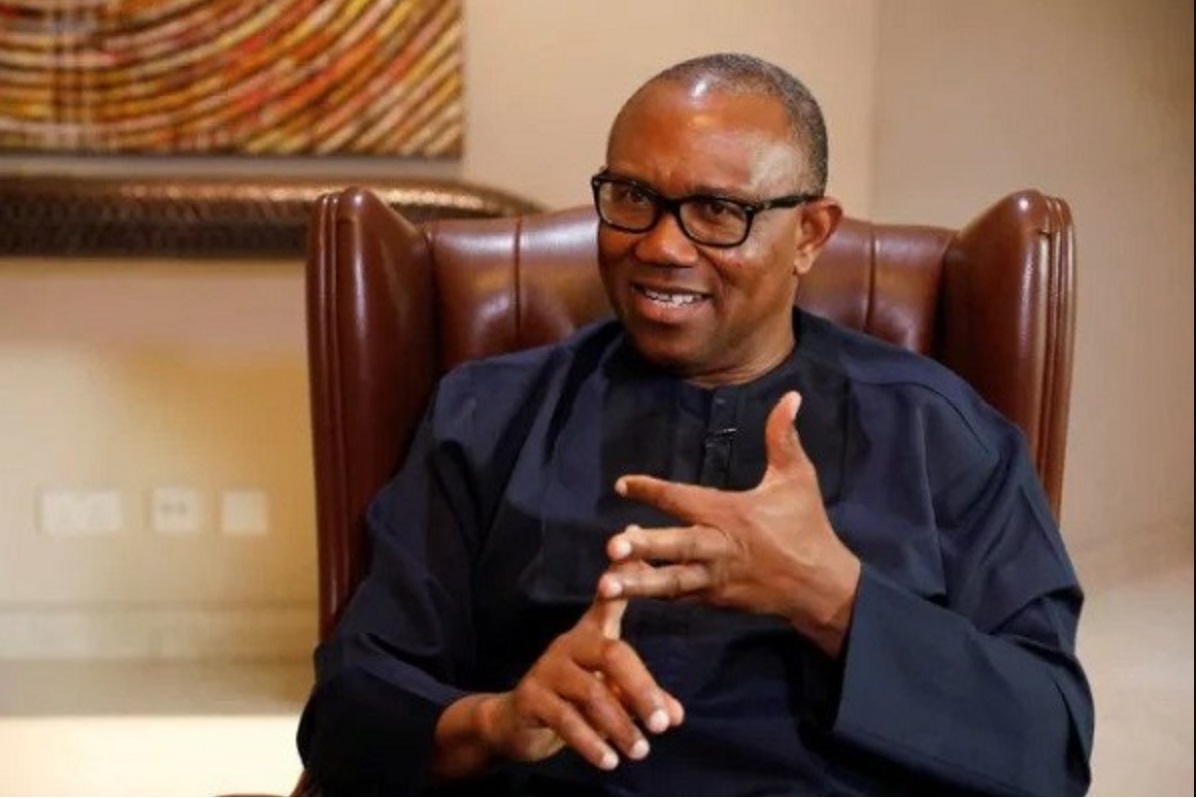
2027: Peter Obi Promises to Expand Nigeria’s Power Capacity by 10,000MW
By Adedapo Adesanya
The presidential candidate of the Nigeria Democratic Congress (NDC), Mr Peter Obi, has pledged to increase Nigeria’s electricity generation and distribution by at least 10,000 megawatts within four years if elected president in the 2027 general elections.
Mr Obi made the commitment on Saturday in Abuja while accepting his nomination as the party’s presidential flagbearer, as part of his pledge to transform the economy, tackle insecurity, create jobs, and end widespread hunger through targeted investments in key sectors.
The former Anambra State Governor said his administration would be driven by transparency, productivity and national unity, stressing that Nigeria’s current challenges required urgent and decisive leadership.
Mr Obi noted that the country continues to face significant socio-economic challenges, including insecurity, poverty, unemployment, hunger, and limited access to healthcare and education.
He, however, expressed confidence that Nigeria could overcome its challenges through efficient resource management and visionary leadership.
He highlighted that a core focus of his manifesto was to overhaul the power sector, which he described as central to economic growth and industrial development.
“Nigeria today is the nation with the highest number of citizens lacking access to electricity globally,” he said.
He noted that Nigeria generates and distributes about 4,000 megawatts of electricity for a population of over 200 million people, describing the figure as inadequate.
Comparing Nigeria with countries such as South Africa and Egypt, which generate over 40,000 megawatts in spite of smaller populations, Mr Obi said the gap reflected a major structural challenge.
“Over the next four years, I commit to ensuring a minimum of 10,000 megawatt increase in power generation and distribution,” he said.
On security, Mr Obi pledged to deploy intelligence-driven and technology-based approaches to tackle insecurity, while addressing root causes such as poverty, unemployment and social exclusion.
He also promised to strengthen the healthcare system, including increasing health insurance coverage from about 10 per cent to over 20 per cent within four years.
According to him, his administration would raise healthcare spending to at least 10 per cent of GDP and ensure that every one of Nigeria’s 8,809 political wards has a functional primary healthcare centre.
On education, Mr Obi pledged increased investment in schools, teacher training, technology and vocational skills development, saying human capital is the foundation of national transformation.
He expressed concern over rising food insecurity, noting that over 35 million Nigerians are projected to face acute hunger in spite of the country’s agricultural potential.
“We have absolutely no justification for being among the world’s hungriest nations,” he said, adding that his government would prioritise agricultural productivity to shift Nigeria from consumption to production.
Mr Obi also promised targeted support for micro, small and medium enterprises through tax incentives, access to affordable credit and job-creation policies aimed at empowering young Nigerians.
Mr Obi, who was the 2023 presidential candidate of the Labour Party, joined the NDC from the African Democratic Congress (ADC) earlier this month.
General
Dangote Refinery Cuts Petrol to N1,250 Per Litre, Diesel N1,700 Per Litre
By Dipo Olowookere
The ex-depot prices of two major petroleum products, Premium Motor Spirit (PMS), otherwise known as petrol, and Automotive Gas Oil (AGO), also known as diesel, have been slashed by Dangote Petroleum Refinery and Petrochemicals.
The company announced the reduction in prices of the products in a statement on Saturday evening.
The Lagos-based private refinery said its latest action was to reinforce its commitment to making refined petroleum products more affordable and supporting economic activities across Nigeria.
The cut in the prices of petrol and diesel by Dangote refinery comes as the global crude oil prices continue to moderate, amid expectations that the United States of America and Iran will agree on a ceasefire very soon and reopen the Strait of Hormuz.
This narrow vessel passage accounts for 20 per cent of the world’s crude oil consumption. It has been closed for more than two months because of the Middle East crisis.
On February 28, 2026, America and Israel launched airstrikes in Iran, killing its Supreme Leader and other top government officials.
Iran fought back by attacking US bases in the Middle East, including in Saudi Arabia, Qatar, the United Arab Emirates and others. It also shut down the Strait of Hormuz, causing the price of oil to almost hit $120 per barrel.
The crisis faraway in the Middle East, rather than becoming a blessing to Nigeria, put citizens under untold hardship, as the price of petroleum products, especially PMS, jumped from around N800 per litre to almost N1,500 per litre.
On Friday, the price of Brent crude was about $94 per barrel, while the West Texas Intermediate (WTI) crude was about $89 per barrel.
Ostensibly in response to this, the Dangote refinery has reduced the ex-depot price of petrol to N1,250 per litre from N1,275 per litre, while the price of diesel has been cut to N1,700 per litre from N1,800 per litre.
Since commencing operations, the 650,000 barrels per day refinery has increasingly supplied the domestic market with refined products aimed at eliminating the country’s dependence on imported fuels.
The company claimed it decided to slash the price to improve supply efficiency, deepen domestic refining, and provide cost relief to consumers and businesses that depend heavily on petroleum products for transportation, power generation and industrial operations.
General
Dangote Refinery Emerges World’s Largest Jet Fuel Exporter in April
By Adedapo Adesanya
Dangote Petroleum Refinery was the world’s largest exporter of jet fuel in April, driven by increased production capacity and shifting global supply chains disrupted by geopolitical tensions in the Middle East.
This was disclosed by the refinery’s chief executive, Mr David Bird, in a recent report by S&P Global Energy at the Lagos-based facility.
According to the report, disruptions in global aviation fuel trade routes created a supply gap that repositioned major non-Middle East refiners, with Dangote Refinery taking a leading role in meeting international demand.
S&P Global Commodities at Sea data revealed that the refinery recorded a surge in aviation fuel exports after the escalation of conflict in the Middle East altered established shipping and supply patterns across key markets.
“After the Middle East war began, Dangote shifted to ‘max jet mode,’ and in April it became the world’s single largest exporter of aviation fuel,” the report stated.
The refinery, which has reached an estimated production capacity of about 650,000 barrels per day, has continued to operate at near-peak levels following its phased ramp-up. It has also adopted a flexible blending system that allows it to process additional feedstocks, including GTL naphtha and Bonny condensate, to boost gasoline and jet fuel output.
Mr Bird explained that sustaining large-scale output requires stronger logistics coordination and more sophisticated trading systems, especially as the refinery expands beyond reliance on domestic crude supply.
He also noted that Dangote Refinery is gradually transitioning into a merchant refining model, positioning itself as an active participant in global crude and refined product trading rather than a domestically focused processor.
As part of its long-term strategy, the refinery is expanding its crude slate beyond Nigerian light sweet grades to include heavier and more complex blends. It is currently capable of processing about 40 crude types, with plans to increase that capacity as operations scale.
Mr Bird disclosed that the company is targeting a future expansion to 1.4 million barrels per day, which would require sourcing crude from multiple regions, including the United States, the Middle East and parts of South America.
He added that the refinery is pursuing long-term supply agreements with governments, airlines and national oil companies, as it gradually shifts away from spot-market transactions.
The report further highlighted Dangote’s ambition to operate at the level of global refining hubs such as Singapore’s Pulau Bukom facility, which processes over 100 crude grades.
Beyond refining, the company is also investing in logistics and infrastructure development across Africa, including proposed storage hubs in Namibia, pipeline discussions in Zambia and expanded storage networks in East and Central Africa.
The official said the broader vision is to transform the Lekki Free Zone into a fully integrated industrial and energy hub anchored on refining, petrochemicals and export logistics.
The surge in jet fuel exports comes amid global market disruptions linked to tensions involving the United States, Iran and Israel, which affected shipping through the Strait of Hormuz a critical route responsible for about 20 per cent of global oil and fuel trade.
The resulting supply constraints tightened global jet fuel availability and pushed up international prices, creating an opening for refiners outside the Middle East to capture market share.
In Nigeria, rising aviation fuel costs had earlier forced government intervention. In April, authorities introduced price caps and a 30-day credit window for airlines to ease operational pressures, with Jet A1 prices benchmarked between N1,760 and N2,037 per litre across major cities.
Earlier in May, Dangote Refinery reduced its ex-depot aviation fuel price from N1,750 to N1,650 per litre and introduced a 30-day interest-free credit facility for airline operators and marketers.
The refinery also moved Jet A1 transactions from Dollar-based pricing to Naira-denominated sales, a step widely seen as an effort to stabilise domestic aviation costs and reduce foreign exchange pressure on operators.
General
Customs Agents Ask Tinubu to Halt Planned Shipping Charge Hike
By Adedapo Adesanya
The National Council of Managing Directors of Licensed Customs Agents (NCMDLCA), the umbrella body of customs agents in Nigeria, has petitioned President Bola Tinubu to compel the Nigerian Shippers’ Council (NSC) to suspend the planned increase in shipping charges pending the review by the standing committee.
According to Mr Lucky Amiwero, the president of the body, in a letter to the President, the increase is a clear contravention of the Memorandum of Understanding (MOU) signed in respect of local shipping charges between providers and users of shipping/Port and related service approved by the federal government.
The MoU under Articles 2(b)&4 clearly states that any other charges shall require agreement between the Parties concerned through the Nigerian Shippers Council, which must be complied with.
“In line with the provisions of Articles 2 and 4 of the Memorandum of Understanding, there is a need to follow the prescribed procedure as contained in the MOU. First is by submitting the information of the increase to the standing committee, including the detailed information, why the increase, and the percentage, to the standing committee for consideration and review of any increase
“We hereby request the suspension of any Local Shipping Charges increase, pending the review by the standing committee, which entails the detailed information of the increase, the Percentage (%), and if the Increase is necessary, to be sent to the standing Committee as approved by the Federal Government,” he said.
The official said the NSC were supposed to forward all detailed information on the increase in the local shipping charges to the standing committee, who are signatory to the MOU, and then to review in line with the approved federal government directive.
“We refer the government to the usual procedure of initiating an increase in local shipping charges. Notification of increase as proposed is always forwarded to the standing committee, reference 2003 NSC/TOD/FPS/011/VOL.V/54 OF 20TH JUNE, and NSC/TOD/FPS/011/VOL.35 OF 14TH April 2003 in line with article 2(b)&4 of the MOU.
“In line with Article 2(b)&4 of the memorandum of understanding, the request made by Shipping Association of Nigeria (SAN), which was forwarded to the Shippers Council and the Shippers Council forwarded the same to the technical standing committee for review,” he added.
-
Feature/OPED6 years agoDavos was Different this year
-
Travel/Tourism10 years ago
Lagos Seals Western Lodge Hotel In Ikorodu
-
Showbiz3 years agoEstranged Lover Releases Videos of Empress Njamah Bathing
-
Banking8 years agoSort Codes of GTBank Branches in Nigeria
-
Economy3 years agoSubsidy Removal: CNG at N130 Per Litre Cheaper Than Petrol—IPMAN
-
Banking3 years agoSort Codes of UBA Branches in Nigeria
-
Banking3 years agoFirst Bank Announces Planned Downtime
-
Sports3 years agoHighest Paid Nigerian Footballer – How Much Do Nigerian Footballers Earn