General
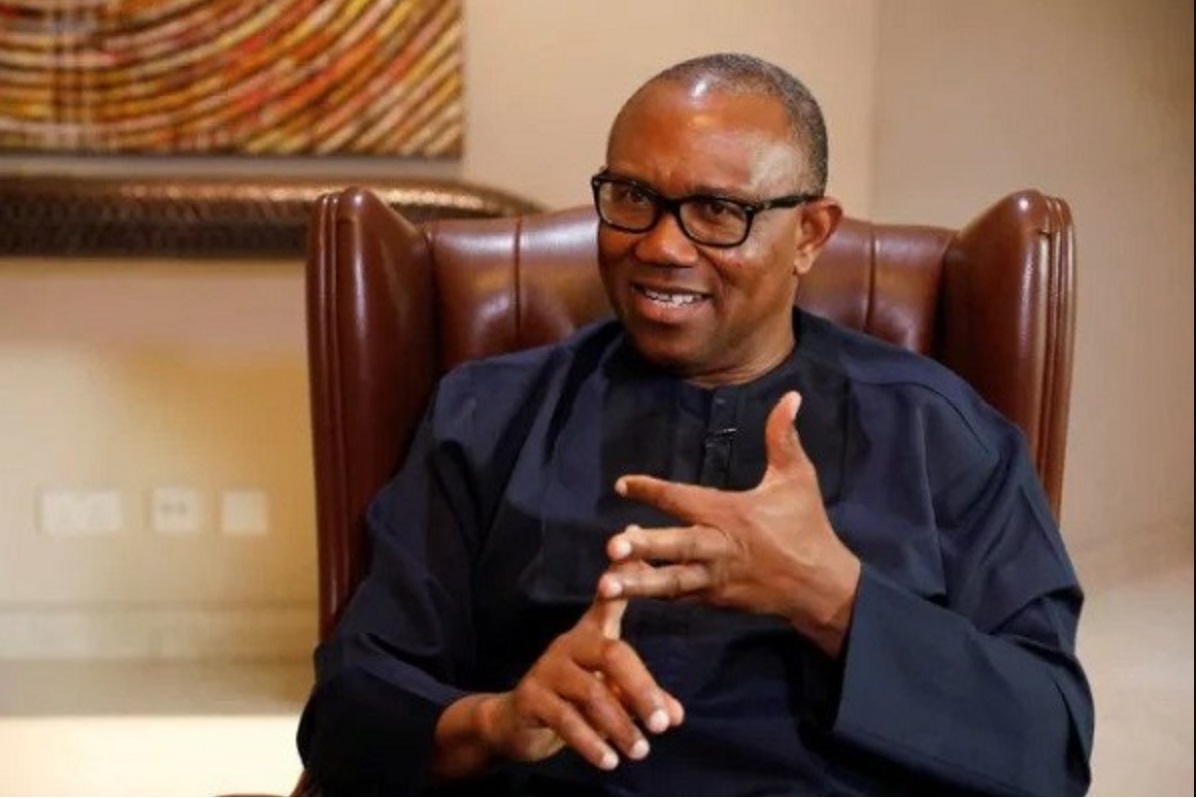
2027: Peter Obi Promises to Expand Nigeria’s Power Capacity by 10,000MW
By Adedapo Adesanya
The presidential candidate of the Nigeria Democratic Congress (NDC), Mr Peter Obi, has pledged to increase Nigeria’s electricity generation and distribution by at least 10,000 megawatts within four years if elected president in the 2027 general elections.
Mr Obi made the commitment on Saturday in Abuja while accepting his nomination as the party’s presidential flagbearer, as part of his pledge to transform the economy, tackle insecurity, create jobs, and end widespread hunger through targeted investments in key sectors.
The former Anambra State Governor said his administration would be driven by transparency, productivity and national unity, stressing that Nigeria’s current challenges required urgent and decisive leadership.
Mr Obi noted that the country continues to face significant socio-economic challenges, including insecurity, poverty, unemployment, hunger, and limited access to healthcare and education.
He, however, expressed confidence that Nigeria could overcome its challenges through efficient resource management and visionary leadership.
He highlighted that a core focus of his manifesto was to overhaul the power sector, which he described as central to economic growth and industrial development.
“Nigeria today is the nation with the highest number of citizens lacking access to electricity globally,” he said.
He noted that Nigeria generates and distributes about 4,000 megawatts of electricity for a population of over 200 million people, describing the figure as inadequate.
Comparing Nigeria with countries such as South Africa and Egypt, which generate over 40,000 megawatts in spite of smaller populations, Mr Obi said the gap reflected a major structural challenge.
“Over the next four years, I commit to ensuring a minimum of 10,000 megawatt increase in power generation and distribution,” he said.
On security, Mr Obi pledged to deploy intelligence-driven and technology-based approaches to tackle insecurity, while addressing root causes such as poverty, unemployment and social exclusion.
He also promised to strengthen the healthcare system, including increasing health insurance coverage from about 10 per cent to over 20 per cent within four years.
According to him, his administration would raise healthcare spending to at least 10 per cent of GDP and ensure that every one of Nigeria’s 8,809 political wards has a functional primary healthcare centre.
On education, Mr Obi pledged increased investment in schools, teacher training, technology and vocational skills development, saying human capital is the foundation of national transformation.
He expressed concern over rising food insecurity, noting that over 35 million Nigerians are projected to face acute hunger in spite of the country’s agricultural potential.
“We have absolutely no justification for being among the world’s hungriest nations,” he said, adding that his government would prioritise agricultural productivity to shift Nigeria from consumption to production.
Mr Obi also promised targeted support for micro, small and medium enterprises through tax incentives, access to affordable credit and job-creation policies aimed at empowering young Nigerians.
Mr Obi, who was the 2023 presidential candidate of the Labour Party, joined the NDC from the African Democratic Congress (ADC) earlier this month.
General
FG, IFDC Sign MoU to Ease Farmers’ Access to Fertiliser
Adedapo Adesanya
The federal government, through the Ministry of Agriculture and Food Security, has signed a Memorandum of Understanding (MoU) with the International Fertiliser Development Centre (IFDC) to improve farmers’ access to fertiliser.
The agreement seeks to address key challenges limiting the productivity of smallholder farmers, particularly fertiliser affordability, accessibility and timely distribution.
Under the partnership, both parties will work to strengthen fertiliser supply systems, expand soil testing and balanced nutrient management, and promote private-sector-led distribution networks across the country.
Speaking at the signing ceremony in Abuja, the permanent secretary of the ministry, Mr Marcus Olaniyi Ogunbiyi, described fertiliser as a critical input for increasing agricultural productivity and ensuring food security.
Mr Ogunbiyi noted that the MoU would support ongoing efforts to improve fertiliser accessibility, strengthen soil fertility management, promote sustainable agricultural practices and increase food production nationwide.
“Fertiliser remains indispensable for increasing crop yields and improving farm productivity across the agricultural value chain. A farmer may appreciate access to machinery, tools, or financial services; however, the availability and affordability of fertiliser often determine the success or failure of a farming season,” he said.
He said the Memorandum of Understanding will support efforts to improve fertiliser accessibility, strengthen soil fertility management, promote sustainable agricultural practices, and enhance food production nationwide.
He called on IFDC and other stakeholders to maximise the opportunities provided by the partnership to develop impactful programmes capable of boosting agricultural productivity and improving rural livelihoods.
Responding on behalf of IFDC, the organisation’s Executive Director, Mr Ben Lenkcher, pledged continued technical and logistical support to Nigerian farmers in line with the federal government’s agricultural transformation agenda.
Mr Lenkcher said IFDC remains committed to improving fertiliser accessibility, availability and affordability across Nigeria, noting that the partnership would contribute significantly to strengthening the agricultural ecosystem and enhancing food production to meet the needs of the country’s growing population.
General
Arridex Plans Mega Industrial Additive Manufacturing Plant in 2027
By Aduragbemi Omiyale
Plans are underway by Arridex to commission a mega industrial additive manufacturing facility in the first quarter of 2027.
The chief executive of the organisation, Mr Kayode Adeleke, disclosed this at the commissioning of the company’s omnifactory in Lagos some days ago by Governor Babajide Sanwo-Olu of Lagos State.
The new plant is the first multi-technology industrial additive manufacturing facility in West Africa.
The Arridex Omnifactory integrates multiple additive manufacturing technologies under a single roof, including Laser Powder Bed Fusion (L-PBF), Cold Spray, Fused Filament Fabrication (FFF), and Selective Laser Sintering (SLS), enabling on-demand production of industrial components, spares, and improved part designs for critical industries. Its large-format capabilities extend to full-size marine components and other large-scale industrial structures.
The Omnifactory’s commissioning is the point at which two decades of accumulated capability become infrastructure. Arridex began operations in 2005 as an asset integrity practice in Nigeria’s oil and gas sector and grew sector by sector into maritime, defence, construction, technology, and aerospace. The organisation has recorded zero lost-time incidents across more than seven million man-hours of operations.
For Nigeria and West Africa, the Arridex Omnifactory addresses a structural dependency that has long affected operational continuity across critical industries. Asset owners managing ageing infrastructure have routinely contended with extended procurement lead times, supply chains spanning multiple jurisdictions, and the increasing obsolescence of legacy parts whose original manufacturers may no longer exist. The Omnifactory manufactures those components on demand in Lagos.
Arridex holds Pioneer Status in additive manufacturing, granted by the Nigerian Investment Promotion Commission (NIPC), it is the first company qualified by the Nigerian Upstream Petroleum Regulatory Commission (NUPRC) for additive manufacturing deployment in the oil and gas sector, and has a joint venture partnership with the Defence Industries Corporation of Nigeria (DICON) for the local production of military-grade additive manufactured components, a set of recognitions that collectively signal the institutional grounding of what the Omnifactory represents.
“We did not set out to build the biggest company, but a resilient one. For over two decades, we have chosen the harder path, and that is to make in Africa what others import, to meet global standards without exception, and to put purpose before profit.
“The Arridex Omnifactory is where that conviction becomes infrastructure. The name on the door is new, but the work behind it is not. We are not stopping here. By the first quarter of 2027, we will commission the Arridex Mega Omnifactory, which will stand among the largest single-site industrial additive manufacturing facilities in the world. The next chapter of global manufacturing can be written from Lagos. We are building it,” Mr Adeleke commented.
On his part, Mr Sanwo-Olu lauded the firm for its “vision and commitment to building solutions that serve not only Nigeria but the wider African continent.”
“Lagos will continue to support investments that create opportunities, grow local capacity and position our state as a hub for innovation and industry,” he assured.
General
NMDPRA, NEITI Deepen Partnership on Data Transparency, Regulatory Reforms
By Adedapo Adesanya
The Nigerian Midstream and Downstream Petroleum Regulatory Authority (NMDPRA) and the Nigeria Extractive Industries Transparency Initiative (NEITI) have strengthened collaboration on data transparency, accountability and regulatory reforms in Nigeria’s petroleum sector.
The commitment was made during a visit by a NEITI delegation led by its Executive Secretary, Mr Musa Sarkin Adar, to the headquarters of NMDPRA, where discussions focused on enhancing data management, technology-driven regulation and transparency across the midstream and downstream segments of the oil and gas industry.
Speaking during the meeting, the chief executive of NMDPRA, Mr Rabiu Abdullahi Umar, said the Authority is implementing key reforms aimed at improving regulatory efficiency and ensuring the integrity of industry data.
According to him, two major initiatives, Project NEXUS and Project 365, are central to the authority’s reform agenda.
He explained that “Project NEXUS is designed to transform the implementation of the Petroleum Industry Act, PIA, while Project 365 is focused on automating the Authority’s processes and services.”
Mr Umar stressed that accurate and reliable data remain critical to effective regulation, policy formulation and decision-making in the petroleum sector.
“Reliable data remains critical to effective regulation and policy formulation,” he said, adding that NMDPRA is leveraging technology to improve product tracking across the petroleum value chain and enhance operational transparency.
The NMDPRA boss further reaffirmed the Authority’s commitment to working closely with NEITI, noting that stronger collaboration would support efforts to deepen transparency and accountability in the industry.
In his remarks, NEITI Executive Secretary, Mr Musa Sarkin Adar, sought NMDPRA’s support in providing critical industry data and information required for the agency’s forthcoming reports.
Mr Adar specifically requested information relating to refinery operations as well as beneficial ownership in the midstream and downstream petroleum sectors, areas that have increasingly become key components of transparency reporting in the extractive industry.
He also invited NMDPRA to participate in NEITI’s exhibition at the 2026 Extractive Industries Transparency Initiative (EITI) Global Conference scheduled to be held on October 8 and 9, 2026, in Brussels, Belgium.
The meeting also featured contributions from NMDPRA’s Executive Director, Hydrocarbon Processing Plants, Installations and Transportation Infrastructure, HPPITI, Mr.= Francis Ogaree, and Executive Director, Economic Regulation and Strategic Planning, ER&SP, Mrs Zainab Gobir.
-
Feature/OPED6 years agoDavos was Different this year
-
Travel/Tourism10 years ago
Lagos Seals Western Lodge Hotel In Ikorodu
-
Showbiz3 years agoEstranged Lover Releases Videos of Empress Njamah Bathing
-
Banking8 years agoSort Codes of GTBank Branches in Nigeria
-
Economy3 years agoSubsidy Removal: CNG at N130 Per Litre Cheaper Than Petrol—IPMAN
-
Banking3 years agoSort Codes of UBA Branches in Nigeria
-
Banking3 years agoFirst Bank Announces Planned Downtime
-
Sports3 years agoHighest Paid Nigerian Footballer – How Much Do Nigerian Footballers Earn