Connect with us

Economy

Firm Sites $20m Oil Palm Plant in Delta, Eyes 5000 Jobs

Published

on

By Dipo Olowookere

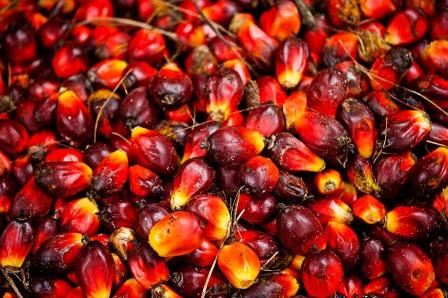
Delta State government has entered into an agreement with a private firm called Norsworthy Investment Limited for the siting of an oil palm processing plant in the state.

The project is said to worth $20 million and would create over five thousand jobs for the people of the state.

The oil palm plant will require the company to cultivate oil palm on about about 3,000 acres of land at Akwukwu-Igbo community in Oshimili North Local Government Area of the state.

This, we gathered, is part of Governor Ifeanyi Okowa’s efforts in boosting the economy of oil-rich Delta State and also diversifying its source of income.

At the signing ceremony on Thursday in Asaba, the state capital, Secretary to the State Government, Mr Festus Agas, who signed on behalf of the government, noted that Mr Okowa places high premium on agriculture.

He urged other investors to emulate Norsworthy and take advantage of the enabling investment environment in the state to help grow the state economy.

“The Governor is committed to creating jobs and also make the environment fertile for investments to flourish.

“Other investors should emulate Norsworthy and put their money in Delta State. They will never regret doing so,” Mr Agas said.

He assured the firm that the state government would provide every necessary support to make the project a success.

In his remarks, Chairman of Norsworthy Investment Limited, Dr Gabriel Ogbechie, expressed the determination of the company to contribute its quota in the development of Delta State.

“We are very passionate when it comes to investment, not only in Delta but elsewhere because investment brings development to the people and grows the economy of its area of operation.

“I want to commend Gov. Ifeanyi Okowa for his vision and commitment to bring development to the state, and we are ready to bring our own contribution to growing the Delta economy,” he said.


Dipo Olowookere is a journalist based in Nigeria that has passion for reporting business news stories. At his leisure time, he watches football and supports 3SC of Ibadan. Mr Olowookere can be reached via [email protected]

Click to comment

Leave a Reply

Your email address will not be published. Required fields are marked *

Economy

Naira Loses Against Dollar Official, Black Markets

Published

on

money supply naira

By Adedapo Adesanya

The Naira opened the new trading week on a negative note on Monday at the Nigerian Autonomous Foreign Exchange Market (NAFEX) and the black market.

At the parallel market, the Nigerian currency weakened against the US Dollar by N5 to sell for N1,380/$1 compared with the preceding session’s rate of N1,375/$1, and at the GTBank FX desk, it shed N1 to trade at N1,373/$1 versus N1,372/$1.

At the official market, it lost 63 Kobo or 0.05 per cent against the Dollar during the session to close at N1,362.84/$1, in contrast to last Friday’s value of N1,362.21/$1.

However, the Nigerian Naira gained N2.30 against the Pound Sterling at the spot market yesterday, quoting at N1,821.29/£1 compared with the previous rate of N1,823.59/£1, and improved against the Euro by 23 Kobo to settle at N1,574.35/€1 versus N1,574.58/€1.

Data from the Central Bank of Nigeria (CBN) showed that interbank forex turnover increased to $92.248 million across 90 deals, from $73.565 million last Friday.

On the policy front, participants believed that the application of the fourth edition of the Foreign Exchange Manual of the central bank, which introduces updated guidelines for foreign exchange transactions and tightening compliance requirements for authorised dealers and market participants, will enhance market flexibility and ease previous restrictions.

Meanwhile, the cryptocurrency market snapped from recent declines, jolted by Strategy’s purchase of 1,550 Bitcoin for approximately $101 million, increasing its total holdings to 845,256 BTC. The company raised $181 million through common stock sales, using the proceeds to fund the bitcoin purchase and increase its cash reserves to $1 billion, pushing the price of the coin higher by 3.2 per cent to $63,731.69.

Cardano (ADA) appreciated by 8.4 per cent to $0.1738, Ethereum (ETH) rose by 5.2 per cent to $1,711.54, Solana (SOL) expanded by 5.1 per cent to $67.82, and Ripple (XRP) improved by 4.9 per cent to $1.18.

Further, Dogecoin (DOGE) jumped by 4.3 per cent to $0.0873, Binance Coin (BNB) soared by 2.7 per cent to $609.50, and TRON (TRX) increased by 0.7 per cent to $0.3274, while the US Dollar Tether (USDT) and the US Dollar Coin (USDC) remained unchanged at $0.9997 and $0.9998, respectively.

Continue Reading

Economy

Economist Tasks FG to Explore Alternative Funding Sources

Published

on

Aliyu Ilias

By Aduragbemi Omiyale

The federal government has been advised to consider exploring other funding sources to finance its budget deficits.

Speaking with Punch recently, the chief executive of CSA Advisory, Mr Aliyu Ilias, said the current appetite for borrowing by the government cannot be sustained because it elevates debt-servicing costs.

The economist suggested the sale of some public assets and the involvement of the private sector in infrastructure financing for economic growth.

According to him, running to the debt markets to raise funds for the government is not the best route to take, as the reliance on borrowing always leads to higher debt-servicing obligations.

“The more you borrow, the more you are also incurring more debt services,” he said, tasking the government to also capitalise on increased oil revenues stemming from ongoing geopolitical tensions in the Middle East.

“The government can actually sell off some of their assets to raise more money. The government can also, if you look at the revenue we are getting from oil, it’s getting more, especially with this war. It’s another opportunity for us to actually not borrow again,” Mr Ilias submitted.

He also pointed to ongoing tax reforms as another avenue to improve government finances and narrow the fiscal gap.

“The government can also look at tax reform. The fact is that the government does not have money. The only chance for getting more money is to address the financial deficit,” he added.

Continue Reading

Economy

Crude Oil Gains Over $1 Despite Easing Iran-Israel Tensions

Published

on

Cawthorne crude oil

By Adedapo Adesanya

Crude oil was up by $1 on Monday as Iran and Israel said they had halted attacks on each other following an ‌appeal from US President Donald Trump.

Brent crude futures gained $1.16 or 1.3 per cent to trade at $94.25 a barrel, while the US West Texas Intermediate (WTI) crude futures were up 76 cents or 0.8 per cent to $91.30 per barrel.

Iran’s military said Monday it halted attacks on Israel after the two countries exchanged their most intense strikes in months, further straining an already shaky ceasefire as well as the US-Israeli relationship. Iran, however, said it would resume strikes if Israel continued to hit Hezbollah in Lebanon.

Israel also halted attacks on Iran, Israeli Prime Minister Benjamin Netanyahu said, stopping short of acknowledging a ceasefire that US President Donald Trump said the countries were aiming for.

President Trump said earlier that the US blockade, which was introduced in April, would remain in place “in full force” until a final peace agreement between the two warring nations is reached.

Prices gained more than 5 per cent earlier on Monday after renewed Israeli strikes ​on Iran and attacks on Lebanon had reduced hopes of an imminent end to the wider war.

Market analysts noted that because of the strikes, investors were concerned that flows through the Strait of Hormuz might remain restricted for longer. Roughly ​a fifth of the world’s daily supply of oil and liquefied natural gas passed through the waterway before US-Israeli airstrikes at the end of February ‌unleashed the ⁠latest escalation of the Middle Eastern conflict.

Yemen’s Iran-aligned Houthis said on Monday they would ban ships linked to Israel from the Red Sea after Israel renewed its military ​attacks on Iran, adding to concerns about global shipping and energy flows.

In the face of ​the supply crisis, a sub-group under the Organisation of the Petroleum Exporting Countries and its allies (OPEC+) on ⁠Sunday agreed on its fourth oil output target increase in four months. The seven members decided to increase ​targets by 188,000 barrels per day from July, the same as the June hike, which was adjusted down from monthly increases of 206,000 barrels per day in May and April to take into account the exit of the United Arab Emirates (UAE).

On paper, the sub-group has increased its output quotas from April ⁠to June by almost 600,000 barrels per day, but in reality, the group’s production has collapsed due to export cuts by Gulf members, averaging 33.19 million ​barrels per day in April compared with 42.77 million barrels per day in February.

Saudi Arabia has cut its official selling prices for crude oil to Asia ​in July for a second month.

Continue Reading

Trending