Connect with us

Economy

Over 10,000 Chinese Firms Operate in Africa—Report

Published

on

By Modupe Gbadeyanka

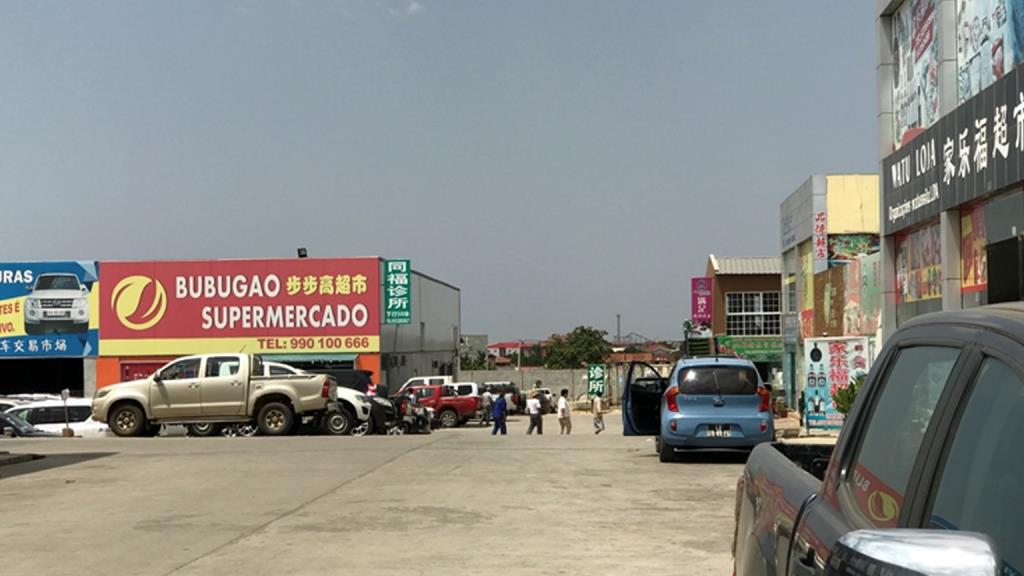
A new report by McKinsey Africa has disclosed that more than 10,000 Chinese firms operating in Africa, which it said is four times the previous estimate.

This study, according to McKinsey Africa, was conducted across eight countries making up about two-thirds of Sub-Saharan Africa’s GDP.

After the study, it was also discovered about 90 percent of these were private firms, of all sizes and operating in diverse sectors, with about a third in manufacturing.

In a statement made available to Business Post on Thursday, McKinsey Africa noted that these firms are bringing capital investment, management know-how and entrepreneurial energy to the continent, and in so doing, are helping to accelerate the progress of Africa’s economies.

It was also learnt that China remains Africa’s largest economic partner, though it has been a challenge to understand the full extent of the partnership due to a dearth of data.

Across trade, investment, infrastructure, financing and aid, China is a top five partner to Africa—no other country matches this level of engagement.

The China-Africa relationship has ramped up over the past decade with trade growing at around 20 percent per annum.

FDI has grown even faster—at an annual growth rate of 40 percent. China’s financial flows to Africa are 15 percent larger than official figures suggest when non-traditional flows are included. China is also a large and fast-growing source of aid and the largest source of infrastructure financing, supporting many of Africa’s most ambitious infrastructure developments in recent years.

Chinese firms are market-driven and investing for the long-term

Operating across many sectors of the African economy, in addition to manufacturing, a quarter is in services and a fifth in trade and in construction and real estate.

Chinese firms already handle 12% of Africa’s industrial production—valued at $500 billion a year in total. In infrastructure, Chinese firms’ dominance is even more pronounced, having cornered nearly 50 percent market share of Africa’s international EPC (engineering, procurement and construction) market. Chinese firms are making healthy profits. Nearly a quarter of the 1000 firms surveyed said they covered their initial investment within a year or less. A third recorded profit margins of over 20 percent. These firms are agile and quick to respond to new opportunities. They are primarily focused on serving the needs of Africa’s fast-growing markets rather than on exports. Chinese firms have made investments that represent a long-term commitment to Africa. Of the Chinese firms surveyed, 74 percent said that they are optimistic about their future in Africa.

Clear benefits, but challenges must be addressed

The report points to three main economic benefits to Africa from Chinese investment and business activity:

Job creation and skills development: Of the 1,000 firms surveyed, 89 percent of the employees are local. The research suggests that Chinese firms employ several million Africans. Nearly two-thirds of Chinese firms provide skills training to their workers.

Transfer of knowledge and new technology: Chinese firms are modernizing African markets by introducing new products and technologies. Some 48 percent introduced a new product or service and 36 percent have introduced a new technology in the last three years.

Financing and development of infrastructure: When asked what they value most from their Chinese partners, for some 50 African public-sector leaders, low-cost financing and improved infrastructure topped the list. They cited Chinese firms’ efficient cost-structures and speedy delivery as major value-adds.

While on balance, China’s burgeoning partnership with Africa is a positive for Africa’s economies, governments and workers, there are areas that need significant improvement:

Local sourcing: By value, only 47 percent of Chinese firms’ sourcing was from local African firms, which is lost opportunity for these firms to benefit from Chinese investment.

Local managers: Too few locals are in managerial positions—only 44 percent today.

Pain points for both sides: Chinese firms cite personal safety and corruption in some countries as their top concerns. For African leaders, language and cultural barriers are pain points. There have been instances of labour and environmental violations by Chinese firms.

Maximising the impact of the partnership

Kartik Jayaram, a senior partner and co-author of the report said, “Chinese engagement with Africa is set to accelerate—by 2025 Chinese firms could be earning revenues worth $440 billion, from $180 billion today. Additional industries could be in play for Chinese investment, including technology, housing, agriculture, financial services and transport and logistics. However, to unlock the full potential of the China-Africa partnership, we have identified 10 recommendations for Chinese and African governments as well as the private sector. To highlight two key ones—African governments should have a China strategy and the Chinese government should open financing and provide guidance to Chinese firms.”

Few African countries have a clear strategy and engagement plan for China. Governments should develop such strategies, linked to national plans and priorities. They should also cultivate capabilities in their bureaucracies to support these strategies.

Opening Chinese government financing and providing guidance on responsible business practices to Chinese private sector firms in Africa would accelerate sustainable investment.


Modupe Gbadeyanka is a fast-rising journalist with Business Post Nigeria. Her passion for journalism is amazing. She is willing to learn more with a view to becoming one of the best pen-pushers in Nigeria. Her role models are the duo of CNN's Richard Quest and Christiane Amanpour.

Click to comment

Leave a Reply

Your email address will not be published. Required fields are marked *

Economy

United Capital Acquires 5% Stake in Nigerian Exchange Group

Published

on

United Capital revenue

By Adedapo Adesanya

United Capital Plc has acquired a 5 per cent equity stake in the Nigerian Exchange (NGX) Group Plc for an undisclosed fee, deepening its involvement in Nigeria’s capital market.

The pan-African investment banking and financial services group announced this in a statement on Monday, noting that the transaction had been successfully completed and describing the investment as a key milestone in its long-term growth strategy.

NGX Plc, which serves as the holding company for Nigeria’s premier securities exchange and related market infrastructure businesses, plays a central role in Nigeria’s capital formation, market development, and economic growth.

United Capital said the acquisition reflects its confidence in the future of Nigeria’s capital markets and positions the Group to contribute more actively to the development of the nation’s financial system.

Commenting on the development, the chief executive of United Capital, Mr Peter Ashade, said the investment aligns with the company’s vision of creating sustainable value while supporting institutions critical to economic development.

“This acquisition reflects our confidence in Nigeria’s capital markets and our responsibility to contribute to their growth actively,” Mr Ashade said.

“We have always said that United Capital is not just a participant in Nigeria’s capital markets; we are also builders. This strategic investment in NGX Plc is exactly that: we are building for impact. It is our vote of confidence in the leadership and strategic direction of the NGX and where the capital market is headed,” he added.

According to him, the acquisition underscores the firm’s commitment to supporting the continued evolution of Nigeria’s capital market infrastructure while delivering long-term value to shareholders.

United Capital, which operates across 12 countries in West, East and Central Africa, provides a range of services spanning investment banking, asset management, securities trading and wealth management.

The company said the stake in NGX Plc would enable it to leverage its regional footprint and market expertise to support the Exchange’s next phase of growth and transformation.

The acquisition comes amid a series of strategic milestones for the financial services group, including the successful recapitalisation of all its subsidiaries ahead of regulatory deadlines and the recent acquisition of operational licences in Ethiopia and Rwanda.

Continue Reading

Economy

Nigerians Resist IMF Proposal for Higher VAT, Telecom Tax

Published

on

excise tax on telecom

By Adedapo Adesanya

Nigerians have kicked against suggestions by the International Monetary Fund (IMF) to the federal government to consider increasing the Value Added Tax (VAT) rate and introducing excise duties on telecommunications services as part of efforts to boost revenue generation and create fiscal space for development spending.

IMF, in its 2026 Article IV Consultation Report on Nigeria, warned that despite recent tax reforms, additional revenue measures would likely be required over the medium term to support critical social and infrastructure spending.

According to the IMF, Nigeria’s revenue mobilisation efforts must go beyond administrative improvements to address the country’s persistently low revenue-to-GDP ratio and rising expenditure pressures.

The Fund stated that, “Further tax policy changes will likely be needed, such as increasing the VAT rate, extending VAT to fuel products, rationalising tax expenditures in particular VAT exemptions on extractive industries and some customs duties, and introducing telecom excises, to complement administrative gains.”

It noted that while the recently enacted tax reforms are expected to improve revenue collection over time, some of the measures are revenue-reducing in the short term and may take time to yield significant gains.

On X (formerly Twitter), user @RealCeecee wrote – “You want to impose more suffering on people living on empty pockets. Where exactly does all this revenue go to? IMF would never give this kind of advice to any country that has good leaders, when the masses are already going through extreme suffering.”

“To be honest Nigerian need to stand its feet against the IMF, no be anything them go detect for us. The revenue they are talking about has anyone seen where it goes, let alone imposing another way to generate that will actually cause discomfort for Nigerians,” another handle, @KingMasy, wrote.

The IMF had stressed that continued revenue mobilisation is essential if the government is to sustain higher capital spending and expand social intervention programmes aimed at cushioning the impact of economic reforms on vulnerable Nigerians.

“Over the medium term, continued revenue mobilisation is essential to creating fiscal space for development and social spending,” the Fund said, adding that there was limited room to maintain the projected increase in capital expenditure without additional revenue sources.

The Bretton Woods institution, however, cautioned that the timing of any new tax measures should take into account the worsening poverty and food insecurity situation in the country.

It emphasised that any tax increases should be accompanied by a fully funded and effective cash transfer programme to shield vulnerable households from additional economic hardship.

“The timing of reforms must consider the poverty and food insecurity situation and ensure that the cash transfer system is in place and funded,” the report stated.

The IMF’s recommendation comes as Nigeria continues to grapple with weak revenue generation despite recent reforms, including the removal of fuel subsidies and efforts to improve tax administration.

The Fund projected that poverty and food insecurity could worsen amid higher global fuel and food prices, noting that poverty had already reached 63 per cent of the population while about 27 million Nigerians faced food insecurity in 2025.

It also reiterated its call for a neutral fiscal stance in 2026, warning that spending pressures linked to poverty, food insecurity and preparations for the 2027 general elections could widen fiscal deficits and increase financing needs if not carefully managed.

Continue Reading

Economy

Nigeria’s Inflation Rises to 15.93% in May as Prices Remain Elevated

Published

on

Nigeria’s Headline Inflation

By Adedapo Adesanya 

The National Bureau of Statistics (NBS) has revealed that Nigeria’s headline inflation rate in May 2026 rose to 15.93 per cent from 15.69 per cent in April, as the pressure from the Iran war continued to affect the global economy.

In the report on Monday, the statistical office showed that the headline inflation rate for May on a month-on-month basis was 1.75 per cent. 0.39 per cent lower than the 2.13 per cent recorded in April 2026.

On an annualised basis, the print was down from 26.06 per cent in the same month of the preceding year (May 2025). This was due to the rebasing of the calculation year from 2009 to 2024.

The rise in prices, which stemmed from the continued conflict in the Middle East, continued to stoke food prices and energy costs, which account for a huge chunk of average spending.

According to the NBS, “this can be attributed to the rate of change in the average prices of the following products: Millet whole grain, yam flour, ginger (Fresh), beef, garri, tam tuber, pepper (Fresh), cray fish, cassava tuber, Beans, Irish Potatoes, tomatoes (fresh), wheat grain (Sold loose), soya beans, guinea corn, plantain, carrots (Fresh) etc.”

The Food inflation rate in May 2026 on a month-on-month basis was 2.98 per cent, down by 0.65 percentage points from April 2026 (3.63 per cent), while on a year-on-year basis, it was 16.96 per cent and stood at 24.55 per cent in the same month of the preceding year (May 2025).

In its recent assessment of Nigeria, the International Monetary Fund (IMF) acknowledged the country’s ongoing macroeconomic reform efforts while warning that rising inflation, deepening poverty, and external shocks linked to geopolitical tensions could undermine recent gains.

The IMF projected a reversal in the disinflation trend, with headline inflation rising from 15.1 per cent in February 2026 to 15.4 per cent in March, driven largely by food price increases. It projected year-end inflation of 17.0 per cent, citing global commodity shocks and domestic pass-through effects.

The lender also recommended that the Central Bank of Nigeria maintain a cautious, data-dependent monetary policy stance following its recent steadying of interest rates at 26.5 per cent.

Continue Reading

Trending