Media OutReach
Thailand’s BOI Approves $688 Million Nestlé Investment for AI-Driven Regional Coffee Hub
The approval highlights Thailand’s accelerating momentum in attracting high-tech, high-value food and beverage manufacturing as global corporations seek resilient, technology-driven supply chains in Southeast Asia.
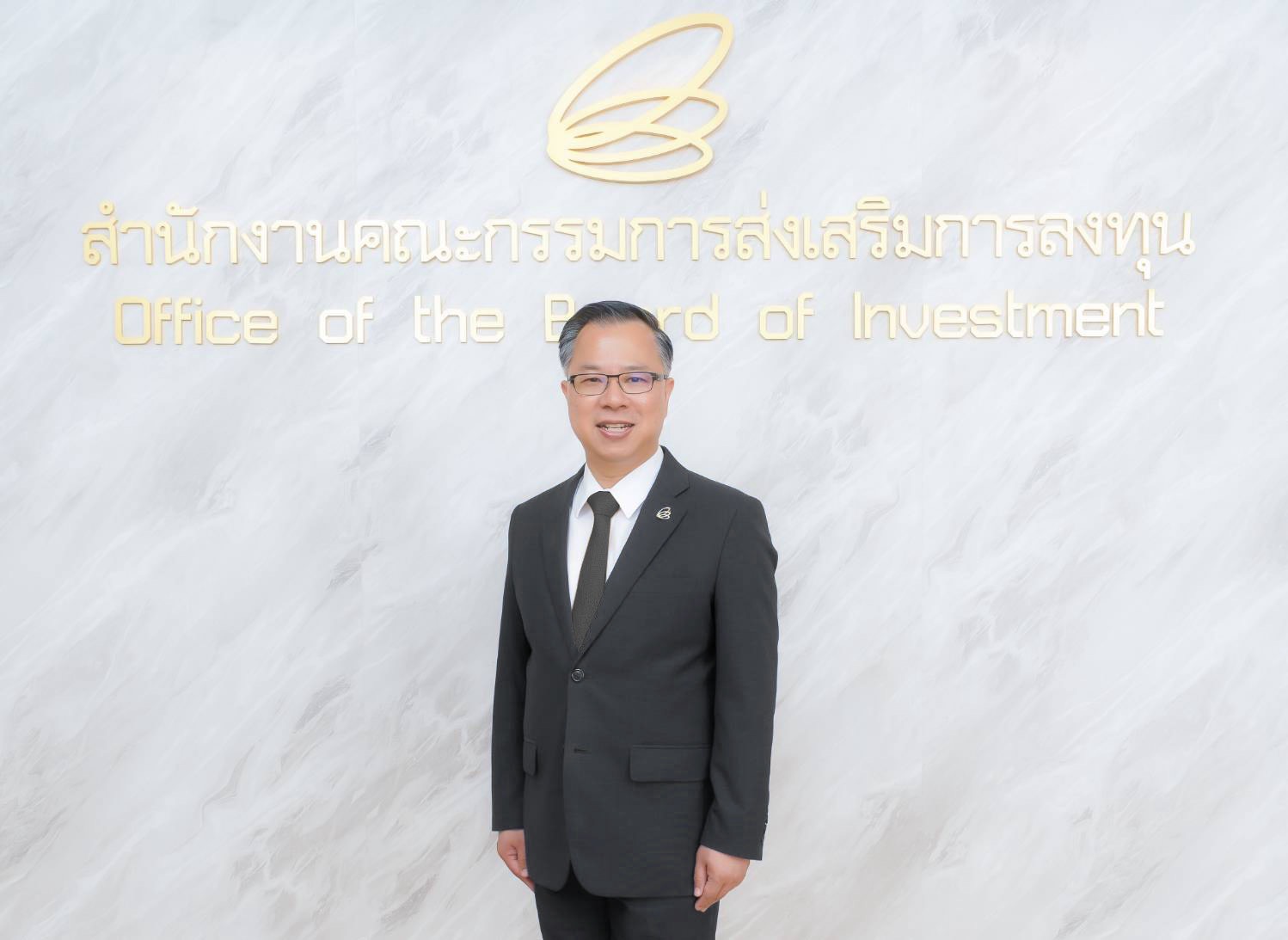
“This greenfield investment will support growing domestic and regional market demand while linking directly with our domestic supply chain,” said Mr. Narit Therdsteerasukdi, Secretary General of the Thailand Board of Investment. “By using local raw materials, helping our farmers and entrepreneurs, and sharing knowledge, this project will boost the potential of the Thai coffee industry and strengthen Thailand’s position as a key food and beverage hub in the region.”
The new automated facility, located in the Araya Industrial Estate in Samut Prakan province, is scheduled to start operations in the fourth quarter of 2028 with an annual capacity of 170,000 metric tons of NESCAFÉ soluble coffee, coffee mixes, and ready-to-drink beverages. The project is expected to create over 520 jobs for Thai engineers and technical specialists.
By integrating AI-driven systems and robotic automation, the facility aims to maximize operational efficiency and minimize its environmental footprint. This directly supports Thailand’s Bio-Circular-Green (BCG) economic agenda.
Nestlé, the world’s largest food and beverage company, counts Thailand among its longest-serving markets. Its NESCAFÉ brand has led the Thai coffee market for more than 50 years, with more than half the market share.
“Thailand has been an important market for Nestlé for more than 130 years,” said Mr. Nikhil Chand, Chairman and Chief Executive Officer of Nestlé Indochina. “This investment reflects our confidence in the country and our commitment to contributing positively to Thai society, the economy, local communities, and the environment. The new facility will use a wide range of locally sourced ingredients including coffee beans, sugar, and fresh milk, further supporting local agriculture and economic development.”
A key factor in the BOI’s approval is the project’s deep integration into the domestic economy. Nestlé will source USD 130 million (4.3 billion baht) worth of local agricultural inputs and raw materials each year.
In tandem with the manufacturing expansion, Nestlé will drive upstream agricultural development by researching climate-resilient coffee varieties, distributing high-quality saplings, and training local farmers in sustainable, high-yield cultivation practices.
“Nestlé’s choice to invest in coffee production here reflects the confidence global investors place in Thailand. It advances our strategy to become a world-leading food and beverage production base,” Mr. Narit said. “This investment strengthens the entire coffee value chain, from farming and processing to logistics and export. And it builds a stronger, more resource-efficient foundation for Thailand’s food and beverage industry.”
Note: Currency conversions are based on the Bank of Thailand’s average selling rate of approximately 1 USD = 33.3 THB.
Hashtag: #Thailandboardofinvestment #BOI #FDI #Investment
https://www.boi.go.th/en/index/
The issuer is solely responsible for the content of this announcement.
About Thailand Board of Investment (BOI)
Established in 1966, the Office of the Board of Investment (BOI) has continuously played an essential role for over 60 years in promoting value-adding investment for the country, from both foreign and Thai investors, to enhance national competitiveness and drive towards a new era of sustainable and balanced growth.
Investment Services Center — PR Section, The Office of the Board of Investment (BOI)
555 Vibhavadi-Rangsit Road, Chatuchak Bangkok 10900 Tel. +66 (0) 2553 8111, Fax: +66 (0) 2553 8222
Media OutReach
FEV collaborates with Microsoft on efficient AI model approach for in car applications built on NVIDIA
The focus is on the use of small language models (SLM) such as Microsoft’s Phi-4-mini-instruct in Microsoft Foundry that is powered by NVIDIA DRIVE AGX accelerated compute. The solution allows vehicle functions such as the dashboard or individual vehicle profiles to be configured by voice command. At the same time, the system acts as robust local backup intelligence for cloud-based large language models (LLMs).
More intelligence, robustness and efficiency in the software-defined vehicle
Embedded small language models increase the functional intelligence level of modern vehicles and improve the responsiveness and availability of AI-powered functions. Since inference takes place directly in the vehicle, central functions remain available even when there is a limited or no internet connection. In addition, embedded SLMs enable a reduction in backend and infrastructure costs, as cloud-based LLMs can be supplemented or partially replaced depending on the use case. This helps OEMs economically scale software-defined vehicle functions.
“Our collaboration with Microsoft and NVIDIA showcases how small, efficient language models can transform in-vehicle experiences, delivering powerful functionality without the overhead of larger systems,” said Thomas Hülshorst, Group Vice President Intelligent Mobility and Software at FEV.
“By combining advanced AI frameworks with domain- and task-specific optimizations, FEV and Microsoft are shaping the future of intelligent, voice-driven interfaces that meet the high standards of automotive deployment,” added Boris Scholl, Vice President of Engineering at Microsoft.
The full press release is available here: https://fev.group/689292
– Picture is available at AP –
Hashtag: #FEV
The issuer is solely responsible for the content of this announcement.
Media OutReach
SNP and Palantir form strategic partnership to accelerate secure SAP transformations
- SNP builds on Palantir platforms to deliver new AI-powered solutions for solving mission-critical customer challenges
- The partnership will build on SNP’s strong base with more than 3,000 customers globally and 15,000 successful SAP transformation projects
- SNP and Palantir will leverage their strengths to help customers modernize their SAP landscapes and business processes in a predictable and secure way
SINGAPORE – Media OutReach Newswire – 9 July 2026 – SNP SE, a leading provider of software for AI-enabled digital transformation, automated data migration and data management in the SAP environment, and Palantir, a global leader in artificial intelligence and data platforms, today announced a strategic partnership at SNP’s flagship event, Transformation World, in Heidelberg, Germany. The collaboration positions SNP to develop new AI-powered solutions with an aligned approach to accelerate SAP transformations for joint customers.
The two partners will offer solutions for mission-critical challenges across all types of SAP projects, helping customers improve speed, efficiency and quality. The first joint solution, Test Data Proposal, solves a so far highly manual area of SAP migrations, the identification of relevant test data for given customer test cases. By leveraging AI, this process runs automatically and saves customers’ time and resources. Test Data Proposal will expand SNP’s proven Kyano® platform.
As part of the partnership, SNP and Palantir are also collaborating in large-scale moves to SAP Cloud ERP applications where customers seek to accelerate these modernization programs. Both companies combine complementary, category-leading strengths. SNP contributes deep real-world SAP data migration expertise while Palantir provides state-of-the-art AI-driven software platforms, which enable and accelerate secure modernizations for customers.
“Organizations are looking for new ways to increase speed, efficiency, and quality in large-scale SAP transformations,” said Jens Amail, CEO of SNP. “We are hugely excited to collaborate with Palantir, a company that has leveraged AI to revolutionize and accelerate the way enterprises modernize mission-critical systems and automate operations. Together, we will deliver secure outcomes and new solutions to customers and partners.”
“We have seen exceptional momentum accelerating SAP migrations for customers, and helping them do so via the Ontology and AIP (Artificial Intelligence Platform) in a way that significantly compresses the timeline and delivers operational value along the way,” said Sameer Kirtane, Head of US Commercial at Palantir. “SNP over the last 30 years has built an impressive track record of delivering predictable, compliant and auditable outcomes in thousands of successful engagements. We are proud to partner with SNP to fundamentally rethink how customers transform their SAP landscapes.”
Hashtag: #SNP #Palantir #SAP #AI
The issuer is solely responsible for the content of this announcement.
About SNP
SNP (ticker: SHF.DE) is the global technology platform leader and trusted partner for companies seeking unparalleled data-enabled transformation capabilities and business agility. SNP’s Kyano® platform integrates all necessary capabilities and partner offerings to provide a comprehensive software-based experience in data migration and management. Combined with the Bluefield® approach, Kyano sets a comprehensive industry standard for restructuring and modernizing enterprise data faster and more securely while harnessing AI-driven innovations based on over 30 years of experience.
The company works with more than 3,000 customers of all sizes and in all industries in over 80 countries, including numerous DAX 40 and Fortune 500 companies. The SNP Group has more than 1,600 employees worldwide at over 34 locations in 22 countries. The company is headquartered in Heidelberg, Germany, and generated revenues of around EUR 297 million in the 2025 fiscal year.
More information is available at www.snpgroup.com
About Palantir
Foundational software of tomorrow. Delivered today.
Additional information is available at https://www.palantir.com
Palantir Forward-Looking Statements
This press release contains forward-looking statements within the meaning of Section 27A of the Securities Act of 1933, as amended, and Section 21E of the Securities Exchange Act of 1934, as amended. These statements may relate to, but are not limited to, Palantir’s expectations regarding the amount and the terms of the contract and the expected benefits of Palantir’s software platforms. Forward-looking statements are inherently subject to risks and uncertainties, some of which cannot be predicted or quantified. Forward-looking statements are based on information available at the time those statements are made and were based on current expectations as well as the beliefs and assumptions of management as of that time with respect to future events. These statements are subject to risks and uncertainties, many of which involve factors or circumstances that are beyond Palantir’s control. These risks and uncertainties include the ability to meet the unique needs of customers; the failure of Palantir’s platforms to satisfy customers or perform as desired; the frequency or severity of any software and implementation errors; Palantir’s platforms’ reliability; and customers’ ability to modify or terminate the contract. Additional information regarding these and other risks and uncertainties is included in the filings Palantir makes with the Securities and Exchange Commission from time to time. Palantir’s forward-looking statements speak only as to Palantir, and Palantir assumes no responsibility for the accuracy or completeness of any forward-looking statements made by any other party. Except as required by law, Palantir does not undertake any obligation to publicly update or revise any forward-looking statement, whether as a result of new information, future developments, or otherwise.
Media OutReach
Cambodian secondary school championing environmental practices wins US$15,000 AIA Outstanding Health & Sustainability Award 2026
Now in its fourth year, the competition is a flagship initiative of the AIA Healthiest Schools programme (AHS), which empowers students aged 5 to 16 to embed healthy living into daily life across four key pillars: healthy eating, active living, mental wellbeing and sustainability.
Angchum Lower Secondary School was selected from nearly 1,000 entries across Asia-Pacific, the highest participation level since the programme’s launch, and was announced at a regional ceremony in Bangkok, Thailand.
The AIA Healthiest Schools Competition challenges schools to turn their best health and wellbeing ideas into practical action. By applying what they have learned to real-life issues, students are embedding healthy habits into daily life while creating positive impact within schools and across their wider communities.
Stuart A. Spencer, Head Judge of the AIA Healthiest Schools Competition and AIA Group Chief Marketing Officer, said:
“The AIA Healthiest Schools Competition is the largest programme of its kind in Asia and is helping young people take ownership of their health by turning knowledge into action.
“Congratulations to Angchum Lower Secondary School from Cambodia. Your shining example will inspire countless others across the region, shaping a healthier future for young people all over Asia.”
In his speech at the event, Mr. Lee Yuan Siong, AIA Group Chief Executive and President, said:
“What is most powerful about this programme is that it turns health from something students are taught into something they do every day.”
Hashtag: #AngchumLowerSecondarySchool
The issuer is solely responsible for the content of this announcement.
About the school:
Angchum Lower Secondary School in Kampot, Cambodia, faced limited staff, plastic-heavy canteen habits, inadequate sanitation facilities for female students, and unreliable access to clean water. Despite these constraints, the teachers, students, and the surrounding community chose to prioritise improvements in daily health and hygiene practices.
Students led the effort through the “Plastic-Free School” campaign, bringing reusable bottles and lunch boxes to reduce waste. Each class formed a Green Youth Club responsible for tree planting, garden care, and maintaining clean classrooms. Regular hygiene awareness sessions supported all students—especially girls—in building healthier daily routines.
Teachers reinforced these actions by integrating lessons on waste segregation, personal hygiene, and environmental protection across subjects. They also modelled positive behaviours by avoiding plastic bags and joining campus clean-up activities.
Quarterly cleanups, contributions of saplings and compost, and assistance in repairing the school’s clean-water system deepened school-community cooperation.
A structured implementation process — teacher preparation, student lessons, community meetings, surveys, and interviews — helped the school track progress and adjust plans. As a result, students now demonstrate strong environmental knowledge, practice sustainable habits, and share a growing sense of responsibility.