

Feature/OPED
Like Water Finding Its Course, Kaduna’s Development Must Find Its Conscience

By Sani Abdulrazak, PhD
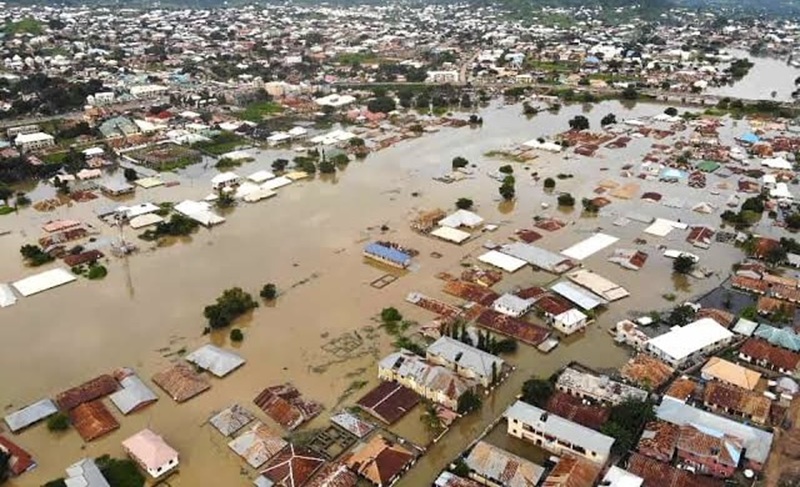
This is a defining season for Kaduna State. Governor Uba Sani has flagged off a flood and gully-erosion control project exceeding ₦34 billion, with ₦2 billion already paid as compensation to about 1,000 affected property owners. Yet amidst the applause, a quieter question lingers like smoke in a room nobody wants to open: what happens to the people and the environment around the development we are so eager to celebrate? Development is indeed loud; in kilometres completed, contracts awarded, billions committed. But the question is not how much has been spent, but how wisely, and who ultimately bears the weight. For an environmental chemist, a project of this magnitude is never just an engineering exercise. It is an intricate dance between water, soil, land use, human settlement, infrastructure and vulnerability.
The scale of the current response is significant. Beyond the Rigasa–Tudun Wada corridor, flood and gully-control contracts said to exceed ₦50 billion have been reported for interventions in Rigasa/Tudun Wada, Kawo and Zaria, with the Rigasa/Tudun Wada component alone covering about 17 kilometres of structural engineering and bioremediation works. This is where humane development becomes important. It does not mean rejecting infrastructure. It insists that infrastructure must serve people without trampling on their dignity, livelihoods or environmental security. The decision to compensate residents deserves recognition. Compensation cannot erase every inconvenience that comes with displacement, but it affirms a principle worth defending: public interest must never become a licence for private injustice.
Development inevitably forces difficult choices. Some structures will have to give way. Some land will need to be reclaimed. But the quality of governance is revealed, not in whether these hard choices are made, but in how they are made. The question is not whether Kaduna should develop. It must. The pesky question is whether it can develop without unnecessarily displacing the very people it claims to be developing for.
There is also a deeper environmental question lurking beneath the concrete. A sustainable response demands attention to upstream land use, vegetation cover, soil stability, drainage maintenance, waste management, settlement patterns and the natural movement of water. A gully is not simply a hole in the ground waiting to be filled with concrete; it is evidence of an imbalance between water movement, soil properties, slope, land cover and human activity. A blocked drain is not a sanitation nuisance; it can become a hydraulic bottleneck that swells runoff and deepens flood risk. Indiscriminate dumping is not just an eyesore; solid waste can choke drainage systems, alter the pathway of water and compound the fury of intense rainfall.
Kaduna’s ACReSAL programme, which has identified 22,435 hectares of degraded land for restoration, points encouragingly toward a systems approach. A drainage network should fit into an urban plan. Urban planning should respect floodplains and natural watercourses. Erosion control should consider vegetation and soil conservation. Waste management should be woven into flood prevention. The state must not fight the symptoms of environmental degradation; it must progressively confront its causes.
Climate variability makes it increasingly unwise to design infrastructure for yesterday’s weather while tomorrow’s storms are already gathering. Kaduna needs stronger environmental data, flood-risk mapping, early-warning systems, drainage monitoring, land-use enforcement and community-level preparedness. Satellite imagery, geographic information systems and hydrological modelling can flag vulnerable corridors long before they harden into disaster zones.
But technology alone will not save Kaduna from itself. Communities must be drawn fully into environmental governance, for the resident who knows exactly where water has always flowed after heavy rainfall carries knowledge no government spreadsheet can capture. Environmental responsibility cannot be dumped entirely at government’s doorstep. Citizens carry obligations too. Government may dig the drains, but citizens who turn them into refuse dumps undermine the very infrastructure meant to protect them. The state may restore degraded land, but indiscriminate tree-felling and reckless land use can quietly recreate the very problem being solved. Environmental stewardship is a shared burden, not a government errand.
The real test is not whether Kaduna can raise a flood-control structure. It is whether Kaduna can build an environmental culture strong enough to sustain it long after the ribbon is cut. That culture must marry infrastructure with enforcement, science with community participation, planning with accountability, and development with compassion. This is where humane development stops being a slogan and becomes a philosophy: one that recognises people are not obstacles to infrastructure, but its ultimate beneficiaries; one that recognises environmental protection is not an impediment to growth, but one of the very conditions that make growth sustainable; one that recognises compensation is not charity but an element of justice; and one that recognises a project is never truly successful merely because it has been completed, but because it continues to protect lives, preserve livelihoods and serve communities long after the dignitaries have gone home.
Kaduna has an opportunity to fold its current environmental interventions into a larger transformation in how development itself is conceived. The state can build roads without needlessly destroying livelihoods. It can control floods while restoring watersheds. It can tackle erosion while rehabilitating degraded landscapes. That is admittedly the harder path. But as an environmental chemist, I have learned that environmental systems rarely operate in isolation, that a disturbance in one part of a system will surely echo elsewhere, and that water, soil, vegetation, waste, land use and human activity are locked in constant conversation with one another. Governance, at its core, is not so different. A decision taken in an engineering office today may quietly determine whether a farmer keeps his livelihood tomorrow, whether a family keeps its home, or whether a community floods again.
Kaduna’s development story must not be told only in the language of projects and expenditure. It must also be told in the language of resilience, justice, environmental stewardship and human dignity. The question is no longer simply how much Kaduna can build. It is how wisely, sustainably and humanely it can build. And that, in the end, is the more meaningful definition of development.
Sani Abdulrazak, PhD, an Environmental Chemist and public affairs analyst at Ahmadu Bello University, Zaria, can be reached via email at [email protected]



Pingback: Así como el agua encuentra su curso, el desarrollo de Kaduna debe encontrar su conciencia. - Noticias Bolivia