Connect with us

General

EBID Injects $260m Into Nigeria’s Cross-Border Highway Project

Published

on

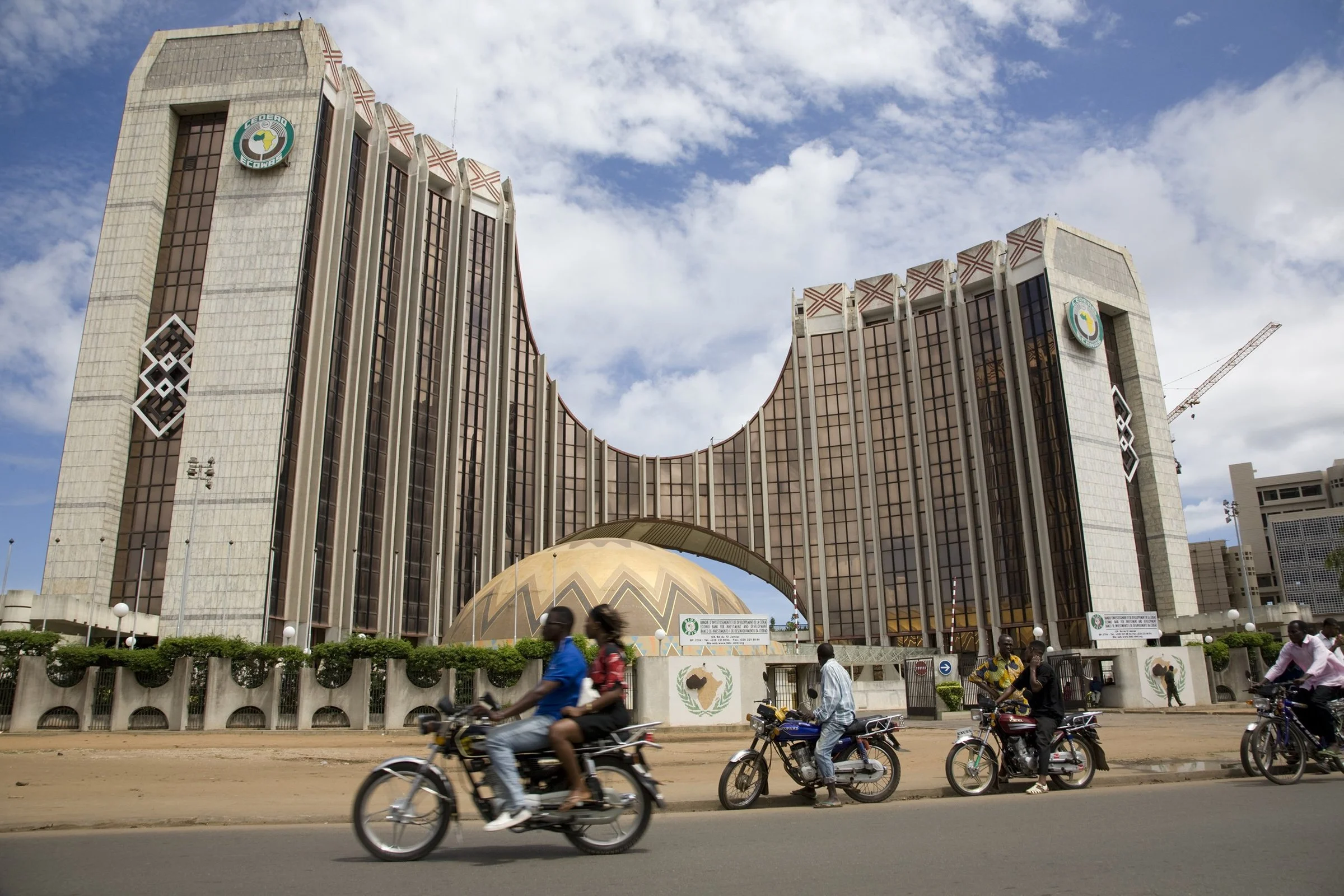
ECOWAS Bank for Investment and Development

By Adedapo Adesanya

The board of the ECOWAS Bank for Investment and Development (EBID) has approved a $260 million financing package for the construction of a 123-kilometre section of the Trans-Saharan Highway in Nigeria as part of more than $417 million earmarked for strategic projects across West Africa.

The approval was granted during the bank’s 99th Ordinary Session, chaired by its President, Mr George Donkor, according to a statement issued after the meeting. It was noted that the total financing will support five public and private sector projects spanning infrastructure, healthcare, housing, mining, financial resilience and regional connectivity.

EBID said the approved investments underscore its commitment to funding high-impact projects that drive economic growth, create jobs and improve living standards across the sub-region.

“The projects approved during this 99th Board Session demonstrate EBID’s unwavering commitment to financing development solutions that directly improve the lives of West African citizens.

“From clean energy and transport infrastructure to healthcare, housing and financial sector resilience, these investments will strengthen regional competitiveness and support sustainable and inclusive growth across our community,” said Mr Donkor.

That of Nigeria is to improve connectivity, facilitate trade, reduce logistics costs and support economic integration; West African CFA franc (XOF) 10 billion in a line of credit to Banque de l’Habitat de Côte d’Ivoire (BHCI) to expand housing finance and support SMEs operating across the housing and construction value chain; €80 million for the design, construction, equipment and maintenance of the 150-bed Regional Hospital of Ferkessédougou in Côte d’Ivoire under a public-private partnership;

XOF 12.82 billion (West African CFA Franc) for the renovation, operation and maintenance of the Symphonie Building in Abidjan under a public-private partnership and $47.4 million for Azumah Resources Ghana Limited to finance the procurement of long-lead process plant equipment and critical early-stage development activities for the Black Volta Gold Project.

“These approvals advance EBID’s Growth, Resilience and Optimisation (GRO) Strategy, which prioritises transformative infrastructure, human capital development, private sector growth and regional integration. Through these investments, the Bank continues to promote sustainable development and shared prosperity across West Africa,” the statement said.


Adedapo Adesanya is a journalist, polymath, and connoisseur of everything art. When he is not writing, he has his nose buried in one of the many books or articles he has bookmarked or simply listening to good music with a bottle of beer or wine. He supports the greatest club in the world, Manchester United F.C.

Click to comment

Leave a Reply

Your email address will not be published. Required fields are marked *

General

Nigeria Eyes 50% Solar Share in Power Mix by 2029

Published

on

Solar Panel Importation

By Adedapo Adesanya

Nigeria is targeting that solar power will account for 50 per cent of the power generation mix by 2029, according to the Rural Electrification Agency (REA).

According to REA’s managing director, Mr Abba Abubakar Aliyu, solar power generation has risen dramatically in the last few years to about 20 per cent of Nigeria’s electricity supply.

He said this could further reach 50 per cent by 2029 if current deployment and private-sector partnerships continue, speaking during the just-concluded 25th Nigerian Oil and Gas (NOG) Energy Week in Abuja on Thursday.

Mr Aliyu, during an energy panel titled Re-Engineering Africa’s Power Market – Driving Reliable Energy Systems, said solar’s share of national generation has risen rapidly, and that sustained momentum would push it toward half of the country’s power mix within the next three years.

Mr Aliyu said the growth was driven by increasing deployment and stronger collaboration with private investors.

“Solar currently constitutes 20 per cent of the nation’s total generation capacity, and with the pace of deployment we are seeing, it is closing in on 50 per cent,” he projected.

The REA chief told delegates that Nigeria was shifting from being primarily a consumer of clean-energy equipment to becoming a regional supplier of renewable technology.

He said manufacturers in the Lagos–Sagamu industrial corridor were building capacity to meet demand across West Africa.

Mr Aliyu said Lagos-made solar photovoltaic (PV) panels were already being exported to neighbouring countries.

He added that a pipeline of about 3.7 gigawatts of PV manufacturing capacity was under development to support further expansion.

“If you go to the Lagos–Sagamu axis, you will see manufacturing companies coming up,” he said.

He, however, noted that despite the rapid expansion in solar deployment and local manufacturing, he clarified that conventional gas-fired thermal plants would remain necessary to stabilise Nigeria’s electricity grid.

He joined other panellists to advocate for a dual-track investment strategy that would continue to expand solar generation and domestic manufacturing while also maintaining and upgrading gas-fired plants.

Continue Reading

General

PenCom to Deploy $22bn Pension Fund for Roads, Energy, Healthcare

Published

on

Nigeria's pension assets

By Adedapo Adesanya

The National Pension Commission (PenCom) is developing a new investment vehicle that would channel part of Nigeria’s $22 billion pension assets into critical infrastructure projects, providing long-term financing for roads, railways, energy and healthcare.

The proposal was disclosed by PenCom spokesman, Mr Ibrahim Buwai, who said the initiative is expected to be launched later this year as the commission explores ways to mobilise pension assets for national development while protecting contributors’ savings.

Mr Buwai said the regulator is promoting the creation of a special-purpose investment vehicle that would allow pension assets from different fund managers to be pooled for financing commercially viable infrastructure projects.

“We are encouraging the setting up of a vehicle, kind of special purpose vehicle, where resources can be pooled, so that viable infrastructure projects can be looked at,” he said, explaining that the proposed fund is designed to balance national development with the interests of pension contributors by targeting investments capable of delivering returns that outperform inflation.

He noted, however, that participation will remain at the discretion of individual Pension Fund Administrators, while the final size of the investment vehicle is yet to be determined.

The proposal also comes as pension investments in infrastructure continue to expand. Latest data published by PenCom show that investments through infrastructure funds climbed by 38 per cent year-on-year to N318 billion (about $230 million) as of May 2026, reflecting growing interest among pension managers in long-term infrastructure assets.

The proposed infrastructure vehicle aligns with PenCom’s broader strategy of increasing the role of pension assets in Nigeria’s capital market and unlocking what it describes as the industry’s largest pool of long-term passive investment capital.

The initiative follows a period of strong growth in the pension industry, with Nigeria’s total pension assets rising to a record N31.32 trillion in May 2026 despite challenging economic conditions.

PenCom has also intensified efforts to strengthen compliance within the pension system. Working with the Independent Corrupt Practices and Other Related Offences Commission (ICPC), the commission recently recovered more than N3 billion in outstanding pension contributions that employers had failed to remit on behalf of workers.

Continue Reading

General

NAQS Seeks Integration Into Customs’ B’Odogwu Platform

Published

on

NAQS Customs' B'Odogwu Platform

By Modupe Gbadeyanka

The Nigeria Agricultural Quarantine Service (NAQS) has asked to be integrated into the B’Odogwu platform of the Nigeria Customs Service (NCS).

This call was made by the head of NAQS, Mr Vincent Isegbe, during a meeting with the Comptroller-General of Customs, Mr Adewale Adeniyi, in Abuja on Wednesday.

Mr Isegbe, who used the visit to congratulate Mr Adeniyi on the extension of his tenure as Chairperson of the World Customs Organisation Council, which he described as recognition of his dedication and leadership, praised what he called an excellent working relationship with Customs.

He outlined areas for closer partnership, including integrating NAQS into Customs’ B’Odogwu platform, joint enforcement operations, and coordinated efforts to detect fake certification and fraudulent documentation.

In his remarks, Mr Adeniyi commended his guest for the partnership, promising that NAQS will provide technical support for the new Customs laboratory.

According to him, this is one of the avenues to deepen collaboration between the two agencies on intelligence sharing, trade facilitation and national security.

He informed Mr Isegbe that his organisation was moving to harmonise inspection procedures across the country’s ports and border stations, a step he described as critical to promoting consistency, transparency and efficiency in cargo clearance nationwide.

He also stated that customs training facilities would be opened up to NAQS officers as part of a broader capacity-building push.

“We must expose our officers to the broader concept of national security. Border management goes beyond revenue collection,” Mr Adeniyi said, stressing that Customs sees itself as the anchor institution coordinating Nigeria’s multi-agency border protection efforts.

Continue Reading