

Health
WHO Designates Egypt’s Field Epidemiology Training Programme as Collaborating Centre

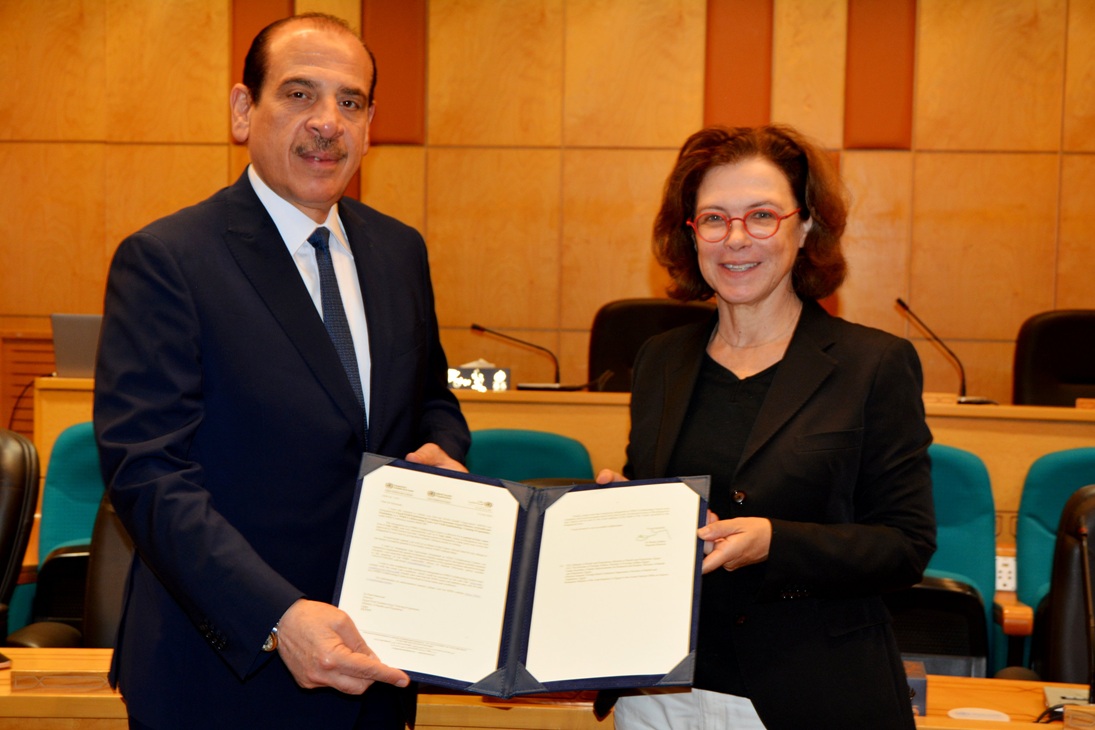
By Kestér Kenn Klomegâh
The World Health Organisation (WHO) has designated Egypt’s Field Epidemiology Training Programme (E-FETP), hosted by the Ministry of Health and Population, as a WHO Collaborating Centre in recognition of its longstanding contributions to strengthening disease surveillance, outbreak investigation and public health emergency preparedness.
The designation, effective from 6 July 2026 for an initial four-year period, is an important milestone in advancing Egypt’s public health capacity and creates new opportunities for technical cooperation, knowledge exchange and workforce development across the Eastern Mediterranean Region.
“This designation is a significant step towards strengthening health security across the Eastern Mediterranean Region. It will help build a skilled public health workforce, strengthen disease surveillance and outbreak response and expand regional cooperation through field epidemiology training and knowledge exchange,” said WHO Regional Emergency Director Dr Annette Heinzelmann.
As a WHO Collaborating Centre, E-FETP will have enhanced opportunities to contribute its technical expertise to WHO’s work in field epidemiology training and strengthen collaborations with public health institutions and partners across the region.
Building on the longstanding partnership between WHO and Egypt’s Ministry of Health and Population, the designation provides a platform to reinforce technical cooperation, exchange expertise and support the development of a skilled public health workforce capable of detecting, investigating and responding to emerging and re-emerging health threats. This work builds on wider regional collaboration, including the Eastern Mediterranean Public Health Network, to strengthen field epidemiology training programmes.
Established in 1993, E-FETP has developed into a comprehensive training programme supporting the development of skilled frontline, intermediate and advanced level epidemiologists. Embedded within Egypt’s Ministry of Health and Population, the Programme plays an important role in strengthening national surveillance systems, investigating outbreaks and supporting evidence-informed public health decisions.
E-FETP has contributed to hundreds of outbreak investigations, both national and international, and more than 80 peer-reviewed scientific publications. Its network of graduates works across Egypt’s health system and in national, regional and international institutions, supporting surveillance, outbreak response and emergency preparedness.
The Programme has expanded its specialised training to address emerging public health priorities. In collaboration with WHO, it launched a One Health training track in 2024 and a vector control track in 2025, strengthening multidisciplinary approaches that connect human, animal and environmental health.