Connect with us

Economy

Seplat Extends Payment of $150m Credit Facility

Published

on

By Modupe Gbadeyanka

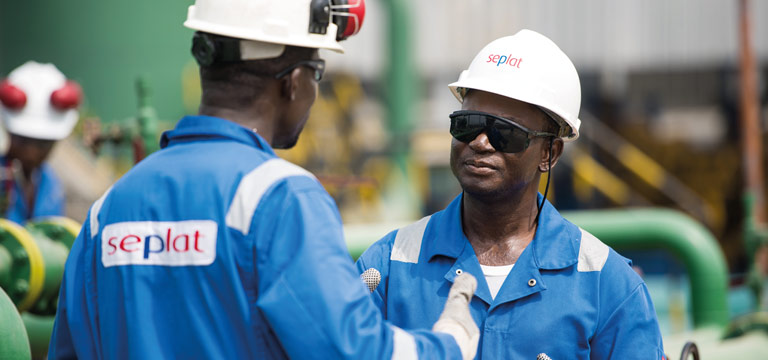
Leading Nigerian oil and gas firm listed on both the Nigeria Stock Exchange (NSE) and the London Stock Exchange (LSE), Seplat Petroleum Development Company Plc (Seplat), has announced successfully concluding a one year extension of its revolving credit facility (RCF) until December 31, 2018.

A statement issued on Monday by the company disclosed that the extension has been successfully amended to amortise the remaining outstanding principal balance of $150 million in equal instalments over five quarters commencing from the fourth quarter of 2017.

The current three year RCF was due to expire at the end of 2017 before the extension.

Overall, Seplat’s aggregate indebtedness under its Term Loan and RCF has reduced by $365 million from its peak in Q1 2015 of $1 billion to the current balance at the end of June 2017 of $635 million, which the firm said was a significant deleveraging of the balance sheet particularly in exceptionally difficult trading conditions over the past 18 months.

“We are pleased to announce the extension to our revolving credit facility. The approval to extend and strong demand within our core lending group, which saw around 30 percent oversubscription, demonstrates Seplat’s strong underlying business fundamentals and is further testament to the strength of our relationship with our continuing and new lenders,” Seplat’s Chief Financial Officer, Mr Roger Brown, commented.

“The amended facility, and recent resumption of exports via the Forcados terminal, will enable the business to rebuild cash on its balance sheet as we seek to strengthen our capital structure to ensure a strong platform for future growth,” he added.

It was disclosed in Monday’s press release that the amended facility has been provided by Citibank N.A. London Branch, Citibank Nigeria Limited, The Mauritius Commercial Bank Plc, Natixis, Nedbank Limited London Branch, Nomura International Plc, FirstRand Bank Limited acting through its Rand Merchant Bank Division, Stanbic IBTC Bank Plc, The Standard Bank of South Africa Limited and Standard Chartered Bank.

Seplat Plc is a leading indigenous Nigerian oil and gas exploration and production company with a strategic focus on Nigeria. It is pursuing a Nigeria focused growth strategy and is well-positioned to participate in future divestment programmes by the international oil companies, farm-in opportunities and future licensing rounds.


Modupe Gbadeyanka is a fast-rising journalist with Business Post Nigeria. Her passion for journalism is amazing. She is willing to learn more with a view to becoming one of the best pen-pushers in Nigeria. Her role models are the duo of CNN's Richard Quest and Christiane Amanpour.

Click to comment

Leave a Reply

Your email address will not be published. Required fields are marked *

Economy

Sell-Offs in GTCO, First Holdco Crash NGX All-Share Index by 0.62%

Published

on

NSE All-Share Index

By Dipo Olowookere

The local stock exchange remained in the red on Friday after it further depreciated by 0.62 per cent due to panic sell-offs in some bellwether equities.

NAHCO lost 10.00 per cent to trade at N148.50, Royal Exchange depreciated by 10.00 per cent to N1.53, GTCO slumped by 9.97 per cent to N115.55, First Holdco dropped 9.84 per cent to quote at N55.00, and Neimeth slipped by 9.60 per cent to N28.12.

On the flip side, Deap Capital increased by 9.89 per cent to N4.89, RT Briscoe expanded by 9.62 per cent to N13.10, International Energy Insurance advanced by 7.43 per cent to N5.06, Jaiz Bank gained 7.14 per cent to sell for N9.00, and Living Trust Mortgage Bank rose by 5.26 per cent to N4.00.

During the session, the energy index chalked up 2.35 per cent, but this was not enough to lift the Nigerian Exchange (NGX) Limited when the closing gong was struck by 4 pm to signify the close of trading activities.

This was because the banking sector lost 4.41 per cent, the insurance counter shed 1.52 per cent, the industrial goods space declined by 0.71 per cent, and the consumer goods segment tumbled by 0.13 per cent.

Consequently, the All-Share Index (ASI) contracted by 1,463.45 points to 235,941.27 points from 237,404.92 points, and the market capitalisation retreated by M939 billion to N151.327 trillion from N152.266 trillion.

The activity chart was topped by Access Holdings, which posted a turnover of 65.0 million shares valued at N1.5 billion. Zenith Bank sold 35.2 million stocks worth N3.9 billion, Sterling Holdings exchanged 28.4 million equities for N217.8 million, UBA transacted 16.3 million shares valued at N650.7 million, and GTCO traded 14.0 million stocks worth N1.8 billion.

In all, investors transacted 440.4 million equities for N24.7 billion in 50,273 deals, in contrast to the 691.6 million equities valued at N116.9 billion traded in 50,025 deals on Thursday, implying an uptick in the number of deals by 0.50 per cent, and a decrease in the trading volume and value by 36.32 per cent and 78.87 per cent, respectively.

Continue Reading

Economy

Naira Crashes to N1,370/$ at Official Market, N1,390/$1 at Black Market

Published

on

forex Black Market

By Adedapo Adesanya

The Naira again depreciated against the United States Dollar by N7.16 or 0.53 per cent in the Nigerian Autonomous Foreign Exchange Market (NAFEX) on Friday, June 19, to N1,370.46/$1 from the previous day’s N1,363.30/$1.

In the same vein, the Nigerian currency lost N9.07 against the Pound Sterling at the official market yesterday to trade at N1,814.76/£1 compared with Thursday’s closing price of N1,805.69/£1, and crashed against the Euro by N6.43 to settle at N1,571.50/€1 versus N1,565.07/€1.

Also, the Naira weakened against the greenback in the black market during the session by N5 to sell for N1,390/$1, in contrast to the preceding day’s N1,385/$1, and at the GTBank FX desk, it shed N3 to close at N1,376/$1 versus N1,373/$1.

The official market’s FX liquidity has been facing pressure over the last three trading sessions, contributing to a decline in the official exchange rate due to rising demand for foreign payments.

FX reserves rose to $51.03 billion, the highest level since January 20, 2009, according to data obtained from the Central Bank of Nigeria (CBN). The figure also represents the highest since the beginning of the year and under the administration of the current Governor of CBN, Mr Yemi Cardoso.

The latest figure underscores the steady strengthening of Nigeria’s external buffers, which continues to reinforce investor confidence in the Nigerian economy and support exchange rate stability.

Meanwhile, the cryptocurrency market was mixed, with Bitcoin (BTC) up by 0.8 per cent to $63,225.80 after trading activity was relatively subdued due to a US federal holiday, as the absence of stock and bond market activity led to quieter conditions across crypto markets, even though digital assets continue to trade around the clock.

Further, TRON (TRX) also gained 0.8 per cent to sell at $0.3230, Binance Coin (BNB) jumped 0.5 per cent to $579.84, and Ethereum (ETH) appreciated by 0.1 per cent to $1,704.23.

On the flip side, Ripple (XRP) declined by 0.9 per cent to $1.13, Cardano (ADA) shed 0.8 per cent to trade at $0.1611, Solana (SOL) fell by 0.1 per cent to $69.23, and Dogecoin (DOGE) slipped by 0.1 per cent to $0.0831, while the US Dollar Tether (USDT) and the US Dollar Coin (USDC) remained unchanged at $1.00 each.

Continue Reading

Economy

Brent Rises to $80 as Israel, Hezbollah Agree Ceasefire

Published

on

Brent crude oil price

By Adedapo Adesanya

Brent crude gained 66 cents or 0.53 per cent to sell for $80.38 per barrel ​on Friday after Israel and Hezbollah agreed on a ceasefire in Lebanon, though Iran set conditions for using the vital Strait of Hormuz.

Also, the US West Texas Intermediate (WTI) crude was up 94 cents or 1.23 per cent to $77.54 per barrel, amid light trading volumes due to the US Juneteenth holiday.

In spite of Friday’s gains, Brent was down about 8 per cent week-over-week, ​reflecting a significant easing of supply concerns in the wake of the US-Iran deal to end the war.

Gulf producers were preparing to raise exports after Israel and Hezbollah agreed to a ceasefire, ​which began on Friday.

Israel and Hezbollah agreed to halt fighting in southern Lebanon after days of escalating clashes threatened to derail the fragile US-Iran peace process, reducing the risk that the first major test of the agreement would turn into its first major failure.

At least four tankers carrying crude, oil products and liquefied petroleum gas (LNG) entered the ​Strait of Hormuz on Friday, heading for Iraqi Gulf ports. However, despite the uptick in activity, Iran signalled ⁠tighter control over shipping.

Iran’s Persian Gulf Strait Authority said “no vessel is permitted to pass through the Strait of Hormuz without a valid ​passage permit issued by the PGSA”.

Concerns also remain as a planned meeting between Iranian and American officials in Switzerland on Friday was postponed, with arrangements underway for talks in the coming days.

Iran’s Foreign Ministry said the meeting was no longer urgent because a memorandum of understanding on ending the war had already been signed digitally between the two sides.

Analysts expect ​the deal to release more than 85 million ​barrels of oil stranded in the ⁠Middle East Gulf into global markets. The agreement also includes the lifting of US sanctions on Iranian oil, which would add more supply.

However, recovery in flows of supply that transits Hormuz and production after the US-Iran ​deal could take several months.

On the demand front, the Organisation of the Petroleum Exporting Countries (OPEC) said in its 2026 World Oil Outlook that world ​demand will rise to 113.3 million barrels per day in 2030 from 105.1 million barrels per day in 2025.

Continue Reading

Trending