General
FG Rules Out Immediate Electricity Tariff Hike
By Adedapo Adesanya
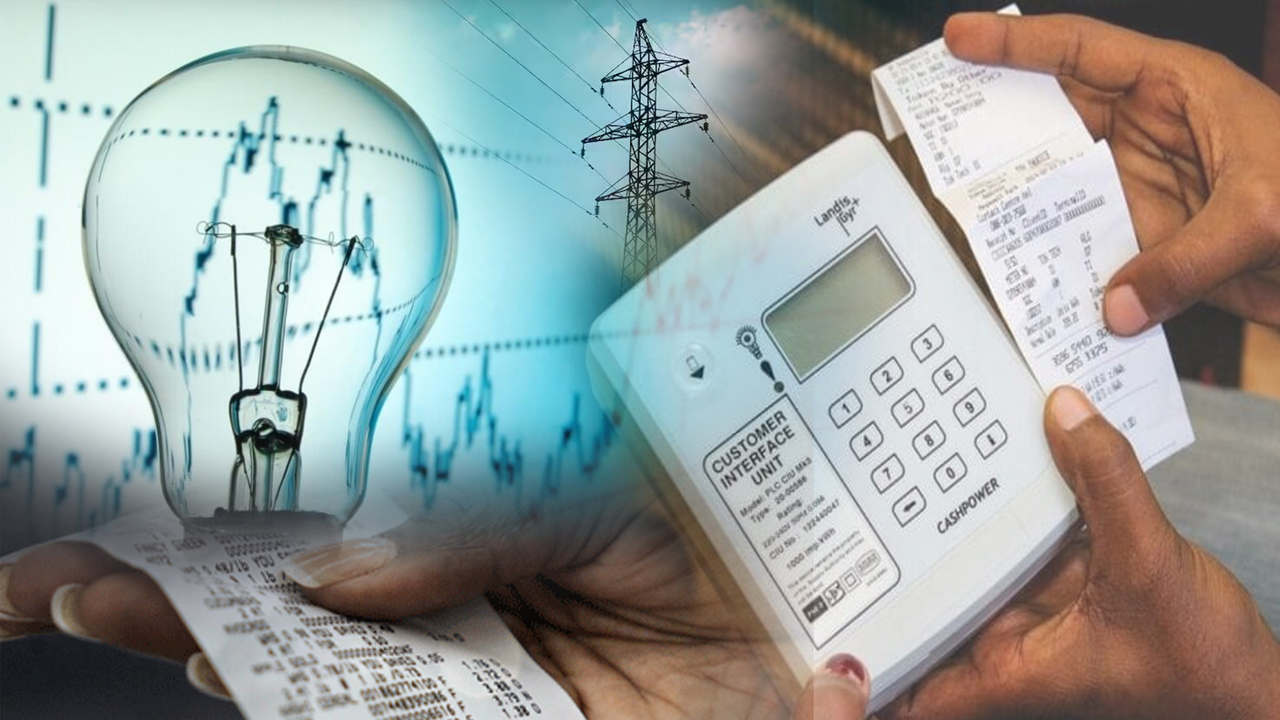
Millions of electricity consumers across Nigeria will not face higher power bills for now, as the federal government has assured citizens that there are no immediate plans to increase electricity tariffs, dismissing reports of an impending hike across different service bands.
The Special Adviser to the President on Power Infrastructure, Mr Sadiq Wanka, made the disclosure amid growing public concern over the cost of electricity and media reports of his recent remarks.
Mr Wanka said his comments had been taken out of context, stressing that the federal government remains committed to shielding vulnerable electricity consumers from additional financial pressure.
“There is no planned tariff hike for any grid consumer across any service band. The government remains committed to protecting vulnerable households through continued tariff support,” he stated.
According to Mr Wanka, the remarks that generated public debate were made during his presentation at the Asharami Square 3.0 conference held in Lagos on July 22, where discussions centred on investment opportunities in Nigeria’s electricity sector and ongoing reforms designed to attract private capital.
He explained that his presentation focused on how the federal government’s power sector reforms are creating new opportunities for investors across electricity generation, transmission and distribution, rather than announcing any immediate changes to electricity pricing.
“The Special Adviser’s comments were made during a presentation where he addressed investment opportunities in the power sector and how the Federal Government’s reform programme has opened new avenues for investors across the power value chain,” the statement published on his official X account noted.
Mr Wanka reiterated that the government’s long-term electricity pricing framework remains anchored on the National Integrated Electricity Policy (NIEP), which was completed in December 2024 and approved by the Federal Executive Council (FEC) in May 2025.
He explained that the policy supports a gradual transition towards cost-reflective electricity tariffs, a process that has already been implemented for Band A customers, who receive a minimum of 20 hours of electricity supply daily.
However, he emphasised that the policy does not translate into an immediate tariff increase for other categories of electricity consumers.
“In that context, he reaffirmed the tariff policy direction set out in the National Integrated Electricity Policy a long-standing, publicly available policy of gradually transitioning to cost-reflective tariffs already implemented for Band A electricity consumers,” the statement added.
The presidential aide stressed that electricity subsidies would remain in place for consumers outside Band A, contrary to widespread speculation.
“For all other consumer bands, he was clear that there is no plan to remove subsidies. Rather, the Government is exploring how to deliver value and support more efficiently,” the statement said.
As part of that strategy, Mr Wanka highlighted the proposed Power Consumer Assistance Fund (PCAF), established under the Electricity Act 2023, describing it as a more transparent mechanism for delivering targeted subsidies to vulnerable electricity users.
According to him, the fund is expected to channel government support directly into consumers’ electricity accounts or through identity-linked payment platforms, ensuring that subsidies reach intended beneficiaries while improving accountability and boosting investor confidence in the power sector.
General
Nigeria Intensifies Push for Reliable Population Database
By Adedapo Adesanya
Nigeria is stepping up efforts to build a more reliable population database and strengthen its national identity system with the nationwide rollout of a digital birth and death registration platform, as the National Population Commission (NPC) seeks to address the country’s persistently low civil registration rates.
As part of the initiative, the commission has inaugurated 131 digital birth and death registration centres across Anambra State, marking the state’s transition to the electronic Civil Registration and Vital Statistics (e-CRVS) system through the VitalReg platform.
Speaking in Awka, the state’s capital, over the weekend, during an event commemorating the 2026 World Population Day, the NPC Federal Commissioner representing Anambra State, Mr Chidi Ezeoke, said the digital platform would improve the country’s ability to capture vital demographic data needed for national planning, public service delivery and resource allocation.
According to him, estimates show that Nigeria records an average of five million births every year, but only about 57 per cent are officially registered. Death registration remains even lower, at below 20 per cent, leaving millions of births and deaths undocumented.
He noted that the absence of comprehensive civil registration has created significant gaps in demographic data, making it more difficult for governments to effectively plan for healthcare, education, infrastructure and other public services.
Mr Ezeoke said the VitalReg platform became operational nationwide on July 1, describing it as a landmark development in Nigeria’s Civil Registration and Vital Statistics system.
He explained that the digital platform would ensure every birth and death is captured electronically while providing faster registration services, round-the-clock online access, digital certificate issuance, improved data validation and enhanced security for the country’s civil registration database.
According to him, the system will also reduce paperwork and waiting time while serving as a foundational database that supports interoperability across Nigeria’s broader digital identity ecosystem.
The commissioner disclosed that the NPC has established 4,011 functional registration centres across the country’s 774 local government areas and plans to expand the network to about 8,000 centres nationwide.
In Anambra State, he said the 131 registration centres have been opened across the 21 local government headquarters and several communities, with additional centres already proposed.
Mr Ezeoke urged Nigerians to promptly register every birth and death, stressing that comprehensive civil registration is essential for producing accurate population statistics and supporting evidence-based policymaking.
He also highlighted the theme of the 2026 World Population Day, Realising the Hopes and Aspirations of Young People – Today and for the Future, calling for increased investment in education, healthcare, skills development and decent employment opportunities, alongside greater youth participation in governance.
On his part, the NPC State Director, Mr Obiakonwa Okagwu, appealed to the media to help raise public awareness about the importance of birth and death registration, urging residents to regard civil registration as a shared national responsibility.
General
2027: Peter Obi Promises Lower Interest Rates if Elected President
By Adedapo Adesanya
The presidential candidate of the Nigeria Democratic Congress (NDC), Mr Peter Obi, has pledged to reduce interest rates if elected.
Mr Obi made the remarks during an appearance on Sunday Politics on Channels Television late on Sunday, where he outlined plans to revive the economy through cheaper credit for businesses and increased investment in agriculture and manufacturing.
He said Nigeria’s current borrowing costs are crippling small businesses, and this could be tied to the current interest rate level.
Last week, the Monetary Policy Committee (MPC) of the Central Bank of Nigeria (CBN) retained the Monetary Policy Rate (MPR), the country’s benchmark interest rate, at 26.5 per cent.
Mr Obi argued that government should focus on creating an enabling environment for entrepreneurs rather than directly engaging in production, stressing that small businesses remain the largest employers of labour in successful economies.
Drawing comparisons with countries such as Indonesia, he said governments that prioritise small businesses provide affordable financing, training and other forms of support that enable enterprises to thrive.
“The government supports them with training and loans at less than 10 per cent, actually about 5 per cent. How can you do small business in Nigeria with no support, no training, and interest rates at 35 per cent? It is impossible.”
According to Mr Obi, supporting manufacturers and visiting factories to understand their challenges is central to building a productive economy rather than one driven by consumption.
“I know the biggest problem for manufacturers today in Nigeria is interest rate,” he said.
The show’s host, Mr Seun Okinbaloye, then asked whether he would reduce interest rates if elected president.
“Of course, yes,” he answered, adding that his background in building businesses and in the corporate world qualifies him to know exactly what to do to drive the interest rate down.
Although the Nigerian president does not directly determine the MPR, presidential economic policies and appointments to the CBN leadership can influence the broader environment in which those decisions are made.
Following the conclusion of the 306th Monetary Policy Committee meeting held in Abuja on July 20 and 21, 2026, the Governor of the CBN, Mr Yemi Cardoso, who heads the MPC, said the decision to hold rates steady is intended to sustain the moderation in inflation, preserve stability in the foreign exchange market and consolidate recent macroeconomic gains.
Headline inflation eased marginally to 15.91 per cent in June 2026, from 15.93 per cent in May, although food inflation accelerated on a monthly basis to 3.75 per cent from 2.98 per cent.
General
SERAP, NNPC in Court Over N211tn Sundry Receivables, Accrued Expenses
By Adedapo Adesanya
The Socio-Economic Rights and Accountability Project (SERAP) has dragged the Nigerian National Petroleum Company (NNPC) Limited before a Federal High Court in Abuja over what it described as the company’s failure to adequately explain and account for more than ₦211 trillion recorded in its 2023 audited financial statements.
According to SERAP, the sum of N211.015 trillion was listed under “Sundry Receivables” and “Accrued Expenses” in NNPC’s audited accounts without sufficient details to enable public scrutiny of the transactions.
In the suit marked FHC/ABJ/CS/1427/2026 and filed last week, the advocacy group is seeking an order compelling the state oil company to account for the funds and disclose all documents relating to the entries contained in its 2023 financial statements.
SERAP is asking the court to direct the oil company to provide a detailed explanation and reconciliation of the N107.6 trillion recorded as “Sundry Receivables,” including the identities of the debtors, amounts owed, legal basis for the receivables and the status of efforts to recover the funds.
The organisation is also requesting the disclosure of documents relating to the N103.4 trillion listed as “Accrued Expenses,” including the identities of creditors and beneficiaries, the nature of the liabilities, their legal basis and supporting records establishing their legitimacy.
In addition, SERAP wants the court to compel NNPC to release all records used in preparing and approving the N211 trillion entries in the audited accounts.
The group argued that there is an overriding public interest in making the information available, maintaining that NNPC Limited has a legal obligation to explain the transactions and demonstrate that the figures are accurate, lawful and backed by credible documentation.
SERAP further contended that the Freedom of Information Act and the African Charter on Human and Peoples’ Rights guarantee citizens access to information held by public institutions, including NNPC Limited, to facilitate oversight of public resources.
According to the organisation, disclosure of the information would promote transparency, strengthen fiscal accountability, prevent corruption and enable Nigerians to assess how the country’s oil wealth is being managed.
The suit stated that Nigerians have a right to know who owes the N107.6 trillion, who is entitled to the N103.4 trillion in accrued expenses, the legal basis for the transactions and whether the entries comply with relevant laws and accountability standards.
Filed by SERAP’s legal team comprising Miss Oluwakemi Agunbiade, Miss Kehinde Oyewumi, Mr Andrew Nwankwo and Miss Maryam Mumuni, the suit explained that “Sundry Receivables” represent funds NNPCL claims are owed to it by individuals, companies or government entities but have not yet been received.
It also described “Accrued Expenses” as liabilities NNPCL says it owes for goods, services or other obligations already incurred but not yet paid.
SERAP argued that together, the two entries account for more than N211 trillion in NNPC’s 2023 audited financial statements, yet the accounts do not sufficiently identify the parties involved, explain the legal basis of the transactions or provide supporting documentation for independent verification.
The organisation maintained that NNPCL remains subject to the Freedom of Information Act because it is wholly owned by the Federal Government and manages petroleum resources and oil revenues on behalf of the federation.
According to SERAP, the Petroleum Industry Act does not exempt the company from its obligations to operate transparently and accountably.
The organisation added that secrecy surrounding oil revenue management undermines public trust, weakens the rule of law and runs contrary to Nigeria’s constitutional provisions, financial regulations and international anti-corruption commitments.
No date has been fixed for hearing the suit.