

Travel/Tourism
Why More Nigerians Are Looking Beyond London and Paris to Greece

As traditional travel and second-residency destinations like London and Paris become increasingly restrictive and expensive, forward-thinking African investors are shifting their gaze, with Greece quietly emerging as the most strategic, high-value decision a Nigerian traveller or wealth-builder can make.
There is a version of Europe that Nigerians have been selling for decades, which is London, Paris and maybe Amsterdam. They are familiar, expensive and are becoming increasingly difficult to get into. Greece is the counter-argument. Older than all of them, more beautiful than most and, right now, quietly becoming one of the smartest moves an African traveller or investor, can make.
Greece: The Country
Greece is one of the few places in the world that earns every photograph taken of it. The Aegean in full summer light is genuinely that colour. The ruins are genuinely that old. The food is genuinely good. What makes Greece remarkable as a destination, however, is not a single thing, but a range of things.
Athens is a capital city carrying the full weight of Western civilisation on its back, and somehow still functioning as a modern, energetic place to actually live. The Acropolis sits above a neighbourhood of rooftop bars, vinyl record shops and restaurants where you eat well for a fraction of what you would spend in Rome. Santorini delivers on every expectation; Mykonos runs at a different frequency entirely. It is unapologetically cosmopolitan, built for people who want the Mediterranean and the party in the same week. Crete, the largest island, holds its own world: ancient Minoan ruins, dramatic gorges, a food culture distinct from the rest of Greece and enough coastline to spend a fortnight without repeating a beach.
Beyond the names, there are another two hundred inhabited islands. Some of the best experiences in Greece happen on the ones nobody has heard of.
Why It Works for Nigerians Specifically
Greek food is generous and deeply flavoured: grilled seafood, slow-cooked lamb, and wine that costs almost nothing. For a Nigerian palate, it lands. The country is safe, the English penetration in tourist areas is high, and the culture has genuine warmth toward visitors rather than a transactional tolerance of them.
Practically, Greece is also better value than the European destinations Nigerians typically default to. A week in Athens and one of the islands costs significantly less than an equivalent week in London or Paris, with a better climate and more to actually see.
Getting There and Getting In
There are no direct flights from Lagos or Abuja to Athens. Connections run through Istanbul on Turkish Airlines, Dubai on Emirates, or Addis Ababa on Ethiopian, with total journey times from around ten hours. Turkish Airlines tends to offer the most competitive fares on this corridor. Nigerian passport holders require a Schengen visa, which covers up to 90 days across the entire Schengen zone, implying that a Greece trip can roll into Italy or France on the same document.
The Bigger Play: Residency Through Property
For Nigerians who have spent years watching London prices climb past £500,000 and US investor visas demand upwards of $800,000 in complex, job-creating commitments, Greece quietly offers something the others have stopped offering: a clear, property-linked path to EU residency that actually works.
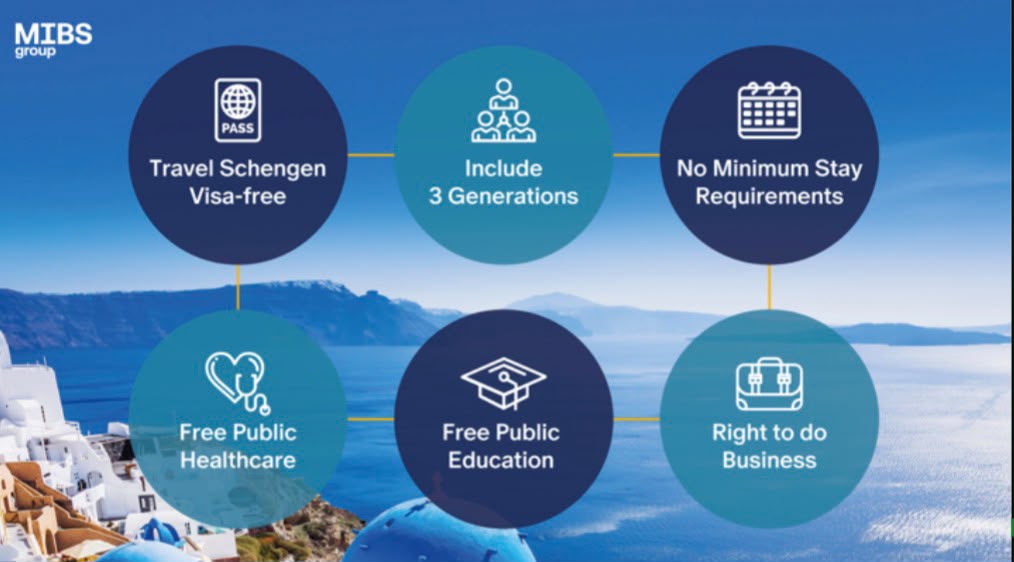
The Golden Visa programme is the mechanism. With a minimum real estate investment starting from €250,000, the Greek Golden Visa provides the lowest entry point, compared to other European residency schemes. Invest in qualifying Greek real estate, and you receive a five-year renewable EU residence permit for yourself, your spouse, your children and both sets of parents. No minimum stay or points system or lottery. It is simply ownership. And after seven years of continuous residency, a Greek and, therefore, EU passport becomes a genuine possibility.
The investment returns are real too. Athens property prices rose 8.5% in 2024 alone. Rental yields average 4–5% annually in the city, with stronger returns during peak tourism periods. New-build properties currently carry an exemption from the standard 24% VAT, reducing upfront costs considerably. For Nigerians looking to move wealth out of naira exposure and into a hard currency, income-generating asset in a stable EU market, the numbers are not incidental; they are the point.
But here is where most people get stuck: the fear of getting it wrong. Stories of fraudulent intermediaries, unclear property titles, and lost investments have made many Nigerians hesitant about putting serious money into foreign real estate. That hesitation is legitimate.
It is also exactly what MIBS Group was built to resolve. With over 50 years of experience as a real estate developer in Greece and deep expertise in the Golden Visa process, MIBS Group handles the full journey for African investors, from identifying and acquiring the right property through the visa application itself to rental management once the investment is in place. They understand both the Greek market and the specific concerns of Nigerian and African buyers. With the recent opening of their Lagos office, MIBS Group has strengthened its presence in Nigeria, offering face-to-face support and serving as a reliable local partner for Nigerian investors throughout their investment journey. That combination- high-end properties and end-to-end trusted guidance- is what turns a complicated cross-border investment into a straightforward, protected transaction.
Where other destinations keep raising the bar, Greece keeps the door open. And with MIBS Group, Nigerians can walk through it with confidence.
The Case Closed
Greece earns the attention it is getting. It is beautiful in a way that requires no filter and no curation. It is historically significant in a way that makes everywhere else feel recent. And right now, it is one of the few European countries offering Africans a genuinely accessible path, not just to visit, but to belong.




By Adedapo Adesanya
The presidential candidate of the Nigeria Democratic Congress (NDC), Mr Peter Obi, has called for a comprehensive investigation into the runway excursion of an Enugu Air aircraft during landing at the Benin Airport on Thursday.
He also expressed relief, describing the safe evacuation of all passengers and crew as a cause for gratitude in a statement on X on Friday.
Mr Obi said he received the news of the incident “with profound relief,” noting that all 68 passengers and crew members on board disembarked safely without injuries or fatalities.
Business Post reports that Flight 4264 (registration 5N-ENR) from Lagos (LOS) to Benin (BNI) got involved in the runway excursion after overrunning the end of Runway 05 during landing.
Also, the Nigerian Safety Investigation Bureau (NSIB) has commenced an investigation into the incident involving the Embraer E170 aircraft at the Benin Airport.
“I join all Nigerians in thanking God Almighty that all 68 passengers and crew members on board disembarked safely, with no injuries or fatalities recorded. The preservation of human life must always remain our highest priority,” he said.
Mr Obi commended the pilot, cabin crew, and airport emergency response teams for their swift and professional response, saying their actions helped prevent a more serious outcome.
“I commend the pilot, the flight crew, and the airport emergency response teams at Benin Airport for their swift, professional, and coordinated handling of the situation, which helped avert what could have been a far more serious incident. Their composure and decisiveness under pressure deserve the highest commendation,” he stated.
While expressing gratitude for the safe outcome, Mr Obi described the incident as a reminder of the need to strengthen aviation safety measures across the country.
“The incident serves as a sobering reminder of the importance of unwavering adherence to aviation safety protocols, rigorous aircraft maintenance, and sustained investment in airport infrastructure and operational standards across the country,” he said.
The former Anambra State governor also called on the Nigerian Civil Aviation Authority and the Nigerian Safety Investigation Bureau to carry out a thorough, transparent, and timely investigation into the circumstances surrounding the runway excursion.
“I urge the relevant regulatory and investigative authorities, particularly the NCAA and the NSIBo, to conduct a thorough, transparent, and timely investigation into the circumstances surrounding this incident and to make their findings and recommendations public,” Mr Obi said.
He added that every aviation incident should be treated as an opportunity to improve safety standards and reinforce public confidence in Nigeria’s aviation sector.
“Every aviation occurrence presents an opportunity to strengthen our safety systems. Learning from this incident will further reinforce public confidence in Nigeria’s aviation sector and help ensure that our skies remain among the safest possible,” he added.
By Adedapo Adesanya
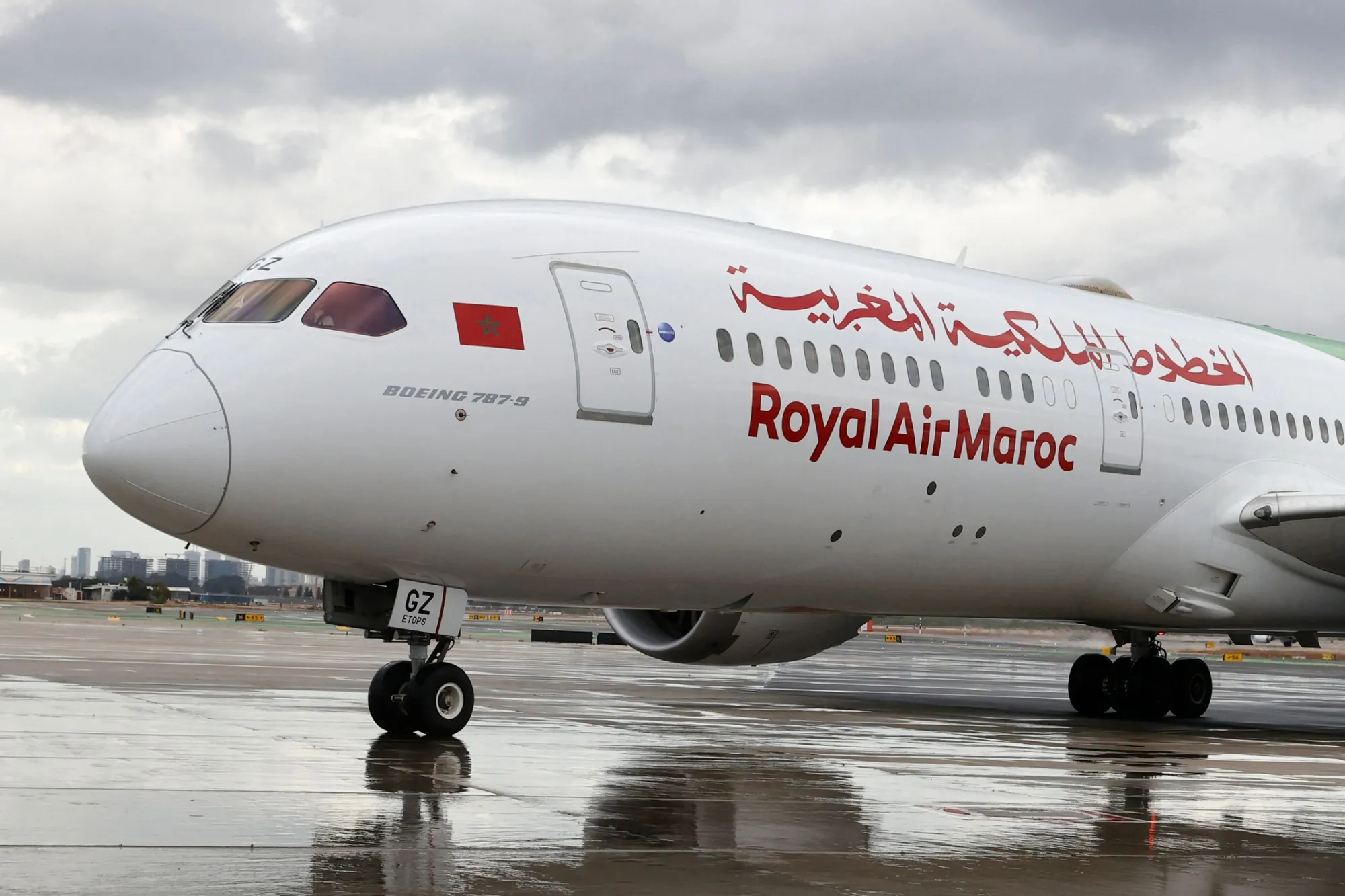
The Nigerian Civil Aviation Authority (NCAA) has threatened to impose tougher sanctions on Royal Air Maroc, including pushing for the suspension of its operations in Nigeria, over what it described as persistent violations of consumer protection regulations and poor treatment of Nigerian passengers.
The Director of Public Affairs and Consumer Protection at the NCAA, Mr Michael Achimugu, said the Moroccan carrier had become a repeat offender in cases involving baggage infractions, poor passenger handling, and delayed resolution of customer complaints despite previous regulatory sanctions.
According to him, Royal Air Maroc was sanctioned in 2025 for consumer protection-related infractions, but the airline has failed to significantly improve its service delivery.
He alleged that passengers continue to experience incidents of short-landed baggage without timely notification, inconsistent payment of compensation and prolonged complaint resolution, with many cases only addressed after intervention by the NCAA.
Mr Achimugu also accused the airline of showing disregard for the authority’s regulatory oversight, alleging that invitations from the NCAA were often treated with “a degree of insolence that is unacceptable.”
He alleged that Royal Air Maroc’s Country Manager, Mr Ahmed Boussouf, routinely declined invitations to attend meetings at the NCAA headquarters in Abuja, opting instead to remain in Lagos while delegating representatives without the authority to resolve pending cases or make binding commitments on behalf of the airline.
The NCAA spokesman further alleged that during a recent engagement over the recurring issues, Mr Boussouf responded to the regulator’s concerns by saying, “Whatever you want to do, do.”
While describing regulatory work as “thankless and exhausting,” Mr Achimugu said the authority would not tolerate what he termed “brazen disregard and non-compliance” from any airline operating in Nigeria.
He stressed that international airlines operating in the country are expected to comply with Bilateral Air Service Agreements (BASA) and uphold global standards in passenger service and consumer protection.
“As regulators, we support airlines to remain in business, but that support cannot come at the expense of Nigerian passengers,” he said, adding that those affected by unresolved complaints are paying customers who deserve fair treatment.
Mr Achimugu disclosed that his department would recommend stricter enforcement measures against Royal Air Maroc, including advocating a suspension of the airline’s operations in Nigeria until it demonstrates a firm commitment to improving passenger service.
He also argued that Nigerian travellers often continue to patronise airlines despite poor service, unlike consumers in some other jurisdictions who resort to boycotts, a situation he said has reduced pressure on some operators to improve standards.
“There is nowhere Royal Air Maroc flies that passengers do not have alternatives such as Air Algérie, EgyptAir and Ethiopian Airlines,” he said.
He maintained that the NCAA would enforce the country’s aviation consumer protection regulations “without fear,” insisting that no airline would be allowed to take Nigerian passengers or the regulator for granted.


By Modupe Gbadeyanka
The hospitality subsidiary of Transnational Corporation (Transcorp Group), Transcorp Hotels Plc, has posted its unaudited results for the second quarter ended June 30, 2026.
In the results submitted to the Nigerian Exchange (NGX) Limited, it was shown that the performance for the period was driven by disciplined cost management and continued operational excellence despite moderated revenue, with post-tax profit rising by 21 per cent to N10.5 billion from N8.7 billion in the same period of 2025.
However, due to softer market demand in its International Business segment, revenue for the period moderated to N44.4 billion from N46.9 billion in Q2 2025, though Operating Expense Margin improved by 3 percentage points, demonstrating continued operational efficiency and prudent cost management.
These results validate Transcorp Hotels’ resilience and focus on operational excellence, cost efficiency, and customer-centric innovation, reinforcing its leadership in Nigeria’s hospitality sector.
Commenting on the results, the chief executive of Transcorp Hotels, Ms Uzoamaka Oshogwe, said, “Our Q2 2026 performance reflects the resilience of our business and the disciplined execution of our strategy in a dynamic operating environment.
“While market conditions remained challenging, we continued to deliver strong profitability by staying focused on operational excellence, commercial agility, and creating exceptional experiences for our guests.
“We remain committed to strengthening our market leadership, investing strategically in our business, and delivering sustainable long-term value for our shareholders.”
Also, the Chief Finance Officer of Transcorp Hotels, Oluwatobiloba Ojediran, said, “Our disciplined approach to cost management, revenue optimisation, and operational execution delivered a 12 per cent increase in Profit Before Tax to N13.7 billion, alongside a 21 per cent growth in Profit After Tax to N10.5 billion, compared with N8.7 billion in the corresponding period last year.
“These strong financial results reinforce the resilience of our business, provide a solid platform for sustainable growth, and position us to continue investing strategically while delivering long-term value for our shareholders.”
Beyond the numbers, Transcorp Hotels continues to strengthen its portfolio of iconic assets. Transcorp Hilton Abuja remains one of the company’s flagship properties, while Transcorp Centre, one of West Africa’s largest purpose-built event and conference venues, is fast becoming a landmark for business, tourism, and world-class events in Nigeria.
Since its launch, the venue has hosted several landmark gatherings, further cementing its position as a premier venue for high-profile corporate and social gatherings.
