Connect with us

Sports

Can South Africa’s Provincial Gambling Model Work in Nigeria?

Published

on

nigeria gambling framework

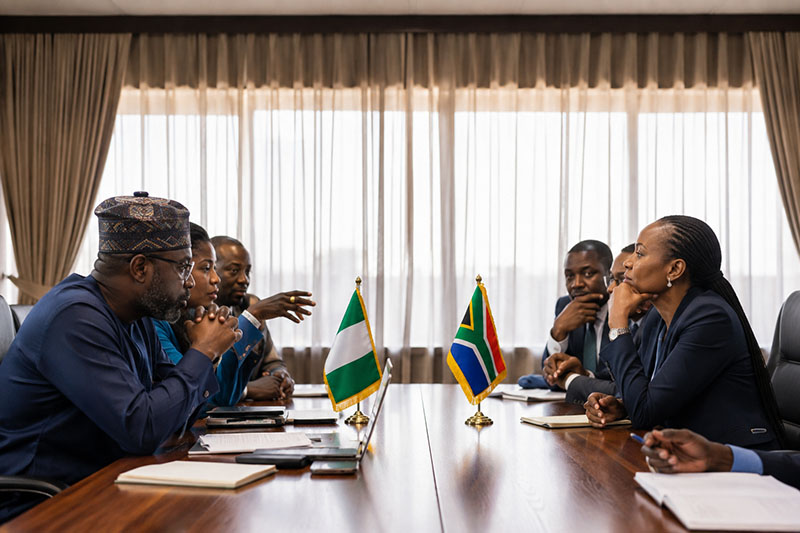
South Africa is not new to gambling legislation and regulatory affairs. As opposed to relying on one singular gambling regulator, like the UK and Malta, South Africa opts for a provincial licensing system, meaning it allows state provinces to regulate gambling, with the model supported by a national legislation. As Nigeria continues to shape and reform its gambling industry, questions are arising.  Can Nigeria use South Africa’s provincial gambling model as a blueprint to monitor online gaming?

South African Gambling Model explained

South Africa monitors gambling both via its national gambling laws along with provincial regulators. Online gaming laws are outlined by the government on a national level, with each province in charge of licensing, compliance and enforcement within each region.

Although widely debated, the current South African market allows sports betting sites to operate legally, yet casino gambling is still regarded as illegal.  Having said that, sports betting sites do offer games of chance such as slot games, table games and quick games via their platforms.

Whilst the main legislation is laid out by the South African government, respective provinces are in charge of the following gambling elements with the region:

  • License bookmaker sites
  • Monitor games with fixed odds offered by platforms
  • Tracks legal compliance and regulations
  • Collects gambling taxes that are generated
  • Promotes responsible gambling practices.

Nigeria’s current gambling framework

Just like South Africa, Nigeria has ample potential in the gambling industry. Currently, the country does not have any licensing procedures in place to legally operate an online casino. Having said that, no laws forbid Nigerian players to join offshore online gambling sites and tempt their luck at gambling.

Sports betting sites in Nigeria are legal. This means, players have the option to go online, register at a sports site and place bets. The National Lottery Regulatory Commission is in charge of the legal framework, with many states developing their own licensing bodies, or in the process of.

Latest court cases in Nigeria and South Africa are giving more power to provinces and states to outline gambling laws, with the government ready to support new laws and licensing bodies.

Could South Africa’s decentralized provincial system serve as a blueprint?

Nigeria and South Africa are very much alike in terms of territories. The latter has 9 provinces, with Nigeria having 36 states and the Central Federal Territory. The constitutional infrastructure of both aligns, with states and provinces having their own gambling territories to monitor. Both countries have a love for sports, with both participating in major sporting events such as the African Cup, Boxing and major athletic competitions. Several provinces in Nigeria have already established a foothold in the gambling market with Lagos being a major player. In recent years, we have seen many live events shown on DAZN, TNT and ESPN happening live from Nigeria. Can the country capitalise from that?  Having Nigerian provinces and regions regulate their own gambling laws just like South Africa will see the market grow, flourish and hopefully see also online casinos or fixed odds games being available to enjoy online.

South Africa’s sportsbetting sites have been working with legislators to officially legalize online casinos. Currently, South African players can register as betting sites and enjoy online games. In theory, they are the everyday online games we grew to love at online casinos, but they are called ‘ fixed odds games’ which in the eyes of South African lawmakers, this is not illegal to do.

Having Nigeria states set the gambling regulations for the region, will see the country move forward in terms of progress, and will also please many online punters. Each state can look at the numbers generated by the state and adapt laws and regulations in line with the customer’s gaming needs. Nigeria, can benefit massively from applying South Africa’s decentralized system as a model of excellence or blueprint.

How will Nigeria benefit from developing State gambling laws and regulations?

Having control of gambling within the state is an important factor to consider. The Nigerian states can develop laws based on customer feedback, activity and state needs. Currently, Nigeria players are allowed to visit offshore sites, register and play, so why not have the possibility of doing so within the state?  Nigeria would benefit massively by doing so, and here is what each state can obtain by legalising online casino gaming:

Revenue Opportunities

  • Licensing Fees paid by each online casino / sportsbook site
  • Collecting of taxes and contribution to the state’s GDP
  • Vast employment opportunities for Nigerians
  • Economic development by investing tax money into State development.
  • Better control on gambling activities happening within the state
  • Licensing online casinos will see operators flock to grow in a new and flourishing market.

Things to consider if Nigeria adopts the South African provincial model

Adopting the South African model of provincial licensing can also pose some challenges for Nigeria. With 36 states, 36 licensing bodies would need to be established, with a centralised body overseeing and setting national gambling standards. Whilst each state can opt to have different technical standards, Nigeria needs to find a way to adopt a compliance stronghold. Each license would need to be monitored, and this could be done adopting the South African model of a national legislation. Operators would need to have a closer look at each state, and ultimately decide on which license to acquire. The good news is that states will deal with licensing requirements at a state level, and thus the process would be easier from an operator standpoint.

Responsible Gambling regulations can be outlined at a national level, with each state having to abide by RG. Centralised RG rules will see Nigeria dealing and tackling illegal and problematic gambling, with states having a blueprint of how to help gamblers in need.

Next Steps for Nigeria

With sporting markets and gambling opportunities everywhere, Nigeria could adopt the South African model or go for a hybrid model of provincial gambling. A national gambling authority would set the minimum regulatory standards. Technical infrastructure and requirements can also be standard across all Nigeria. Ultimately, each state would be responsible in issuing licenses, and operators upholding their part by complying to compliance rules set by licensing states.

The above model can mirror South African’s model, improve enforcement and also attract new operators to Nigeria’s markets. Success is achieved when national standards are clearly set, promoting discussion and cooperation amongst Nigerian states.

Success would depend on creating clear national standards, promoting cooperation among state regulators, and ensuring consistent consumer protections across all jurisdictions. Online Gambling is indeed a growing market, with Nigeria benefitting massively by adopting a standard regulatory system within each state collaborating.


Click to comment

Leave a Reply

Your email address will not be published. Required fields are marked *

Sports

Super Falcons’ 2027 World Cup Hopes Alive Despite WAFCON Exit

Published

on

Super Falcons WAFCON 2026

By Adedapo Adesanya

The Super Falcons can still qualify for the 2027 FIFA Women’s World Cup despite losing to Cameroon in the quarter-finals of the 2026 Women’s Africa Cup of Nations (WAFCON) on Sunday.

Nigeria, the 10-time African champions, were beaten 1-0 by the Lionesses after conceding an early free-kick goal, ruling them out of contention for one of Africa’s four automatic tickets to next year’s World Cup in Brazil.

However, the Super Falcons still have another opportunity to secure a place at the tournament, albeit through a longer qualification route.

The Nigerian side will join the three other quarter-final losers — South Africa, Ghana and Côte d’Ivoire — in the continental play-offs.

Following their defeat to Cameroon on Sunday, the Super Falcons will quickly regroup to face South Africa on Thursday.

A victory over Banyana Banyana will earn Nigeria one of the two available continental play-off tickets.

The two teams that emerge from the continental play-offs will then advance to the global play-off tournament, where they will battle for the final remaining places at the 2027 Women’s World Cup.

According to FIFA, the first phase of the global play-off tournament will take place in November and December 2026 at a centralised venue and will feature six teams — two from the Asian Football Confederation (AFC), two from the Confederation of African Football (CAF), one from the South American Football Confederation (CONMEBOL) and one from the Oceania Football Confederation (OFC).

“Using a format which will be confirmed at a later date, two teams will qualify for the final play-off phase,” FIFA stated on its website.

The final play-off phase will be held at a centralised location in February 2027, with the two qualifiers from the first phase joined by two teams from Concacaf, one from CONMEBOL and one from UEFA.

The six teams will be drawn into three paths, with a direct knockout match in each path determining the final three teams to qualify for the World Cup. Teams from the same confederation will not be drawn in the same pathway.

This means only three teams from the global play-off tournament will ultimately secure places at the World Cup in South America next year.

The Super Falcons, therefore, have little room for error if they are to maintain their record of appearing at every edition of the Women’s World Cup since the tournament was introduced in 1991.

At the 2023 World Cup, Nigeria reached the Round of 16 before losing to eventual finalists England on penalties.

Continue Reading

Sports

Arsenal, Emirates Renew Landmark Partnership

Published

on

Arsenal Emirates

By Modupe Gbadeyanka

The deal between Arsenal Football Club and Emirates has been renewed, making it one of the longest-running and most recognisable partnerships in world sport.

Both parties first came together as partners in 2006 and have since built one of football’s defining partnerships. Spanning the entire Emirates Stadium era, the relationship has evolved alongside the club – supporting Arsenal’s ambitions, strengthening both organisations’ global reach and creating new ways for supporters around the world to connect with Arsenal.

The latest deal will see Emirates continue as the Champions’ front-of-shirt, training kit and stadium naming rights partner through to 2033.

The renewal comes at a pivotal moment in the club’s history following its recent Premier League title. The new agreement will build on many of the flagship initiatives that have defined the partnership, including the Emirates Cup, which brings world-class football to Emirates Stadium each summer, and Global Gooners, which gives supporters from around the world the opportunity to experience Arsenal in North London for the first time.

The next chapter of the partnership will begin this weekend as Arsenal welcome Borussia Dortmund to North London for the Emirates Cup, with a programme of anniversary activity celebrating more than two decades of shared history while looking ahead to the next chapter still to be written. Sir Tim Clark, President of Emirates Airline, will attend alongside Arsenal senior leadership as part of the celebrations.

Launching alongside the partnership renewal is a new cinematic film featuring Arsenal legend Per Mertesacker. Set inside an antique shop filled with objects from across the Emirates era, the film celebrates two decades of shared memories between Arsenal, Emirates and our supporters, reflecting on the history we’ve made together and the moments still to come.

“Winning the Premier League is an incredibly proud moment in our club’s history and one that belongs to everyone connected with Arsenal. Emirates has been an integral part of this success – standing alongside us throughout this journey and sharing in the defining moments, challenges and successes that have shaped our club over the past two decades,” the chief executive of Arsenal, Mr Richard Garlick, stated.

On his part, the President of Emirates Airline, Sir Tim Clark, said, “Over the last two decades, Emirates and Arsenal have built something that goes far beyond a traditional partnership, and one we are immensely proud of. We have grown alongside the club through changes of era and ambition, united by a shared goal of bringing people closer to what they love.

“In practice, that has meant reaching the millions who follow Arsenal across the Emirates network and beyond and creating experiences for them that neither of us could have done alone.”

Continue Reading

Sports

WAFCON 2026: Falcons Target Quarter-Final Spot in Final Group Match

Published

on

WAFCON 2026 final group matches

Nigeria’s Super Falcons will look to secure their place in the quarter-finals when they face Egypt in their final Group C match on Wednesday at 9:00 pm at the ongoing WAFCON 2026 in Morocco.

The defending champions bounced back from their disappointing 3-2 defeat to Malawi with a crucial 1-0 victory over Zambia and will now be aiming to finish the group stage strongly. All the matches of the tournament air live on SuperSport via DStv and GOtv.

The final matchday of Group A saw hosts Morocco play out a goalless draw with Senegal, a result that was enough to send Morocco through to the quarter-finals in first position in their group. Algeria also secured their place in the knockout stages after a 2-0 victory over Kenya, bringing their group-stage campaign to a strong close.

Tuesday, Group B will conclude with Burkina Faso facing South Africa before Tanzania takes on Ivory Coast. South Africa and Ivory Coast played out a 2-2 draw in their previous match, while Burkina Faso bounced back from their opening defeat with a 2-1 victory over Tanzania. With the group still to be decided, the final results will determine which teams join the quarter-final line-up.

All eyes will then turn to Group C on Wednesday, where Egypt will face Nigeria, and Malawi will take on Zambia, with both matches kicking off at 9:00 pm. The Super Falcons will be hoping to build on their victory over Zambia and secure the result they need to advance to the knockout stages, while Egypt will be looking to end their campaign on a positive note after suffering a 3-1 defeat to Malawi in their previous game.

Nigeria’s final group match comes after a difficult start to their title defence. The Super Falcons were stunned 3-2 by Malawi in their opening game but responded with a 1-0 victory over Zambia to revive their campaign. The ten-time champions will now need to complete the job against Egypt as they look to keep their hopes of retaining the continental crown alive.

The final group-stage fixtures on Thursday will see Ghana take on Mali, and Cape Verde face Cameroon on Thursday, with both matches also scheduled for 9:00 pm. Ghana suffered a 1-0 defeat to Cameroon in their previous outing, while Mali secured a 3-2 victory over Cape Verde. The final results will determine which teams progress to the knockout stages from Group D.

Matchday 3 Fixtures

Tuesday, August 4
Burkina Faso vs South Africa – 9:00 pm
Tanzania vs Ivory Coast – 9:00 pm

Wednesday, August 5
Egypt vs Nigeria – 9:00 pm
Malawi vs Zambia – 9:00 pm

Thursday, August 6
Cape Verde vs Cameroon – 9:00 pm
Mali vs Ghana – 9:00 pm

SuperSport Brings All the Live Action

Catch every match of WAFCON Morocco 2026 live on SS Football (Ch. 202, GOtv Ch. 61) and SS Football Plus (DStv Ch. 202) on DStv and GOtv. Fans can also stream every match live on DStv Stream from ₦6,000, with no decoder or dish required.

Continue Reading