General
FG Targets 7.2m Vulnerable Households with $1bn Social Protection Programme
By Adedapo Adesanya
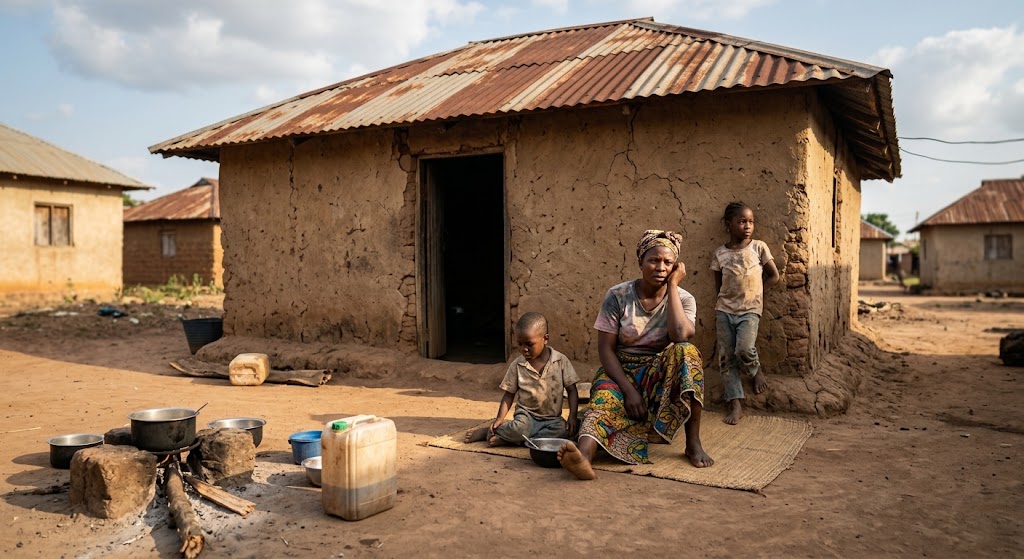
The federal government will next Tuesday unveil a $1 billion social protection programme targeting 7.2 million of the country’s most vulnerable households through emergency cash transfers and other interventions aimed at helping them withstand economic shocks and transition towards self-reliance.
The programme will be unveiled by the First Lady of the Federal Republic of Nigeria, Mrs Oluremi Tinubu, at the Presidential Villa, Abuja. It is part of the efforts of the administration of President Bola Tinubu to strengthen social protection and ensure that vulnerable Nigerians are protected while being supported towards resilience and economic self-reliance.
Mr Abimbola Fasanu, the Senior Technical Adviser on Information Systems and Data Analysis to the Minister of Humanitarian Affairs and Poverty Reduction, Mr Bernard Doro, said in a statement that the unveiling goes beyond the launch of a single programme, as it introduces a more coordinated approach to humanitarian response, social protection and poverty reduction, with the household placed at the centre of intervention and measurement.
A major component of the event will be the launch of the Federal Government Emergency Shock-Responsive Cash Transfer Programme, targeting 7.2 million of the most vulnerable households nationwide.
The event will also feature the launch of the One Humanitarian One Poverty Response System (OHOPRS), Nigeria’s integrated framework for humanitarian response, social protection, poverty reduction and economic inclusion; the Federal Ministry of Humanitarian Affairs and Poverty Reduction Ministerial Blueprint; and Humanity First Magazine.
Mr Doro said OHOPRS addresses a longstanding challenge in which different government institutions, development partners and other organisations may intervene without sufficient visibility of who has already received support, what assistance was provided and whether the intervention improved the household’s condition.
“Nigeria cannot continue with a system where one vulnerable household receives interventions from several institutions while another equally vulnerable household remains unseen. We must know who has been reached, what support they received, whether it worked and what they need next,” the Minister said.
Under the new approach, a household receiving emergency assistance following a flood, conflict, economic shock or other crisis should not simply disappear from Government’s radar once the immediate emergency has passed. Where necessary, that household can be connected to appropriate social protection, livelihood support, skills development and economic opportunities, with progress towards resilience and self-reliance tracked over time.
“Our objective is not to keep Nigerians permanently dependent on assistance. We are moving from palliatives to pathways, from fragmentation to coordination, and from vulnerability to prosperity,” he stated.
He said the reform reflects President Tinubu’s commitment to ensuring that economic reforms ultimately translate into improved welfare and greater opportunities for Nigerian households.
The Minister added that the First Lady’s role in unveiling the programme provides an important connection with her commitment to improving the welfare and economic opportunities of women, young people, families and vulnerable Nigerians through the Renewed Hope Initiative.
“The true measure of success is not simply how many Nigerians receive assistance, but how many become stronger, more resilient and ultimately able to sustain themselves and their families,” the spokesperson said.
General
FG Declares Tuesday Public Holiday for Eid ul Mawlid
By Modupe Gbadeyanka
Tuesday, August 25, 2026, has been declared a public holiday by the federal government to celebrate this year’s Eid ul Mawlid.
A statement on Friday by the Permanent Secretary in the Ministry of Interior, Ms Magdalene Ajani, said the holiday is in commemoration of the birth of the Holy Prophet Muhammad (Peace Be Upon Him).
Announcing the holiday on behalf of the federal government, the Minister of Interior, Mr Olubunmi Tunji-Ojo, extended warm felicitations to Muslims in Nigeria and across the diaspora.
“Every Eid ul Mawlid gives us reason to pause and draw lessons from a life defined by compassion, humility and service to others.
“These are qualities our nation needs now more than ever, and I encourage every Nigerian, not just our Muslim brothers and sisters, to reflect on them,” he was quoted as saying in the statement, adding that the period should also serve as a time for collective prayer for the peace and cohesion of the country, noting that national unity remains a shared responsibility.
Mr Tunji-Ojo further charged citizens to observe the celebration with restraint and mutual respect, wishing the Muslim community a joyous and peaceful Eid, restating the resolve of the present administration to safeguard lives and property across the country and to ensure that peace is maintained at all times.
General
NERC Inaugurates KAEDC Interim Board
By Modupe Gbadeyanka
The new interim board of the Kaduna Electricity Distribution Company (KAEDC) has been inaugurated by the Nigerian Electricity Regulatory Commission (NERC).
The body was inaugurated by the regulator on Wednesday, August 19, 2026, pursuant to its intervention order issued recently.
NERC had, through Order No. NERC/2026/08, dissolved the board of directors of KAEDC following repeated failures to meet market obligations and other prescribed performance indices.
It subsequently constituted a five-member interim board of Special Directors, chaired by Mr Abdullahi Garba, for an initial period of one year, alongside an interim administrator, Mr Abubakar Umar Hashidu, appointed for an initial six-month period, to drive the reset of the distribution company.
The new team has been tasked to restore sanity into the energy distribution firm and deliver quality service to consumers within its franchise area.
It was gathered that shortly after the inauguration at midweek, a joint delegation of NERC, the newly inaugurated board, KAEDC’s management and staff paid a courtesy visit to the headquarters of One Division of the Nigerian Army in Kaduna.
At the military facility, the delegation was received by the General Officer Commanding and senior officers of the Division.
Thereafter, the team visited the Nigerian Defence Academy in Kaduna, where the Commandant and principal officers of the military institution received them with open arms.
At both visits, discussions centred on ways to collaborate for better efficiency.
General
Eyesan Laments Decline in Nigeria’s Technical Talent Pool in Energy Sector
By Adedapo Adesanya
The chief executive of the Nigerian Upstream Petroleum Regulatory Commission (NUPRC), Mrs Oritsemeyiwa Eyesan, has lamented the decline in Nigeria’s technical and commercial talent pipeline.
She canvassed for the rebuilding of the critical talent needs as renewed investment returns to the country’s energy sector after years of underinvestment.
According to her, Nigeria is facing a depleted pool of geoscientists, petroleum engineers and other critical technical professionals, largely as a result of a drop in investments that saw many capable hands jump ship.
She emphasised that Nigeria’s annual oil and gas investment, which stood at about $24 billion in 2014, had fallen to roughly $2 billion by 2023, representing a decline of more than 90 per cent over the period.
Mrs Eyesan, therefore, warned that the country could face a new constraint if investment accelerates faster than the development of the technical workforce required to execute complex upstream projects.
She said the prolonged investment contraction did not only affect capital spending and exploration activity but also triggered a corresponding erosion of human capital, with geoscientists among the first professionals to leave the industry when companies began cutting budgets.
Mrs Eyesan made the remarks during a panel session on Local Content & Human Capital under PIA 2021 & NOGICD, held on the second day of the Oil and Gas Trainers Association of Nigeria (OGTAN) Human Capacity Development Conference and Expo at the Petroleum Training Institute, Effurun, Delta State.
According to her, petroleum engineers were subsequently affected as the downturn deepened, with some made redundant while others were increasingly restricted to maintenance functions as operators moved from expansion to survival.
The official said the industry is now moving in the positive direction, with renewed investment and project development creating an urgent requirement for a new generation of highly specialised professionals.
The shift on her part is particularly significant following President Bola Tinubu’s Deep Offshore Oil and Gas Projects Incentives (Tax Remission) Order, 2026, signed on August 6, providing production tax credits for qualifying deep offshore project developments and is designed to improve the economics of projects reaching Final Investment Decision (FID) within the specified window.
Mrs Eyesan therefore warned that the country could face a new constraint if investment accelerates faster than the development of the technical workforce required to execute complex upstream projects.
The NUPRC boss had previously identified the skills deficit as a major consequence of the prolonged reduction in exploration activity, particularly affecting geologists.
She said renewed investment following the Petroleum Industry Act and business-oriented initiatives of the Tinubu administration was beginning to revive exploration, but warned that human capacity remained a major challenge.
Mrs Eyesan said Nigeria could no longer prepare oil and gas professionals using curricula designed primarily for an earlier generation of petroleum operations.
She identified digitised operations, advanced geoscience, digital twins and digital drilling technologies among the competencies that should now form part of the industry’s core workforce development strategy.
She disclosed that the transformation is significant because modern upstream projects increasingly depend on the ability to integrate subsurface data, real-time field information, automation, modelling and advanced analytics into investment and operational decisions.
For Nigeria, she said, the implication is that training institutions, operators, regulators and academia must move beyond simply replacing workers lost during the downturn.
They must build a workforce capable of operating the digital oilfield of the next investment cycle.
She said, “Training curricula need to evolve,” cautioning that Nigeria was still behind where it needed to be in developing the competencies required by a rapidly changing industry.
Mrs Eyesan also linked human capital development directly to Nigeria’s competitiveness for investment.
Using the analogy that capital behaves like water and flows towards areas of least resistance, she argued that Nigeria’s workforce must become more commercially oriented if the country is to capture greater value from the next wave of oil and gas investment.
She further explained that technical professionals increasingly need to understand the commercial consequences of their decisions, while commercial professionals need sufficient technical understanding to operate effectively within increasingly complex energy projects.
Mrs Eyesan further called for a fundamental change in how Nigeria approaches human capacity development, urging operators, regulators and training institutions to work more closely with universities and other academic institutions to establish a clear pathway for closing the existing skills gap.