

General
Lagos Commences Phased Activation Plan for Imota Industrial Hub

By Modupe Gbadeyanka
To translate industrial policy into tangible economic opportunities, strengthen local value chains and accelerate industrial production, the Lagos State government has commenced a phased activation plan for the Imota Industrial Hub, Ikorodu.
The activation strategy will be implemented in phases, beginning with an inventory of available units, machinery and facilities, identification of priority industrial clusters, assessment of power requirements, establishment of facility management structures and identification of prospective manufacturers, processors and MSMEs.
The second phase will focus on onboarding suitable businesses, commencing production and introducing ITF-supported training programmes, while the third phase will provide for Infrastructure upgrades, Additional investment, expanded Industrial clusters and full operationalisation.
The Ministry of Commerce, Cooperatives, Trade and Investment is expected to lead the development of a comprehensive activation plan in collaboration with hub management, ITF and other relevant stakeholders.
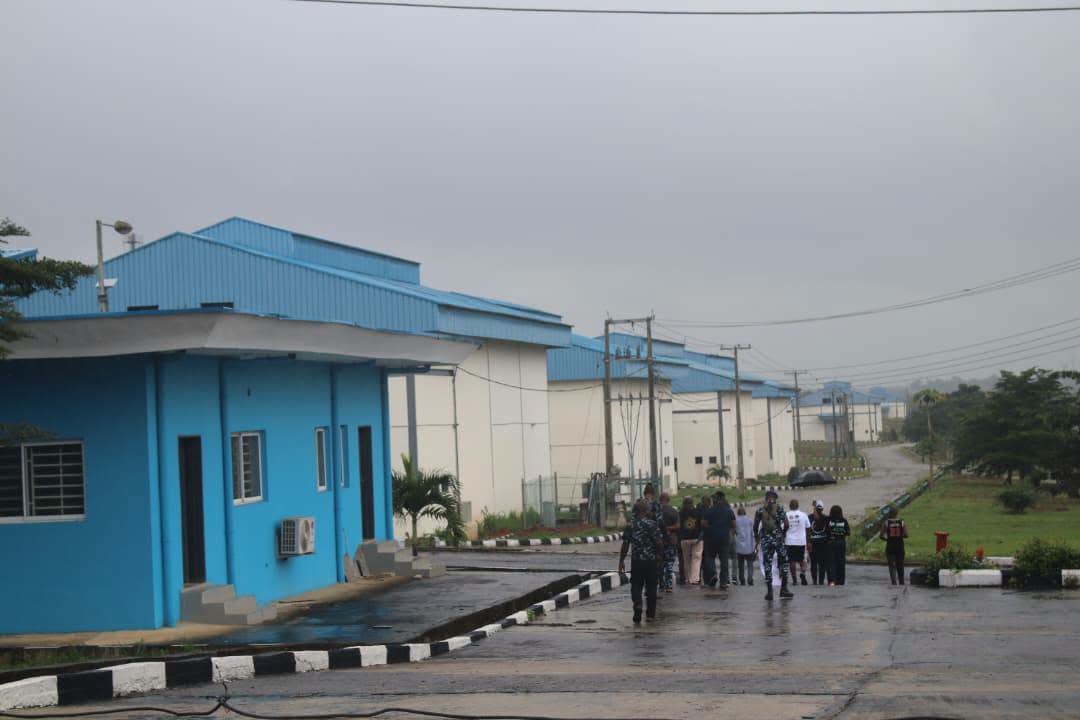
The Commissioner for Commerce, Cooperatives, Trade and Investment, Mrs Folashade Bada Ambrose-Medebem, speaking during an assessment visit to the hub on Saturday, August 29, 2026, described the facility as a “low-hanging fruit” with considerable potential for quick activation.
She noted that the state would not wait for every component of the facility to be “100 per cent perfect” before commencing operations.
According to her, the visit to the hub was to evaluate its readiness and identify immediate interventions required for commencement of operations.
The assessment established that the facility has significant potential to become a major industrial and economic centre, with existing infrastructure, production spaces and machinery capable of supporting early activation.
The Commissioner said the strategic priority was to begin with facilities that are ready for use, while addressing outstanding infrastructure and operational requirements progressively.
According to her, the hub must be developed beyond a collection of factory spaces into an integrated industrial centre built around complementary businesses, shared machinery, production, logistics, training and market access.
The proposed industrial clustering model will bring businesses within related value chains together, enabling manufacturers, processors, packaging companies, logistics providers and other supporting enterprises to share infrastructure, reduce production costs, strengthen local sourcing and improve competitiveness.
Agriculture and agro-processing have been identified as priority areas, with opportunities in food processing, Rice-related activities, packaging, agricultural inputs, machinery fabrication and maintenance, equipment servicing, storage and logistics.
The visit also opened a new dimension for collaboration with the Industrial Training Fund (ITF), with the hub expected to serve as a practical platform for technical and vocational training, industrial apprenticeship, equipment-based learning and certification.
The Director-General of ITF, who participated in the assessment, expressed the Fund’s readiness to explore collaboration with the Ministry in using the Hub to bridge the gap between technical training and practical industrial experience, particularly by exposing trainees to operational machinery and production environments.
The proposed model will enable the hub to combine production and manufacturing with skills development, industrial support and market access, creating a stronger pipeline of skilled workers and potential entrepreneurs for Lagos’ industrial sector.
The state government will also address key operational requirements, including reliable power, logistics and heavy-duty truck management, temporary accommodation for workers and operators, facility management, security, maintenance and performance monitoring.


