Connect with us

Economy

Seplat Confirms Board’s Approval of HY Financial Results

Published

on

By Modupe Gbadeyanka

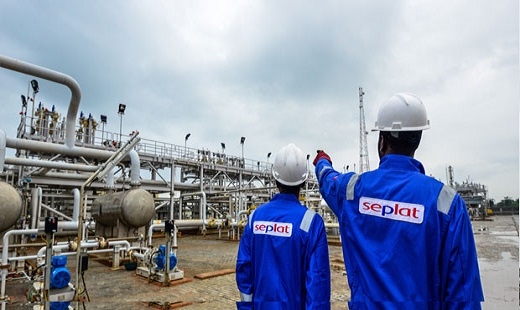
One of the oil firms listed on the Nigerian Stock Exchange (NSE), Seplat Petroleum Development Company Plc (Seplat) has announced the approval of its half year financial results for the period ended June 30, 2017.

In a statement to the stock market regulator, Seplat, also listed on the London Stock Exchange (LSE), disclosed that the board approved the financial statements at its last meeting in London.

Mirian Kene Kachikwu, Seplat’s Secretary, stated that the firm “held its 46th Board meeting on Thursday, July 20, 2017, at the SEPLAT London Office, 50 Pall Mall, London, United Kingdom, SW1Y 5JH to approve its H1 2017 Financial Results.”

“The H1 2017 Financial Results was considered and approved by the Board of Directors and will be filed with the Exchange accordingly,” the statement noted.

Seplat is a leading indigenous Nigerian oil and gas exploration and production company with a strategic focus on Nigeria.

It is pursuing a Nigeria focused growth strategy and has a significant portfolio onshore Nigeria that provides a substantial current reserves and production base and material growth potential.


Modupe Gbadeyanka is a fast-rising journalist with Business Post Nigeria. Her passion for journalism is amazing. She is willing to learn more with a view to becoming one of the best pen-pushers in Nigeria. Her role models are the duo of CNN's Richard Quest and Christiane Amanpour.

Economy

Decades-Long Ogoni Shutdown Costs Nigeria $226bn in Oil Revenue—PINL

Published

on

oil spills NNRC NOSDRA

By Adedapo Adesanya

Pipeline Infrastructure Nigeria Limited (PINL) says Nigeria has lost an estimated $226.734 billion in revenue from stalled crude oil production in Ogoniland over the past 32 years.

The group at the company’s monthly stakeholders’ meeting in Port Harcourt called for an urgent, structured restart of operations in the region.

PINL described the resumption of oil production in Ogoniland as a “strategic national priority,” stressing that the process must be driven by host communities and grounded in environmental sustainability.

Speaking at the event, Mr Akpos Mezeh, General Manager, Community and Stakeholder Relations at PINL, said the scale of losses highlights both the cost of inaction and the opportunity ahead.

“Available data shows that over $226.734 billion has been lost due to the suspension of crude oil production from 96 oil wells in Ogoniland over the past 32 years. This clearly underscores both the economic cost of inaction and the immense opportunity that lies ahead,” he said.

Ogoniland, covered under Oil Mining Lease (OML) 11, has the capacity to produce over 500,000 barrels of crude oil per day. Production was halted in 1993 following unrest and environmental concerns linked to oil exploration activities.

PINL outlined key conditions for restarting operations, including active community participation, sustained environmental remediation, adoption of community-based security models, and prioritisation of economic inclusion.

“The position of PINL aligns with growing calls from stakeholders in the Niger Delta for the Federal Government to restart oil production in Ogoniland in a manner that balances economic benefits with environmental justice and community interests,” Mr Mezeh added.

He further affirmed the company’s readiness to support the process, stating: “At PINL, we stand ready to support this process by applying our experience in stakeholder engagement and infrastructure protection to ensure a peaceful, secure, and sustainable resumption.”

PINL maintained that with the right framework, resuming production in Ogoniland could significantly boost Nigeria’s crude output, increase government revenues, and support broader economic growth.

Continue Reading

Economy

Champion Breweries Lists Additional Shares on Stock Exchange

Published

on

champion breweries

By Aduragbemi Omiyale

Additional shares of Champion Breweries Plc have been listed on the Nigerian Exchange (NGX) Limited.

A circular from the NGX Regulation Limited confirmed this development on Wednesday, April 15, 2026.

The new stocks of the brewery company came from its hybrid offer comprising rights issue and offer for subscription.

Through the two exercises, Champion Breweries issued fresh 2,375,615,342 ordinary shares of 50 Kobo each to subscribers, which were brought to the stock exchange for listing.

Business Post reports that 931,712,324 units arose from the rights issue of 994,221,766 ordinary shares of 50 Kobo each at N16.00 per unit, indicating a subscription rate of 93.71 per cent; and 1,443,903,018 units from the offer for subscription of 2,625,000,000 ordinary shares of 50 Kobo each at N16.00 per unit, reflecting a subscription rate of 55.01 per cent.

The listing of the new shares of the organisation has increased the total issued and fully paid-up shares to 11,323,611,234 ordinary shares of 50 Kobo each from 8,947,995,892 ordinary shares of 50 Kobo each.

“With this listing of the additional 2,375,615,342 ordinary shares of 50 Kobo each, the total issued and fully paid-up shares of Champion Breweries Plc have now increased from 8,947,995,892 to 11,323,611,234 ordinary shares of 50 Kobo each,” a part of the circular signed by the Head of Issuer Regulation Department of NGX RegCo, Mr Godstime Iwenekhai, stated.

Continue Reading

Economy

Nigeria’s Finance Minister Rules Out Seeking IMF Loan

Published

on

IMF GDP growth forecast

By Adedapo Adesanya

The Minister of Finance, Mr Wale Edun, says Nigeria has no immediate plans to approach the International Monetary Fund (IMF) for financial assistance.

Mr Edun made this known at the African Finance Ministers’ briefing during the IMF and World Bank Annual Meetings on Thursday in Washington, D.C. United States.

He said reliance on ongoing domestic economic reforms was yielding positive results.

According to him, Nigeria’s reforms over the past two years have restored policy credibility and strengthened resilience against global economic shocks affecting many African economies, adding that the country has prioritised market-based adjustments, avoiding administrative controls, particularly in foreign exchange and petroleum pricing mechanisms.

Mr Edun reaffirmed that Nigeria would continue to rely on internal policy measures rather than seeking multilateral lending support at this time.

However, he urged faster and more coordinated financial assistance for African countries amid discussions on a proposed $50 billion global support package.

The Minister said Nigeria had built buffers through reforms, but noted that several African nations remained highly exposed and required urgent external financial support.

He said Nigeria’s reliance on market mechanisms had enabled smoother economic adjustments, reduced disruptions, and sustained the country’s macroeconomic trajectory amid global uncertainties.

However, on Monday, the |Minister said Nigeria would seek stronger international financial support at this week’s IMF-World Bank ‌Spring Meetings as the Iran war lifts fuel costs at home and complicates reforms.

He said ahead of the meeting that surging crude prices had some clear benefits for the country, which is Africa’s top oil producer, boosting foreign exchange earnings.

“But the ⁠shock comes at a critical transition point, intensifying inflationary pressures and raising living costs for households,” he added.

Continue Reading

Trending