
Economy
5 Best Crypto Trading Platforms for Stock and Commodity Futures in 2026


Bitcoin traders also follow company earnings, gold prices and the cost of oil. For readers watching several financial markets, choosing a crypto trading platform increasingly involves looking beyond its digital asset listings.
Some exchanges now offer futures linked to traditional assets alongside their crypto markets. These products give traders exposure to price movements, with their own rules for margin, funding and trading hours. They do not provide the same ownership rights as holding shares or physical commodities.
Here are five crypto trading platforms to compare in 2026, based on their published product ranges and features for following stock and commodity markets.
1. BYDFi
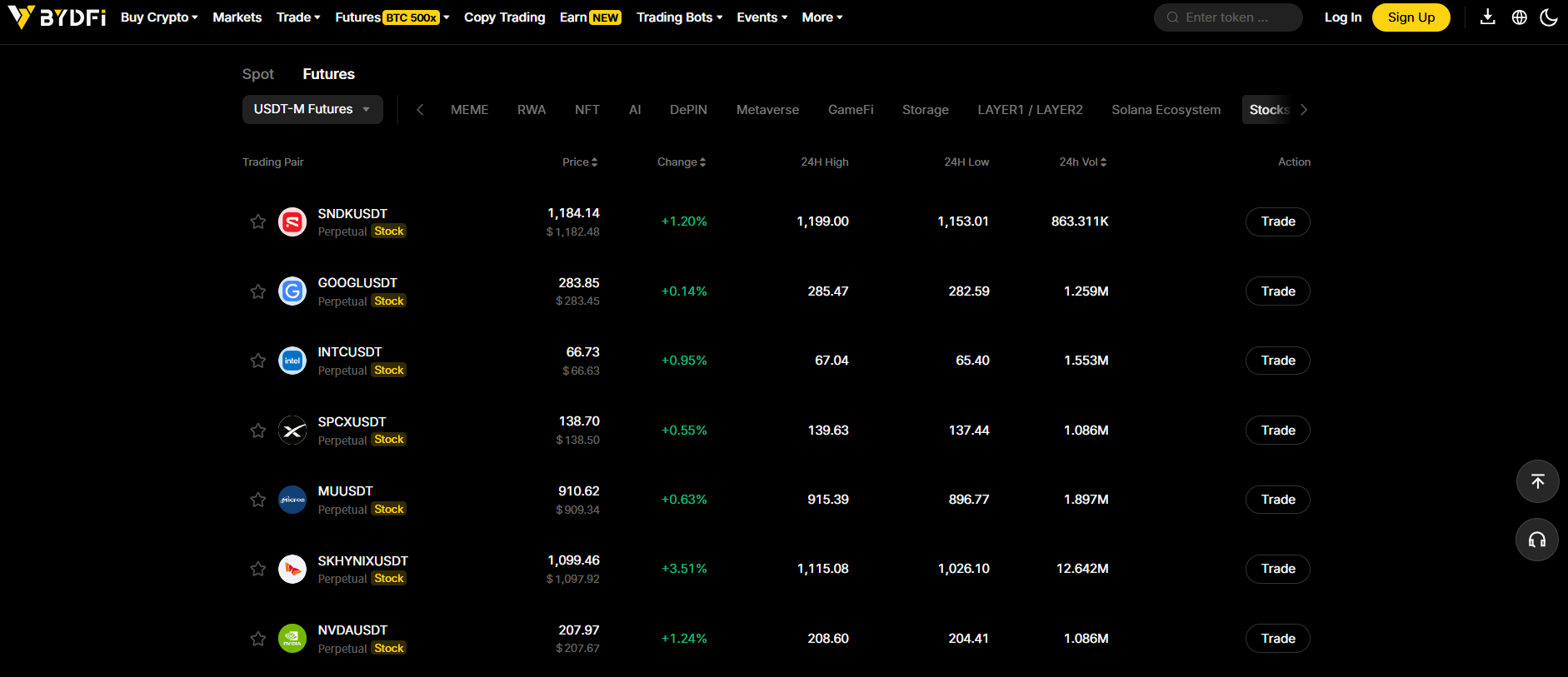
BYDFi offers TradFi trading through USDT-margined perpetual futures linked to US stocks, gold, silver and crude oil, alongside its crypto spot and perpetual markets. This gives traders access to traditional-market price movements through a crypto trading platform. These contracts provide price exposure without ownership of the underlying shares or physical commodities.
Its US stock futures trade 24 hours a day on weekdays. Traders following company announcements should therefore consider the trading calendar alongside the price chart: positions cannot be opened or closed during market closures.
The stock futures page currently advertises maker and taker fees as low as 0%, with funding fees waived. These are product-specific promotional terms that can change. Spreads and the selected contract’s conditions still matter when assessing the cost of a trade.
2. Bitget
Bitget offers a TradFi perpetuals range alongside its crypto spot and futures markets. Its published product coverage includes stocks, precious metals and energy, allowing traders to compare several types of price exposure within the platform.
Its TradFi offering also describes a unified trading account and multiple margin modes. For active traders, the arrangement of collateral is an important part of the comparison: the margin mode affects how funds support positions, not just which asset appears on the screen.
Bitget also presents stock-token products elsewhere on its platform. Readers should identify the specific product they intend to use, since a token and a perpetual contract can reference the same company while having different mechanics.
3. MEXC
MEXC groups traditional-market derivatives under its Global Asset Futures offering. The range covers stocks, metals and commodities, with crypto used as margin. These contracts follow market prices without requiring delivery of the underlying shares or physical assets.
The breadth of that menu can appeal to traders whose research moves between company news and commodity markets. However, the product category is only the starting point. MEXC’s own guidance says trading schedules and available margin modes can vary by asset.
For example, a trader moving from a crypto perpetual to a stock-linked contract should check the opening hours, contract multiplier and funding terms of that particular instrument. Familiarity with the futures interface does not replace understanding the selected market.
4. BingX
BingX is another platform to consider for commodity exposure alongside crypto trading. Its gold futures offering is described as a USDT-settled perpetual contract, allowing traders to take a view on gold prices without purchasing physical metal.
This provides a specific product for readers who follow inflation releases, interest-rate expectations and other developments affecting precious metals. The platform’s gold futures guide sets out the long and short trading workflow, including position settings and take-profit and stop-loss orders.
The useful comparison is how the contract fits the trader’s market view and holding period. Gold’s relationship with Bitcoin can change, so adding a gold-linked position should follow a defined trading plan rather than an assumption that the two markets always offset each other.
5. LBank
LBank has a TradFi futures area covering stock, precious-metal and commodity markets alongside its crypto offering. Its trading guide describes exposure to traditional asset prices using crypto as margin, without directly purchasing the underlying assets.
One useful distinction is how the platform organises market research. Its TradFi page places market categories alongside an economic calendar and financial news. The calendar includes macroeconomic releases and company-event categories, helping readers organise research around the events they follow.
For someone who starts with a business story and then considers a trading position, that layout can be useful. The next step is to check the individual contract: LBank’s guide notes that trading hours and funding arrangements depend on the product, including differences between stock-related and commodity contracts.
Choosing a platform for the market you follow
The best crypto trading platform for this purpose should match both the market being followed and the way the trader intends to participate. Compare the actual instrument, margin requirements, trading schedule and ongoing costs before looking at the size of the wider product menu.
A platform that brings several markets together can make research and trading more convenient. The decision still rests on understanding each position. Leveraged futures magnify gains and losses, and positions can be liquidated. Product availability and terms vary by location and should be checked before trading.