

General
Opening an Optical Store: Systems to Put in Place Before Your First Customer

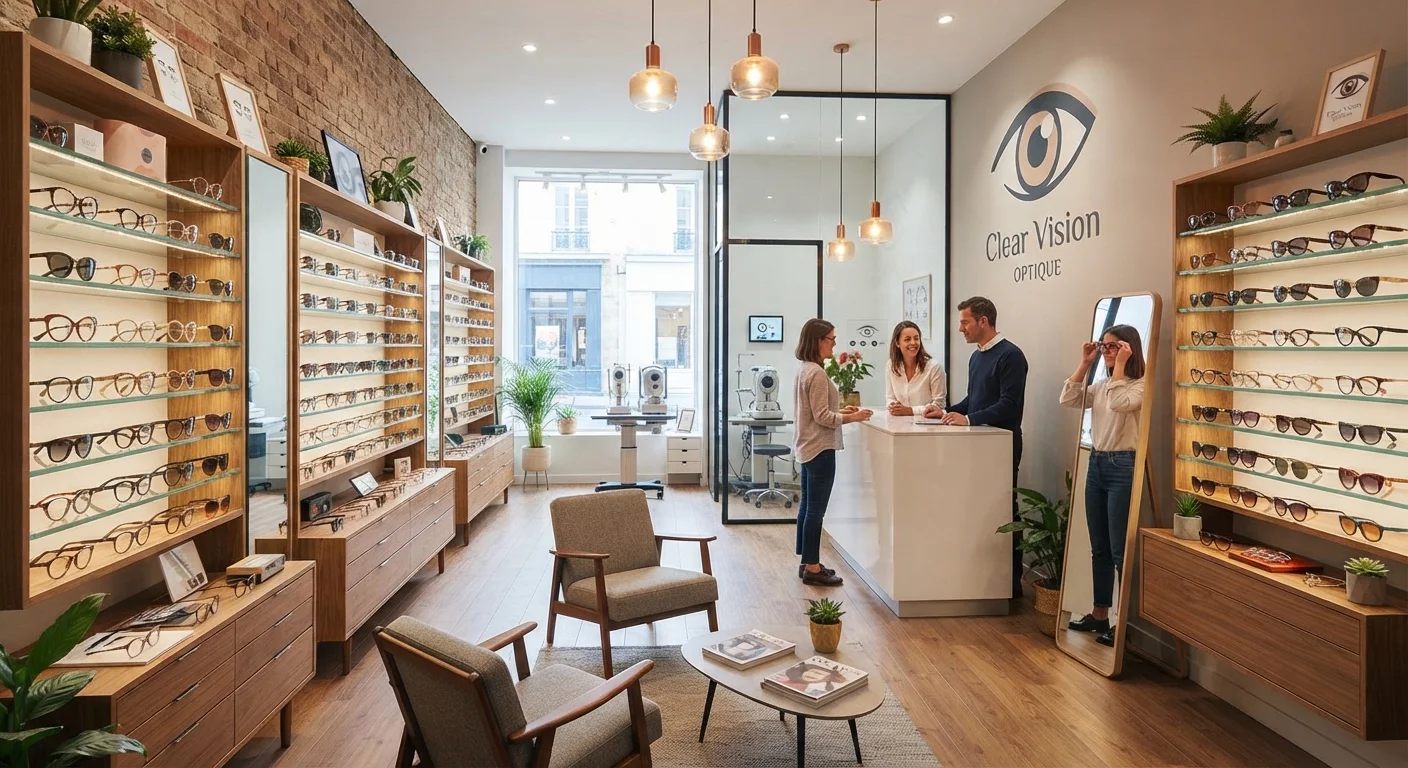
Most people who open an optical store spend their energy on the visible things: the location, the shop fit-out, the brands on the wall. These matter, but they are not what decides whether the business is calm or chaotic in its second year. That is decided by the unglamorous systems behind the counter, and they are much cheaper to build before the doors open than to repair after a few hundred customers have passed through.
This guide covers five areas to set up before the first customer: stock, appointments, sales, the customer base and reports. It is general advice for a new owner, whatever the market.
1. Stock: know what you have and what it is worth
An optical store carries an unusual mix: frames in many styles and sizes, lenses in many powers, contact lenses with limited shelf life, and small accessories. Before opening, decide how you will identify each item. Give every frame a unique code, put the code on a label, and record the brand, model, colour, size, cost price and selling price.
Lenses deserve special thought. Many are ordered per customer from a laboratory instead of held on the shelf, while a basic range of popular powers and contact lenses may be kept in stock. Decide which is which, and decide a minimum level for items you hold, so that reordering is triggered by a rule instead of by a gap on the shelf.
Also decide how often you will count. A short count of one category every week is easier than a full stocktake once a year, and it keeps errors small.
2. Appointments: treat time as a product
If you offer eye tests, or work with an optometrist or ophthalmologist, your calendar is a sales tool as much as a medical one. Set it up before launch:
- define the length of each type of visit, such as a first test or a follow-up check;
- define who works when, and in which room;
- record how a booking is made: by phone, by message, in person or online;
- decide how reminders go out, and who calls patients who do not turn up.
Walk-in customers are welcome, but a store that depends only on walk-ins has an unpredictable day. Even a simple appointment habit makes staffing and cash flow easier to plan.
3. Sales: a process from prescription to collection
Selling glasses is not a single transaction. It runs through several stages: the prescription, the choice of frame and lenses, an order to the laboratory, payment (often split into a deposit and a balance), a fitting and a collection. Write the stages down and give each a name, such as placed, in production, ready, collected.
Then answer the practical questions. Who takes the measurements? Where is the prescription stored, and does the order refer to it or copy it? Who tells the customer the glasses are ready? What happens if the customer is not satisfied? What discounts may staff give without asking? A new store has the advantage that nobody has bad habits yet, so agree on the process now.
Do not forget the cash side: how payments are recorded, how the day is closed, who counts the till, and how you meet any local rules on receipts or tax reporting. Ask a local accountant about the requirements in your own country.
4. The customer base: start recording on day one
The customer list is the most valuable asset a young optical store builds, and most owners only realise it after a year of not recording it properly. From the first customer, capture a name, a contact number, preferred contact method, the prescription with its date, what was bought, and when the customer should be contacted again.
Eyewear is a repeat business by nature. Prescriptions change, glasses get scratched or broken, and contact lens wearers need a regular resupply. A store that remembers when each customer is due will sell more than one that waits for them to come back by chance. Be careful with personal data from the beginning: collect only what you need, limit who can see it, and keep backups.
5. Reports: decide what you want to see each week
You do not need dozens of reports. You need a handful that you will actually read. A reasonable starting set is:
- sales by day, by product category and by employee;
- the best-selling and the slowest-moving products;
- orders waiting for a supplier or for a customer to collect;
- stock below its minimum level;
- cash and payments received.
If these figures take hours to assemble from notebooks and files, you will stop looking at them. This is the argument for choosing a proper system early.
Paper, spreadsheets or specialised software
A new store with one employee can survive on a notebook and a spreadsheet, and many do. The trouble is that the habits you form in the first months are the ones that stay. If your records begin in scattered files, moving them later costs time and some history is always lost.
Specialised systems exist for this purpose. MARVI, for example, is a cloud CRM/ERP for optical stores and ophthalmology clinics, which brings customers, sales, stock, lens inventory and analytics into one place. It includes a customer base with purchase history, orders, appointment reminders, supplier orders, price and markup management and sales reports, and it can be reached from any device with internet access. Whichever system you consider, ask for a demo and run through your own daily scenario: take a prescription, create an order, receive a delivery, and pull a sales report.
Before-opening checklist
- Every item coded, priced and labelled.
- Minimum stock levels decided for the items you hold.
- A calendar with visit types, working hours and a reminder routine.
- The order stages written down and known to every employee.
- A customer record that includes the prescription and a date for the next contact.
- Five weekly reports chosen, and a person assigned to read them.
- A backup routine and a clear rule on who can see what.
None of this needs to be perfect on day one. It needs to exist, so that the first customer, and the thousandth, are handled the same way.