

Health
Root Canal Myths vs. Facts: What Does Science Say?

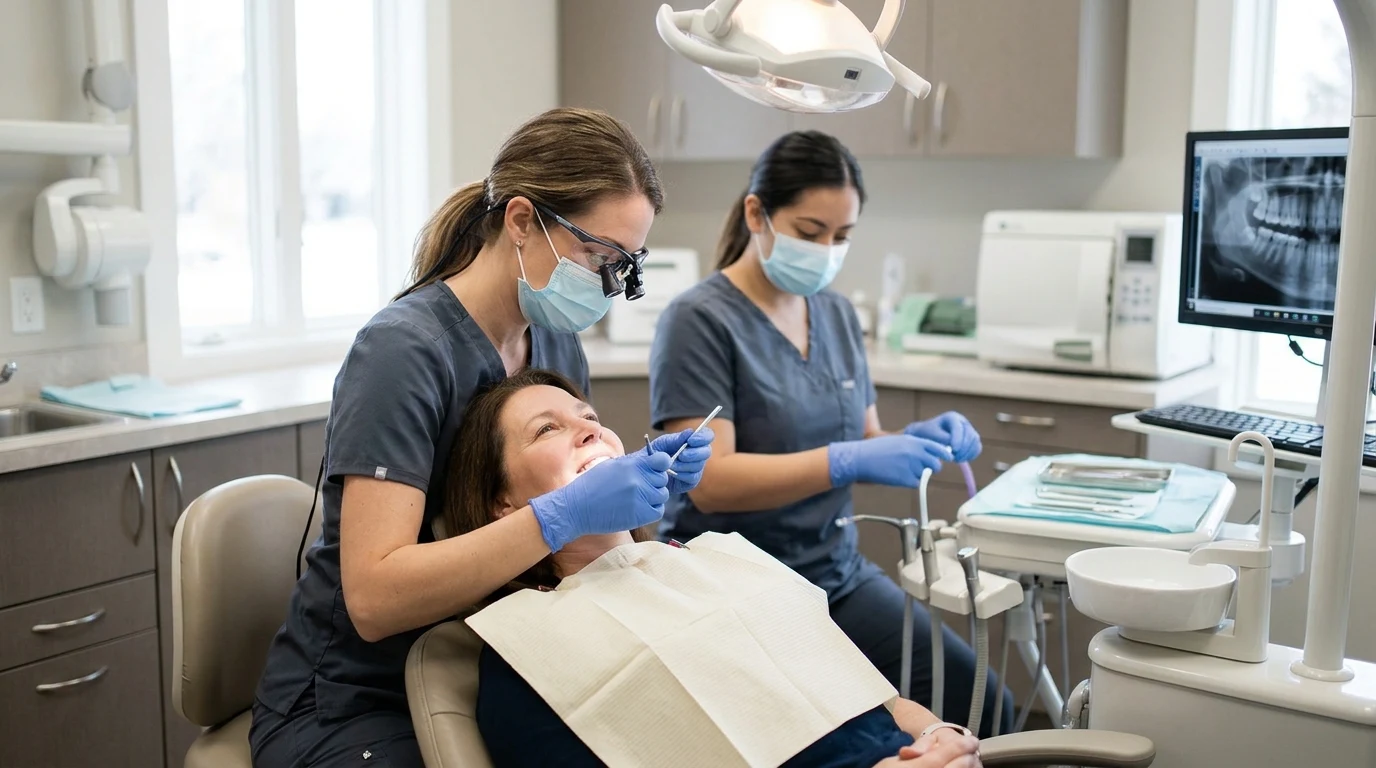
There are many misconceptions from the public about dental treatments, including root canal therapy. It is often viewed as a cause of unbearable pain, long recovery, and health complications. Some patients even choose extraction or avoiding the dental office altogether, as they feel a root canal will do more harm than good. But the misinformation makes what used to be easily manageable into a serious dental problem.
A knowledge of the facts about root canal treatment helps patients to make important decisions based on proven science, not myth. Modern endodontics employs advanced anesthesia/training, precision instruments, state-of-the-art imaging, and proven infection control methods to repair damaged teeth. By comparing some common myths with current knowledge about dentistry, patients can be prepared to know what to expect when they get the procedure, why a dentist recommends it, and what it actually involves.
How Root Canal Myths Affect Patients Today
Many of the root canal myths result from having old dental procedures. Before doing anaesthetics and better instruments, dental treatment was painful.
Dental anxiety is also caused by experience. For instance, if someone experienced pain before an operation, they might wrongly believe that the operation is linked to pain. Watch out for your information source. People will give opinions without ever looking up any reputable sources on medicine or the like on the internet.
And there is confusion between an infected tooth and a well-treated tooth. Before treatment, a tooth can be very painful, because the bacteria have infected the inner pulp. Solving that problem does not mean creating an infection by removing it.
7 Myths About Root Canal Treatment Exposed
Myth #1: Root Canal Treatment Is Very Painful
This is still among the most common myths about endodontic treatment.
Another widespread misconception is that dentists perform root canals but without enough pain relief. However, modern dentistry uses local anaesthesia that numbs the tooth and surrounding tissues.
Most patients complain of little discomfort during the treatment. You may feel some pressure, some adjustments, or a vibration; simply let the dentist know if you start to feel any discomfort so he or she can increase the level of anaesthesia or change techniques.
The pain that patients associate with root canals is often the result of the initial infection or inflammation.
As the American Association of Endodontists (AAE) explains, “Root canal treatment is an endodontic treatment to relieve pain in the tooth, not cause it.” The tooth may be a little tender immediately afterward, particularly when biting down, but that should go away in a few days.
The fact is that with the anaesthesia done well, a root canal is simply no different from any standard dental procedure. It is intended to get rid of the source of infection and preserve the natural tooth.
Myth #2: Root Canals Cause Major Disease in the Body!
Some sites say, “It is not possible to get all the bacteria out” once the tooth is root filled and that bacteria in the body can “travel throughout the body” and cause diseases like heart disease, cancer, or arthritis.
These claims generally stem from the discredited focal infection theory, which hypothesised that infected teeth could harbour bacteria that could cause other diseases in the body.
However, the early studies on which it was based lacked the methodological rigour and quality controls of modern medical research.
As the AAE notes, “There has never been any scientific evidence linking properly performed root canal treatment to disease elsewhere in the body.”
This is an important distinction, as root canal therapy removes the infected tissue, disinfects the inside of the canal system, and then seals the tooth. They do not deliberately leave an infection infected within the body.
The infection: An untreated infection can send bacteria to other tissues in the body, causing serious problems.
There is no basis in endodontics for the idea that root-canal treatment causes cancer and other systemic disease. If patients have specific medical worries, they should discuss these concerns with their dentist and doctor.
Myth #3: It Isn’t Always Better to Save a Tooth Than to Extract It
Some patients think that pulling a painful, infected tooth is easier and more reliable.
While extraction is a viable option in some cases, most dentists will consider the possibility of saving the natural tooth before recommending extraction.
A natural tooth will remain in the proper position of the dental arch and assist in proper chewing and biting. It also may avoid some of the other steps that come with replacing a tooth.
If a dentist pulls a tooth, the patient has options with dental implants, bridges, or removable dentures. These options have different costs, treatments, and maintenance.
Not every tooth, however, is a candidate for root canal treatment. Advanced fracture or advanced decay/advanced supporting bone loss may favour extraction:
In fact, if enough healthy teeth are present, saving the natural tooth can be a worthy goal. (3) Have a Dentist Make an Assessment of the Tooth Before Considering Options
Myth #4: A Tooth Is Useless After Nerve Removal
In another myth, a tooth won’t function as normal when a dentist removes the pulp of a tooth.
The pulp consists of nerves, blood vessels, and connective tissue. Provides sensation and assists in the growth and development of the tooth but is not responsible for the overall chewing function of the tooth.
In root canal therapy, the dentist clears and fills the inner canals but leaves the remainder of the natural tooth in place.
The periodontal ligament and supporting tissues of the tooth remain. These structures are critical for anchoring the tooth in the jawbone and for resisting the normal forces of chewing.
Consequently, a properly maintained restorative tooth that does not battle inadequate oral hygiene may last for many years.
Such teeth may sometimes entail the application of a dental crown to cover the weak/restored tooth.
Fact: If a tooth’s pulp is removed, the tooth does not become a useless member. A routed and restored tooth will still function like a normal tooth in the mouth.
Myth #5: Root Canals Are Done in Multiple Visits
Previously, when treatment techniques involved multiple appointments, extra time was sometimes needed for cleaning and disinfection.
In fact, many standard root canals are done in 1 or 2 visits today.
But the number of visits depends on a variety of factors, including:
- The structure of the root canal and the position of the tooth.
- The degree of infection or inflammation.
- The difficulty of the procedure.
- If the dentist needs to do additional disinfection or treatment.
- The permanent restoration was needed.
Molars tend to have multiple canals and are more difficult to treat than front teeth.
Some patients will also need appointments for final restoration (or crown).
Some root canals are done in one appointment while others require more. Your dentist will schedule according to the clinical situation.
Myth #6: Root Canal Treatment Doesn’t Last Forever
No dental procedure is offered with a lifetime guarantee, but that does not make root canal treatment unreliable.
When it works, the procedure can preserve a natural tooth’s life for years to come. Success in the long term will be determined by such factors as the cleanliness and sealing of the canals, the health of the surrounding tissues, and the final restoration.
Bacterial reinfection can occur if a new decay, crack, or loose filling or crown compromises a tooth.
Sometimes the treated tooth doesn’t heal well and becomes sick months or years later.
Depending on the cause, the dentist may suggest nonsurgical retreatment or endodontic surgery. If the tooth cannot be predictably saved, extraction may be a consideration.
Fact: Root canal treatment is an effective treatment and must still be properly treated, restored, and maintained for long-term success.
Myth #7: Antibiotics Can Replace Root Canal Treatment
Some patients believe that they can just take antibiotics to eliminate a dental infection so they never have to undergo a surgical procedure.
Although antibiotics can be useful in controlling some spreading bacterial infections, they cannot remove infected pulp tissue inside a tooth.
When the pulp is severely damaged or dead, the blood supply to the pulp has been changed, and medications cannot effectively reach the problem.
Definitive treatment will involve surgical removal of the source of infection, usually in the form of root canal therapy or extraction of the tooth.
Antibiotics might be prescribed by the dentist if there is a systemic reaction or if the infection has spread beyond the tooth.
An antibiotic will not be a substitute for dental treatment of an infected pulp. People should not try to treat themselves or wait for a professional to treat them.
Why Today’s Dentistry Makes Root Canal Therapy More Predictable
Technology has transformed endodontics and helped dentists diagnose and treat endodontic disease.
Digital dental x-rays allow the clinician to visualise root anatomy and look for signs of infection. Electronic apex locators to determine the length of the canal and rotary instruments for removing and shaping in a controlled manner.
Dental operating microscopes further aid the dentist in visualising narrow or complex canal systems.
The tools do not remove all risks of treatment, but they do offer more information and help improve control during the procedure.
AAE states that with better technology, good anaesthesia, proven clinical techniques, and the advantage of better tools, these new standards should form the foundation of predictable treatments.
How to Research Root Canal Information Before You Make Your Decision
Dentistry has a lot of misinformation, and it is difficult to separate fact from fiction and real clinical problems from media hype. Patients should therefore be sceptical about the source of information they encounter.
Here are some tips that could help:
- Look to reputable dental associations or medical professionals licensed to give their opinion.
- Be wary of anecdotal stories, and look for references to clinical studies.
- Watch out for sites that claim cures or that one dental procedure can treat multiple, unrelated diseases.
- Ask if the information is based on current dental practices and procedures.
- If what you read is opposite to what your dentist is telling you, meet with a licensed dentist or endodontist.
For additional educational reading, Nuffield Dental provides information about dental procedures and oral healthcare. Patients can use reputable dental resources to prepare questions and understand treatment options, while relying on an individual clinical assessment for personal decisions.
Making Smart Dental Care Choices
Root canal myths are rooted in old experiences, vague thinking, and unsubstantiated health claims. Today, endodontic specialists have an effective system for removing infected pulp, controlling dental infection, and saving a natural tooth whenever possible.
Armed with the facts, patients can avoid scary stories and evaluate treatment on clinical data. While root canals are not always successful, they are not always dangerous or unnecessarily painful.
Discuss the procedure, symptoms, treatment options, risks, and long-term expectations with your experienced dentist. Providing patients with factual evidence and accurate information to make an informed decision will better educate patients about dental care and better serve their oral health with confidence.