Economy
Nigeria Reaping Dividends of Economic Diversification—Awolowo
By Dipo Olowookere
Executive Director of the Nigerian Export Promotion Council (NEPC), Mr Olusegun Awolowo, has expressed his delight in the gains recorded by the country’s economy as a result of earning foreign exchange from other sources apart from oil.
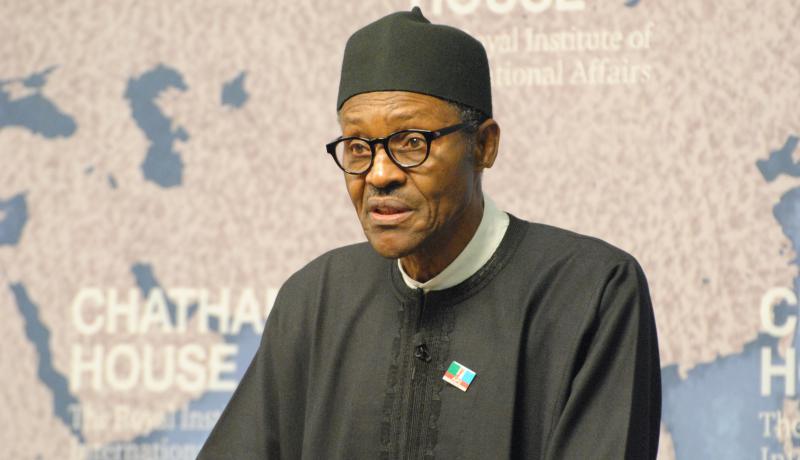
Since the present administration of President Muhammadu Buhari came on board, there have been efforts made to diversify Nigeria’s economy.
According to Mr Awolowo, the Nigerian economy was beginning to record positive trade balance as a result of increase in exports.
The NEPC boss, while reacting to the recent release by the National Bureau of Statistics (NBS) on the Q2, 2017 report on Foreign Trade in Goods Statistics, stated that the 3.2 percent growth in export value in the second quarter of 2017 was a “proof that the economy has indeed recovered from recession and is on its way to sustainable growth as envisioned by the administration of President Muhammadu Buhari, in the recently launched Economic Recovery and Growth Plan (ERGP).”
He added that, “As expected, we therefore see a strong correlation between economic recovery and improved export trade i.e. as exports increase, the economy improves.
“Current efforts by the government to accelerate the development of a more diversified economy, with emphasis on non-oil exports, has started to yield positive results.”
The NBS, in its report, stated that Nigeria’s total export value at N3.1 trillion in the second quarter of this year, representing an increase of 3.2 percent over Q1 2017 and a very significant 73.48 percent over Q2 in 2016.
The report covered seven sectors, namely; Agriculture, Oil & Gas, Raw Materials, Solid Minerals, Manufactured Goods, Energy and other Oil related goods.
NEPC was established through the promulgation of the Nigerian Export Promotion Council Decree No. 26 of 1976, now an Act.
It was established to promote non-oil exports as the key driver of the Nigerian economy. It was also formed to position the export market as the growth opportunity of choice for private sector earnings and sustainable economic development.
However, Mr Awolowo has called for all hands to be on deck to build a stronger and more vibrant economy as the council would continue to leverage on the power of export to transform the economy.
He noted that, “NEPC focuses entirely on leveraging the power of exports to transform the Nigerian economy, create jobs, lift people out of poverty, and strengthen the government’s finances.”
Economy
Finance Ministry Orders NAICOM to Suspend Nigeria Re, NICON Recapitalisation Fees
By Adedapo Adesanya
The Federal Ministry of Finance has directed the National Insurance Commission (NAICOM) to suspend enforcement of disputed recapitalisation fees and a directive requiring NICON Insurance Limited and the Nigeria Reinsurance Corporation to transfer their entire fresh capital into an escrow account with the Central Bank of Nigeria (CBN).
The ministry also demanded a detailed response and legal justification from NAICOM over assessments of N305 million against NICON and N375 million against Nigeria Re as part of the ongoing insurance industry recapitalisation exercise.
The directive was contained in a letter dated August 6, 2026, signed by the Permanent Secretary, Finance, Mr Raymond Omachi, on behalf of the Minister of Finance and Coordinating Minister of the Economy, Mr Taiwo Oyedele.
The letter followed a July 27 petition by NICON and Nigeria Re over the implementation of the Nigerian Insurance Industry Reform Act, 2025. The companies challenged NAICOM’s demand for a one per cent capital injection fee, alongside processing and verification charges under the commission’s Minimum Capital Requirement Guidelines.
They also disputed a directive requiring existing insurance companies to transfer their entire recapitalisation funds into a CBN escrow account, arguing that Section 16(3) of NIIRA 2025 provides for a statutory deposit of only 10 per cent.
According to the Finance Ministry, NICON and Nigeria Re had injected N20 billion and N30 billion respectively into Mudaraba Term Deposit accounts with Lotus Bank, exceeding their adjusted capital requirements of N16 billion and N28 billion.
The companies also deposited N2.5 billion and N3.5 billion respectively with the CBN as statutory deposits and paid initial fees of N80 million and N75 million.
The ministry said the companies therefore considered themselves compliant with the July 31, 2026 recapitalisation deadline.
“Pending the determination of the petition, the Commission should suspend the enforcement of the contested processing fees, 1 per cent capital injection fee demands, and full-capital escrow transfer directives against NICON Insurance Limited and Nigeria Reinsurance Corporation,” the letter stated.
The ministry consequently asked NAICOM to explain the basis and legal justification for the disputed charges and escrow requirement.
The intervention comes amid the Federal Government’s efforts to strengthen the capital base of insurance companies and reinsurers, improve their capacity to underwrite larger risks and enhance the sector’s contribution to economic development.
The dispute, however, has raised questions over the extent of NAICOM’s authority to impose additional fees and require existing insurers to place their entire recapitalisation funds in escrow.
The Finance Ministry’s letter did not disclose whether NAICOM had responded to the issues raised. It also referenced an alleged N500 million demand and an additional N180 million capitalisation charge in its subject, although the substantive section specifically put the disputed assessments at N305 million for NICON and N375 million for Nigeria Re.
For now, enforcement of the contested fees and full-capital escrow directive against the two state-owned insurers has been suspended pending NAICOM’s response and legal clarification.
Economy
NASD Exchange Sheds 0.32% 11 Plc Leads Losers’ Chart
By Adedapo Adesanya
Four price decliners overpowered the two price gainers recorded at the NASD Over-the-Counter (OTC) Securities Exchange on Monday, August 10, weakening it by 0.32 per cent at the close of transactions.
The advancers were led by Food Concepts Plc, which chalked up 25 Kobo to sell at N2.75 per unit versus the previous price of N2.50 per unit, and Mass Telecoms Innovation Plc appreciated by 3 Kobo to 35 Kobo per share from 32 Kobo per share.
However, 11 Plc lost N24.75 to close at N222.75 per unit versus N247.50 per unit, FrieslandCampina Wamco Nigeria Plc declined by N3.09 to N145.00 per share from N148.09 per share, Industrial and General Insurance (IGI) Plc went down by 5 Kobo to 50 Kobo per unit from 55 Kobo per unit, and Geo-Fluids Plc slid by 1 Kobo to N2.27 per share from N2.28 per share.
As a result, the market capitalisation contracted by N8.94 billion to N2.798 trillion from the previous session’s N2.807 trillion, and the NASD Security Index (NSI) retreated by 14.9 points to 4,663.18 points from 4,678.08 points.
The trading data showed that the volume of securities exchanged by investors rose by 108.9 per cent to 1.1 million units from 535,7560 units, and the value of securities jumped by 69.5 per cent to N10.2 million from N6.0 million, while the number of deals executed receded by 2.8 per cent to 35 deals from 36 deals.
Great Nigeria Insurance (GNI) Plc closed the trading session as the most traded stock by value on a year-to-date basis, with 3.4 billion units exchanged for N8.4 billion, followed by Infrastructure Credit Guarantee (Infracredit) Plc with 2.3 billion units valued at N6.5 billion, and Central Securities Clearing System (CSCS) Plc with 77.0 million units transacted for N5.5 billion.
GNI Plc also ended the day as the most traded stock by volume on a year-to-date basis, with 3.4 billion units worth N8.4 billion, followed by Infracredit Plc with 2.3 billion units sold for N6.5 billion, and Resourcery Plc with 1.1 billion units traded for N415.7 million.
Economy
Naira Gains N5.55, Sells N1,360/$1 at Official Market
By Adedapo Adesanya
The Naira opened the week on a positive note, appreciating against the US Dollar by N5.55 or 0.41 per cent in the Nigerian Autonomous Foreign Exchange Market (NAFEM) on Monday, August 10, to N1,360.14/$1 from N1,365.69/$1.
The domestic currency also improved its exchange rate against the Pound Sterling in the official market during the session by 67 Kobo to sell at N1,838.50/£1 compared with the preceding session’s N1,839.17/£1, and gained N4.64 against the Euro to quote at N1,571.09/€1, in contrast to last Friday’s N1,575.73/€1.
However, the Naira maintained stability against the Dollar in the black market and the GTBank forex counter on Monday at N1,400/$1 and N1,371/$1, respectively.
Data from the Central Bank of Nigeria (CBN) showed that interbank FX turnover fell by 46 per cent yesterday to $213.845 million from the $393.477 million recorded at the close of trading on Friday.
The decline came despite a sharp increase in the volume of foreign exchange transactions executed during the session, indicating weaker participation by high-ticket FX customers and other major market participants.
The lower turnover suggests reduced demand for FX among large-scale buyers, even as market makers continued to facilitate transactions through the NAFEM window, with the number of FX traded rising to 182 from 102.
In the cryptocurrency market, traders and investors took profit as broader markets’ focus shifted to rising bond yields, higher oil prices and upcoming US inflation data.
Cardano (ADA) depreciated by 5.2 per cent to $0.1873, Ethereum (ETH) slipped by 2.6 per cent to $1,873.43, Ripple (XRP) slumped by 2.3 per cent to $1.01, Bitcoin (BTC) fell by 1.8 per cent to $63,949.22, Solana (SOL) crashed by 1.3 per cent to $75.81, and Binance Coin (BNB) tumbled by 0.6 per cent to $599.49.
But TRON (TRX) gained 0.5 per cent to trade at $0.3314, and Dogecoin (DOGE) grew by 0.2 per cent to $0.0700, while the US Dollar Tether (USDT) and the US Dollar Coin (USDC) traded flat at $1.00 apiece.