Connect with us

Economy

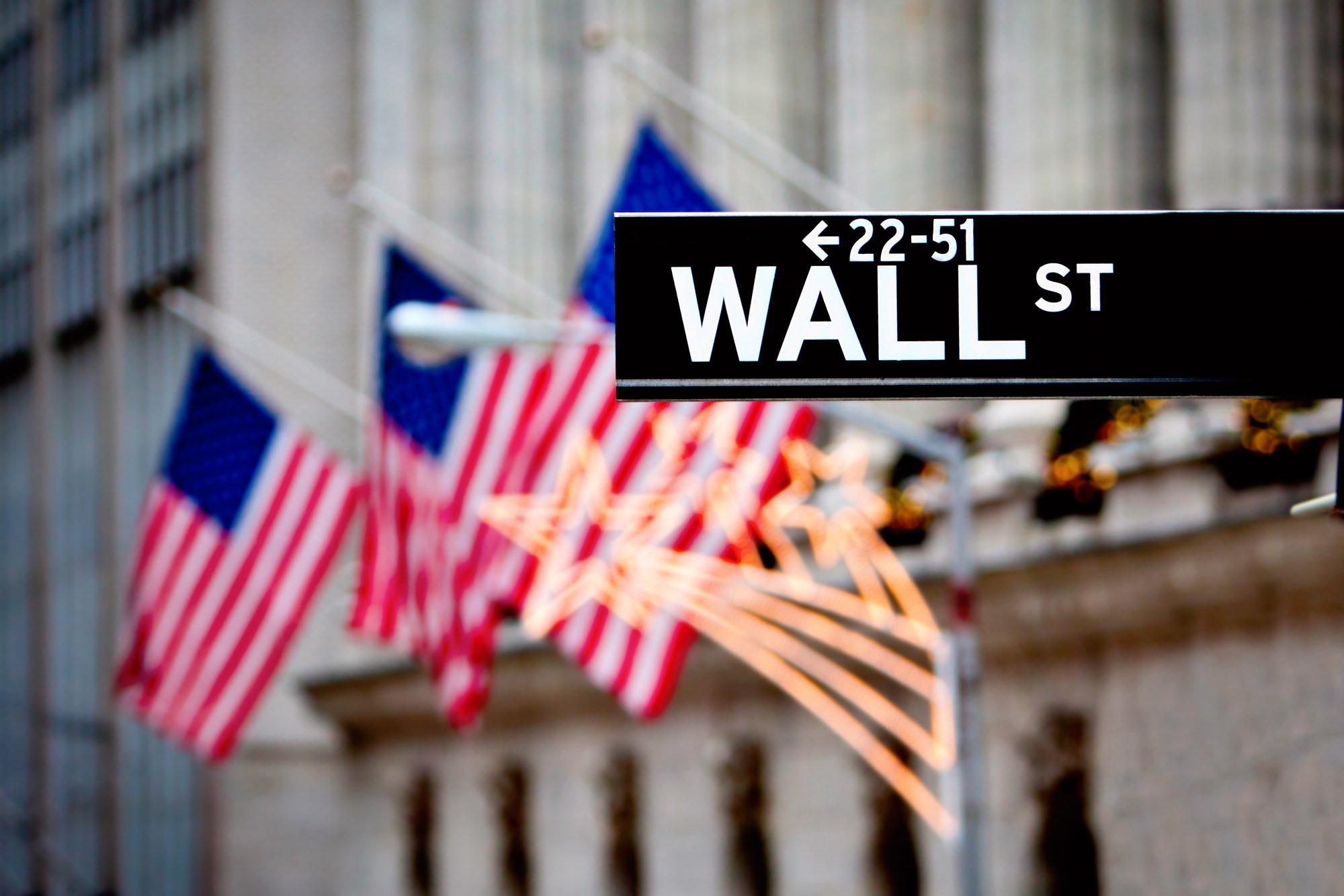
Yellen Testimony in Focus on Wall Street

Published

on

wall street

By Investors Hub

The major U.S. index futures are pointing to a mixed opening on Wednesday, as the Dow futures are up by 69 points but the Nasdaq futures are down by 4.75 points.

Traders may be reluctant to make significant moves ahead of remarks by outgoing Federal Reserve Chair Janet Yellen.

Yellen is scheduled to testify on the economic outlook before the Congressional Joint Economic Committee beginning at about 10 am ET.

In prepared remarks released ahead of her appearance, Yellen said economic growth appears to have stepped up from its subdued pace early in the year.

Yellen noted inflation has continued to run below the Fed’s 2 percent target but said recent lower readings on inflation likely reflect transitory factors.

The Fed Chair also reiterated that she expects gradual increases in interest rates will be appropriate to sustain a healthy labor market and stabilize inflation around the central bank’s objective.

Stocks saw some volatility in afternoon trading on Tuesday but managed to end the session firmly in positive territory. With the strong upward move on the day, the major averages climbed to new record closing highs.

The major averages ended the session just off their best levels of the day. The Dow surged up 255.93 points or 1.1 percent to 23,836.71, the Nasdaq climbed 33.84 points or 0.5 percent to 6,912.36 and the S&P 500 jumped 25.62 points or 1 percent to 2,627.04.

The notably higher close on Wall Street was partly due to news the Republican tax reform bill took another key step forward, as the legislation was approved by the Senate Budget Committee.

Members of the Senate Budget Committee voted 12 to 11 to advance the bill, with the vote coming down strictly along party lines.

The vote to send the bill to the Senate floor came after Republican Senators Bob Corker, R-Tenn., and Ron Johnson, R-Wis., dropped their objections to the bill.

The full Senate could vote on the bill as early as Thursday, although the legislation still includes significant differences from the House version.

Traders also reacted positively to remarks by Federal Reserve Chair nominee Jerome Powell, who testified before the Senate Banking Committee.

Powell told the committee he favors “tailoring” banking regulations so the largest and most complex institutions face the most stringent regulations while the burden on smaller banks is reduced.

The Fed Chair nominee also said the case for a December interest rate hike is “coming together” and said the central bank will continue reducing its $4.5 trillion balance sheet in a process that will take three or four years.

Powell repeatedly refused to comment on the potential economic impact of the Republican tax reform legislation working its way through Congress.

On the economic front, the Conference Board released a report showing an unexpected improvement in consumer confidence in the month of November.

The Conference Board said its consumer confidence index climbed to 129.5 in November from an upwardly revised 126.2 in October. Economists had expected the index to drop to 124.5.

With the unexpected increase, the consumer confidence index rose to its highest level since reaching 132.6 in November of 2000.

In mid-afternoon trading, some selling pressure was generated by reports that North Korea fired a ballistic missile, although traders quickly shrugged off the news.

Banking stocks showed a substantial move to the upside over the course of the session, driving the Dow Jones Banks Index up by 3.3 percent. With the jump, the index reached its best closing level in three weeks.

The rally by banking stocks partly reflected a positive reaction to Powell’s comments regarding financial regulations, which he called “tough enough.”

Significant strength also emerged among airline stocks, as reflected by the 2 percent gain posted by the NYSE Arca Airline Index. The index reached its best closing level in over a month.

Trucking, railroad, brokerage, and housing stocks also saw considerable strength on the day, moving higher along with most of the other major sectors.


Modupe Gbadeyanka is a fast-rising journalist with Business Post Nigeria. Her passion for journalism is amazing. She is willing to learn more with a view to becoming one of the best pen-pushers in Nigeria. Her role models are the duo of CNN's Richard Quest and Christiane Amanpour.

Click to comment

Leave a Reply

Your email address will not be published. Required fields are marked *

Economy

Tanzania Tasks Africa to Prioritise Economic Integration Through Industrialisation

Published

on

Dangote Tanzania

By Aduragbemi Omiyale

African leaders have been advised to focus on economic integration through industrialisation, as this would make the continent a formidable force in the global market.

This charge was given by the Minister of State in the Tanzanian President’s Office responsible for Planning and Investment, Prof. Kitila A. Mkumbo, during a visit to the Dangote Petroleum Refinery and Petrochemicals in Lagos.

“Africa now needs economic liberation, and that can only come through industrialisation,” he said, describing Mr Aliko Dangote as Africa’s leading industrialist whose investments are increasingly extending beyond Nigeria to support development across the continent.

He added that Tanzania looks forward to working with Dangote Group as part of a broader vision of accelerating Pan-African industrialisation and strengthening regional manufacturing capacity.

The Minister also highlighted the importance of local refining capacity in improving Africa’s energy security, particularly in light of recent disruptions in global oil markets.

Referring to the impact of tensions around the Strait of Hormuz on global fuel prices, he said increased refining capacity from facilities such as the Dangote Petroleum Refinery would help cushion African economies against external shocks.

According to him, affordable and reliable energy remains one of the most important drivers of economic development, noting that expanded refining capacity across the continent would contribute significantly to lowering energy costs and improving the quality of life for millions of Africans.

The Tanzanian delegation was in Nigeria to follow up on discussions held earlier this year between President Samia Suluhu Hassan and Mr Dangote regarding the expansion of Dangote Group’s investment footprint in Tanzania.

The East African nation reaffirmed its commitment to deepening economic cooperation with Dangote Group, expressing strong interest in attracting new investments in fertiliser production, energy and industrial infrastructure to support the country’s long-term development agenda.

“We have come here to make a follow-up on what they deliberated with our President in terms of further Dangote investments in Tanzania,” Mr Mkumbo said.

Continue Reading

Economy

Champion Breweries to Strengthen Market Position

Published

on

champion breweries uyo

By Aduragbemi Omiyale

One of the leading brewers and beverage companies listed on the Nigerian Exchange (NGX) Limited, Champion Breweries Plc, has expressed its commitment to strengthening its market position.

The beer maker gave this assurance while reacting to its financial performance for the first half of 2026, which was strong, driven by solid commercial performance, improved operational efficiencies, and the successful expansion of its business portfolio following the acquisition of EnjoyBev B.V.

In the period under review, the organisation boosted its growth platform through strategic investment, delivered resilient operating performance, and successfully transitioned to a new group structure.

Its revenue reached N35.73 billion, while second-quarter revenue amounted to N21.37 billion. Operating profit stood at N6.17 billion, and profit after tax attributable to the group was N2.65 billion, with second-quarter profit after tax of N1.76 billion.

The firm also successfully completed the acquisition of an 80 per cent equity interest in EnjoyBev B.V., strengthened its capital base through a successful capital raising programme that increased shareholders’ equity to N69.08 billion, and maintained full compliance with NGX free float requirements, with free float increasing to 25.72 per cent as of June 30, 2026.

“The first half of 2026 marks a defining chapter in Champion Breweries’ journey. We have not only delivered a strong operating performance but also successfully transformed our business into a broader beverage group with an expanded platform for sustainable growth.

“While higher finance costs associated with our strategic investment programme impacted profitability during the period, our underlying business remains strong.

“The combination of disciplined commercial execution, continued investment in our brands and route-to-market capabilities and improving operational efficiency positions us well for future growth.

“We remain focused on creating long-term value for shareholders, strengthening our market position, and capturing the opportunities presented by our expanded business platform,” the acting chief executive of Champion Breweries, Mr Rasheed Adebiyi, said.

Continue Reading

Economy

How Digital Payments Are Changing the Way Global Businesses Operate

Published

on

crypto payment

For businesses operating across borders, payments are no longer simply the final step in a transaction. The way money moves can influence where a company sells, how quickly it can enter a new market, and how easily customers can complete a purchase. As digital payment methods become more diverse, businesses are adjusting not only their checkout options but also the way payment processes fit into wider operations.

This shift is particularly visible in international commerce. A company can now serve customers in multiple markets without relying on a single payment method or a traditional physical presence in each location. Digital payments have become part of the infrastructure that supports increasingly distributed business models.

A More Connected Payment Environment

Global commerce has created a more complicated payment environment. Customers in different countries may have very different expectations about how a purchase should be paid for. Some markets rely heavily on cards, while others have seen rapid adoption of digital wallets, bank-based payment methods, or other local alternatives.

For businesses, this variety creates both opportunities and practical challenges. Offering payment options that customers recognize can reduce friction during a transaction, while supporting several markets may require businesses to work with different payment technologies and providers.

Digital payments have therefore become closely connected to market expansion. A company entering a new country does not only need to consider demand for its products or services. It also needs to understand how customers in that market prefer to pay and whether its existing payment setup can accommodate those expectations.

6a7b071354914.webp

More Choices for Businesses and Customers

The growth of digital payments has expanded the range of choices available on both sides of a transaction.

Consumers can increasingly choose between cards, digital wallets, bank transfers, mobile payment methods and other forms of electronic payment. Businesses, meanwhile, can select from different technologies and payment providers depending on their markets and operational requirements.

This development has changed the role of payments in the customer experience. Payment is no longer necessarily treated as an isolated technical process that begins only after a purchasing decision has been made. The available options can influence whether a customer completes a transaction in the first place.

For international businesses, flexibility can be particularly important. A payment method that is familiar and convenient in one market may be less relevant in another. Supporting a broader selection can allow businesses to adapt their payment experience without changing the underlying product or service.

The Rise of Alternative Payment Models

Traditional card and bank-based payments remain important, but the digital payments landscape has expanded beyond these established methods. Digital wallets, account-to-account payments, mobile solutions and cryptocurrency have all contributed to a broader definition of what a digital transaction can look like.

Cryptocurrency remains a smaller part of the overall payments landscape, but it has created another category of payment technology for businesses to consider. Specialized solutions such as BitHide can provide businesses with tools for handling crypto payments as part of their broader payment operations.

The significance of this development is not necessarily that every business will adopt cryptocurrency. Rather, it demonstrates how the payment landscape continues to diversify. Businesses operating internationally can increasingly choose from different models instead of relying on a single approach across every market.

Payments Are Becoming Part of Business Operations

As payment systems become more digital, their role increasingly extends beyond accepting money from customers. Payment processes can interact with accounting, order management, customer records and other parts of a company’s digital operations.

This is particularly relevant for businesses with large transaction volumes or customers in multiple countries. Manual payment processes can become difficult to manage as the number of transactions, currencies and payment methods increases. Digital systems can help businesses organize these processes within a wider operational framework.

The result is a gradual shift in how companies think about payments. Instead of treating payment processing as a separate function, businesses are increasingly considering it alongside other elements of their digital infrastructure.

This does not mean that every company needs a complex payment setup. The appropriate approach depends on the business model, target markets, transaction volumes and types of customers involved. For some companies, a small number of established payment methods may be sufficient. Others may need a more flexible arrangement because of the markets they serve.

Adapting to Different Markets

One of the more important changes brought by digital payments is the ability to adapt payment experiences to different markets.

International businesses often face differences in consumer behavior, financial infrastructure and preferred payment methods. A payment strategy that works well domestically may therefore require adjustments when a company expands internationally.

Digital payment technology can make these adjustments more practical, but it does not remove the need for local market knowledge. Businesses still need to understand customer preferences, applicable requirements and the practical costs associated with different payment methods.

This makes payment strategy part of international expansion rather than an issue that can be addressed only after a new market has been entered.

What Comes Next for Global Businesses

The digital payments market is likely to continue becoming more diverse as businesses and customers adopt new ways of moving money. The important change may not be the replacement of one payment method by another, but the growing ability to combine different methods according to the needs of a particular business or market.

For global companies, this creates an emphasis on adaptability. Payment systems need to support the way a business operates rather than becoming a limitation on where and how it can sell.

Digital payments are consequently becoming more than a convenient alternative to cash or traditional payment processes. They are increasingly connected to international commerce, customer experience and day-to-day business operations. As payment options continue to develop, companies that can adapt their payment strategies to different markets will be better positioned to operate in an increasingly digital global economy.

Continue Reading