Connect with us

Economy

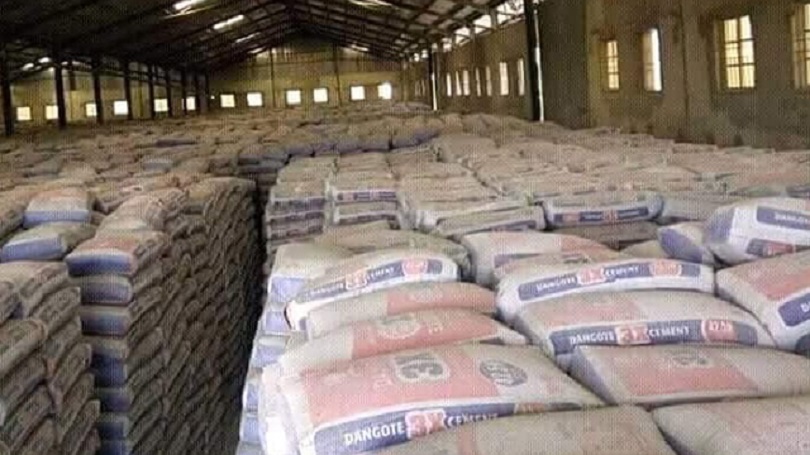
Dangote Cement Assures African Consumers Sufficient Supply With 90MT Yearly

Published

on

Dangote Cement final dividend

By Aduragbemi Omiyale

Leading cement maker, Dangote Cement Plc, has reaffirmed its commitment to making Africa fully self‑sufficient in cement production by raising its output to 90 million metric tonnes per annum by 2030 from the current 52 million metric tonnes per annum.

The chief executive of the firm, Mr Arvind Pathak, during a strategic briefing on the company’s expansion drive, disclosed that efforts are being made to accelerate investments across African markets to close supply gaps and support the continent’s infrastructural ambitions.

According to him, the organisation is strengthening the continent’s industrial backbone and reducing reliance on imported construction materials, stressing that, “Our vision is clear — to ensure Africa produces enough cement to meet its own needs…Through continuous expansion, operational excellence, and a strong distribution network, we are positioning Dangote Cement to power growth across the continent. We are not just building a business; we are building Africa’s future.”

“Through our collective determination, we have eliminated Nigeria’s dependence on imported cement and transformed the country into a net exporter of cement to several neighbouring nations,” Mr Pathak added.

Dangote Cement currently operates in multiple African countries, with integrated plants, grinding facilities, and distribution hubs strategically located to serve diverse markets.

The company’s ongoing projects include plant upgrades, capacity expansions, and the introduction of advanced energy‑efficient technologies designed to reduce operational costs and carbon footprint.

Reinforcing the company’s long-term vision, its founder, Mr Aliko Dangote, described self-sufficiency as both an economic imperative and a continental responsibility.

“Africa has no reason to depend on cement imports. We have the raw materials, the talent, and the determination. Our goal at Dangote Cement is to unlock Africa’s potential by ensuring that every nation on this continent can access affordable, high‑quality cement produced within Africa. This is how we build prosperity, job opportunities, and sustainable development,” the businessman stated.

Mr Dangote added that the company’s investments reflect its passion for unlocking continental competitiveness and fostering industrialisation across Africa.

With major infrastructural projects rising across African cities — from highways and bridges to housing developments — the demand for cement continues to grow. Dangote Cement’s renewed push toward continental self‑sufficiency is expected to address supply challenges, stabilise prices, and enhance construction reliability in the years ahead.


Click to comment

Leave a Reply

Your email address will not be published. Required fields are marked *

Economy

Luno Secures SEC Approval in Principle to Operate in Nigeria

Published

on

Luno Safety of Funds

By Adedapo Adesanya

Luno Nigeria has received Approval in Principle (AIP) from the Securities and Exchange Commission (SEC) through admission into its Accelerated Regulatory Incubation Programme (ARIP), marking a significant milestone in the country’s evolving digital asset regulatory landscape.

The approval follows an extensive engagement process between the company and the regulator and represents a major step in Luno Nigeria’s regulatory journey. As a result, it becomes the first global cryptocurrency exchange to be admitted.

Nigeria has a sordid regulatory minefield when it comes to digital assets; while it encourages new technologies, it has not fully lifted restrictions placed on crypto transactions via official channels.

Admission into ARIP means the cryptocurrency platform has met the commission’s requirements to participate in the programme and is authorised to operate within its defined scope, subject to ongoing compliance obligations and regulatory conditions, thus limiting full utilisation.

Founded in Africa in 2013, Luno has operated in Nigeria since 2015 and was among the first cryptocurrency exchanges to serve the Nigerian market. It was affected by a blanket ban announced by the Central Bank of Nigeria (CBN). The company said the latest approval reinforces its commitment to operating within Nigeria’s emerging regulatory framework for digital assets.

Commenting on the development, the chief executive of Luno Nigeria, Mr Ayotunde Alabi, described the approval as a landmark achievement for the company.

“This is an important milestone for Luno Nigeria and a strong validation of our commitment to building responsibly in one of Africa’s most important cryptocurrency markets. Admission into ARIP gives us a clearer regulatory pathway, strengthens trust with customers and partners, and provides a stronger foundation for the next phase of our growth, particularly as we expand our focus on institutional and B2B opportunities,” Mr Alabi said.

He expressed appreciation to the regulator for its continued engagement throughout the approval process and commended the Luno team for its resilience and commitment in achieving the milestone.

Luno said the regulatory approval comes at a time when it is expanding its business-to-business operations by engaging banks, fintech companies, payment providers, asset managers and corporate institutions seeking digital asset solutions.

According to the company, increasing regulatory clarity has become a key requirement for institutional adoption of digital assets. It noted that admission into ARIP would strengthen its ability to provide compliant digital asset infrastructure, including stablecoin applications, treasury solutions, crypto-as-a-service offerings and secure access to digital assets.

The Accelerated Regulatory Incubation Programme is the SEC’s regulatory sandbox designed to accelerate the onboarding of digital asset and investment service providers, including Virtual Asset Service Providers and tokenised product platforms.

The initiative enables the commission to assess emerging technologies and business models in a controlled environment while ensuring adequate investor protection and market integrity.

Building on the initial licensing rollout in 2024, Luno’s admission into the second batch of the programme underscores Nigeria’s efforts to establish a structured and transparent regulatory framework for the digital asset ecosystem, while strengthening confidence among investors, institutional partners and other market participants.

Continue Reading

Economy

Trading in Fortis Global Insurance Shares Resumes After Share Reconstruction

Published

on

Fortis Global Insurance

By Aduragbemi Omiyale

The Nigerian Exchange (NGX) Regulation Limited has allowed the trading in the shares of Fortis Global Insurance Plc.

This followed the completion of the share capital reconstruction of the organisation, which triggered the suspension a few weeks ago.

In a notice dated June 17, 2026, NGX RegCo announced the suspension of the underwriting company because of the exercise.

Yesterday, another notice was issued to inform the investing public of the lifting of the embargo on the securities of the organisation.

A total of 12,911,030,586 ordinary shares of Fortis Global Insurance were delisted, with 3,227,757,647 ordinary shares relisted at N3.96 per share.

“We refer to our market bulletin with reference number NGXREG/IRD/MB68/26/6/17, dated June 17, 2026, wherein the Market was notified that trading in the shares of Fortis Global Insurance Plc was placed on suspension effective Wednesday, June 17, 2026, in preparation for the share reconstruction of the company’s issued shares.

“The market is hereby notified that the entire 12,911,030,586 ordinary shares of Fortis Global Insurance were delisted from the daily official list of Nigerian Exchange Limited (NGX) on July 2, 2026, while the newly reconstructed issued share capital of 3,227,757,647 ordinary shares of 50 Kobo each were also listed on the daily official list of NGX at N3.96 per share.

“The delisting of 12,911,030,586 ordinary shares and listing of 3,227,757,647 ordinary shares on NGX is pursuant to the approval received from the company’s shareholders at its Extraordinary General Meeting (EGM) of April 4, 2025, and the no-objection received from the Securities and Exchange Commission (SEC).

“Consequently, following the completion of the share reconstruction, the suspension placed on the securities of the company has been lifted,” the circular signed by Bonaventure Onwuji, on behalf of the Head of Issuer Regulation Department at NGX RegCo, stated.

Continue Reading

Economy

LCCI Urges NRS to Extend Company Tax Filing Deadline to July 31

Published

on

company Income Tax

By Adedapo Adesanya

The Lagos Chamber of Commerce and Industry (LCCI) has urged the Nigeria Revenue Service (NRS) to grant a one-month extension for the filing of Company Income Tax (CIT) returns.

The appeal followed widespread technical glitches that occurred on the newly introduced Rev360 tax platform, which restricted organisations from meeting the June 30 deadline.

The Director General of the think tank, Mrs Chinyere Almona, in a statement, also appealed to the NRS to waive penalties for companies that were unable to file their returns by the Tuesday statutory deadline due to the portal’s failure.

Mrs Almona explained that the prolonged downtime experienced on the Rev360 platform on the deadline day prevented thousands of companies from completing their tax filings, noting that though some businesses waited until the last minute to file their returns, the widespread system failure could not be blamed on taxpayers.

“Rev360 inaugurated about two months ago, suffered prolonged downtime on Tuesday, leaving thousands of companies unable to file with only hours to spare.

“This is a platform failure, not a taxpayer failure,” she said.

The LCCI director general noted that while teething challenges were expected with a newly deployed digital platform, inaugurating it close to a major statutory deadline exposed businesses to avoidable risks.

According to her, the heavy volume of last-minute users reveals shortcomings in the platform’s capacity, resulting in login failures, validation errors and unsuccessful submissions when taxpayers need reliable access.

She, therefore, appealed to the tax body to immediately extend the CIT filing deadline by one month and waive all penalties for companies that attempted to file on or before the deadline but were prevented from doing so by the system outage.

The LCCI head also appealed to the revenue agency to urgently improve the platform’s capacity and reliability ahead of subsequent filing deadlines.

“The LCCI appeals to the NRS to announce the extension and penalty waiver as soon as possible to avoid apprehension and confusion within the business community,” Mrs Almona said.

She added that in the interest of ensuring a smooth implementation of the new tax administration system, granting an extension had become necessary. According to her, adopting a cautious regulatory approach during the rollout of the new platform will help build confidence among taxpayers while supporting compliance.

Continue Reading

Trending