Connect with us

Economy

Oando Shareholders Beg Buhari to Sack Adeosun

Published

on

By Dipo Olowookere

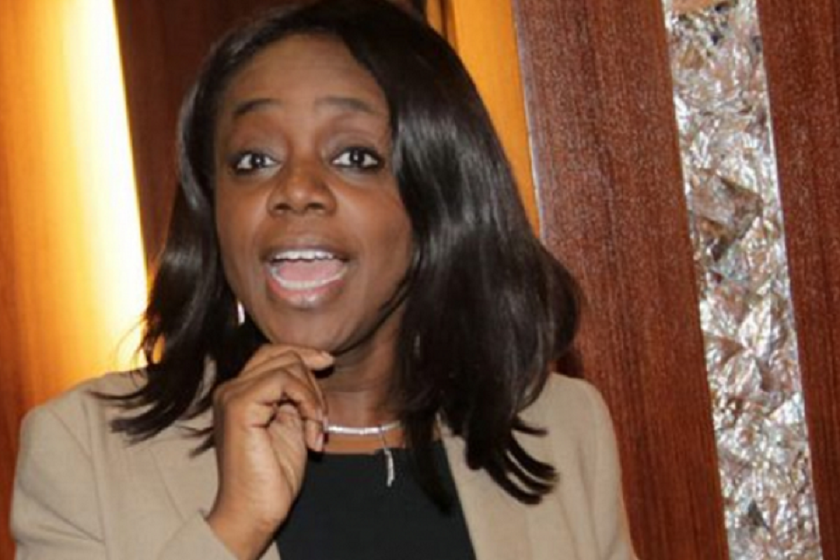
President Muhammadu Buhari has been urged to immediately sack Minister of Finance, Mrs Kemi Adeosun, for allegedly meddling in the forensic audit of Oando Plc.

South-South Coordinator of the Oando Shareholders Solidarity Group (OSSG), Mr Clement Ebitimi, made this plea in a statement issued on Monday in Port Harcourt, Rivers State.

The shareholders of Oando claimed that the alleged interference of the Minister in the audit of the oil firm was a bug stain on the anti-corruption campaign of Mr President, whose integrity could be marred by this action.

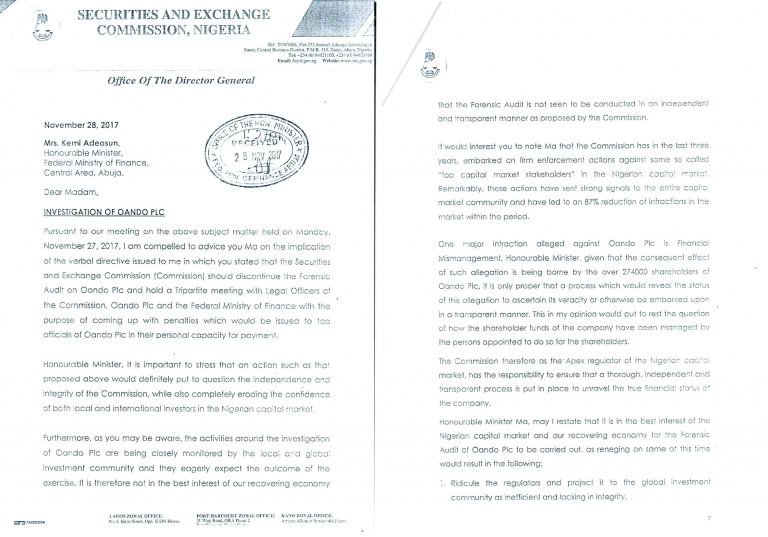
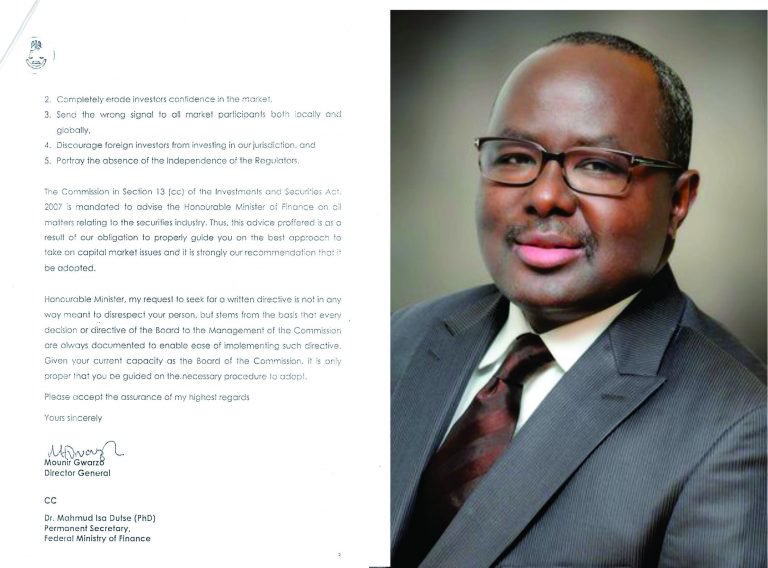
Last week, Director General of the Securities and Exchange Commission (SEC), Mr Mounir Gwarzo, was suspended by the Minister.

Reports later surfaced last week indicating that Mrs Adeosun told the suspended DG to drop the forensic audit of Oando.

In the statement on Monday, shareholders of Oando alleged that Mrs Adeosun has “lost the moral authority” to remain in President Buhari’s cabinet considering “her repugnant role in shielding the embattled management of Oando Plc from forensic audit in the face of the monumental abuse in the company”.

Mr Ebitimi, who led a group of shareholders to protest at Oando’s Annual General Meeting in Uyo, Akwa Ibom State in September, said, “We condemn in strongest terms the recent suspension of the Director-General of the Securities and Exchange Commission (SEC), Dr Mounir Gwarzo, by the Minister of Finance, Mrs Kemi Adeosun.

“Facts in the public space have revealed that Mrs Kemi Adeosun acted in her capacity as a federal minister to stall the impending forensic audit into Oando Nigeria Plc.

“This is a gross abuse of power and an embarrassment to our corporate existence as a nation. It is shameful, totally embarrassing and should be condemned by all well-meaning Nigerians.

“Dr Munir Gwarzo has demonstrated exemplary leadership as the Director-General of the Securities and Exchange Commission. He is a trusted helmsman that has earned the respect of stakeholders in the Nigerian capital market operations.

“Unlike the Minister of Finance who has brazenly abused her powers for personal gains, Dr Gwarzo has used his office to protect the interest of shareholders in the country’s capital market thereby boosting investment in the market.

“We consider the suspension as an abuse of public office, completely unexpected and unacceptable of a government official. There is nothing more definitive and exemplifying of corruption than the action by the Minister. She has personally and singly rendered the anti-corruption mantle of this government rudderless by this singular action. She is not fit to remain a part of the Buhari administration and no longer fit to be entrusted with any public assignment. The Minister has failed to act honourably on this matter and consequently made it difficult to bestow honour on her.”

The activist said Oando shareholders are deeply concerned about the plight of the company and strongly believe the only solution is for the intervention of the regulatory authorities as demonstrated by SEC under Gwarzo.

According to him, “The management of Oando has for so long relegated shareholders to nonentities; we no longer have a say in the company we invested in. The management has been mismanaging the company while they continue to buy the conscience of some powerful people to support the sustained mission of wrecking the company.

“As of today, every conscientious shareholder of Oando Nigeria Plc is angry. They are angry because of the way the company is being managed. We have held protests across the country starting with the Annual General Meeting dubiously held in Uyo; we have written petitions to the National Assembly and called on well-meaning Nigerians to intervene in the well-orchestrated mission to destroy shareholders’ value in Oando.

“Just when the Securities and Exchange Commission (SEC) intervened and sought to finally unravel the extent of the financial mismanagement and corporate governance abuse, Mrs Kemi Adeosun has thrown herself on the way as a stumbling block.

“Our questions to the Minister are: 1. What is your stake in Oando Nigeria Plc? 2. What is your relationship with Wale Tinubu? 3. How much are you being paid for this job and how much have you been promised? We need answers to these questions to clearly understand why the Minister would choose to provide the umbrella for corruption while Dr Gwarzo is bent on throwing light on the darkness that has engulfed Oando Nigeria Plc.

“We will not sit by and watch our investment go down the drain without giving a fight. Many of us bought the shares of Oando at N90, today the price has dropped to N5. The drop in price is not a result of natural events; it is not a result of the drop in crude oil price as the management is trying to make us believe. The drop in price is due to the mismanagement of the company by Wale Tinubu and co. The auditors of the company for three years consecutively have cast a doubt on the going concern of the company because its liabilities are more than its assets. In this dire situation the management of the company has continued to expend company resources on frivolous things that do not add value to the steadiness of the company.

“In fact, they have continued to increase remuneration of the board while shareholders are left to suffer. Whereas other oil companies are making progress and declaring profit, Oando Nigeria Plc has continued to dwindle, racing towards liquidation with no break in sight.

“Rather than join hands with SEC to save shareholders and rescue the company, Mrs Kemi Adeosun is bent on killing Oando Nigeria Plc by retaining the current incompetent management who lack depth and thoroughness in managing a company. What we need is the forensic audit of Oando to go on. And we clearly understand that the suspension of Dr. Gwarzo is to pave the way FOR another helmsman who will either suspend the forensic audit or ensure that the company only pays fine for the weighty allegations before it.

“This is a clear distraction aimed at suppressing the main issue, which is that Oando as a company cannot survive as a going concern because of the gross abuse of trust, and corporate governance abuse of the Tinubu-led management.

“In the 2016 annual report of the company, the auditors Ernst & Young stated: “We are drawing attention to note 45 in the financial statements, which indicates that the company reported a comprehensive loss for the year of N33.9 billion (2015: loss N56.6 billion) and as at that date, it’s current assets exceeded current liabilities by N14.6 billion (2015: N32.8 billion net current liability).

“The group recorded a comprehensive income of N112.4 billion for the year ended December 31, 2016 (2015: loss N37.8 billion) and as at that date, its current liability exceeded current assets by N263.8 billion (2015: N260.4 billion).

“As stated in the notes, these conditions, along with other matters, indicate that a material uncertainty exist that may cast significant doubt on the company (and Group’s) ability to continue as a going concern. This is a major disturbing issue that must be addressed by relevant authorities and every concerned stakeholder.

“We all know that the only way to rescue Oando Nigeria Plc at this point in time is for the Wale Tinubu led management to resign and allow an unhindered forensic audit. We are well aware that there will be more discoveries at the end of the forensic audit. This needs to be done to sanitise our capital market and protect investors. To do otherwise is to show to the whole world that our capital market is populated by companies that have integrity questions. We should not allow the misdeeds of the people at Oando Nigerian Plc to become the image of our capital market. Our nation must purge itself of every untrustworthy individual and their abettors. We want the management of Oando Nigeria Plc to resign and we call on the Minister of Finance, Kemi Adeosun to resign her position for gross abuse of public office or be sacked by President Buhari who is not known to condone corrupt practices and abuse of public trust as brazenly exhibited by Adeosun.”
Dipo Olowookere is a journalist based in Nigeria that has passion for reporting business news stories. At his leisure time, he watches football and supports 3SC of Ibadan. Mr Olowookere can be reached via [email protected]

Economy

CBN at 27.5% is Forcing a Major Reset in Forex Trading Strategies Across Nigeria

Published

on

HFM forex trading app

Nigeria’s trading environment has changed sharply since the Central Bank of Nigeria pushed rates to 27.5%, and the impact is being felt across the currency market. A rate that high does more than tighten financial conditions. It changes how traders read momentum, how they manage risk, and how they think about the naira against the dollar. Reuters reported that the CBN raised the policy rate to 27.50% in November 2024 after a string of hikes, and later kept it there as inflation and exchange rate pressures remained central concerns.

For anyone active in Nigeria’s currency space, forex trading now requires a very different mindset. What worked in a looser money environment does not always work when rates stay this high. Liquidity behaves differently, sentiment shifts faster, and market participants become much more sensitive to inflation data, policy guidance, and reserve trends. Reuters also reported that the CBN has tied its tight stance to the need to control inflation and stabilize the market, while reforms have improved reserves and confidence in the foreign exchange system.

Why a 27.5% rate changes the market mood

A rate this high affects more than borrowing costs. It resets expectations. Traders start looking at the naira through a different lens because such an aggressive stance tells the market that policymakers are serious about defending stability, even if growth conditions become tougher. In Lagos and Abuja, where many traders track both official policy signals and real market pricing, that shift has become impossible to ignore.

Higher rates reshape risk appetite

When rates rise to this level, speculative behavior often becomes more cautious. Some traders reduce position sizes. Others stop chasing moves and wait for stronger confirmation before entering. Why does that happen? Because a tight policy environment tends to punish weak conviction and reward discipline.

There is also a psychological effect. A market with a 27.5% policy rate feels heavier. It is like driving on a road where every turn demands more care than before. That change in mood forces traders to become more selective, especially in a country like Nigeria where inflation and currency sentiment still move together closely. Reuters said inflation eased after a statistical rebase, but the central bank still held rates high because broader pressure had not disappeared.

The naira story is no longer just about panic

Nigeria’s currency narrative has also become more layered. Earlier fears were largely about shortages and disorder, but now traders are also watching reforms, reserves, and policy credibility. Reuters reported that net foreign exchange reserves rose strongly in 2025 and that the CBN said clearer rules and reforms had reduced distortions and volatility.

That matters because strategy changes when the market starts trusting policy a little more. Traders can no longer rely only on the old playbook of assuming one direction and staying there.

How trading strategies are being reset

The biggest reset is in time horizon. In a market shaped by tight policy, many traders become less comfortable with broad, lazy positioning. They look for cleaner setups and faster reactions instead. A currency market under heavy policy influence often rewards timing more than stubborn conviction.

Shorter setups are becoming more practical

Many Nigeria focused traders now pay closer attention to event driven opportunities. Central bank comments, inflation releases, reserve updates, and reform announcements matter more than they used to. Reuters reported in March 2026 that the CBN eased some foreign exchange rules for oil companies to improve market liquidity and confidence, another sign that policy decisions are still actively shaping the currency landscape.

That makes short and medium term strategy more relevant. You might see a naira move that looks technical on the surface, but underneath it is often responding to policy changes, liquidity shifts, or fresh confidence in reserves. In Nigeria, the chart and the macro story now feel more connected than before.

Risk management matters more than prediction

This is where serious traders separate themselves from hopeful ones. A high rate environment does not just reward the right view. It rewards survival. Traders in Port Harcourt or Lagos who stay too attached to a single bias can get caught when policy or liquidity changes suddenly alter the mood.

I have seen markets like this before. They look calm until they do not. Then the move comes fast. That is why many traders are adjusting stop placement, reducing leverage, and focusing more on capital protection than on chasing every opportunity.

The reset, in other words, is not only strategic. It is behavioral.

Why Nigeria’s market may keep evolving

The CBN’s policy stance has already pushed traders to adapt, but the story is still developing. Reuters reported in April 2025 that the central bank sold nearly $200 million to support the naira after tariff related market shocks, showing that officials remain willing to act when volatility becomes disruptive. Reuters also reported this month that the naira had been relatively stable, supported by dollar liquidity from bond investments and exporter repatriations.

Stability can create a different kind of opportunity

A more orderly market does not mean fewer opportunities. It means different ones. Instead of trading pure panic, participants may increasingly trade around policy credibility, flow trends, and relative stability. For Nigeria, that could mark an important shift.

That is why the 27.5% rate matters so much. It has forced traders to stop relying on old assumptions and start working with a market that is slowly becoming more policy driven, more selective, and in some ways more professional.

Conclusion

The CBN’s 27.5% policy rate is forcing a major reset because it changes how traders approach risk, timing, and market structure in Nigeria. High rates, stronger reserves, and ongoing reforms have made the naira story more complex than it was before, and that means strategy has to evolve as well.

For traders in Nigeria, the message is clear. This is no longer a market where old habits are enough. Tight policy has raised the standard, and the traders who adjust their methods are more likely to stay effective as the next phase of the currency story unfolds.

Continue Reading

Economy

NASD Exchange Falls 0.22% After Investors Lose N4.8bn

Published

on

NASD securities exchange

By Adedapo Adesanya

The NASD Over-the-Counter (OTC) Securities Exchange weakened by 0.22 per cent on Tuesday, April 28, with the market capitalisation down by N4.8 billion to N2.420 trillion from N2.425 trillion, and the NASD Unlisted Security Index (NSI) down by 9.01 points to 4,044.96 points from 4,053.97 points.

During the session, the price of Central Securities Clearing System (CSCS) Plc went down by N1.82 to N767.05 per share from N78.87 per share, while FrieslandCampina Wamco Nigeria Plc appreciated by N1.90 to N100.00 per unit from N98.10 per unit.

According to data, the value of trades increased by 265.7 per cent to N27.1 million from N7.4 million units, and the volume of transactions surged by 305.2 per cent to 1.3 million units from 319,831 units, while the number of deals decreased by 6.9 per cent to 27 deals from 29 deals.

Great Nigeria Insurance (GNI) Plc remained the most traded stock by value on a year-to-date basis, with the sale of 3.4 billion units valued at N8.4 billion, followed by CSCS Plc with 59.8 million units exchanged for N4.0 billion, and Okitipupa Plc with 27.8 million units traded for N1.9 billion.

GNI Plc also finished as the most traded stock by volume on a year-to-date basis, with a turnover of 3.4 billion units worth N8.4 billion, trailed by Resourcery Plc with 1.1 billion units transacted for N415.7 million, and Infrastructure Guarantee Credit Plc with 400 million units sold for N1.2 billion.

Continue Reading

Economy

Naira Crashes to N1,380/$ at Official Market, N1,390/$1 at Black Market

Published

on

forex black market

By Adedapo Adesanya

Pressure is beginning to mount on the Nigerian Naira in the different segments of the foreign exchange (FX) market despite an oil windfall triggered by the Middle East crisis.

On Monday, April 27, the domestic currency further weakened against the United States Dollar in the Nigerian Autonomous Foreign Exchange Market (NAFEX) by N16.47 or 1.2 per cent to N1,380.71/$1 from the previous day’s N1,364.24/$1.

It was not different against the Pound Sterling in the same market window, as it lost N16.04 to trade at N1,863.76/£1 versus Monday’s closing rate of N1,847.72/£1, and against the Euro, it slipped by N12.72 to close at N1,615.01/€1 versus N1,602.29/€1.

The Naira also depreciated against the Dollar at the black market yesterday by N5 to quote at N1,390/$1 compared with the previous price of N1,385, and at the GTBank forex counter, it further crashed by N9 to settle at N1,379/$1 compared with the preceding session’s N1,370/$1.

The continued decline of the Naira comes as traders increasingly seek other safe-haven currencies amid continued global disruptions.

The benefit awash in the global market is making foreign portfolio investors stay short in Nigerian markets. Despite this, the daily FX publication released showed that interbank turnover rose to $98.829 million across 78 deals, up from $76.65 million.

Meanwhile, the cryptocurrency market remained cautious, with Bitcoin (BTC) trading at $77,216.66 despite surging oil prices and geopolitical tensions over a potential extended US naval blockade of the Strait of Hormuz.

Analysts say the supply overhang has finally dried up, and the sellers who were spooked by macro shifts or quantum fears have already exited, leaving the market much thinner on the sell-side.

Investors will await decisions made by central banks this week. The US Federal Reserve will announce its rate decision later on Wednesday, while the European Central Bank (ECB) follows on Thursday.

Ethereum (ETH) gained 1.5 per cent to trade at $2,324.59, Dogecoin (DOGE) chalked up 1.4 per cent to sell for $0.1016, Solana (SOL) appreciated by 0.6 per cent to $84.85, Cardano (ADA) grew by 0.5 per cent to $0.2483, and Binance Coin (BNB) advanced by 0.2 per cent to $627.15.

However, TRON (TRX) depreciated by 0.6 per cent to $0.3224, and Ripple (XRP) lost 0.03 per cent to sell at $1.39, while the US Dollar Tether (USDT) and the US Dollar Coin (USDC) were unchanged at $1.00 each.

Continue Reading

Trending