Economy
BUA Group-Dangote Crisis: Edo Indefinitely Shuts Down Disputed Mines
By Modupe Gbadeyanka
The disputed limestone mines between Dangote Group and BUA Group have been shut down indefinitely by the Edo State government.
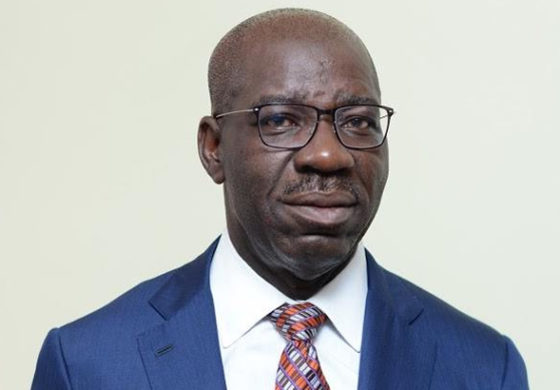
Governor of the state, Mr Godwin Obaseki, ordered the closure yesterday when indigenes of the community where the mines are located, Obu in Okpella area of the state, paid him a courtesy visit at the Government House in Benin City.
Mr Obaseki told newsmen that the directive became necessary in the interest of peace and tranquillity.
Consequently, he directed the Edo State Commissioner of Police and the Army Brigade Commander in the state to halt further operations at the Obu mines with immediate effect.
It would be recalled that the ownership of the mines has been a subject of dispute between the Africa’s leading cement manufacturers, Dangote Cement Plc and BUA Cement, which the Federal Ministry of Mines had asked to vacate the mines because it was an exploiting limestones in the area illegally.
During the visit on Monday, members of Ukhomunyio Okpella expressed reservation at the alleged use of youths as militia to enforce perceived rights to ownership of the mines and thus creating security threat to the peace of the people.
Governor Obaseki described Okpella as the mineral gem of Edo State and as such mineral resources ought to be a blessing to the people of the state “but regrettably, the situation on ground has degenerated to a security threat and therefore there is the need to nip it in the bud.
“The Federal Ministry of Mines, which has authority over the mines, has proclaimed that what we have there now is illegal mining and we don’t want break down of law and order. The situation has degenerated badly.
“Those of you were concerned have moved and tried to resolve the matter, we lost two of the people on the road to Benin while on the trouble shooting mission to Benin. We had a meeting in Abuja two weeks ago and we analysed the Obu mines issue.
“Two people cannot lay claim to one asset, until the court decides the ownership or the federal supervising agency, the Ministry of Mines says otherwise, I am closing down the Obu mines with immediate effect because we believe there is globally acceptable way of determining ownership in a contentious matter as this without recourse to self-help”
The Governor noted that mines were on the exclusive list of the federal government and the ministry said there is illegal mining going on there, “from today, there will be no further mining operations in Obu”
The Okpela Chiefs applauded the government decision and declared their loyalty to the state government saying the decision will bring relief to the people who have been living under fear.
Earlier, spokesman of the Okpella Chiefs, Mr Moshood Aliu, told the Governor that they were in his office to declared their support for the state government’s effort at industrializing the state and for him to intervene in the dispute between Dangote Cement and Bua.
The community heads disclosed that the youths of the community were being incited against one another in a bid to enforce perceived right to ownership of the mines, a situation he said generated tension in the area.
Mr Moshood explained that while the location of the mines was not in dispute, what is being disputed is the ownership.
“Obu mines was in the then Mid-West, later Bendel and now Edo State. We are the occupier of the area and we don’t want trouble, the unilateralism and use of youths as militia to enforce ownership right is condemnable,” he said.
Economy
Capital Inflows to Nigeria Rise 83.8% to $10.37bn in Q1 2026
By Adedapo Adesanya
Nigeria attracted $10.37 billion in capital importation in the first quarter of 2026, representing an 83.8 per cent increase from the $5.64 billion recorded in the corresponding period of 2025, according to the National Bureau of Statistics (NBS).
The latest Capital Importation Report released by the stats bureau also showed that capital inflows rose by 60.97 per cent from $6.44 billion recorded in the fourth quarter of 2025.
The report stated, “In Q1 2026, total capital importation into Nigeria stood at $10.37bn, higher than $5.64bn recorded in Q1 2025, indicating an increase of 83.83 per cent. In comparison to the preceding quarter, capital importation increased by 60.97 per cent from $6.44bn in Q4 2025.”
Analysis of the inflows showed that portfolio investment remained the dominant source of foreign capital, accounting for $9.86 billion or 95.09 per cent of the total amount imported into the economy.
The stats office disclosed that foreign direct investment stood at $135.08 million, representing only 1.30 per cent of total capital inflows, while other investments accounted for $374.48 million or 3.61 per cent.
“Portfolio Investment ranked top with $9.86bn, accounting for 95.09 per cent, followed by Other Investment with $374.48m, accounting for 3.61 per cent. Foreign Direct Investment recorded the least with $135.08m, representing 1.30 per cent of total capital importation in Q1 2026,” the report added.
A further breakdown showed that money market instruments attracted the largest share of portfolio investments at $6.50 billion, while investments in bonds amounted to $3.23 billion.
Equity investments under the portfolio category stood at $131.81 million.
The banking sector emerged as the biggest destination for foreign capital during the quarter, attracting $7.55 billion, representing 72.79 per cent of total inflows.
The financing sector followed with $2.43 billion or 23.42 per cent, while the production and manufacturing sector attracted $152.27 million, accounting for 1.47 per cent of total capital imported.
Other sectors that received foreign investments included shares, trading, agriculture, information technology services, telecommunications, oil and gas, transport, construction, healthcare, education, and consultancy services.
The United Kingdom remained Nigeria’s largest source of foreign capital, accounting for $5.08 billion or 49.01 per cent of total inflows. The United States followed with $3.18 billion, representing 30.69 per cent, while South Africa accounted for $983.83 million or 9.49 per cent.
Among financial institutions, Standard Chartered Bank Nigeria Limited received the highest capital inflow during the quarter at $4.41 billion, representing 42.56 per cent of the total.
Stanbic IBTC Bank Plc followed with $2.78 billion or 26.79 per cent, while Rand Merchant Bank handled $930.82 million, accounting for 8.97 per cent.
Other banks that facilitated capital inflows into the country during the period included Citibank Nigeria, Access Bank, First Bank of Nigeria, Guaranty Trust Bank, Zenith Bank, FCMB, Ecobank, Fidelity Bank, and United Bank for Africa.
Economy
NUPRC Plans Another Licensing Round in Q3 2026
By Aduragbemi Omiyale
The 2026 licensing round for oil fields is expected to commence in the third quarter of 2026, the Nigerian Upstream Petroleum Regulatory Commission (NUPRC) has disclosed.
This followed the approval of President Bola Tinubu, who doubles as the Minister of Petroleum Resources.
A statement issued by the spokesperson of NUPRC, Mr Eniola Akinkuotu, on Wednesday said the authorisation is in compliance with the Petroleum Industry Act (PIA).
“We are also fortunate that the President and Minister of Petroleum Resources has approved the 2026 Licensing Round,” the chief executive of the agency, Mrs Oritsemeyiwa Eyesa, was quoted as saying in the statement when she received representatives of Meren Energy (formerly Africa Oil) in Abuja yesterday.
Mrs Eyesan, who expressed satisfaction with the conduct of the 2025 Licensing Round so far, stated that the commercial bid would take place in July, after which the next licensing round would commence.
The NUPRC boss said the heightened participation in the 2025 Licensing Round was a testament to the fact that Nigeria was headed in the right direction.
She said the rise in investments, coupled with the upswing in production, was evidence that Nigeria’s oil and gas sector, under the leadership of President Bola Tinubu, had become attractive.
“We are in the process of finalising the 2026 launch, which will happen by the third quarter at the latest. So, this is the make-or-break point, and we want to make sure we make it,” she stated.
In his remarks, the chief executive of Meren Energy, Mr Oliver Quinn, said the current reforms had inspired the company to increase its investments in Nigeria, hence its interest in asset divestments and licensing rounds, revealing that his company’s investment priority is Africa, of which Nigeria ranks as number one.
“We have operated in Agbami, Akpo and Egina world-class fields. I think till date, in 20 years, about $11bn in capital from our side has gone into these assets, and about $4bn has gone to tax and royalties,” he said, adding, “Nigeria remains the core of our business today because of the quality of these assets.”
According to Mr Quinn, Meren Energy is pressuring its partners on these assets to deepen their investments and then increase overall production, noting that the energy firm was the first in Nigeria to sell crude oil to the Dangote refinery and will continue to fulfil its Domestic Crude Supply Obligation so long as the price remains right.
Economy
FrieslandCampina Wamco, MRS Oil Buoy NASD Exchange by 0.91%
By Adedapo Adesanya
The NASD Over-the-Counter (OTC) Securities Exchange extended its gains by 0.91 per cent on Wednesday, June 3, spurred by three price gainers led by FrieslandCampina Wamco Nigeria Plc, which rose by N13.90 to sell N210.41 per share versus the previous day’s N196.51 per share. MRS Oil appreciated by N10 to N190.00 per unit from N180.00 per unit, and Food Concepts Plc added 5 Kobo to sell at N3.00 per share versus N2.95 per share.
As a result, the market capitalisation increased by N23.91 billion to N2.660 trillion from N2.636 trillion, and the NASD Unlisted Security Index (NSI) gained 39.97 points to finish at 4,446.27 points, in contrast to Tuesday’s 4,406.30 points.
The NASD exchange witnessed three price losers at midweek, led by Nipco Plc, which shrank by N21.30 to close at N325.97 per unit compared with the previous session’s N347.27 per unit, Nitrox Industrial Gases Plc went down by N1.20 to quote at N24.30 per share versus the preceding session’s N25.50 per share, and Central Securities Clearing System (CSCS) Plc weakened to by 69 Kobo to N75.41 per unit from N76.10 per unit.
The volume of trades yesterday significantly improved by 71.5 per cent to 527,221 units from Tuesday’s 307,363 units, as the value of transactions soared by 49.9 per cent to N64.2 million from the preceding session’s N49.9 million, and the number of deals surged by 9.5 per cent to 46 deals from 42 deals.
When trading activities ended for the day, Great Nigeria Insurance (GNI) Plc remained the most active stock by value on a year-to-date basis with 3.4 billion units valued at N8.4 billion, followed by Infrastructure Credit Guarantee (Infracredit) Plc with 2.3 billion units worth N6.5 billion, and CSCS Plc with 64.6 million units exchanged for N4.4 billion.
GNI Plc also ended the session as the most traded stock by volume on a year-to-date basis with 3.4 billion units sold for N8.4 billion, followed by Infracredit Plc with 2.3 billion units traded for N6.5 billion, and Resourcery Plc with 1.1 billion units transacted for N415.7 million.
-
Feature/OPED6 years agoDavos was Different this year
-
Travel/Tourism10 years ago
Lagos Seals Western Lodge Hotel In Ikorodu
-
Showbiz3 years agoEstranged Lover Releases Videos of Empress Njamah Bathing
-
Banking8 years agoSort Codes of GTBank Branches in Nigeria
-
Economy3 years agoSubsidy Removal: CNG at N130 Per Litre Cheaper Than Petrol—IPMAN
-
Banking3 years agoSort Codes of UBA Branches in Nigeria
-
Banking3 years agoFirst Bank Announces Planned Downtime
-
Sports3 years agoHighest Paid Nigerian Footballer – How Much Do Nigerian Footballers Earn