Connect with us

Banking

Wema Bank’s ALAT Gives Quick Loans, Virtual Dollar Card to Customers

Published

on

By Dipo Olowookere

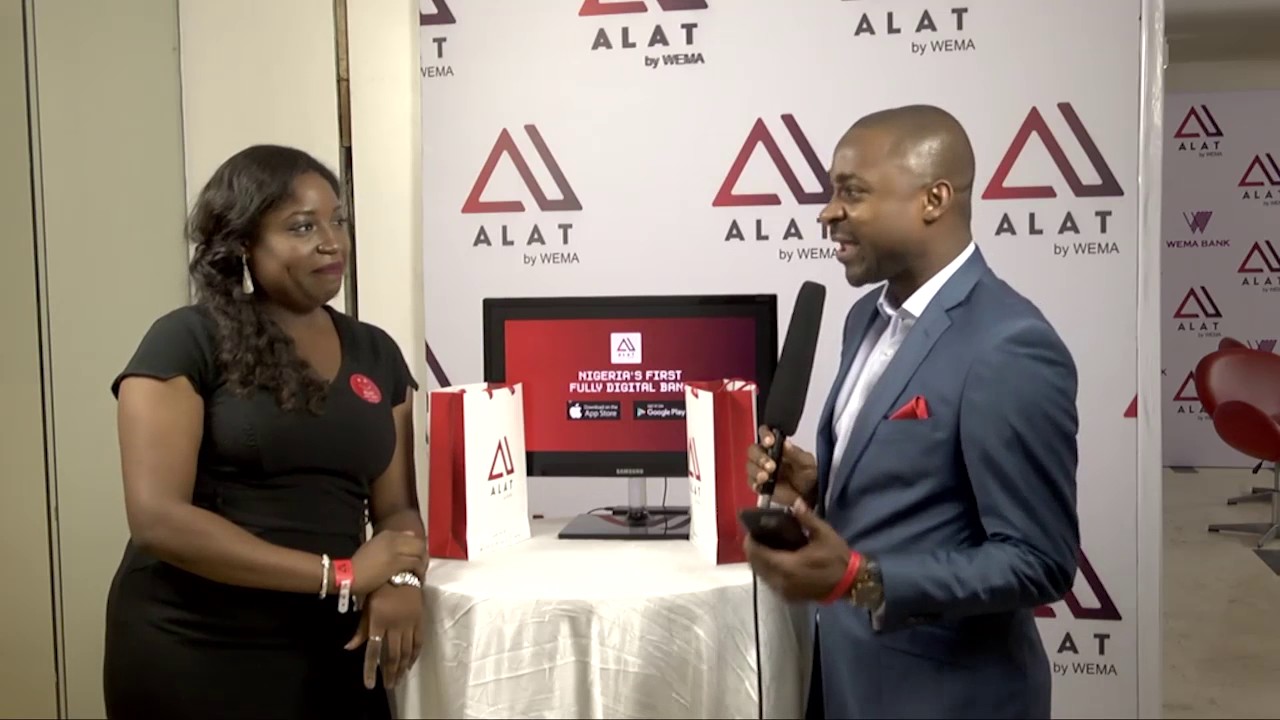
Nigeria’s only fully digital bank created by Wema Bank Plc, ALAT, has released two exciting new features; quick short-term loans and a virtual dollar card for paying online internationally.

A statement issued in Lagos by the lender explained that ALAT Loans are accessible to all ALAT customers through the bank’s Android and iOS apps.

The ALAT Virtual Dollar Card is a non-physical, dollar-denominated debit card designed for online payments. Like ALAT Loans, the card is available to all the bank’s customers through its apps.

In addition, customers of the bank can now connect other Nigerian bank accounts to their ALAT profile on the app. This makes moving money around a lot easier for people who use multiple bank accounts.

The feature is one of several ways ALAT users can fund their account. Other ways are through local and international bank cards, and by transfer.

Speaking on the launch of the new features, the bank’s Chief Digital Officer, Mr Dele Adeyinka, expressed his team’s passion to make banking even easier for everyday people.

“A bank should do more than just keep money safe. That’s the bare minimum. The way we see things at ALAT, that bare minimum is no longer acceptable.

“We believe that these new features will further show the world that banking can and should be relevant to people’s lifestyles,” he said.

ALAT has been well-received since its launch in May 2017, with over 200,000 accounts opened and over 1.1 billion naira in deposits as at February 2018.

ALAT is a branchless, paperless bank which provides financial services through its Android, iOS and web applications. It was designed in response to the growing needs of Nigerians for a financial institution that understands their needs, responds quickly to them and helps them save money.


Dipo Olowookere is a journalist based in Nigeria that has passion for reporting business news stories. At his leisure time, he watches football and supports 3SC of Ibadan. Mr Olowookere can be reached via [email protected]

Banking

Unity Bank Upgrades Unifi Mobile App

Published

on

Unity Bank Unifi 2.3

By Modupe Gbadeyanka

As part of ongoing efforts to improve customer experience on its digital banking platform and reinforce its proposition in e-business, Unity Bank Plc has launched an upgraded version of its mobile banking application, Unifi.

The retail lender disclosed that Unifi version 2.3 introduces a suite of improved features designed to enhance usability, security, and convenience for customers.

Key upgrades include enhanced security protocols, expanded quick-action functionalities, improved bill payment options, and an updated Nigeria Quick Response (NQR) feature to support faster and more secure QR code transactions.

A key aspect of the rollout builds on the bank’s continued investment in digital and security infrastructure, aimed at safeguarding customer data, ensuring secure payments and enabling safe, real-time transactions across channels.

It was also revealed that the improvements were built on the back of continuous interrogation of the platform to be more responsive to customer feedbacks which are being received overtime in our interactions and engagements.

Originally introduced as part of Unity Bank’s strategic push to expand its retail footprint, particularly among young and digitally savvy customers, Unifi has grown into a core engine of the company’s retail banking expansion.

The platform plays a critical role in driving customer acquisition, deepening engagement, and reinforcing Unity Bank’s broader digital transformation agenda.

“Digital banking has become an integral part of everyday life, particularly for retail customers who expect speed, dependability, convenience, and security as standard.

“With the latest upgrade to Unifi, we are responding directly to these expectations by enhancing functionality, strengthening security, and simplifying key payment and transaction journeys.

“Our goal is to ensure that customers can carry out their banking activities seamlessly, confidently, and without friction, anytime and anywhere,” the Divisional Head of Retail, SME, Digital Banking and Fintech Partnerships at Unity Bank, Ms Adenike Abimbola, said.

She added that the bank remains committed to continuous improvement of its digital channels in line with evolving customer needs and emerging industry trends, saying, “As mobile banking increasingly defines how people interact with financial services, Unifi is central to our strategy of delivering intuitive, reliable, and inclusive digital solutions. We will continue to invest in technology partnerships and platform enhancements that support financial inclusion, drive adoption, and improve overall customer experience.”

The Unifi mobile app is available for download on Android and iOS devices, offering customers access to a wide range of services, including transfers, bill payments, airtime purchases, and QR-enabled transactions.

Continue Reading

Banking

FairMoney Customers Earn Over N7bn in Interest, Receive N150bn Loans

Published

on

FairMoney

By Aduragbemi Omiyale

Over N7 billion has been paid out in interest on savings by a leading force in the Nigerian financial technology (fintech) ecosystem, FairMoney Microfinance Bank (MFBank) over the past year.

In the period under review, the technology-enabled lender has disbursed more than N150 billion in loans to customers, which include individuals and businesses.

FairMoney began operations in 2021 as one of the country’s pioneer platforms for rapid credit access.

Beyond expanding access to finance, the company has successfully scaled its operations, evolving into a full-fledged licensed microfinance bank.

It now offers a comprehensive suite of services, including high-interest savings accounts, fixed-term deposits, current accounts, debit cards, and POS solutions for businesses, all aimed at fostering financial inclusion through ease of use and competitive transaction rates.

FairMoney leverages advanced tools, including AI and machine learning algorithms, to analyse extensive financial and alternative data from smartphone usage and user-provided information.

By creating unique credit scores to assess risk, the small bank enables fast, collateral-free lending to underserved segments, ensuring creditworthiness is evaluated beyond traditional banking criteria.

“Our record loan disbursements and savings pay-outs over the past year are more than just numbers; they represent our unwavering tenacity in supporting the Nigerian financial ecosystem.

“At FairMoney, we are driven by the knowledge that our platform provides the essential capital for individuals to thrive and for businesses to scale.

“Our savings products provide both retail and business customers with inflation-beating returns, ensuring genuine wealth preservation. We remain deeply committed to closing the financial gap and empowering our community,” the Managing Director of FairMoney MFB, Mr Henry Obiekea, stated.

Operating as a Central Bank of Nigeria (CBN) licensed institution, FairMoney adheres to all guidelines of the regulator and is strictly regulated to ensure that deposits are insured by the Nigeria Deposit Insurance Corporation (NDIC). Furthermore, the bank prioritizes data protection under the Nigeria Data Protection Regulation (NDPR) and maintains bank-grade security protocols.

Throughout 2025, the Nigerian financial ecosystem operated under the strategic framework of the CBN’s “Payment Systems Vision 2025,” successfully transitioning the nation toward a more inclusive, stable, and cashless economy. By October 2025, Nigeria recorded a massive surge in electronic payments. Total e-payment transactions reached record highs, with instant bank transfers accounting for nearly 70% of all electronic transactions. FairMoney played its part as a conduit, creating a significant digital footprint through the disbursement of loans and the payment of savings interest to customers.

“Our efforts in 2025 were defined by an unwavering commitment to financial inclusivity and a customer-centric mission rooted in fairness, empowerment, and consumer confidence,”

“As we move into 2026, we remain resolute in our mission to uphold these values and drive the continued growth and resilience of Nigeria’s financial landscape,” Mr Obiekea added

Continue Reading

Banking

See Nigerian Banks That Have Secured Their Licences

Published

on

CBN Building Governor Yemi Cardoso

Nigeria’s banking sector is in the midst of one of its most transformative periods in decades. In March 2024, the Central Bank of Nigeria (CBN) announced a new minimum capital requirement for banks, prompting them to raise additional capital by 31 March 2026. The goal? Create larger, more resilient banks that can support big projects, strengthen the financial system, and help drive Nigeria toward a $1 trillion economy.

It is important for everyday customers, investors, and businesses to understand that the new capital requirement is at different levels: International, National, and Regional.

Banks That Have Secured International Licences

An international banking licence allows banks to operate beyond Nigeria’s borders and engage in cross-border transactions. To qualify, banks must meet a higher capital threshold — ₦500 billion in paid-up capital.

As of early 2026, the following banks met this requirement and secured their international licences:

  • Access Bank Plc
  • Fidelity Bank Plc
  • First Bank of Nigeria Ltd
  • Guaranty Trust Bank (GTBank)
  • United Bank for Africa (UBA)
  • Zenith Bank Plc

Banks That Have Secured National Licences

A national banking licence allows operations across Nigeria but restricts international expansion. Banks need ₦200 billion in paid-up capital to secure this licence.

  • FCMB (First City Monument Bank) – currently pushing to raise additional capital to secure its international licence.
  • Wema Bank
  • Standard Chartered Bank (Nigeria)
  • Citibank Nigeria
  • Stanbic IBTC Bank
  • Sterling Bank
  • Globus Bank
  • Premium Trust Bank
Continue Reading

Trending