Connect with us

Economy

Micro-pension Scheme will Deepen Asset Accumulation in Nigeria–Stanbic IBTC Pension Managers

Published

on

By Dipo Olowookere

Managing Director of Stanbic IBTC Pension Managers Limited, Mr Eric Fajemisin, has backed measures taken by the National Pension Commission (PENCOM) to sustain growth of the Nigerian pension industry.

According to him, micro pension scheme, multi-fund investment structure and Pension account transfer window, to mention but a few, are among initiatives capable of putting the sector in stronger footing going forward.

Stanbic IBTC Pension Managers Limited is the biggest pension fund administrator (PFA) in the country.

From Sunday, July 1, 2018, the new multi-fund structure announced by the industry regulator would become operational.

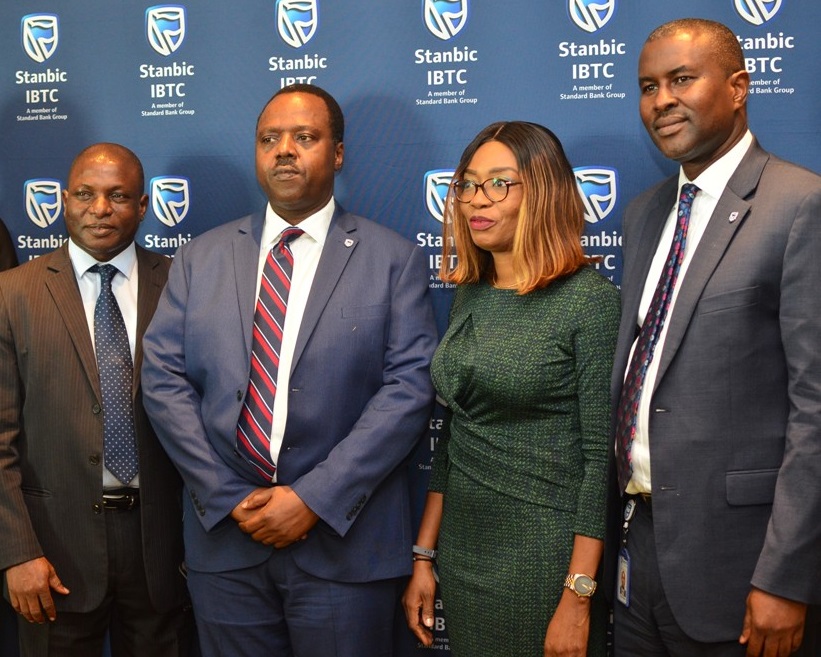
Speaking at a media interactive session in Lagos on Monday, May 28, 2018, Mr Fajemisin said such reforms and innovations are necessary to maintain the strength and depth of Nigeria’s Contributory Pension Scheme (CPS).

Mr Fajemisin noted that the Retirement Savings Account (RSA) Multi-Fund Investment structure, which replaces the “one-size-fits-all” arrangement that puts all active contributors into one RSA Fund, would resolve the challenge of asset-liability risk management faced by the operators.

According to him, the micro-pension scheme will help in deepening asset accumulation in the country, and provide the crucial capital required for investment in critical sectors of the economy.

As an initiative designed to cover an estimated 70 percent of Nigeria’s working population in the informal sector, the scheme offers enormous benefits to the society and ensure improved standard of living for the elderly, guarantee the safety of funds and may provide access to other incentives, such as mortgage facilities and health insurance., regardless of challenges associated with its seamless implementation.

By aligning the age and risk profile of RSA holders to match the four funds, contributors would have a better chance to earn improved returns on their investments in proportion to their risk appetites.

The different categories of the multi-funds structure are Fund 1, Fund 2, Fund 3 and Fund 4. Fund I is targeted at people of 49 years and below who in the quest for higher returns are willing to take more risks. Fund 2 is aimed at people who are aged 49 years and below and still working but are satisfied with moderate returns and levels of risks. Fund 3 targets people 50 years and above but still working and have very low risk appetite. In Fund 4 are retirees who have the lowest risk profile of all categories.

Among its other benefits include improved standard of living for the elderly, safety of funds and access to other incentives, such as mortgage facilities and health insurance. In addition are flexible contribution remittances, the opportunity to make withdrawal prior to retirement and the enhancement of financial inclusion in the country.

On the proposed pension transfer window, which allows a RSA holder to switch PFA once a year, the Stanbic IBTC Pension helmsman said it would deepen the democratic space in the pension industry as well as encourage healthy competition, resulting in further transparency and accountability, which would in turn enhance efficiency, innovation and service delivery.

Mr Fajemisin also reviewed the 2014 Pension Reform Act and the impact on the CPS. On the enabling law, he said the introduction of more stringent penalties for erring operators and directors, especially as it relates to mismanagement of funds, has engendered greater corporate governance, making it almost impossible to misapply pension funds by anyone.

By increasing the contributions of the employer and employee to 10 and 8 percent respectively, Mr Fajemisin said the Act has ensured the availability of more benefits to contributors at retirement. In addition, the Act makes the non-remittance of employees’ contribution by the employer an offence which the regulator can prosecute in court.

Amongst its provisions, which expanded its coverage, private sector organizations with just three employees or more are required to register under the scheme; while the law also compels an employer to open a Temporary Retirement Savings Account (TRSA) on behalf of an employee that fails to open a Retirement Savings Account within three months of being employed.

The PFA’s Head of Business Development, Mrs Nike Bajomo, said the company is already reaching out to its over 1.6 million RSA holders nationwide to create awareness about commencement of the multi-fund structure with effect from July 1, 2018. She said the PFA will continue to engage various stakeholders on developments in the industry to ensure the provisions of the CPS are fully harnessed to the benefit of all. Such platforms as the employers’ forum, preretirement seminars, among other initiatives Stanbic IBTC Pensions organises yearly, are fashioned to ensure regular engagement and to drive awareness.

Backed by the experience and expertise of Stanbic IBTC Group, a member of the over 155-year-old Standard Bank Group Mrs Bajomo said the PFA will not relent in providing excellent services to its RSA holders and Nigerians. Stanbic IBTC Pension Managers Limited, she said, has over 1.6 million RSA holders nationwide, with assets under management in excess of N2 trillion. It pays approximately N1.3 billion to over 37,000 retirees monthly and over N279 billion has been paid to retirees since the PFA commenced operations in 2006, Bajomo added.

Stanbic IBTC Pension Managers Limited is a subsidiary of Stanbic IBTC Holdings, a member of Standard Bank Group, a full service financial services group with a clear focus on three main business pillars – Corporate and Investment Banking, Personal and Business Banking and Wealth Management. Standard Bank Group is the largest African financial institution by assets. It is rooted in Africa with strategic representation in 20 countries on the African continent. Standard Bank has been in operation for over 155 years and is focused on building first-class, on-the-ground financial services institutions in chosen countries in Africa; and connecting selected emerging markets to Africa by applying sector expertise, particularly in natural resources, power and infrastructure.


Dipo Olowookere is a journalist based in Nigeria that has passion for reporting business news stories. At his leisure time, he watches football and supports 3SC of Ibadan. Mr Olowookere can be reached via [email protected]

Advertisement
1 Comment

Leave a Reply

Your email address will not be published. Required fields are marked *

Economy

Grey to Cut Cross-Border Payment Costs with New USD Offering

Published

on

grey fintech

By Adedapo Adesanya

A cross-border payments solutions company, Grey has expanded its business banking platform to include US Dollar corporate accounts, bulk international payments, and USDC stablecoin support, all integrated into a single system.

The company is positioning itself as a low-cost, faster alternative to traditional international banking, particularly for businesses in emerging markets as it enables companies to open US Dollar accounts, receive global payments, and send payouts to 170+ countries, including bulk transfers, within minutes.

Grey aims to solve common cross-border payment challenges, particularly the high transfer costs that often range between 6 and 7 per cent of transaction value, prolonged settlement cycles that can stretch across several days, and the limited access many businesses face when trying to open and operate foreign currency accounts. In addition, companies frequently contend with hidden intermediary fees and poor foreign exchange transparency, both of which undermine cost predictability and effective cash flow management.

By integrating USD business accounts and USDC stablecoin functionality into its platform, Grey enhances its value proposition around faster settlement, clearer pricing structures, improved cost efficiency, and broader global accessibility. The expanded capabilities enable businesses to manage international transactions with greater speed, transparency, and operational control.

“Businesses may operate without borders today, but access to reliable global banking remains uneven, particularly for companies in high-growth markets,” said Mr Idorenyin Obong, Co-founder and Chief Executive Officer of Grey. “We’re closing that gap and enabling businesses to move money faster, with greater transparency and control, wherever their clients or partners are based.”

“When payments are delayed, or costs are unpredictable, growth stalls,” added Mr Joseph Femi Aghedo, Chief Operating Officer and Co-founder of Grey. “Grey eliminates those friction points, giving businesses a faster, simpler way to manage payroll, supplier payments, and partner payouts across borders. Adding USD and stablecoin capabilities makes these benefits accessible to even more customers.”

Established in Africa in 2020, Grey has a presence in key markets, including the United States, the United Kingdom, and Europe, and has recently expanded its services and operations into Latin America and Southeast Asia.

Since its inception, the company has consistently enhanced its services to empower digital nomads worldwide, regardless of location. Grey’s offerings include multi-currency accounts, low-cost international money transfers, a virtual USD card, expense management tools, and robust security measures.

Continue Reading

Economy

Quidax, Lisk to Unlock Stablecoins, On-chain Financial Opportunities

Published

on

Quidax

By Aduragbemi Omiyale

A partnership designed to expand access to stablecoins and on-chain financial opportunities for everyday users and businesses has been entered into between Quidax and Lisk.

The partnership provides a critical gateway for the developer community, as builders on the Lisk network can now leverage Quidax’s robust digital asset infrastructure to access stablecoins and local currencies at competitive rates.

This institutional-grade infrastructure is designed to power “future-forward” financial products, ranging from neobanks and cross-border payment platforms to regional exchanges and global fintech solutions. It will also allow Quidax customers to trade and move value seamlessly using USDT, USDC, LSK, and Ether (ETH) on the Lisk network.

The collaboration will also accelerate the adoption of Web3 solutions that solve real-world financial challenges for millions of customers across Africa by combining Quidax’s deep local liquidity and compliant framework with Lisk’s scalable L2 technology.

In 2024, Quidax became the first crypto exchange to receive a provisional operating license from Nigeria’s Securities and Exchange Commission (SEC).

“The partnership with Lisk enables us to extend our platform to serve more people and cater to the increasing demand from products and services that want to integrate our stablecoin and digital assets product to build products across Africa,” the Chief Infrastructure Officer at Quidax, Mr Morris Ebieroma, said.

Also commenting, the Ecosystem Lead for Africa at Lisk, Ms Chidubem Emelumadu, said, “Africa represents one of the most critical frontiers for blockchain innovation, where the demand for reliable and inclusive financial tools is urgent.

“Our partnership with Quidax expands access to stablecoins and on-chain financial opportunities for everyday users and businesses. At the same time, it gives founders building on Lisk the critical infrastructure they need to create solutions that can scale meaningfully across the continent,” she added.

Continue Reading

Economy

Customs Urges Freight Forwarders to Adopt Automated Licence, Permit System

Published

on

Nigeria Customs Service

By Adedapo Adesanya

The Nigeria Customs Service (NCS) has urged freight forwarders to adopt its automated Licence and Permits Processing system to reduce the cost of doing business.

This advice was given by the Assistant Comptroller-General of Customs, Mr Muhammed Babadede, during a stakeholders’ engagement on automation held in Lagos on Monday.

He noted that the reform responds to longstanding demands for faster, more transparent and simpler procedures for industry stakeholders, disclosing that Comptroller-General of Customs, Mr Bashir Adeniyi, has approved the full automation of the service’s licences and permits processes.

“For years, stakeholders dealt with paperwork, long queues and uncertainty from manual processing. Those days are coming to an end.

“This sensitisation is across all zones. The goal is to ensure stakeholders understand the automated system before implementation,” Mr Babadede said.

He said automation would enable applications and renewals from offices or mobile phones, eliminating visits to customs formations, assuring stakeholders of a fair and consistent process, and reducing errors associated with manual documentation.

He said automation would improve record-keeping, supervision and service delivery without increasing pressure on officers.

The Deputy Comptroller-General, Tariff and Trade, CK Naigwan, also represented by Mr Babadede, reiterated management’s commitment to seamless implementation.

Meanwhile, the Comptroller of Customs for Licence and Permit Unit, Mrs Ngozika Anozie, praised the Comptroller-General for driving innovation within the Service, saying the automation aligns Customs procedures with global best practice and strengthens institutional efficiency.

According to her, the reform reflects the three-point agenda of the Chairman of the World Customs Organisation, Mr Adeniyi, centred on consolidation, collaboration and innovation.

She said the system would enhance the ease of doing business in the maritime sector and boost national revenue generation.

“Automation will cut business costs and reduce travel risks for stakeholders

“They will no longer travel repeatedly to Abuja, paying for transport, hotels and feeding to process licences and permits,” she said, adding that the platform would automatically reject fake documents and accept genuine submissions, curbing fraudulent practices.

“The CGC is determined to sanitise the system, and we are committed to achieving that objective,” Mrs Anozie said.

On his part, the Assistant Superintendent of Customs, Mr Ibrahim Usman, said the Licence and Permit Unit operates under the Tariff and Trade Department.

He explained that the unit ensures proper issuance of licences and permits and compliance with import regulations.

Mr Usman said all licences and permits expire on December 31 of their issuance year.

He added that the portal would become fully operational after nationwide sensitisation, with stakeholders duly informed.

Customs Area Controller, Tincan Island Command, Mr Frank Onyeka, thanked stakeholders for their continued support.

He urged them to take the exercise seriously to achieve seamless processing across Customs operations.

Stakeholders raised concerns about online payment integration and potential technical disruptions.

Officials addressed the questions and pledged continued engagement to ensure smooth implementation nationwide.

Continue Reading

Trending