Connect with us

Economy

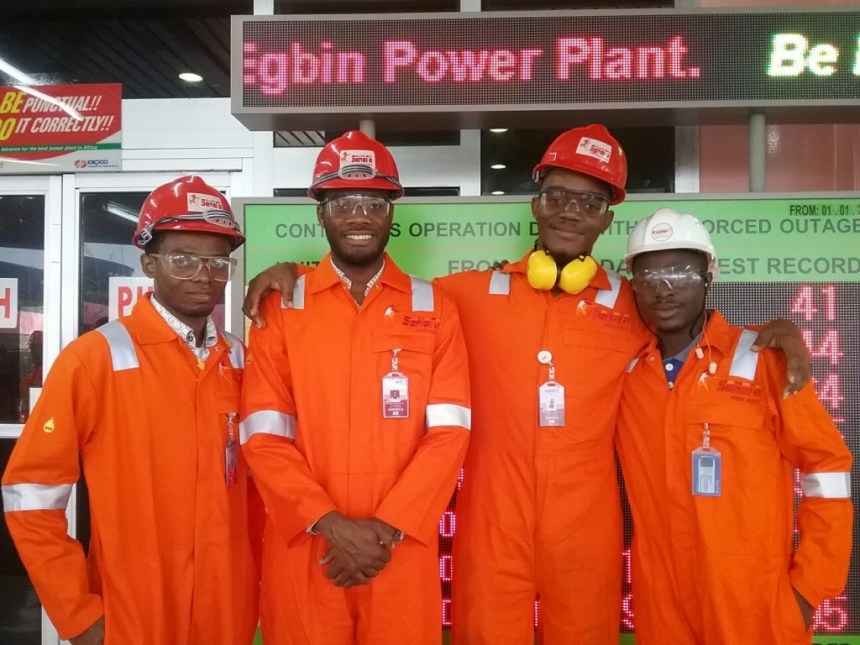
Sahara Power Invests $200m in Egbin Power Plant to Generate 1,100MW

Published

on

Sahara Power Egbin Power Plant

By Dipo Olowookere

Not less than $200 million has been invested in the Egbin Thermal Power Plant in Lagos by Sahara Power Group to increase its generating capacity to its present level.

Managing Director of Sahara Power Group, Mr Kola Adesina, speaking at an event organised by the firm in Lagos, stated that when the Egbin power plant was acquired by Sahara Power, it was generating 400MW of electricity. But with the huge investment made by his company, the plant now generates 1,100 MW, indicating that capacity has been more than doubled.

Mr Adesina said though the privatisation of the sector has not been smooth, there was room for improvement as long as stakeholders agree to work together.

“The privatization occurred in 2013 has not been a smooth one. We successor companies have had to embark on a long, protracted curve of learning to fully appreciate the complexity and the magnitude of the behemoth sector we now captain.

“Like young adolescents we have been compelled to grow and mature rapidly to rise up to the burden of responsibility placed on us,” he said at the Sahara Power Roundtable.

Speaking on why the forum was organised, the Sahara Power chief said the gathering was to create a platform to bring every leading actor across the value chain together on one plenary for the benefit of journalists and the consumer.

“Through discourse and constructive conversation, we hope to examine the current state of the power sector in Nigeria and how both the intrinsic and extrinsic are combining, evolving and reacting against each other to shape the future,” he disclosed.

Speaking on how policy can further drive the sector, Mr Adesina submitted that, “There is need to constantly do a systemic revaluation of every policy that is churned out.

“I want to recommend to government and policy makers that any action being taken, every stakeholder, the relevant public that will be affected by the policy must assess the degree to which those policies will affect them.

“While it is easier for economists to speak to the theory of pricing from the standpoint of cost, revenue and profit, affordability is another issue some are not paying attention to.

“We all are aware that there are citizens in Nigeria who are not employed and/or incapable of paying the appropriate tariff, it invariably behoves on the government to step in and cover the gap so that the shortfall currently impeding on the success of the sector can be erased.

“The social contract of government is to ensure everybody lives a good life. So for everybody to live well there is a need for everyone to be electrified.”

He said further that, “Every Nigerian deserves to have electricity, it is a right. The value chain equally has a right to be paid cost reflective tariff. If the revenue of every member of the value chain is not guaranteed, there cannot be guarantee of supply of commodity in question.”

At the forum, it was concluded that despite the challenges impeding its development, Nigeria’s energy sector still holds enormous potentials to deliver the desired expectations and further stimulate socio-economic growth if stakeholders deepen their collaboration and commitment to develop the sector.

The discourse had two panel sessions where the panellists including Managing Director of Transmission Company of Nigeria (TCN), U. G Mohammed; Lagos State Commissioner for Ministry of Energy & Mineral Resources, Mr. Olawale Oluwo; President/founder, Consumer Advocacy Foundation of Nigeria, Mrs Sola Salako and Head, Procurement, Nigerian Bulk Electricity Trading Plc. (NBET), Mr Eugene Edeoga, examined the plethora of issues affecting players in the value chain and the relationship with consumers.

Managing Director/Publisher of Business Day, Mr Frank Aigbogun, during the second panel session, noted that political parties and aspirants could gain support of electorates on the basis of promise to improve power supply, while the media plays critical role in shaping the opinion of consumers.

The MD of TCN further explained the series of ongoing projects being carried out by TCN as part of efforts to boot transmission. He also noted that manpower development was identified as one of the ways to achieve sustainability in the subsector.

At the high-powered forum where stakeholders including government, policymakers, industry operators across the sub-sector as well as representatives of Consumer Advocacy groups, who gathered to critically explore issues within energy sector with a view to proffering solutions.

An affiliate of Sahara Group, a leading international energy conglomerate, the Sahara Power Group is one the largest private power businesses in Sub-Saharan Africa.

Its operating entities include, First Independent Power Limits, FIPL; Egbin Power Plc, sub-Saharan Africa’s largest privately owned thermal power generation plant and Ikeja Electric Plc, Nigeria’s leading Electricity Distribution Company.


Dipo Olowookere is a journalist based in Nigeria that has passion for reporting business news stories. At his leisure time, he watches football and supports 3SC of Ibadan. Mr Olowookere can be reached via [email protected]

Advertisement
Click to comment

Leave a Reply

Your email address will not be published. Required fields are marked *

Economy

Zichis, Japaul Gain Over 60% Each on Stock Exchange

Published

on

zichis

By Dipo Olowookere

It was a windfall for shareholders of Zichis and Japaul on the Nigerian Exchange (NGX) Limited last week as the prices of the two stocks expanded by over 60 per cent each.

Business Post reports that on the part of Zichis, it chalked up 60.74 per cent to trade at N17.36, while Japaul appreciated by 60.16 per cent to N4.02.

Further, Infinity Trust Mortgage Bank expanded by 59.09 per cent to N15.75, Fortis Global Insurance rose by 53.85 per cent to 60 Kobo, and Jaiz Bank surged by 32.53 per cent to N11.00.

However, the losers’ group was led by RT Briscoe after it shed 20.78 per cent to close at N13.80, Mecure depleted by 18.99 per cent to N84.25, Tripple G slipped by 18.80 per cent to N5.40, Sovereign Trust Insurance moderated by 17.14 per cent to N2.32, and Ellah Lakes dropped 14.67 per cent to end at N12.80.

In the week, 71 equities appreciated, lower than 79 equities in the previous week, as 41 stocks depreciated versus 27 stocks in the preceding week, and 36 shares closed flat versus 42 shares of the previous week.

A look at the performance of the bourse showed that the All-Share Index (ASI) and the market capitalisation appreciated week-on-week by 6.95 per cent to 194,989.77 points and N125.164 trillion, respectively.

In the same vein, all other indices finished higher apart from the Growth index, which fell by 15.06 per cent, while the sovereign bond index closed flat.

As for the trading data, 7.662 billion shares worth N252.566 billion were exchanged in 345,118 deals, in contrast to the 4.652 billion shares valued at N193.326 billion traded in 286,751 deals a week earlier.

Financial stocks dominated the activity chart with 5.625 billion units sold for N113.599 billion in 129,729 deals, contributing 73.41 per cent and 44.98 per cent to the total trading volume and value apiece.

Services equities exchanged 493.131 million units worth N5.866 billion in 30,396 deals, and energy shares transacted 425.657 million units valued at N35.742 billion in 23,136 deals.

FCMB Group, Access Holdings, and Zenith Bank accounted for 3.594 billion shares worth N69.147 billion in 33,802 deals, contributing 46.90 per cent and 27.38 per cent to the total trading volume and value, respectively.

Continue Reading

Economy

Nigeria Investment Fund, Japan Unveil $50m Innovation Fund for Startups

Published

on

African Startups by Venture Capitalists

By Adedapo Adesanya

The Nigeria Investment Authority (NSIA) and Japan International Cooperation Agency (JICA) have finalised agreements to launch a $50  Sovereignmillion impact innovation fund aimed at strengthening the Nigerian start-up ecosystem.

The fund is expected to provide patient capital to pre-seed, seed, and early-stage startups addressing critical social challenges in sectors such as agriculture, healthcare, education, energy, waste and water management.

JICA will provide $14 million in grant support, while NSIA contributes up to $20 million to match the grant.

Structured as an onshore public fund, the initiative combines financial support with technical assistance to help startups refine products, scale operations, and expand into new markets.

The fund is expected to create jobs, improve livelihoods, and contribute to sustainable economic development across Nigeria.

Speaking at the agreement signing ceremony between NSIA and JICA at the Ministry of Budget and Economic Planning, Mr Aminu Umar-Sadiq, the chief executive of NSIA, said: “The Fund represents a transformative step for Nigeria’s startup ecosystem. By providing early-stage ventures in high-impact sectors with the capital and support they need to grow, we are enabling innovators to tackle some of Nigeria’s most pressing challenges. Our collaboration with JICA underscores our commitment to entrepreneurship, inclusive growth, and sustainable development.”

Preparations are underway to operationalise the Fund and develop a pipeline of high-impact startups ready for investment. NSIA remains committed to advancing socio-economic development through strategic partnerships that scale impact, expand innovative solutions, and unlock access to capital.

On his part, the Japanese Ambassador to Nigeria, Mr Suzuki Hideo, said, “The Government of Japan hopes this new project will take root in Nigeria and bear fruit swiftly.”

Continue Reading

Economy

Seven Price Gainers Boost NASD OTC Bourse by 2.19%

Published

on

Alternative Bourse NASD Securities

By Adedapo Adesanya

Seven price gainers flipped recent declines at the NASD Over-the-Counter (OTC) Securities Exchange, raising the alternative stock market by 2.19 per cent on Friday.

According to data, the market capitalisation added N51.24 billion to end N2.389 trillion compared with the previous day’s N2.338 trillion, while the NASD Unlisted Security Index (NSI) climbed 85.65 points to close at 3,994.32 points, in contrast to the 3,908.67 points it ended a day earlier.

Business Post reports that the advancers were led by MRS Oil Plc, which improved its value by N13.00 to N200.00 per share from N187.00 per share, FrieslandCampina Wamco Nigeria Plc gained N7.40 to settle at N91.55 per unit versus the previous day’s N84.15 per unit, Central Securities Clearing System (CSCS) Plc appreciated by N6.08 to N71.00 per share from N64.92 per share, Afriland Properties Plc added 66 Kobo to finish at N17.17 per unit versus N16.51 per unit, IPWA Plc rose 37 Kobo to N4.15 per share from N3.78 per share, First Trust Mortgage Bank Plc grew by 11 Kobo to N1.20 per unit from N1.09 per unit, and Food Concepts Plc went up by 10obo to N3.70 per share from N3.60 per share.

On the flip side, there were two price losers led by Geo-Fluids Plc, which depreciated by 28 Kobo to N3.32 per unit from N3.60 per unit, and Industrial and General Insurance (IGI) Plc dropped 5 Kobo to sell at 45 Kobo per share from 50 Kobo per share.

Yesterday, the volume of trades went down by 92.0 per cent to 3.7 million units from 45.8 million units, the value of transactions fell by 59.4 per cent to N84.5 million from N208.2 million, while the number of deals went up by 7.7 per cent to 42 deals from 39 deals.

CSCS Plc remained the most traded stock by value (year-to-date) with 32.6 million units exchanged for N1.9 billion, trailed by Geo-Fluids Plc with 119.6 million units valued at N470.3 million, and Resourcery Plc with 1.05 billion units traded at N408.6 million.

Resourcery Plc closed the day as the most traded stock by volume (year-to-date) with 1.05 billion units sold for N408.7 million, followed by Geo-Fluids Plc with 119.6 million units worth N470.3 million, and CSCS Plc with 32.6 million units worth N1.9 billion.

Continue Reading

Trending